-
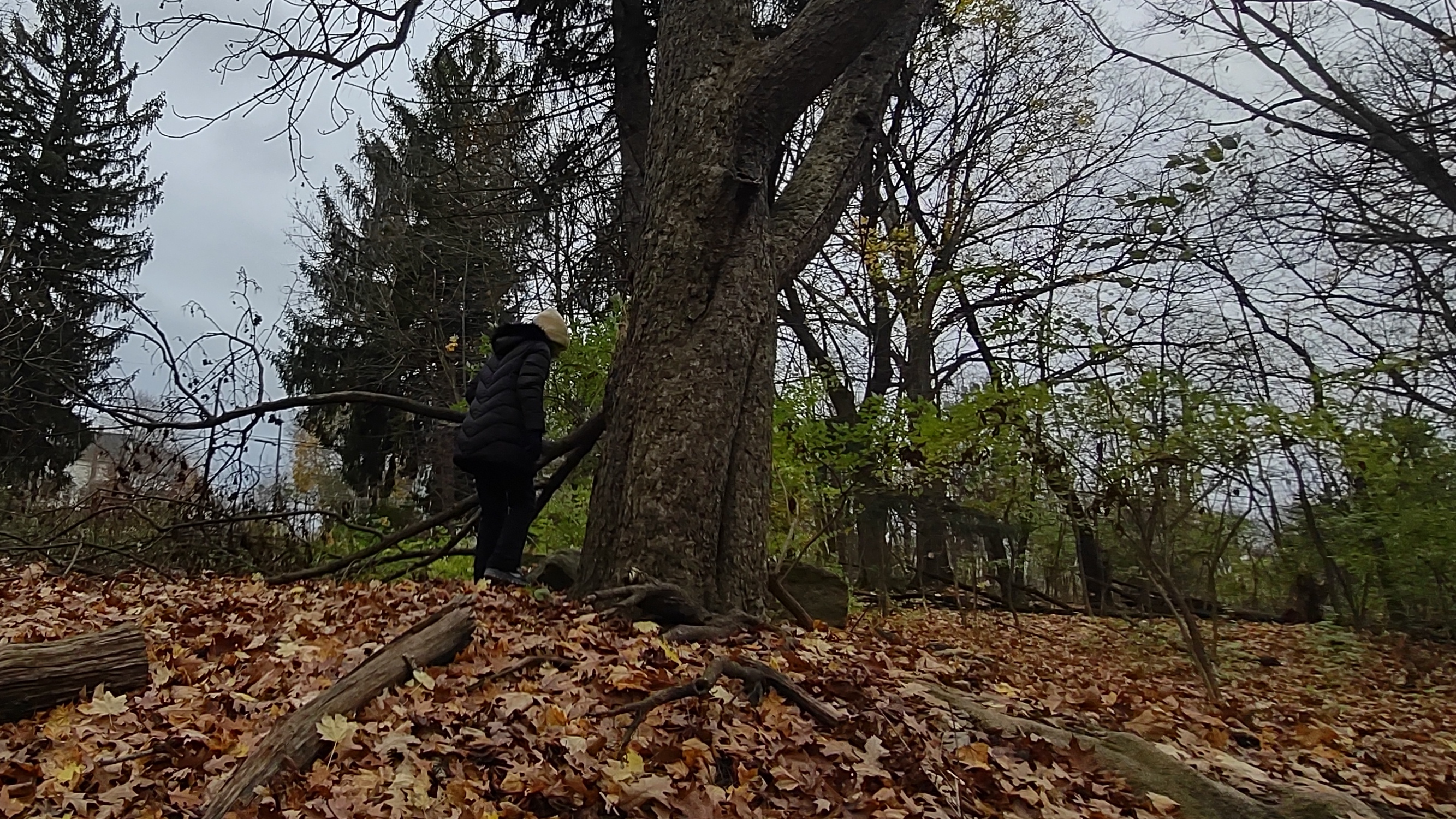
Cache Explosion – Clifton
Tracking a treasure in this season of shared gifts, we follow the call of Cache Owner boydfamily, placed in 2007.
As winter solstice winds blast, the sun’s warmth and light disappear. In the cosmic game of Crack-the-Whip, our hemisphere flings furiously through the outermost point of orbit.
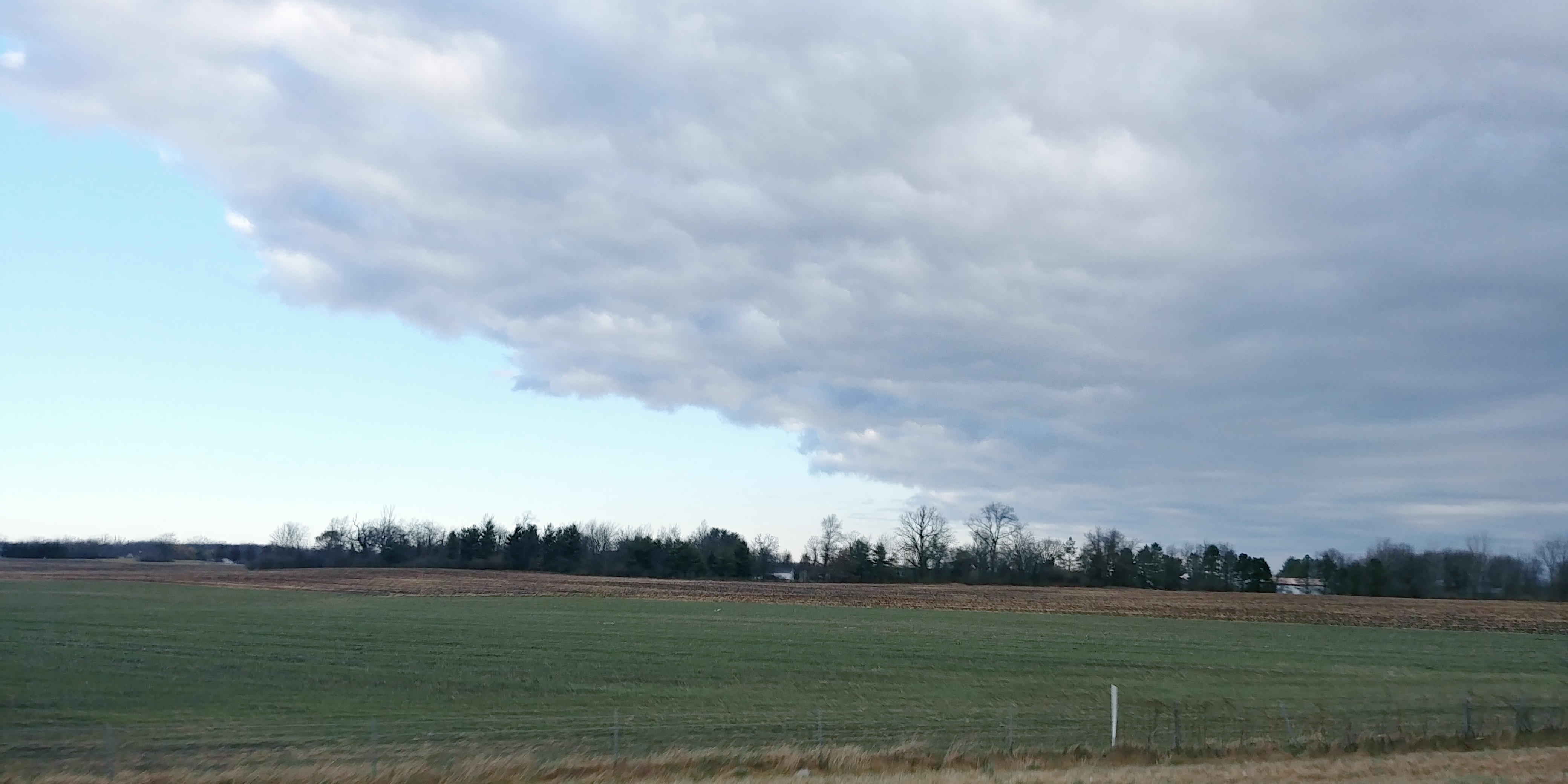
Driving west, then south, the cloud bank rolls back like dryer lint, conceding defeat. The sun blazes forth, and we embrace it as eagerly as the Ancients.
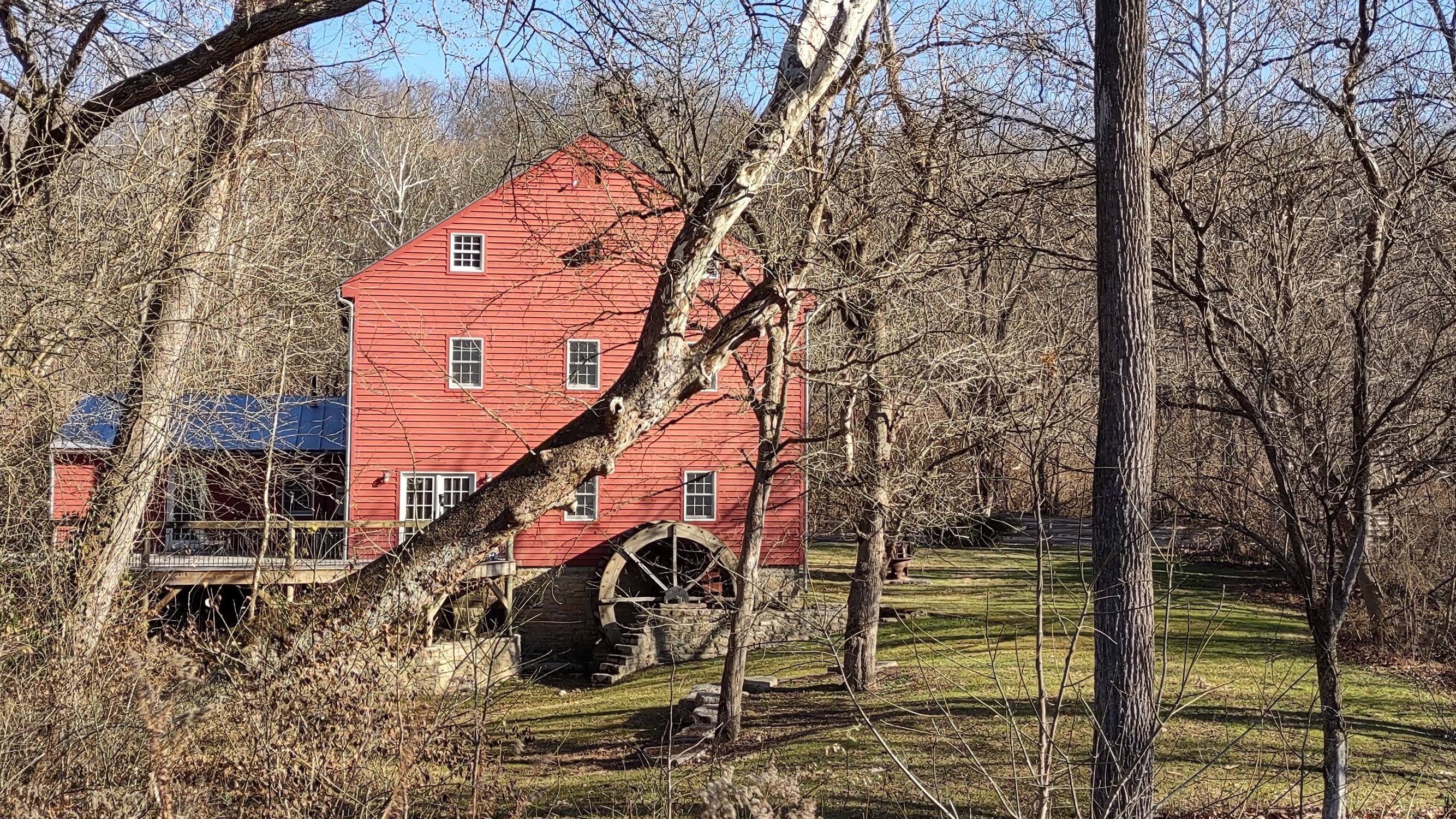
The mills of the Little Miami River drift by. Built in 1813, Grinnell Mill was one of nine mills powered by the river. Textile mills spun cotton into yarn, gristmills ground cereal grain into flour, paper mills rolled wood pulp into paper, and sawmills cut logs into lumber. The Wars of 1812 and 1865 gobbled up the milled flour and wool. Like Silicon Valley startups, mill operators fought to win the market, only to see it move to railroad towns. Grinnell Mill flourishes today as a bed-and-breakfast, where lumber, flour, paper, fabric, hard work, and a river come full circle.
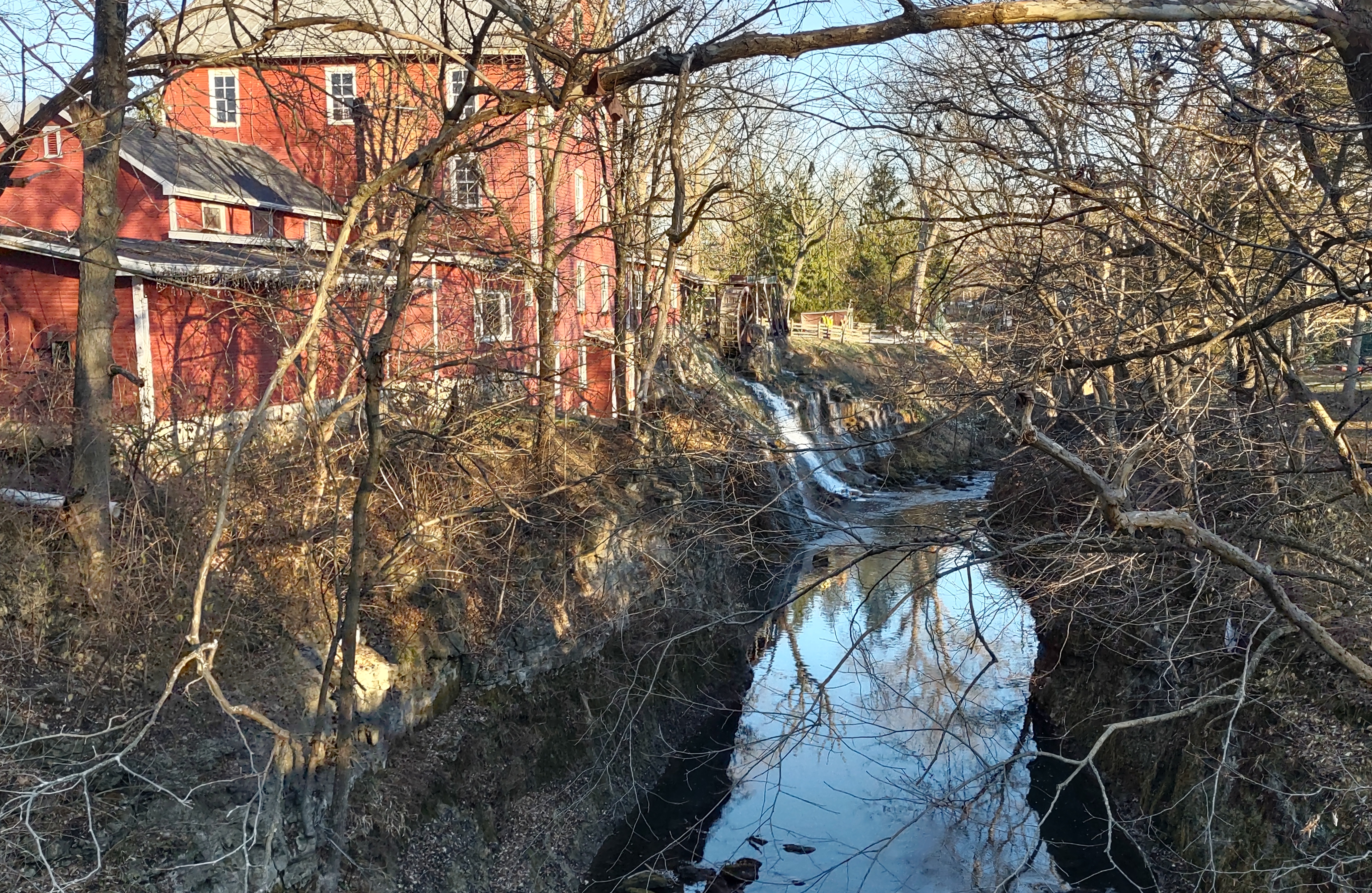
Upstream, on the other end of John Bryan State Park, Clifton Mill birthed the town of Clifton. Grocery stores, furniture makers, weavers, butchers, churches, and blacksmiths catered to farmers coming into town with grain to grind. In 1849, cholera struck, percolating in contaminated ponds and wells. Forty victims were buried.
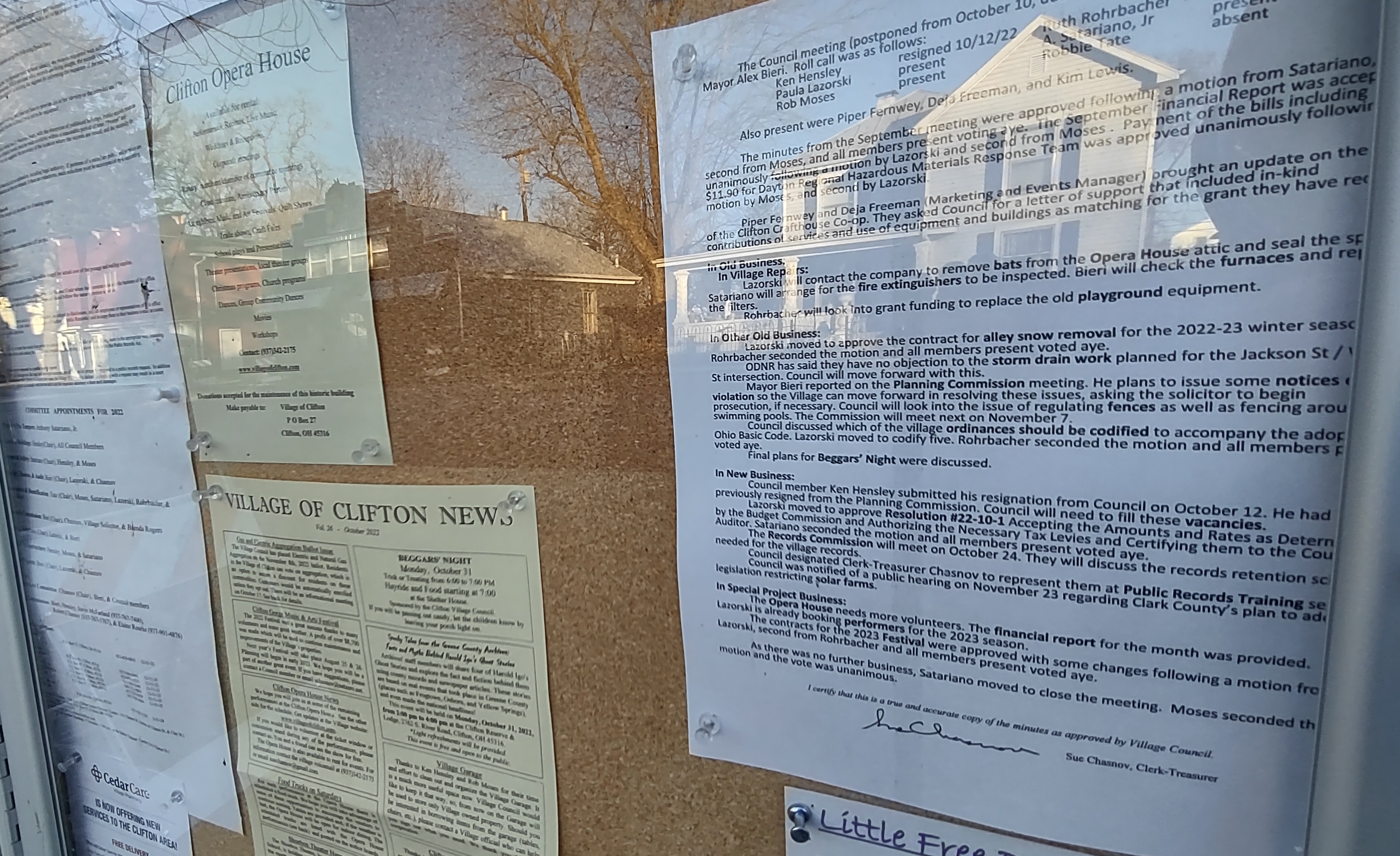
Today’s names, Lazorski, Bieri, Rohrbacher, echo the fortitude and tenacity that carried a settlement through grief and terror. Two centuries later, these names rise to the challenges of impending solar and wind farms, ballooning regulations, and the internet’s tug on children of this land.
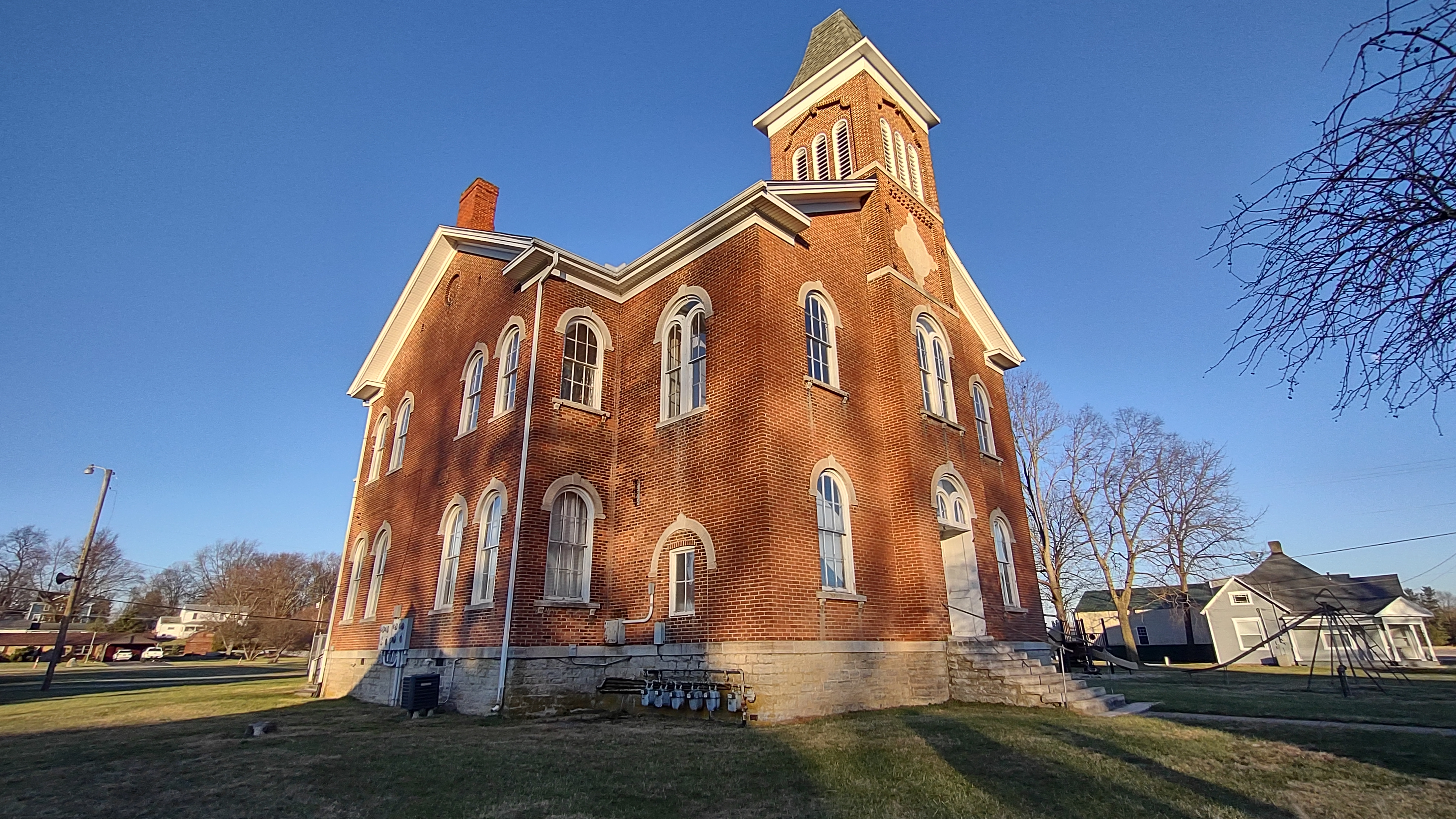
Our coordinates draw us to a monarch still mighty. As parents weathered war, peace, sickness, health, prosperity, and change, children wore out the marble on the schoolhouse steps. Education promised to be the winning lottery ticket, opening opportunity’s window on the world.
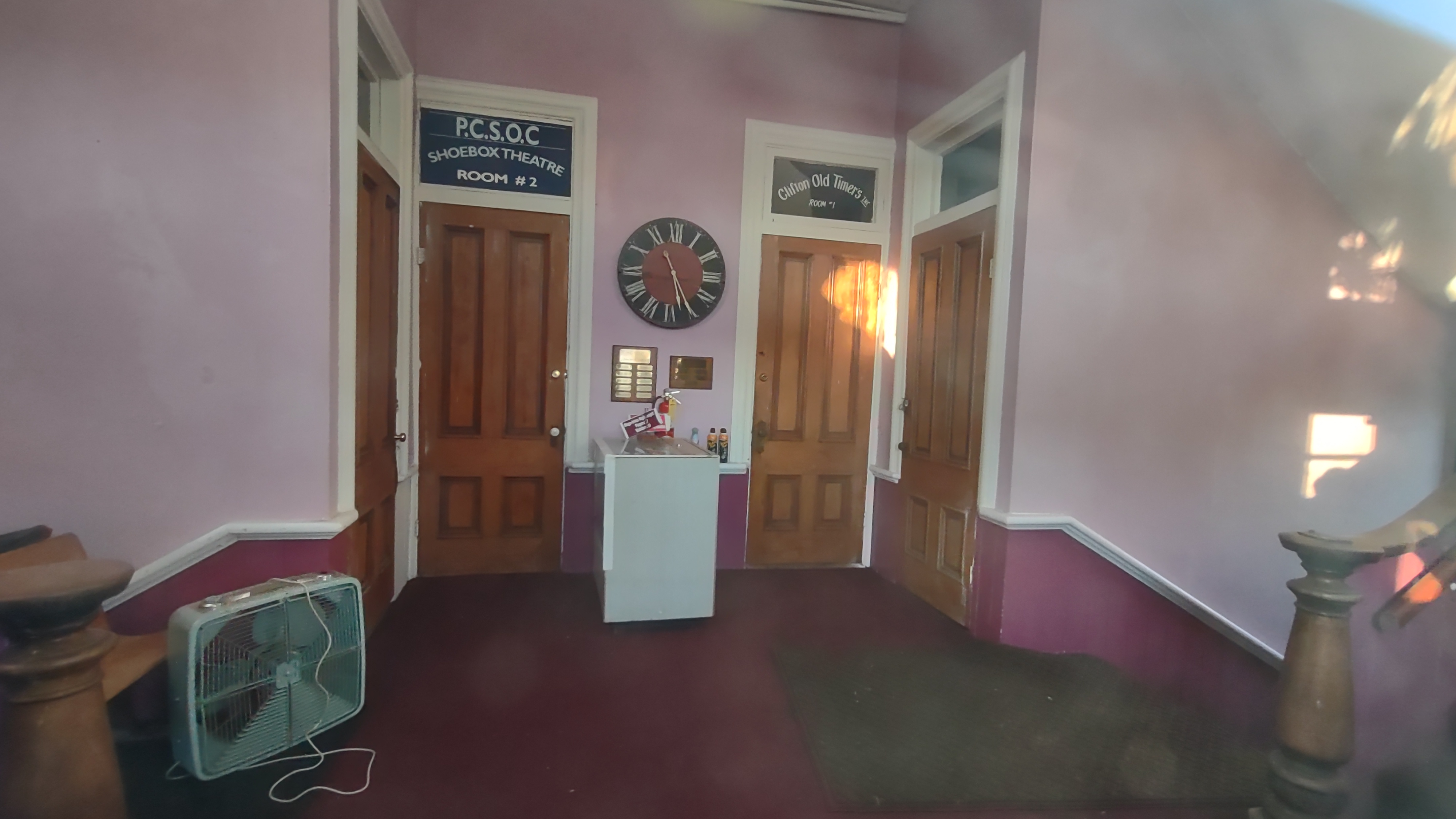
Ghosts flit through with airy shapes, whispering invisible, indelible memories of childhood. As tiny schools consolidated into large repositories, communities began to awaken to the questions of what should be taught, and who should decide.
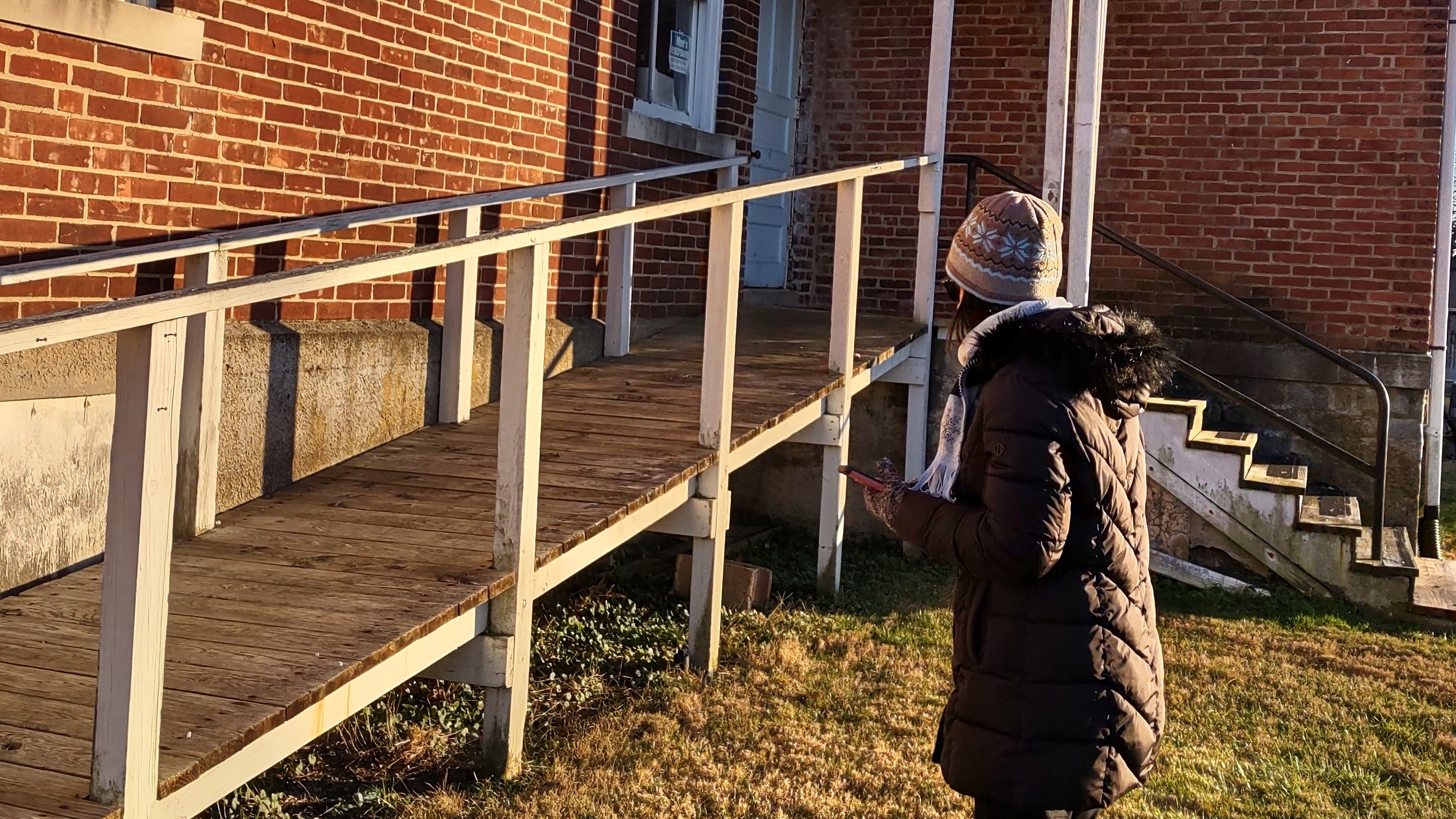
In 2009, the cache stump turned into mulch. Guardian angels moved it to the sheltering school ramp. Three months ago, a log reports that local muggles will help you find it if you can’t, and will also direct you to the other cache by the mill.

In this friendly town, tidings of peace echo goodwill. Threads of past and present weave strength.

As we sign the cache, our hands are cold, cold as ice, cold as fear, cold as cold salami. We are hungry.
-
Strock Stone House
In 2005 Cache Owner Rattlebars brought the caching cosmos to a splendid spot.
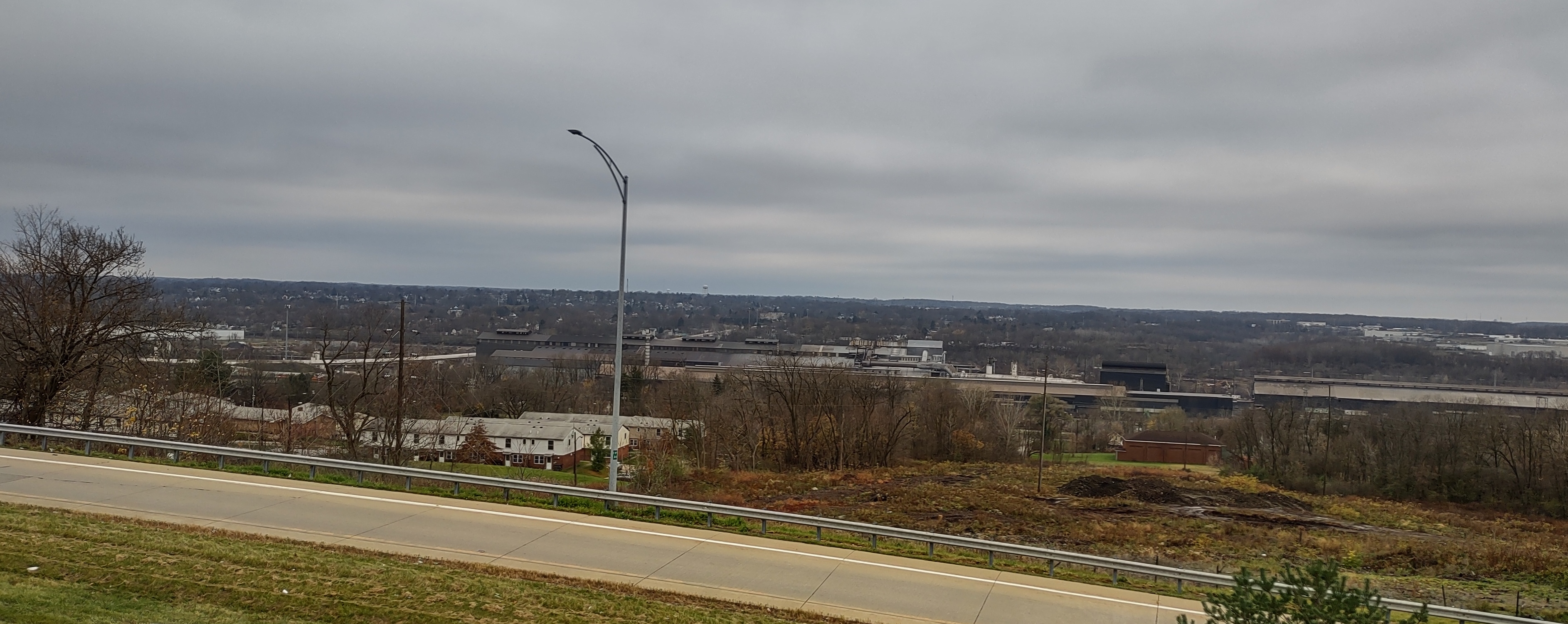
On this, our last caching adventure with our northeast neighbor, the city floats by. Westward bound, we cross into Austintown. One of us, ready to get out of Youngstown, is rolling through red lights, while the other one prays Ohio’s finest are busy somewhere else. Coordinates will stop at the Meander Creek Reservoir, winner of the Best Name Ever for a creek.
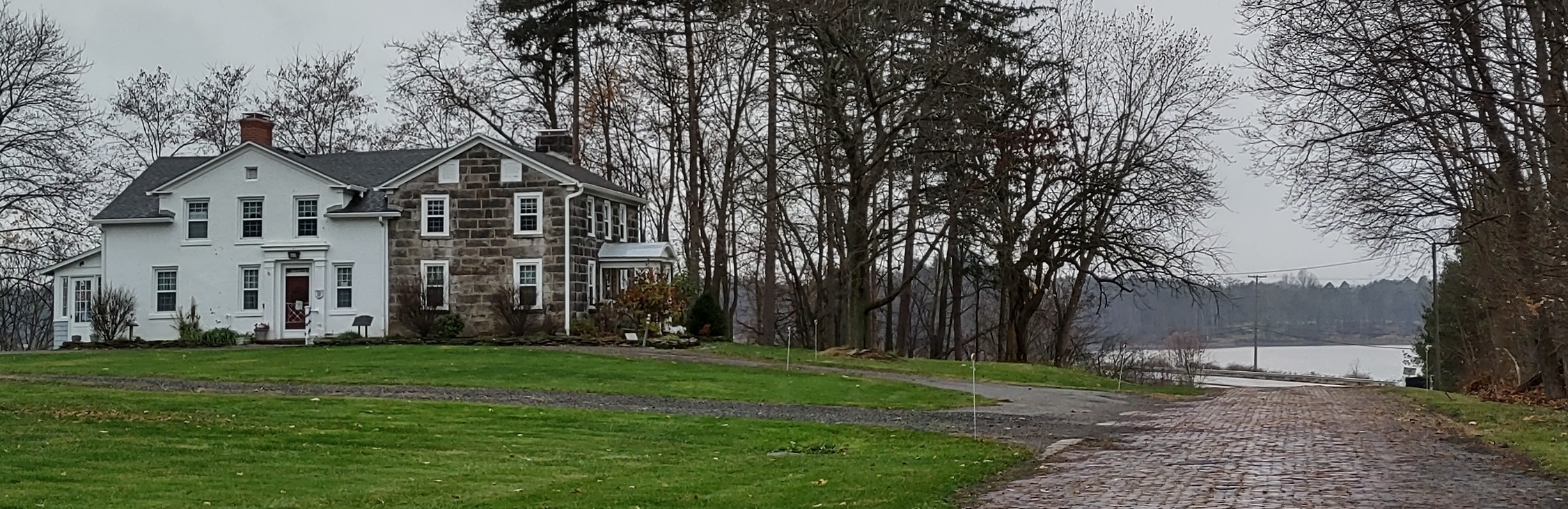
Built in 1831, the Strock House has won the prestige of National Historic Landmark, from its perch overlooking the creek. The road has aged from dirt, to plank, to brick.
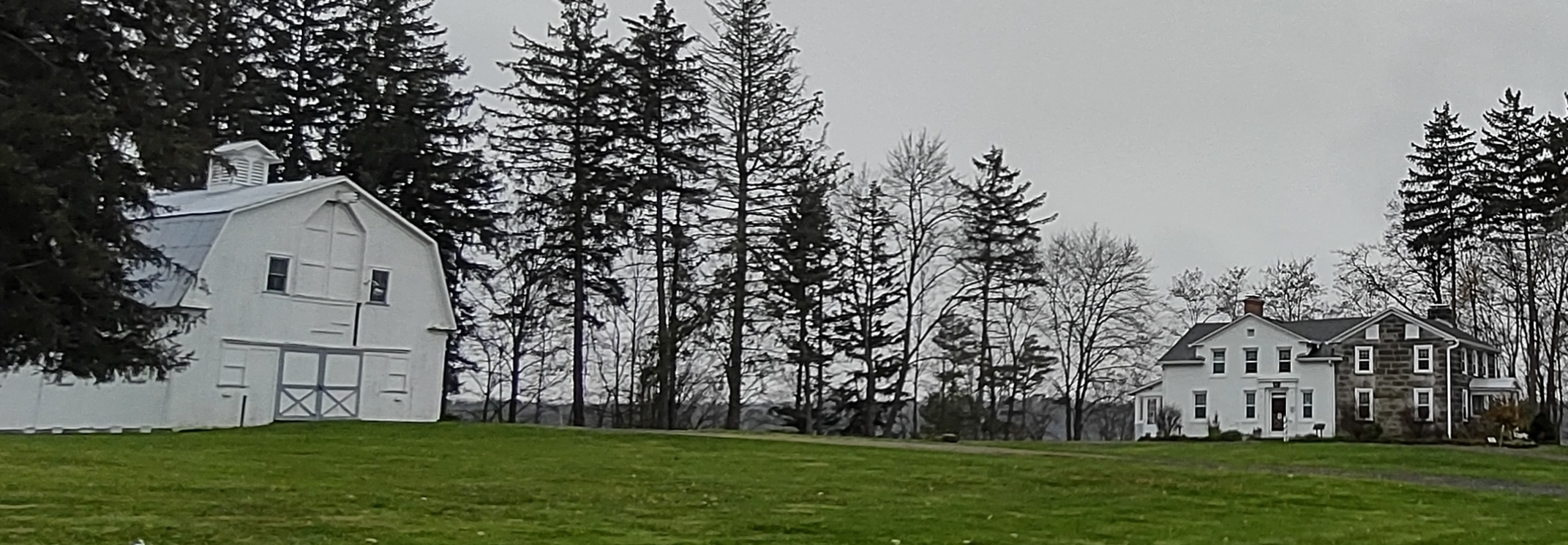
After two decades of life on the creek, the Strocks sold to Francis Henry. Oral history lists a tunnel between the house and barn as a place where escaping Southerners hid as they traveled the Underground Railroad north. Flitting among the trees are the wispy, silhouetted shapes of fear, hope, dignity, and courage in this compassionate land.
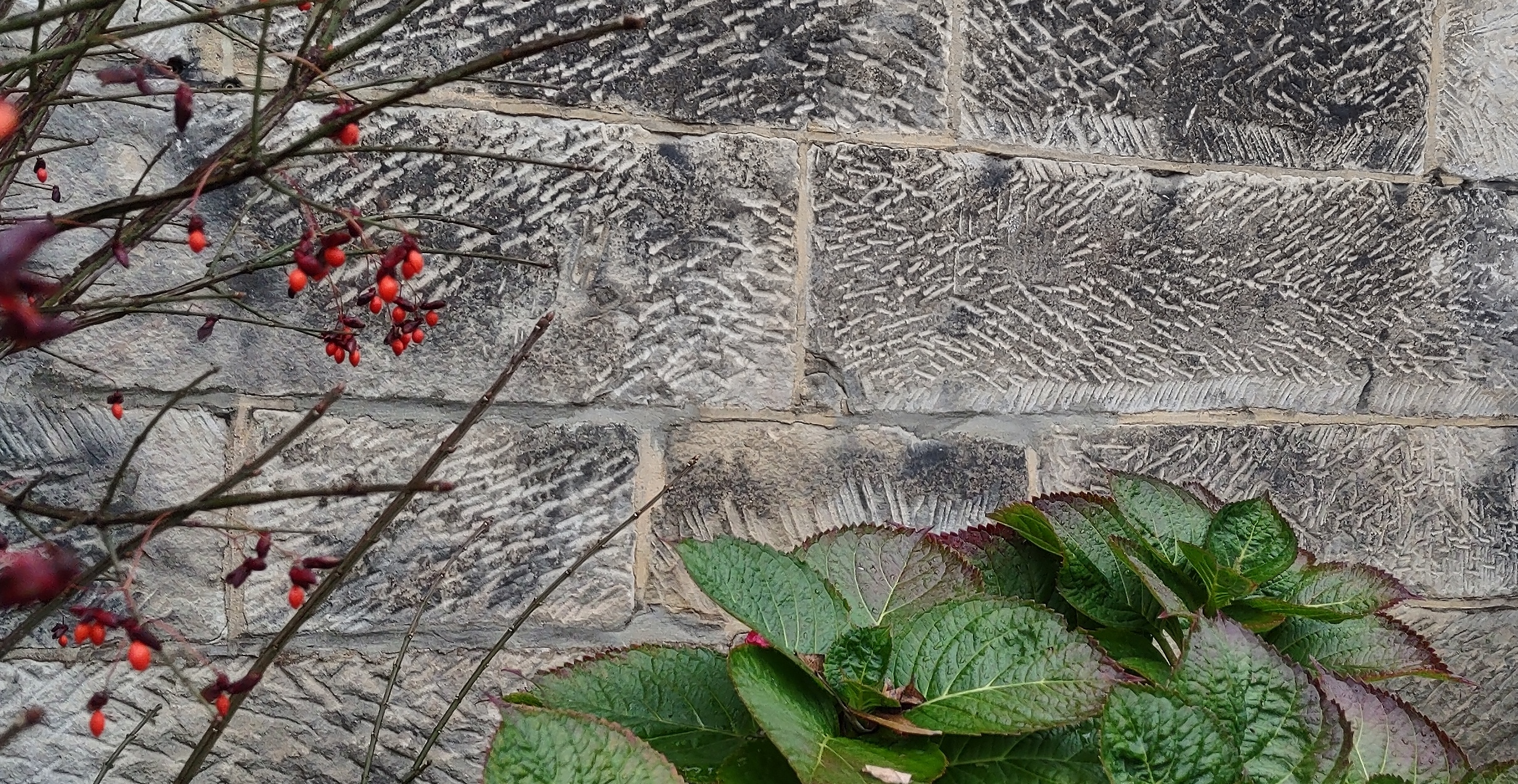
During the Civil War, the house passed to an Anderson, who became impressively wealthy in the general store business. His son became a judge, lived in the house, and framed in an addition. Oral tradition lists President McKinley as a guest in this house. The marks of the stone mason live on in the huge blocks of sandstone hauled from nearby quarries.
Back on the brick road, we wade into the wet leaves, brambles, and rotten logs across from the barn. Autumn’s last liquid glistens.
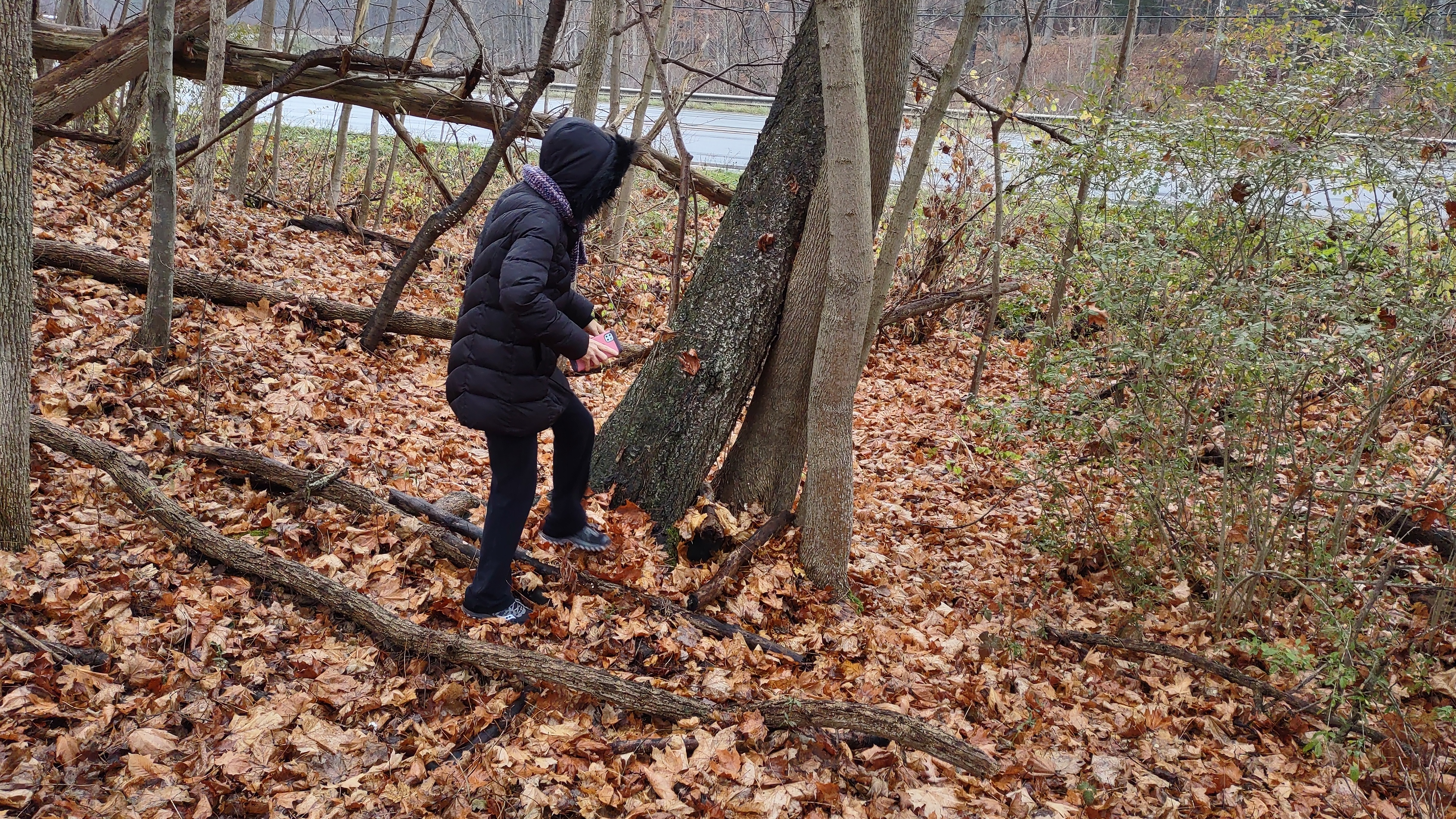
The mystery unravels into a perfect geopile.
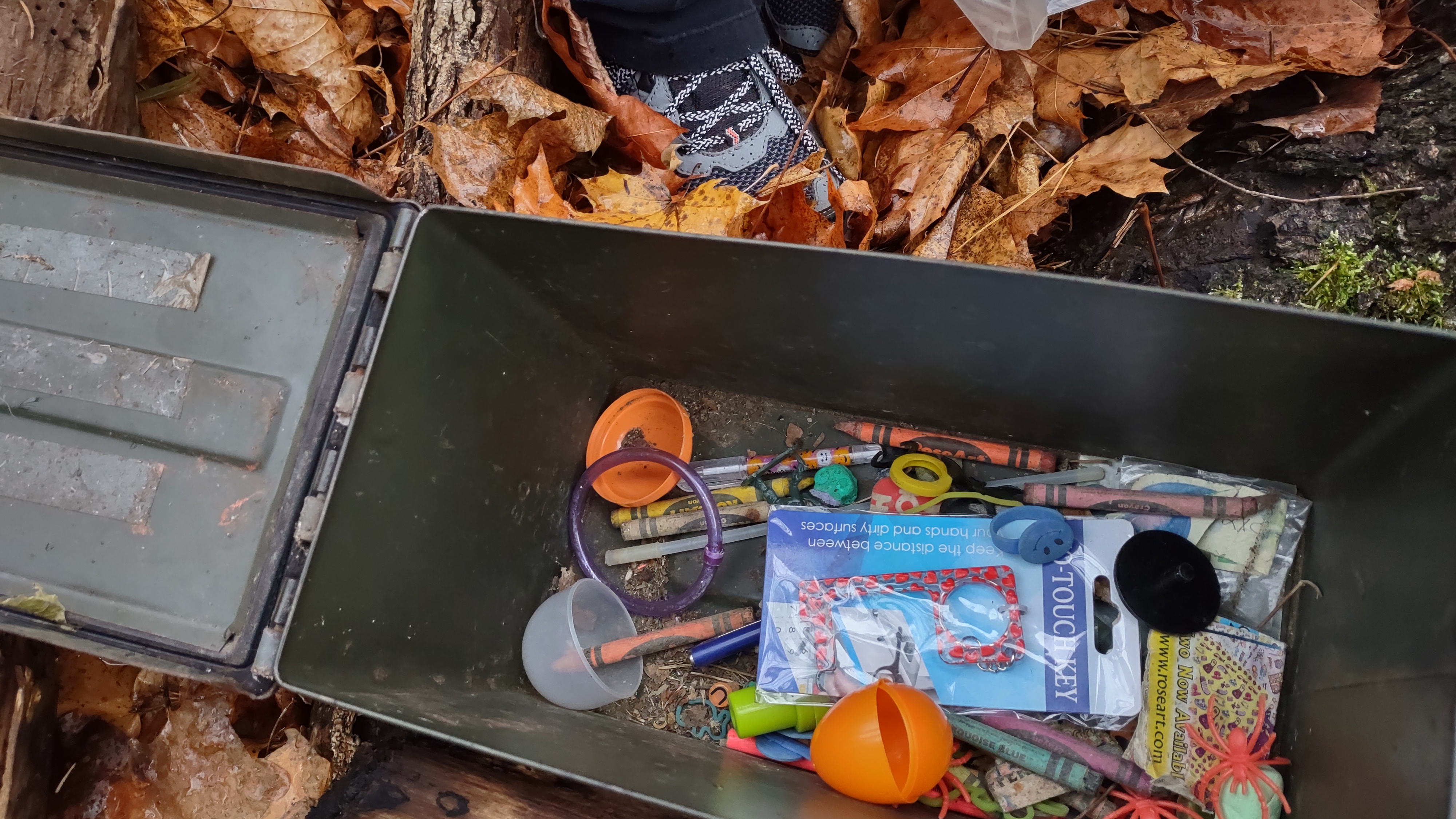
Unlike the first decade of cache logs, local law doesn’t seem to be quite as close by. For those loggers complaining about broken colors, the crayons have shaped up.
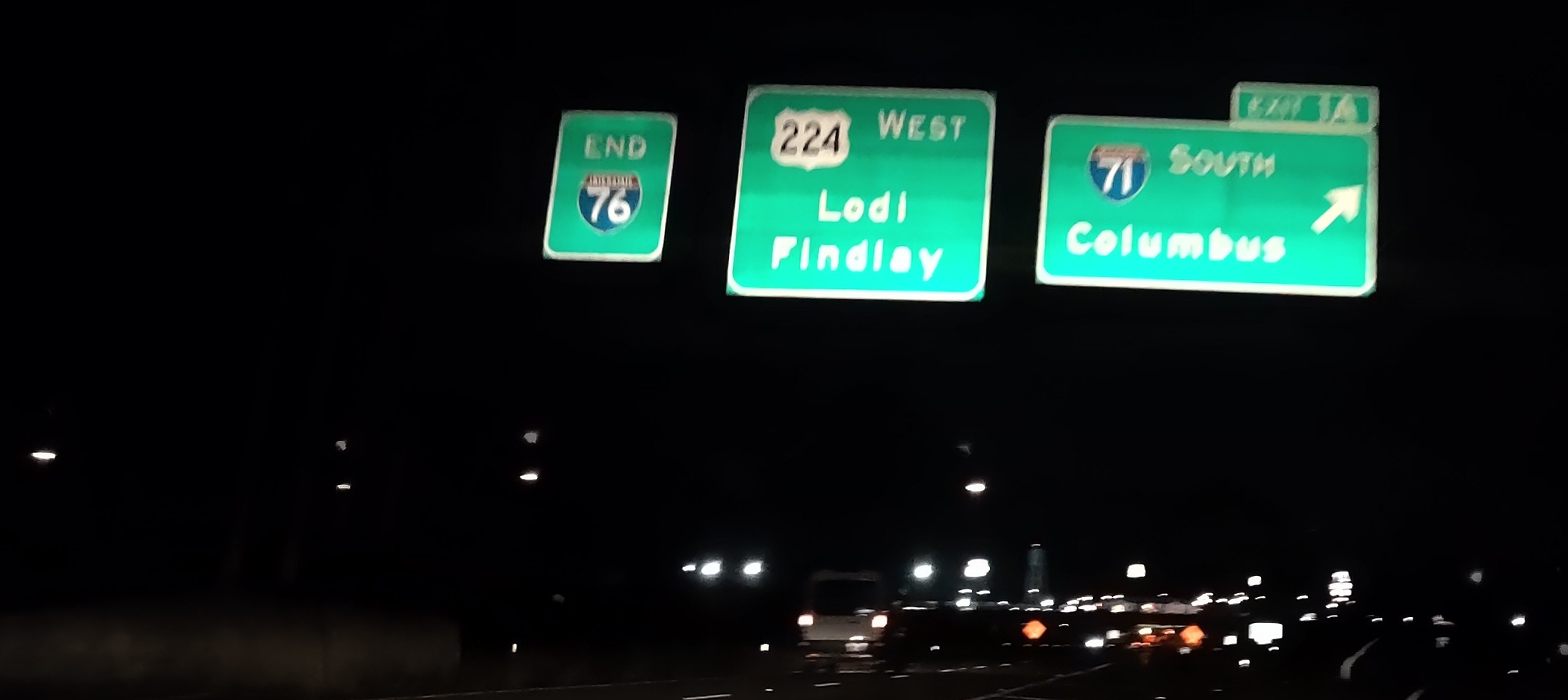
We turn homeward. As lights flicker on in town after town, we pass high school stadiums, Christmas lights, church steeples, courthouse spires. The radio surfs through jazz, country, rap, football news.
We are back in our own corner of the earth and sky, back on our soil, whether owned by us or by another. The places familiar to us, the names, final turns, and at last the closing of the front door, draw us in, even as what we left behind encloses those there.
-
Green Squared
Cache Owner celticsun33 has left us a 12-year-old treasure hunt in a Christmas sandwich: between two GREENS.
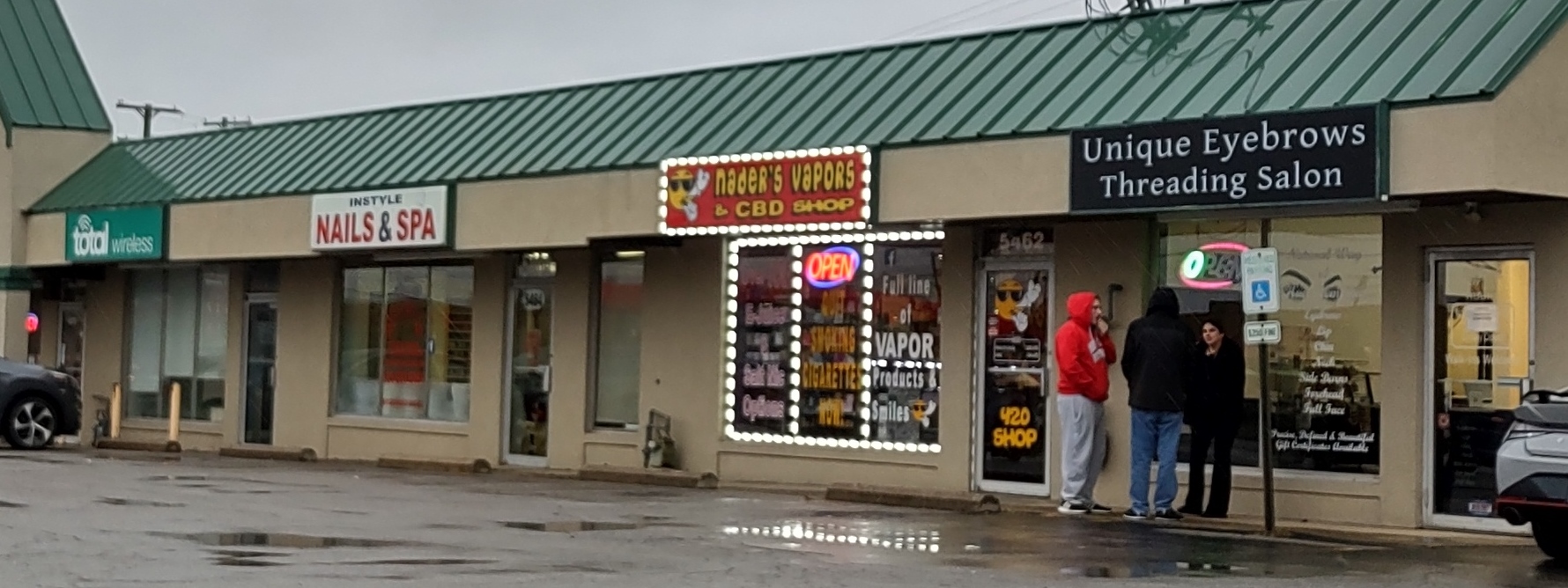
Following our geotrail down Mahoning Avenue, boutique businesses market today’s fixes. For more than a century, crime bosses operating from Pittsburgh have controlled politicians, police, and gambling in the Mahoning Valley.

In a struggling economy, lucrative drug, trafficking, and extortion operations have siphoned money from resigned taxpayers, while creating ever-larger circles of dependency. Over the past 20 years, community push-back has taken hold. More than 70 mobsters and politicians have been convicted of corruption. Like cockroaches inside the walls, invisible predators find new ways to rob others of food, comfort, and home.
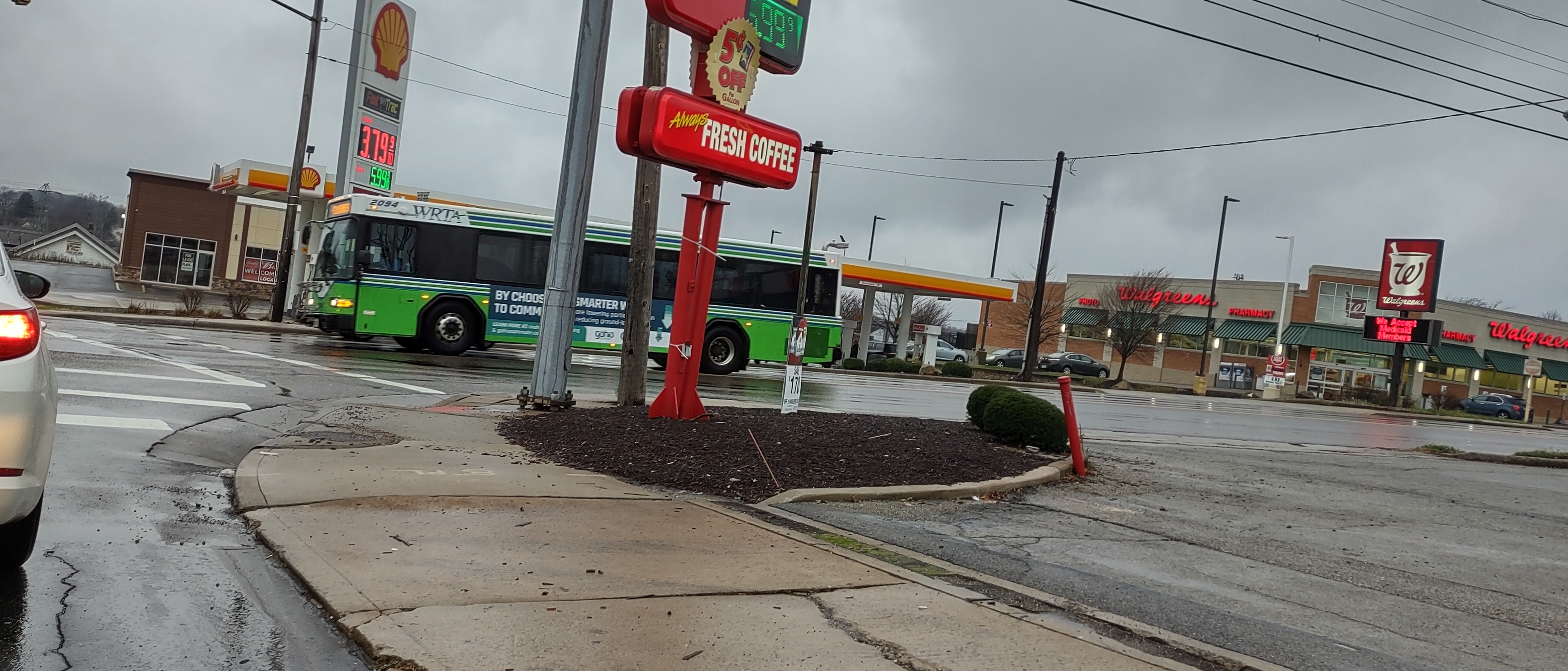
We look for the GREENS. Walgreens, check! In the past 12 years, something has happened to the old green BP. It’s only a Shell of its former self. Green bus? Check!
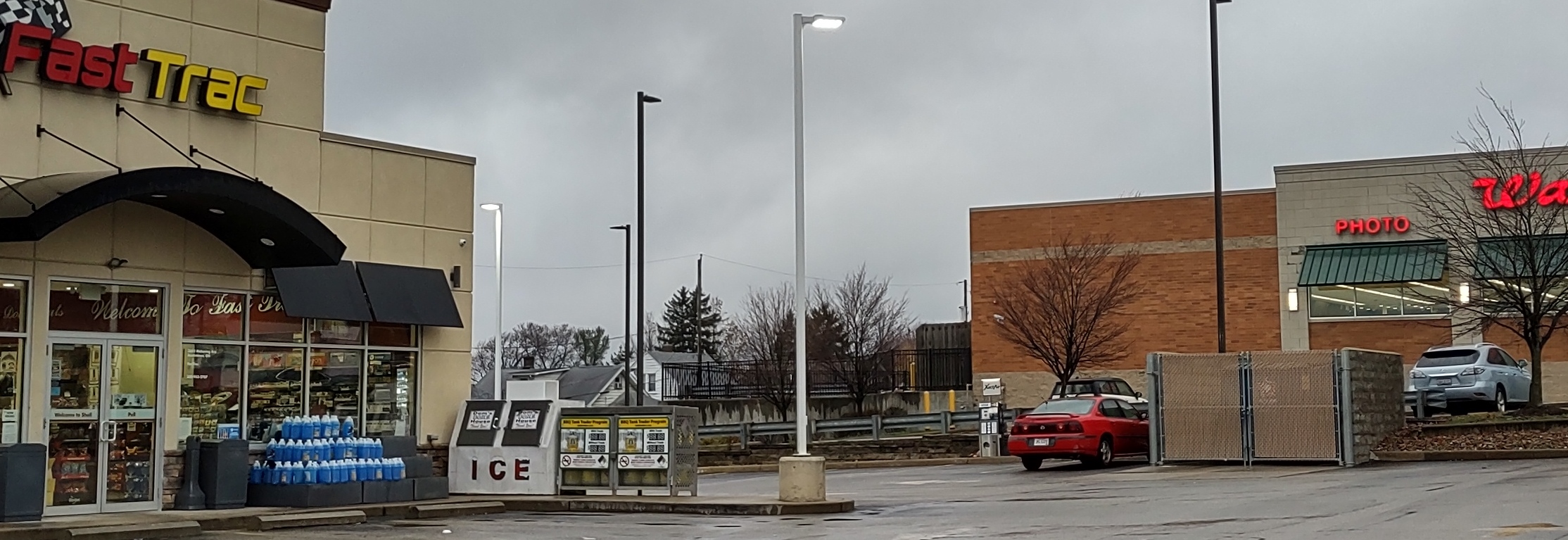
Signs tell us we are on the FastTrac and closing in.
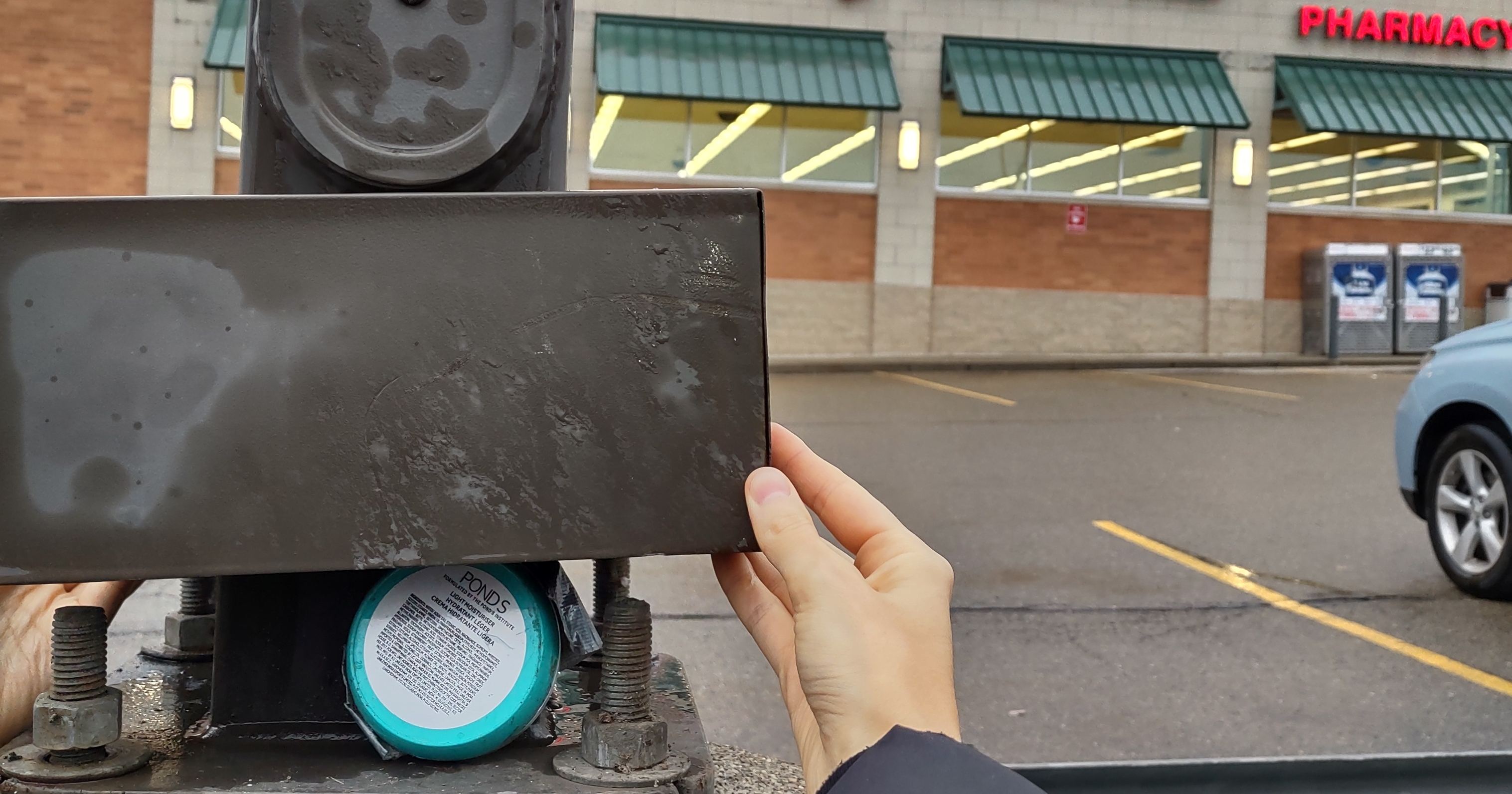
Some days, all you want is to pull up, lift a piece of metal, and find a smile.
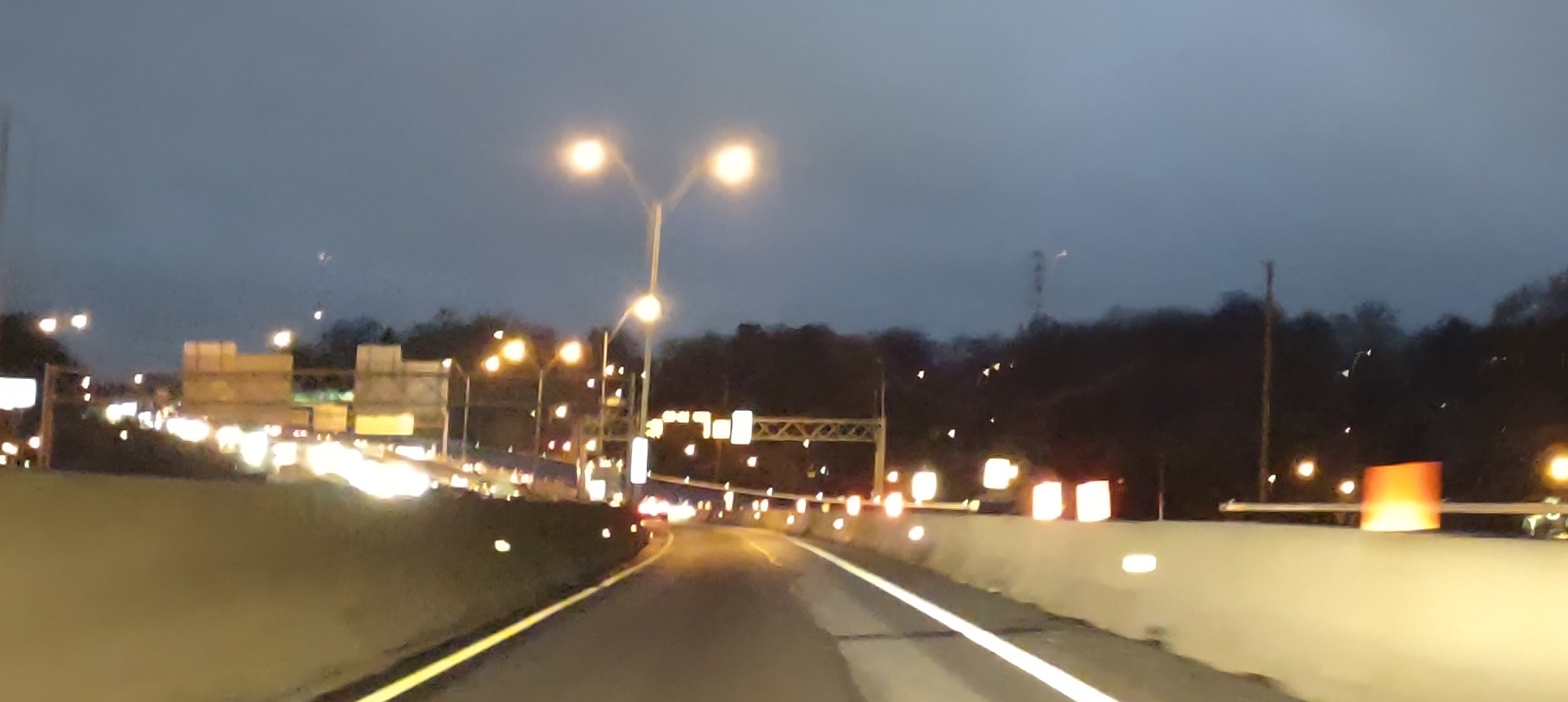
Night closes in on Youngstown. Gratitude and respect to all who fight the good fight here.
-
Calvary Hide
Turning homeward, we navigate west through Youngstown, to a snarled snafu set for us by Cache Owner Blink12oz. Placed on October 31, this weeks-old baby cache is due for a tummy tickle.
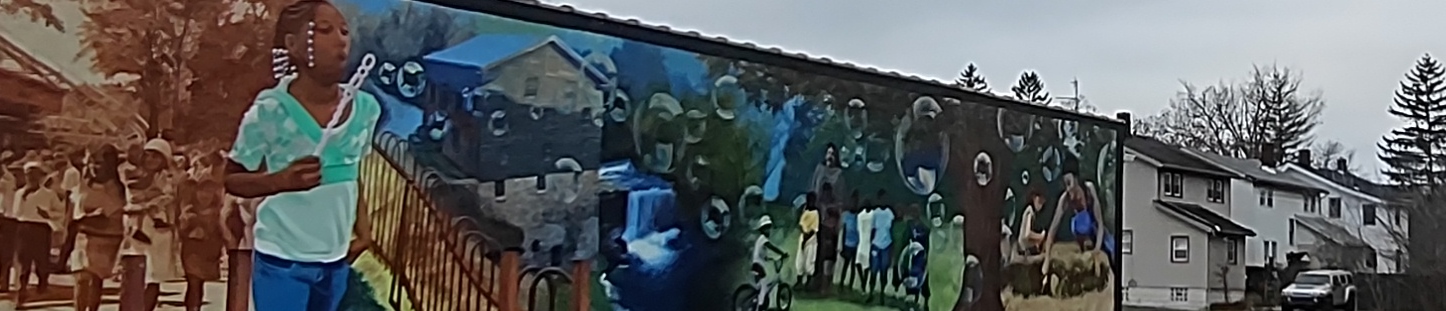
A mural of life, hope, and family floats by in jubilant bubbles.
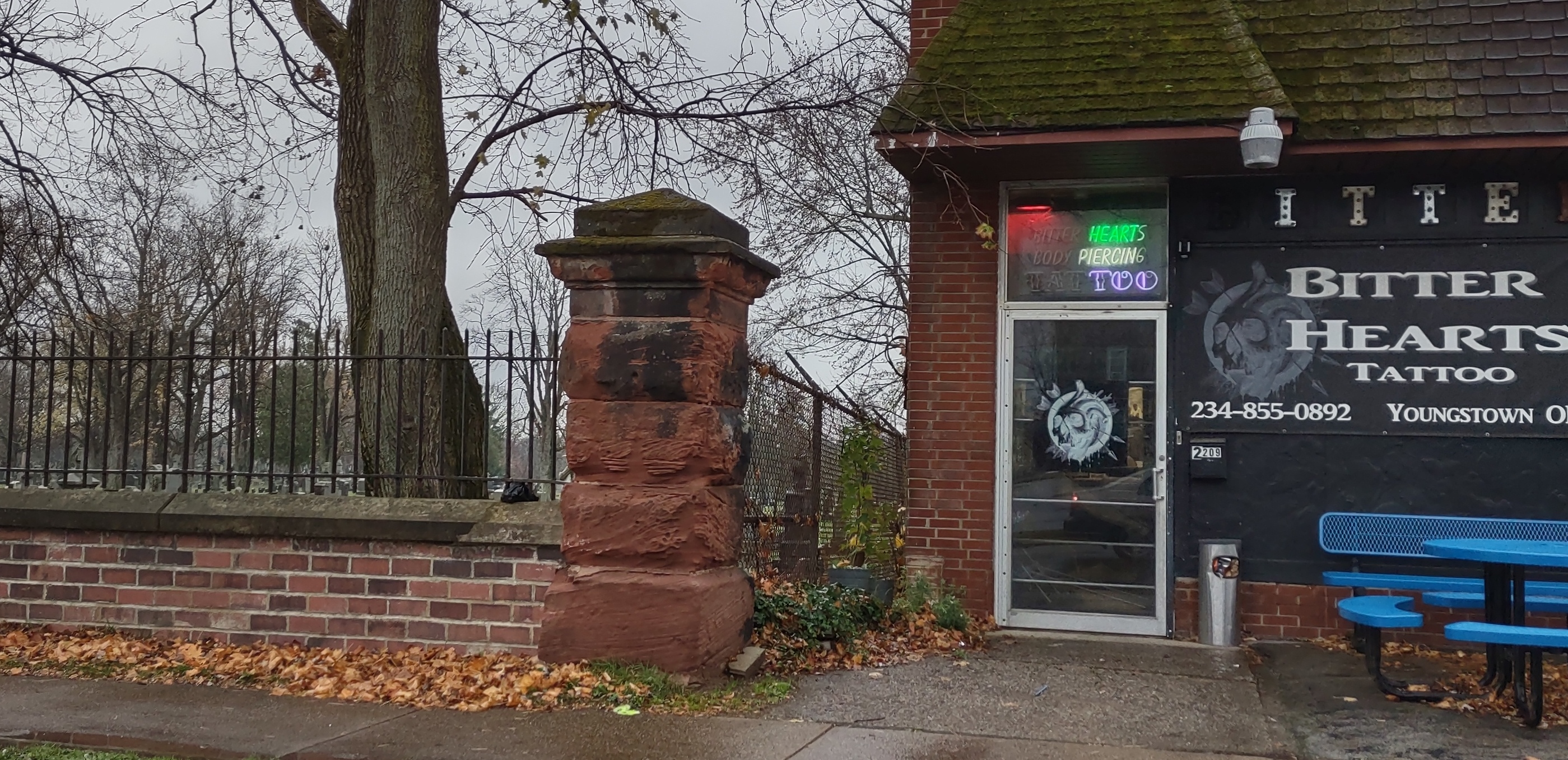
Our GPS closes in on a corner, inside a fence. With a bright blue table, the store next door promises to define who you are.
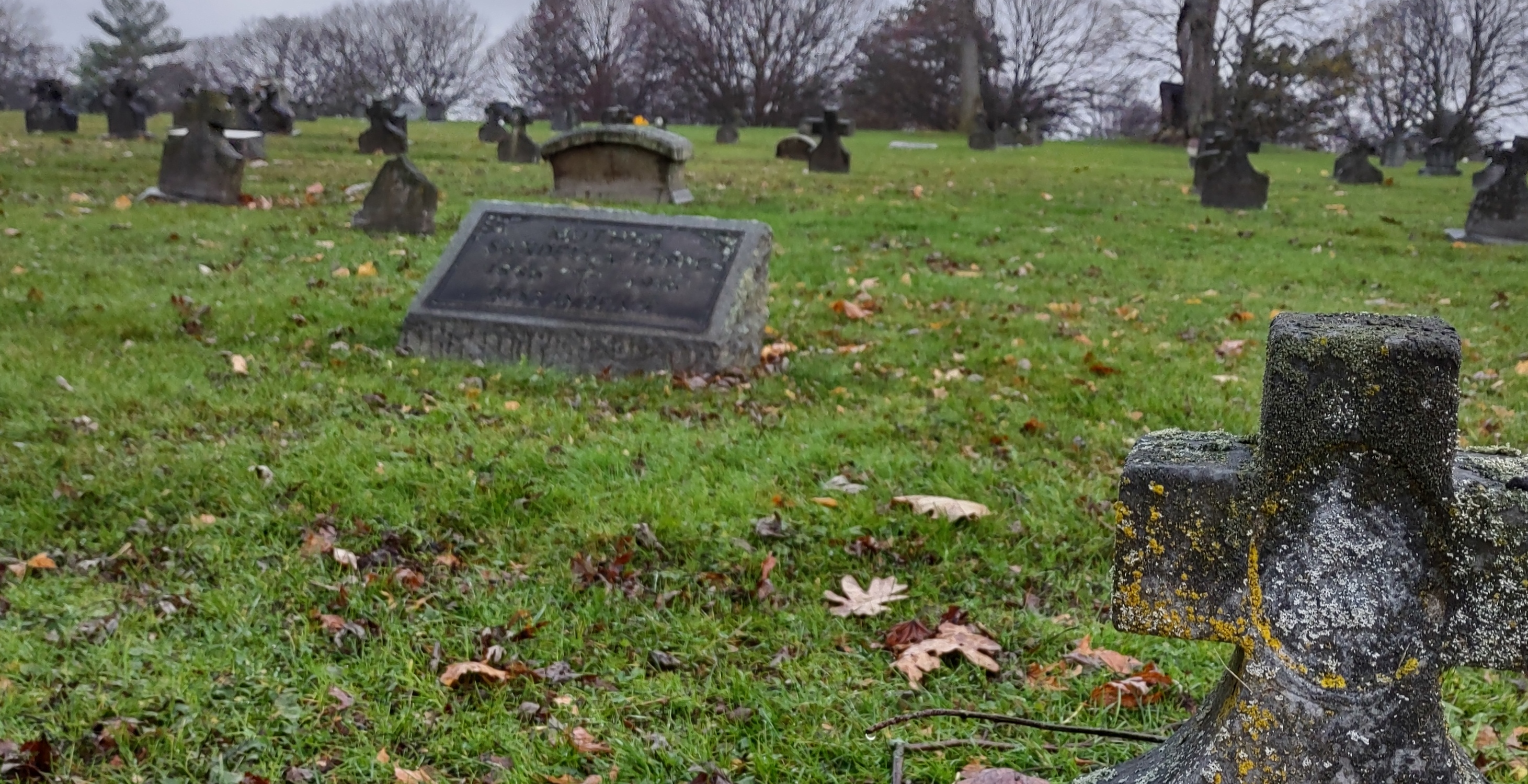
Making our way around and inside the fence, we enter another place where individuals are uniquely defined. Last messages of honor and grace name those born across the seas. Now they are the deepest roots of next generations, for whom this land will not be new.
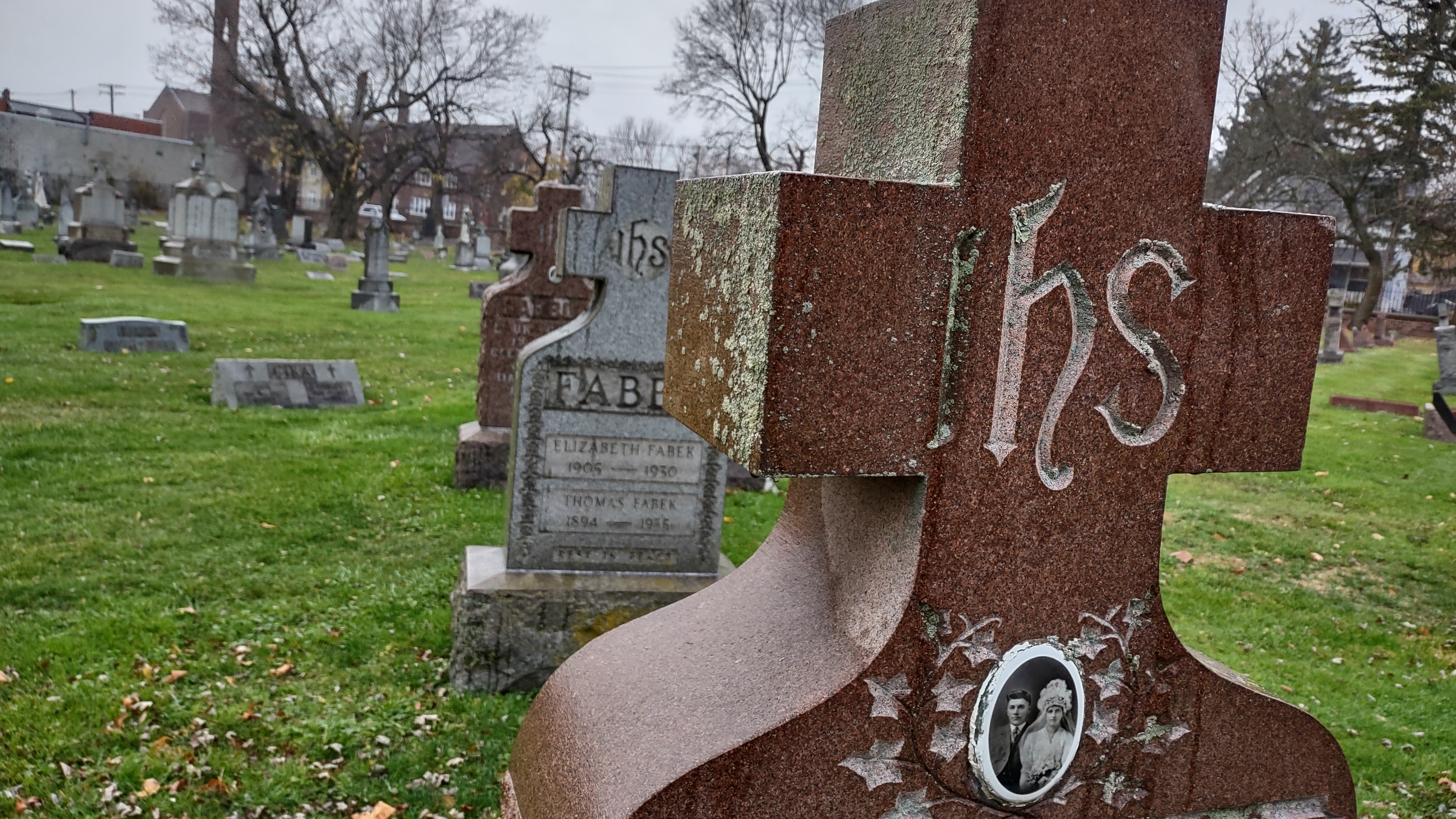
A recent cacher records that both sets of grandparents are interred here. In this most sacred of places, we pause to respect.
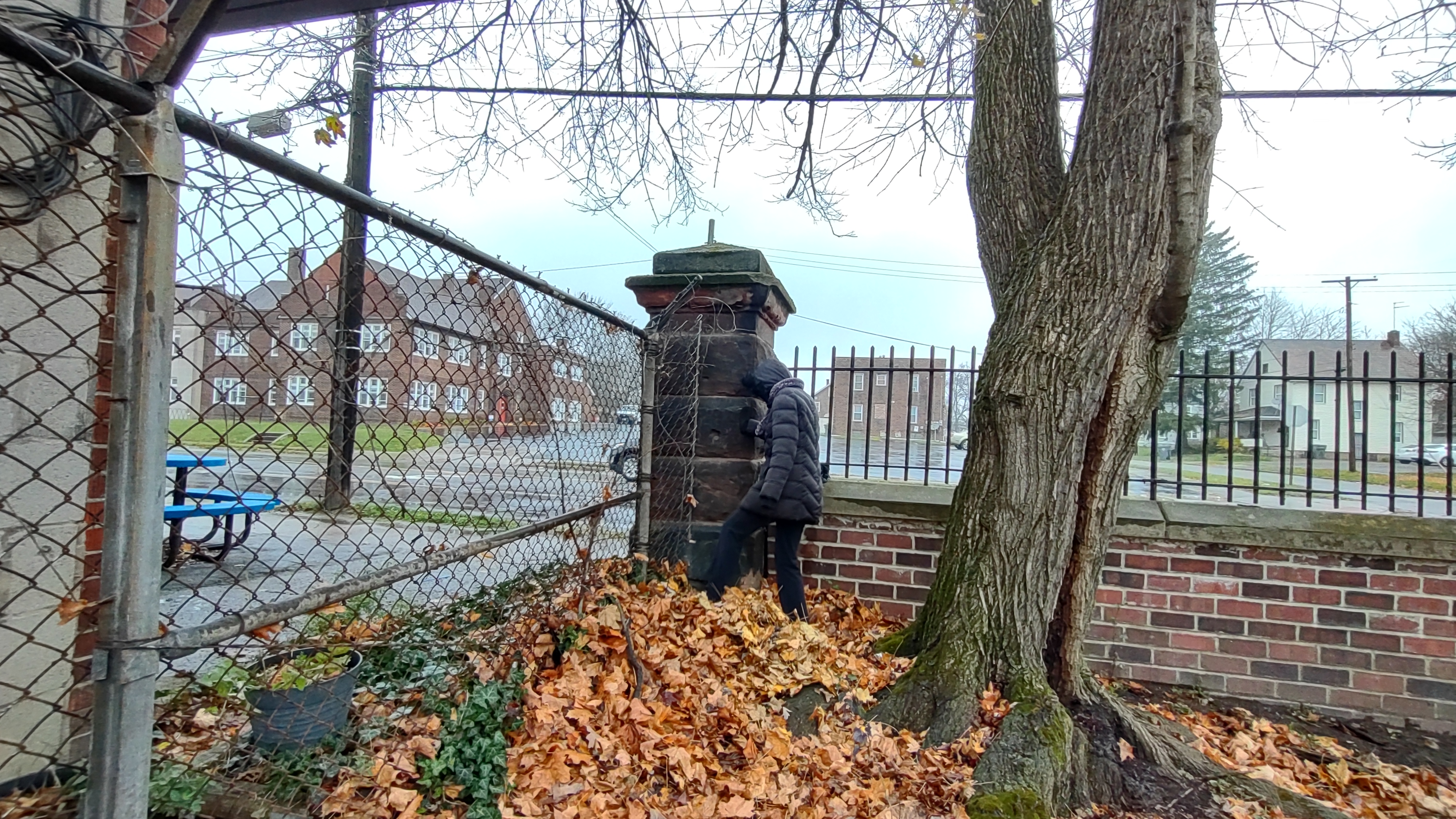
And then to wade through the wet leaves, always a sentence of doom on finding a cache. Add pouring rain, and the sentence compounds to ruination and expiration.
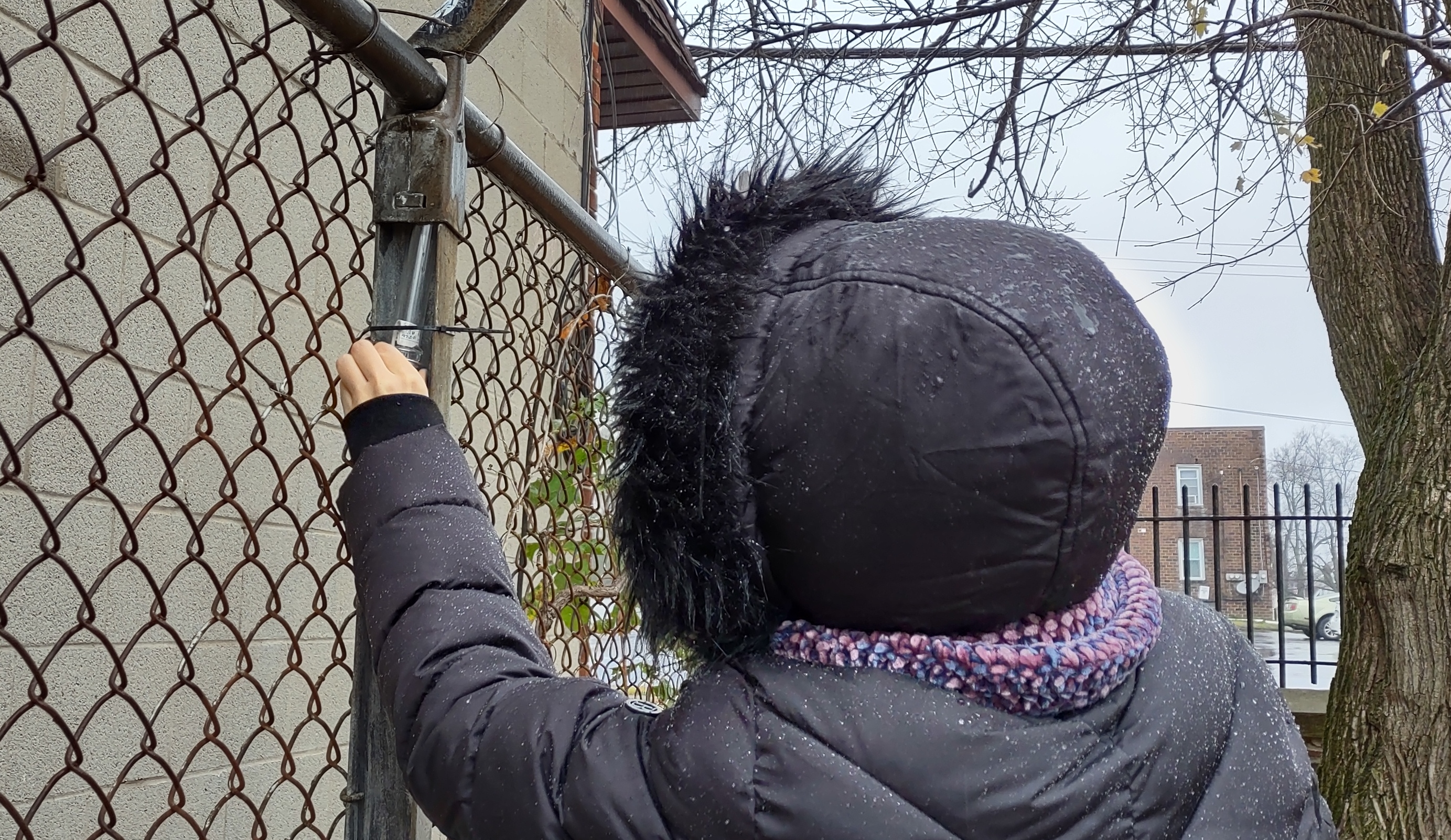
Was someone suggesting giving up?!? With feet soaking, hands shaking, and teeth rattling, as rain turns to snow, we tuck baby back to sleep.
-
Those Who Served
We put on our battle gear to stalk the cache left by Cache Owner YSUFAN in 2017, honoring those who served in both war and peace.
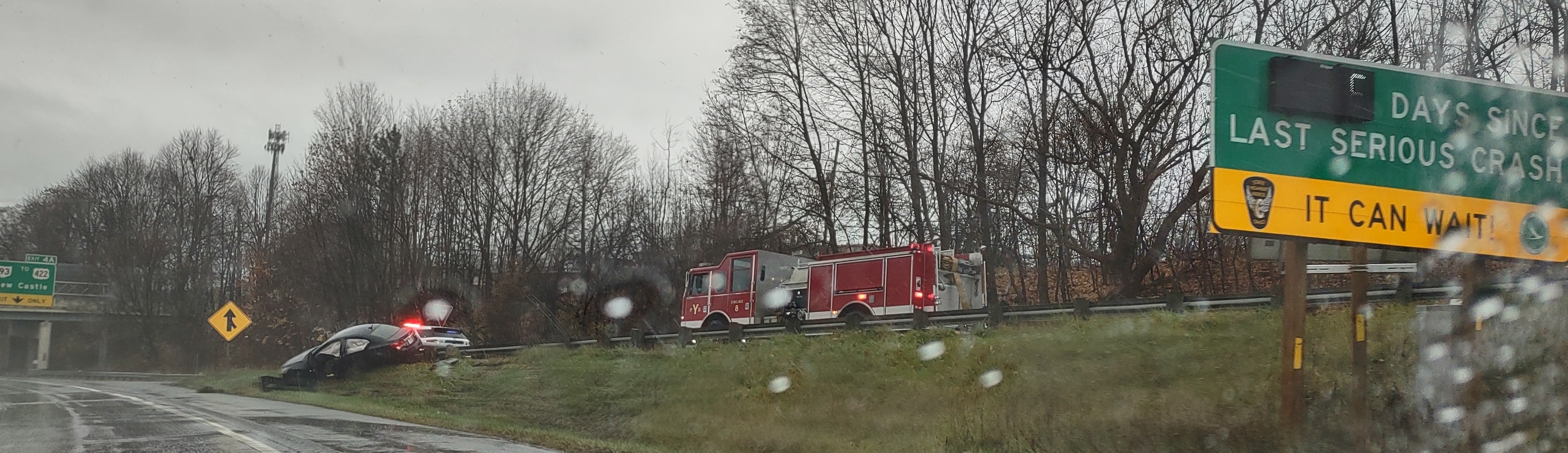
On the trail toward that invisible boundary known as the state line, we pay homage to the heroes serving today, in rain, snow, sleet, and hail, rescuing, resuscitating, and reassuring.
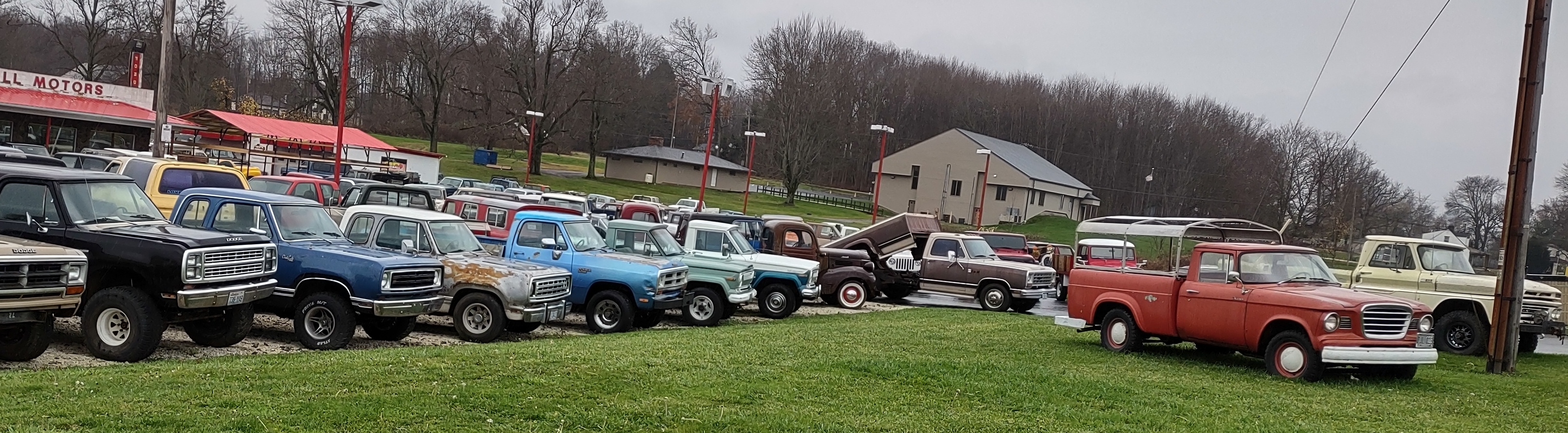
Local inhabitants speak through their vehicles. Like their rural owners, trucks connected to the land are weather-worn, practical, and tough.
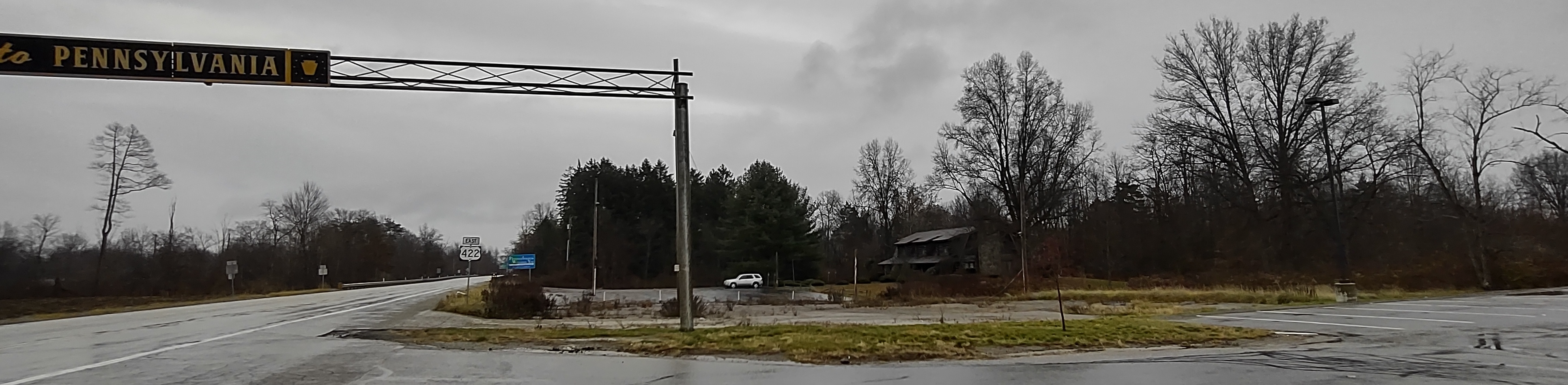
And here we reach State’s End. In the Declaration 250 years ago, a group of Free and Independent States claimed full Power to do all Acts and Things which Independent States may of right do. While at the same time remaining the thirteen united states of America. Subsequent differences over enslaved peoples, and growing centers of urban power, divided states against each other. The Civil War compelled a new definition of loyalty to one nation under God, indivisible.
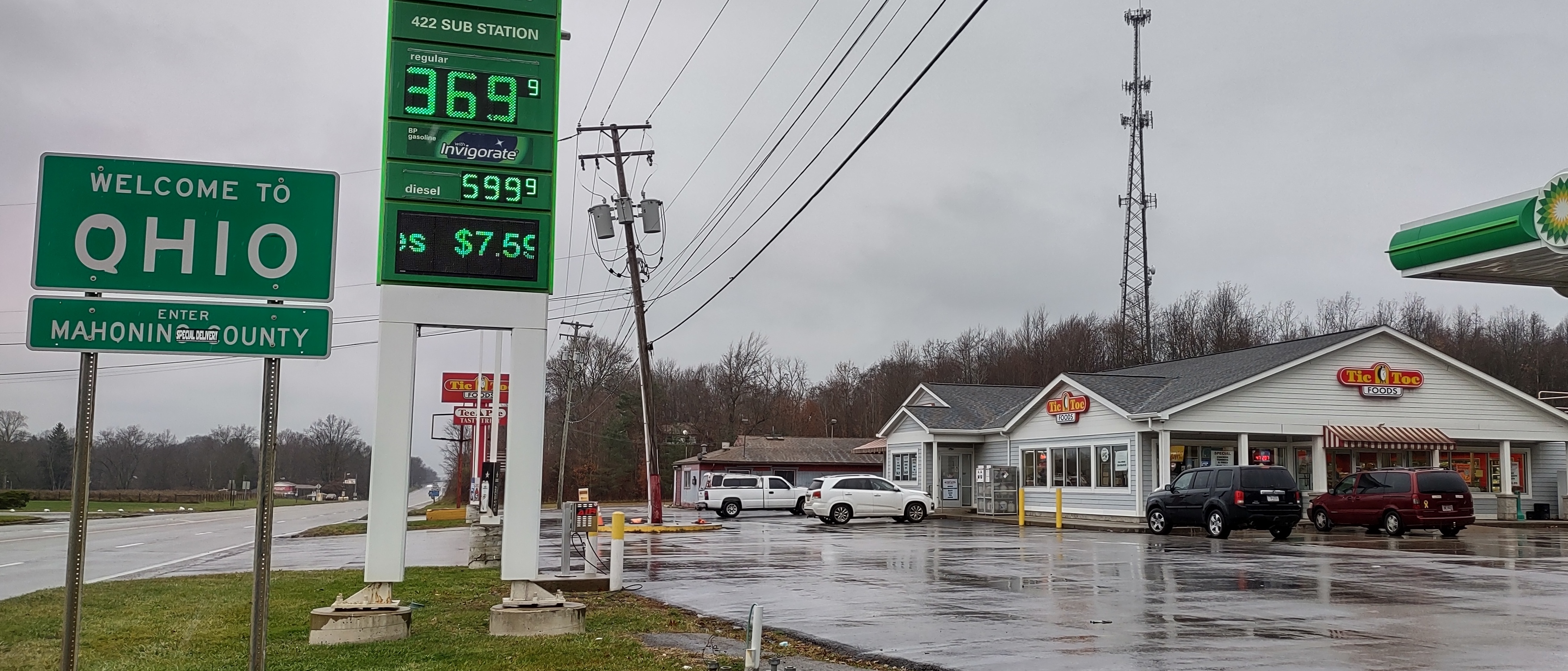
Along this boundary line, questions of law divide. On one side, if you are male, you must be 18 to get married. Step over the line, and you may now marry at 16, if your parents agree. Divorce on one side costs $317 to file. On the other side, pay only $175. Would you rather be an Eastern Hemlock . . . or a Buckeye?
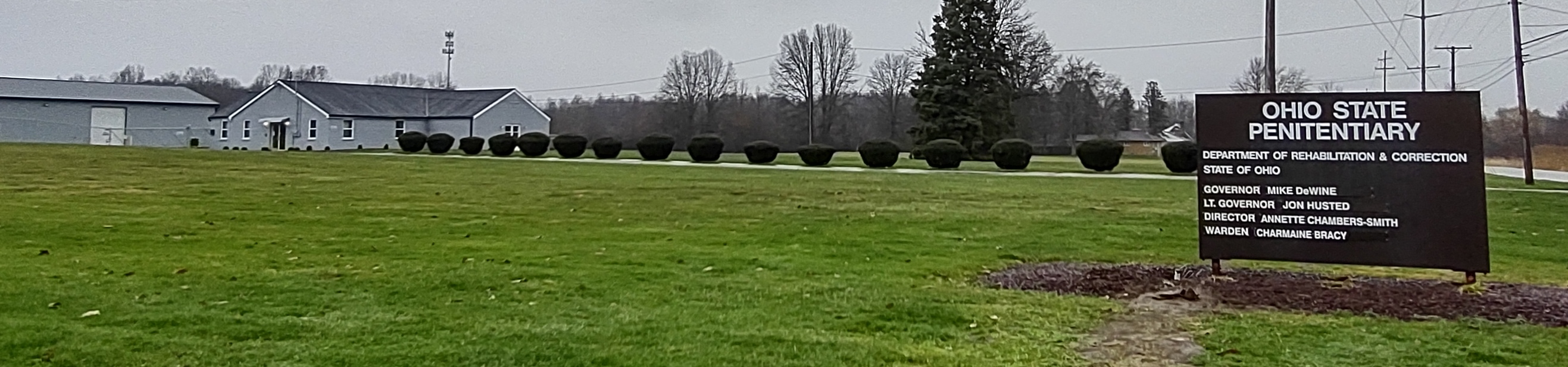
In a landscape that is both mystical and compellingly functional, each state thus manages the order and well-being of its citizenry, deriving its powers from the consent of the governed, maintaining tension with an ever more powerful national government.
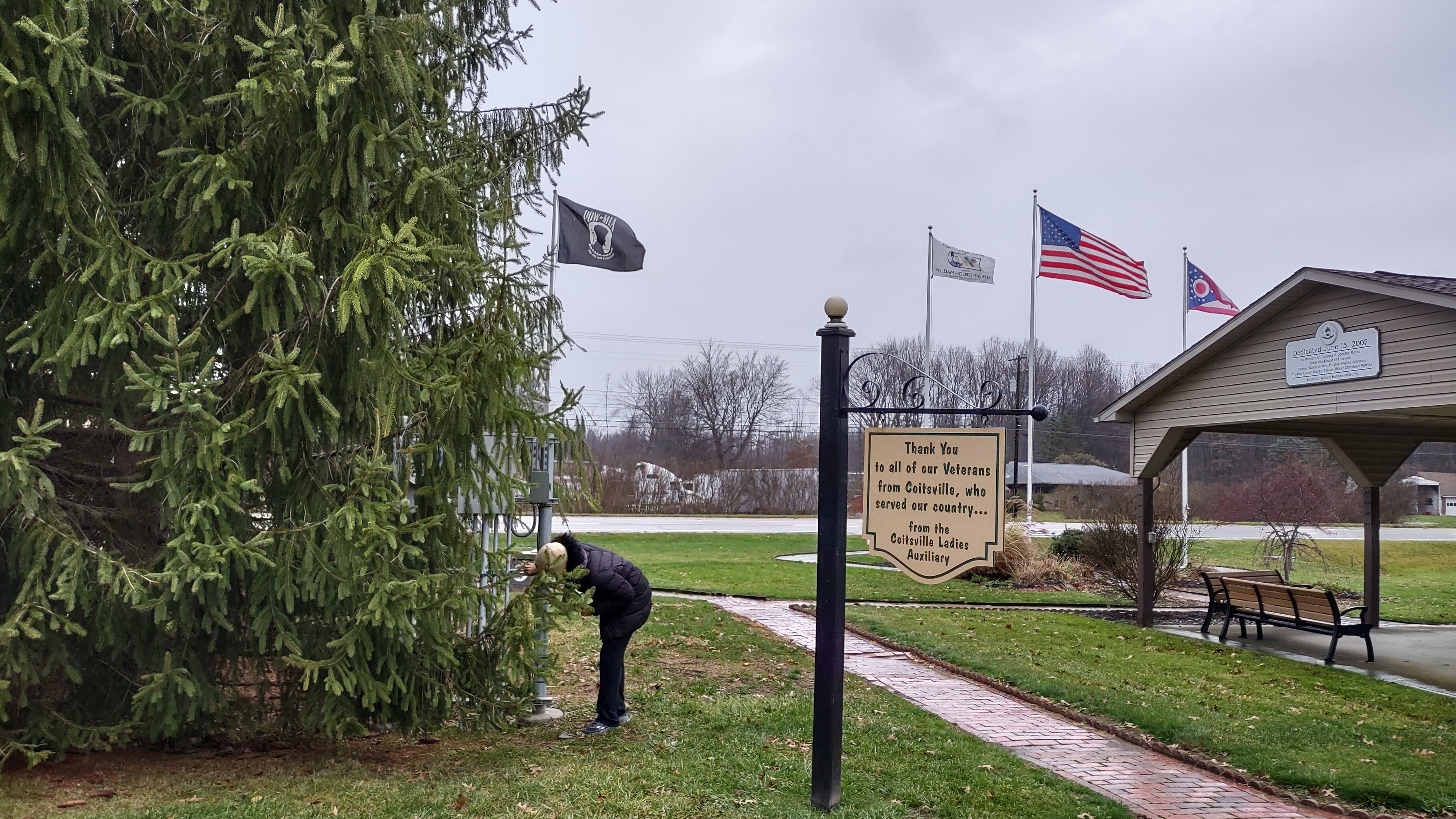
Following the call of our coordinates, we backtrack west, where clouds and wind raise the banners of our state.
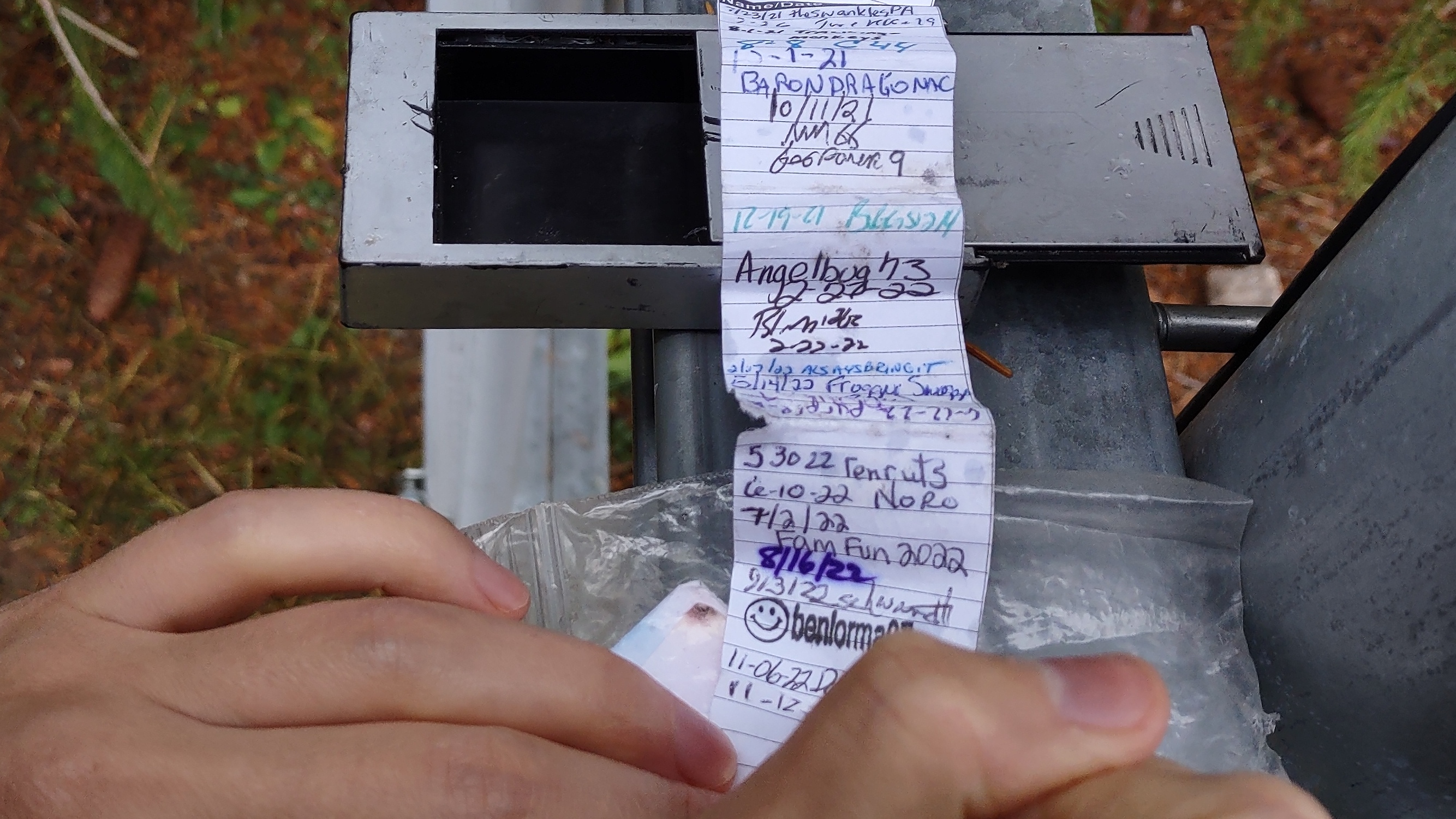
The kaleidoscope of signatures greets. Always room for one more signer on this thank-you card.
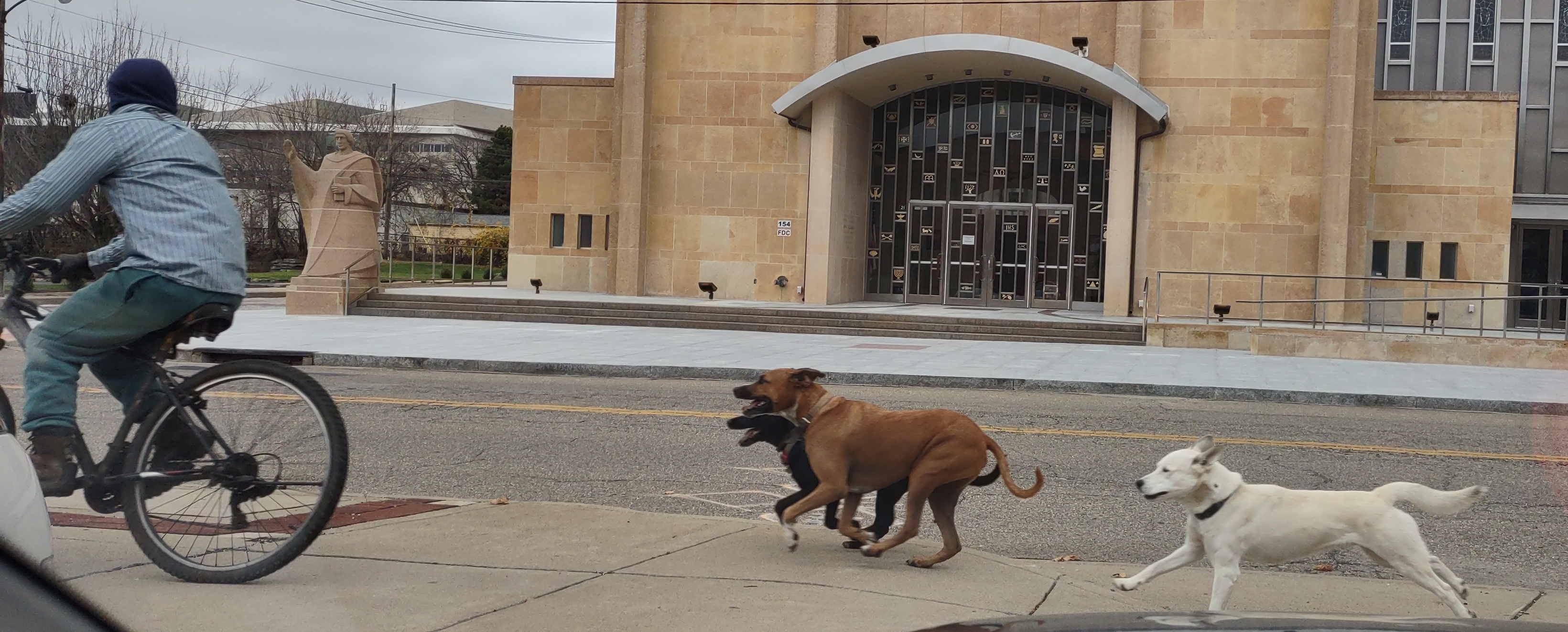
As we circle back through Youngstown, our happiest Ohioans give us a bonus smiley.
-
Magdalana’s Cache
Cache Owner Blink12oz has placed a baby cache only five months old. We will find it for Magdalana.
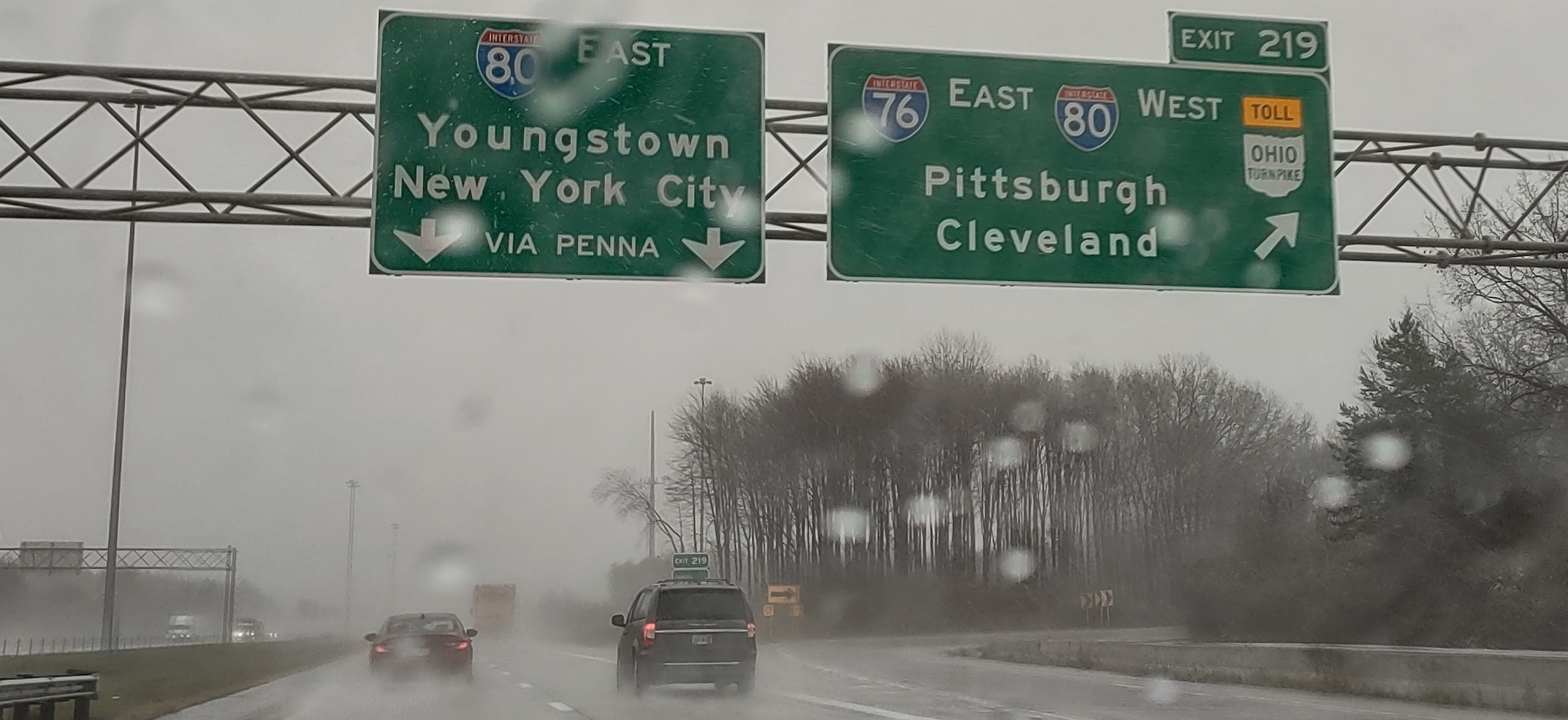
The rains heralding snow connect us to celestial movements and graces.
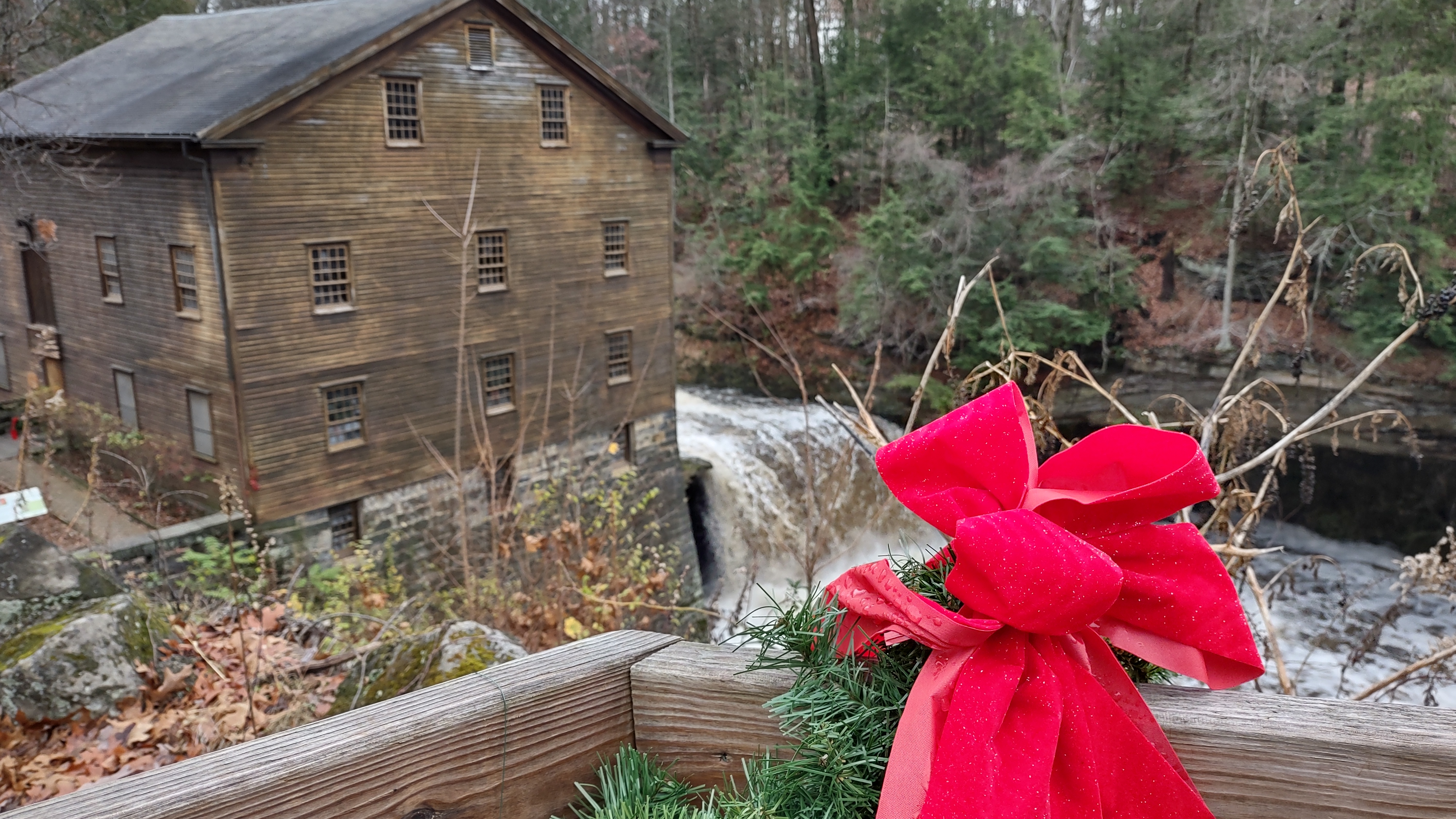
During our final visit to Mill Creek Park, we circle through Lanterman’s Mill. Built in 1845, the combination of millstones, water, waterwheel, gears, and grain powered food for a hungry continent, and drove the economy throughout the Ohio valley.
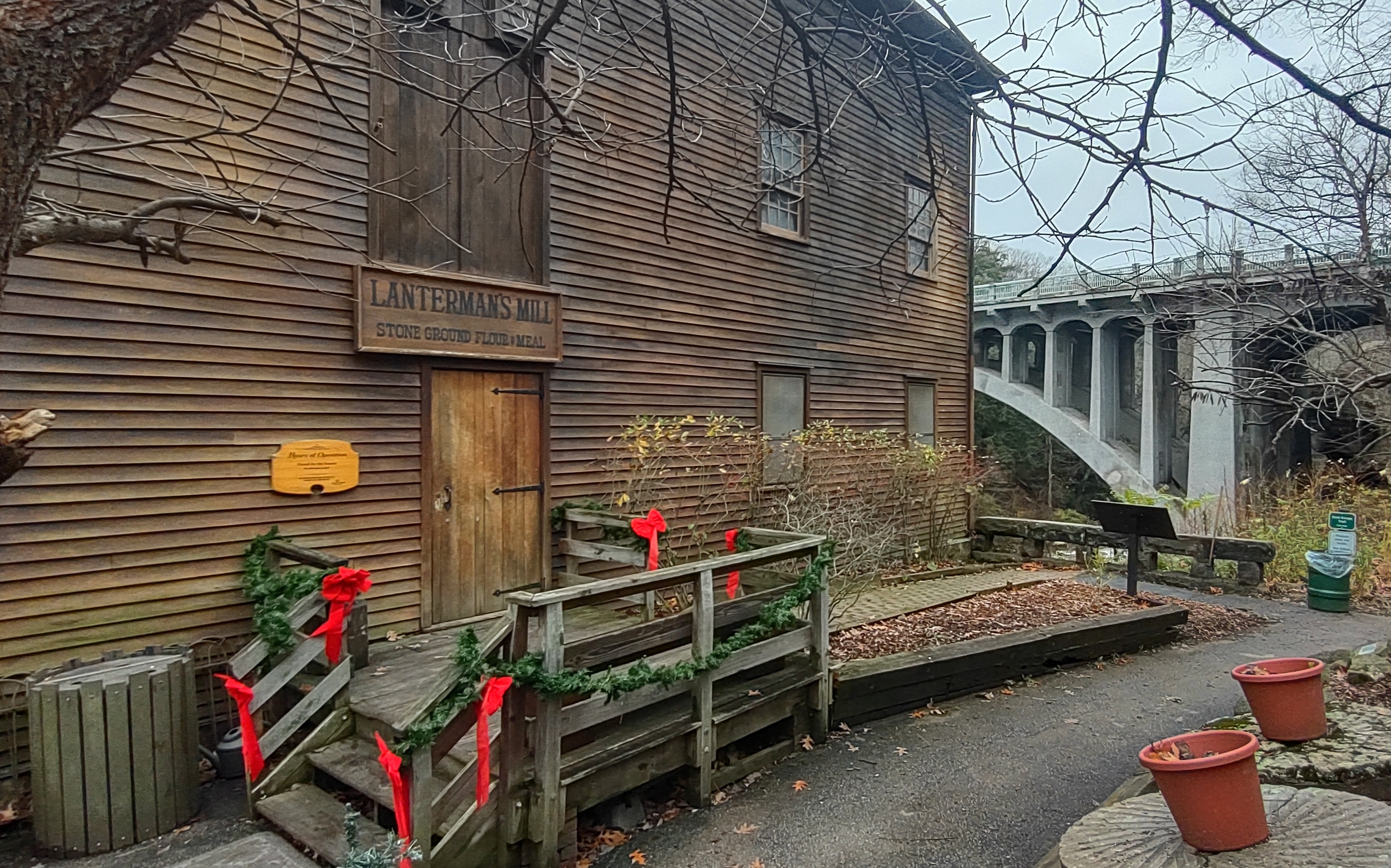
Migrating to Ohio from crowded Pennsylvania and New Jersey, German Lanterman’s parents ran a coal mining operation, which gave the kids enough capital to buy land and establish businesses. German bought the land around the falls, along with the existing logging mill. Soon he employed 80 workers in his flourishing enterprise.
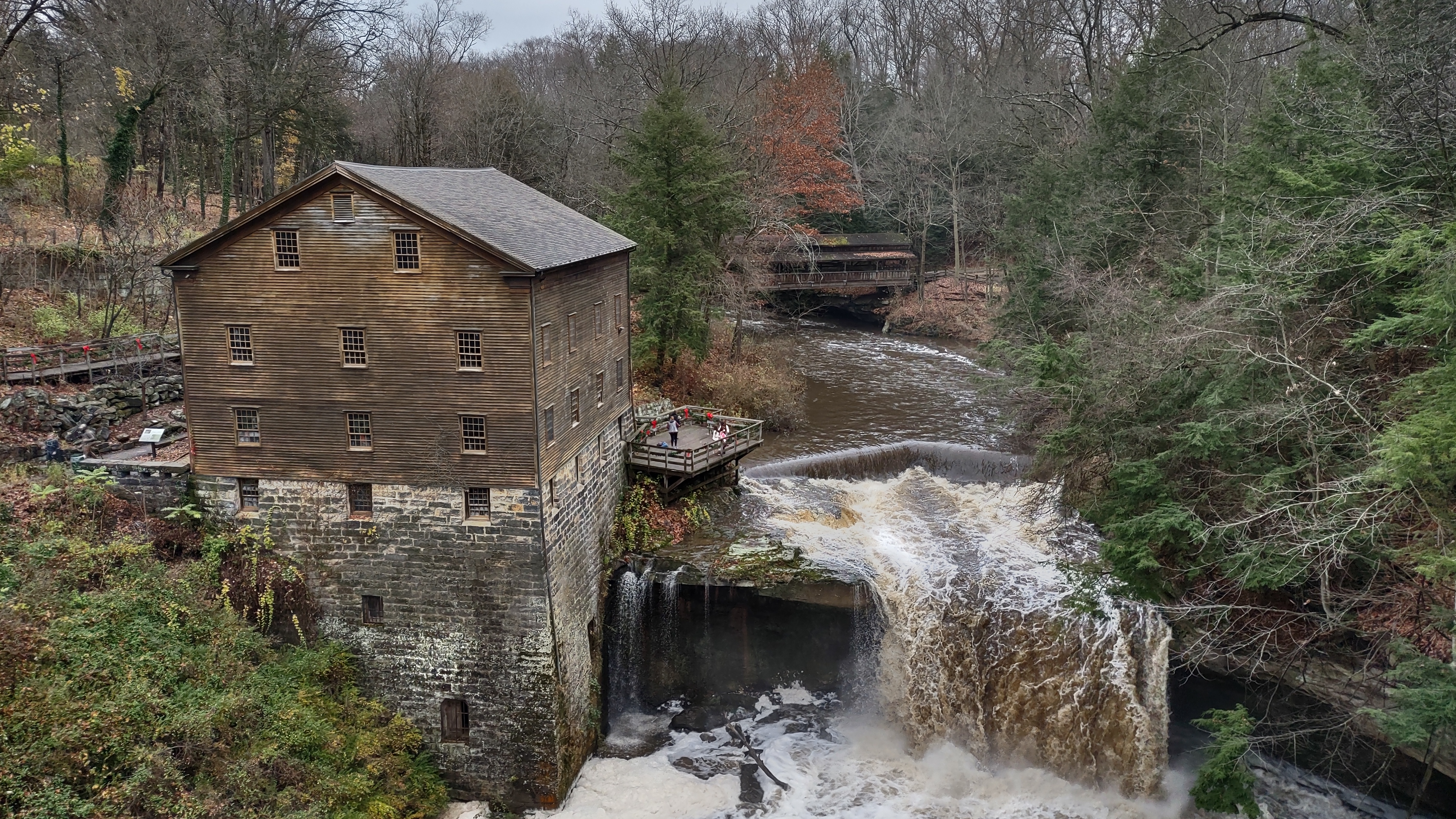
Children of electric-powered bread still come to take Christmas pictures, annual reaffirmation of the deep ties of generations to this land, and even deeper ties to the faith that has sustained through the years.
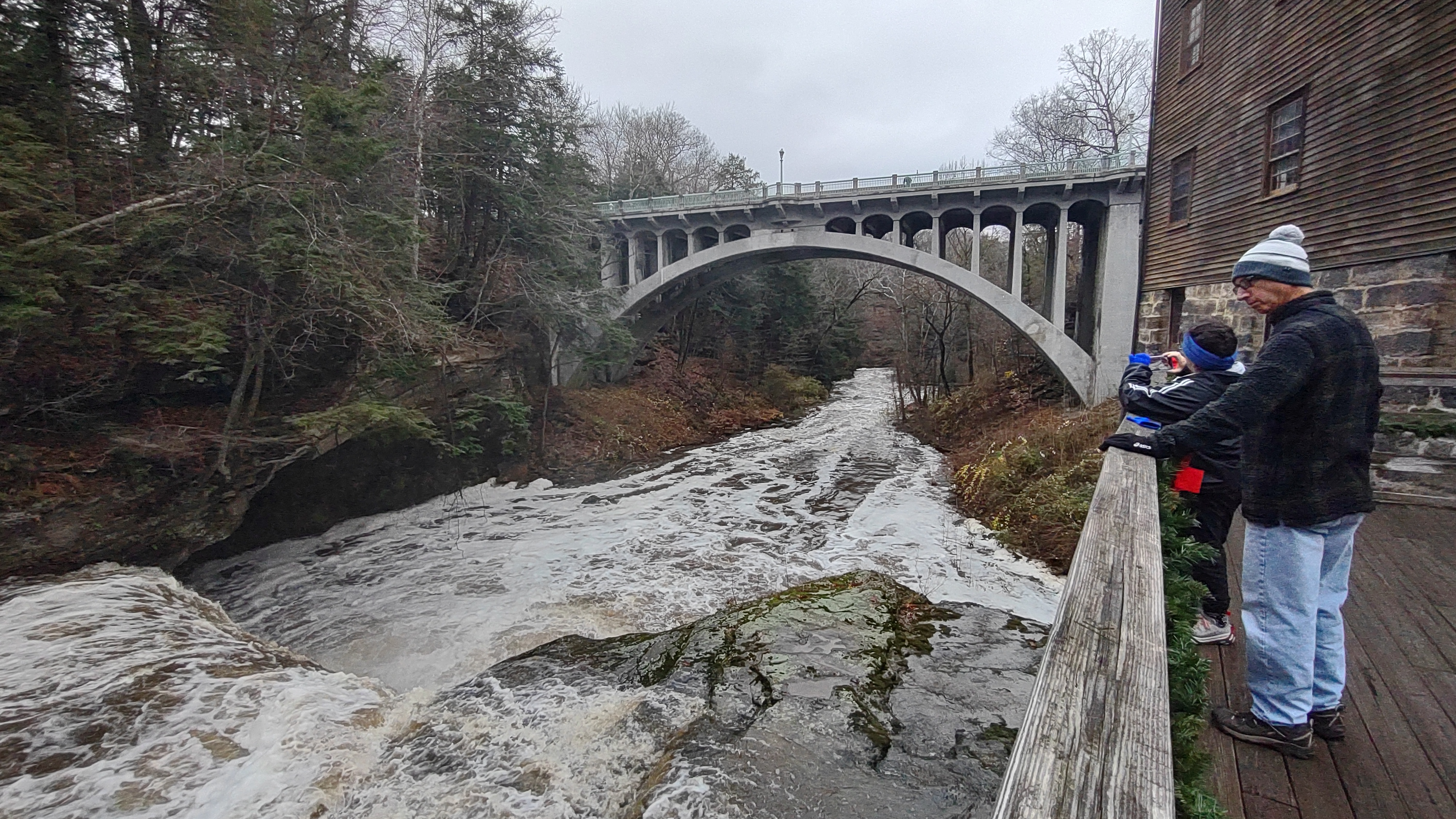
The elegant bridge, the roar of autumn rains, the creek at high tide, pull forth all cameras and, occasionally, an unshuttered, unfiltered, unsocial-media-ed eyeball. As pandemic options shrank to zero, the outdoors called. Two years later, our alfresco obsession shows no sign of subsiding.
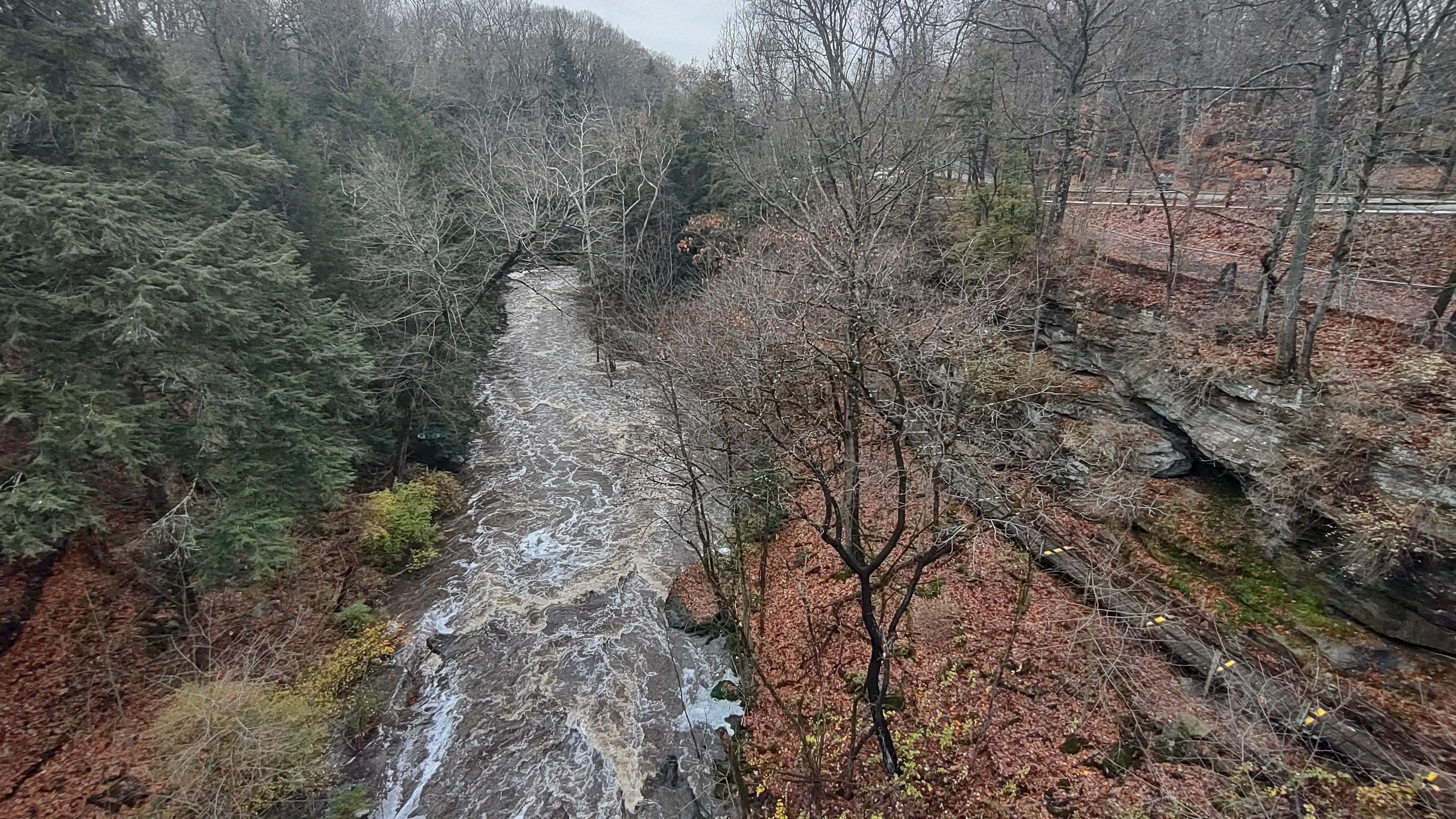
My native country, thee, land of the noble free, thy name I love.
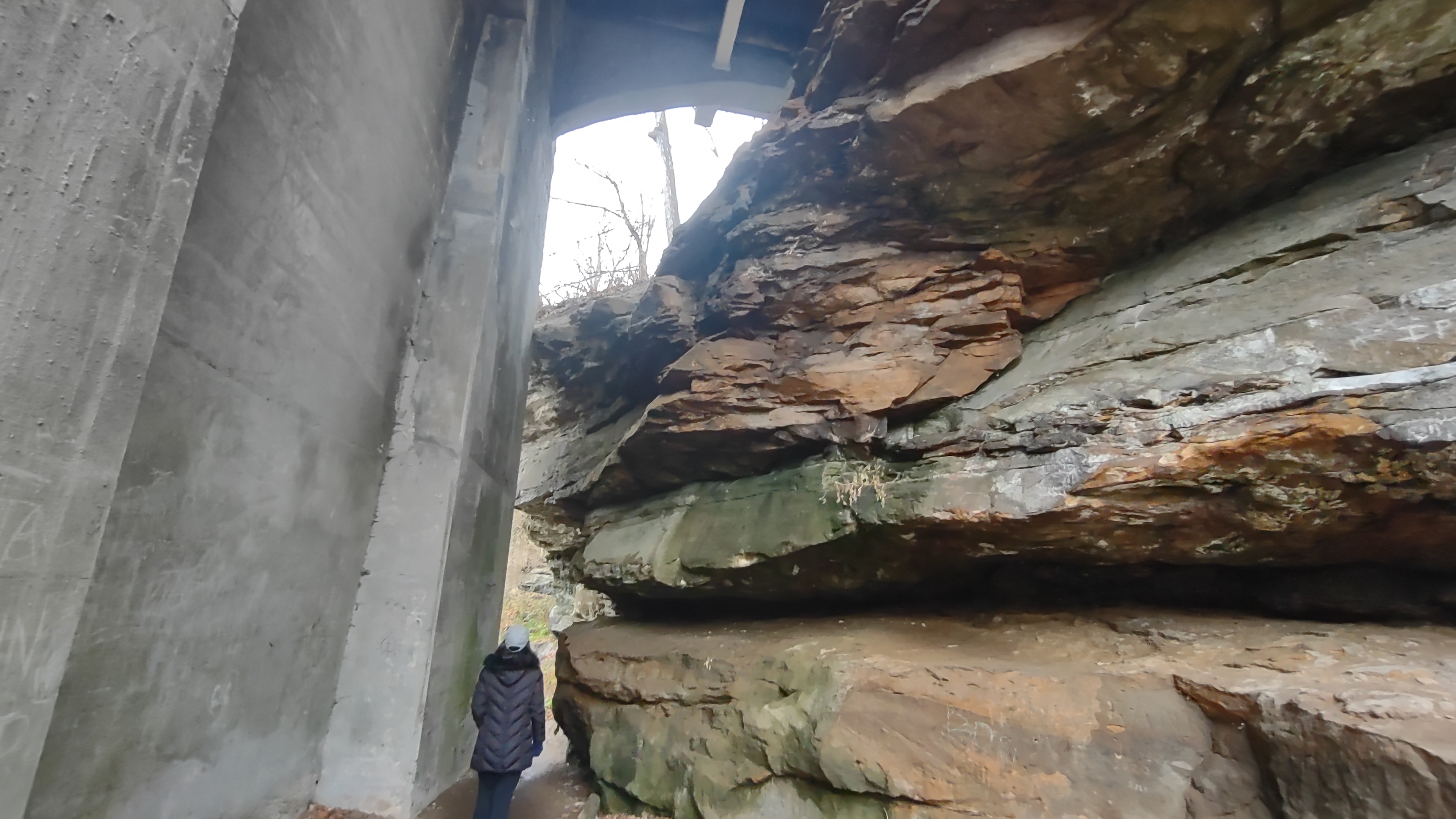
I love thy rocks and rills, thy woods and templed hills; my heart with rapture fills like that above.
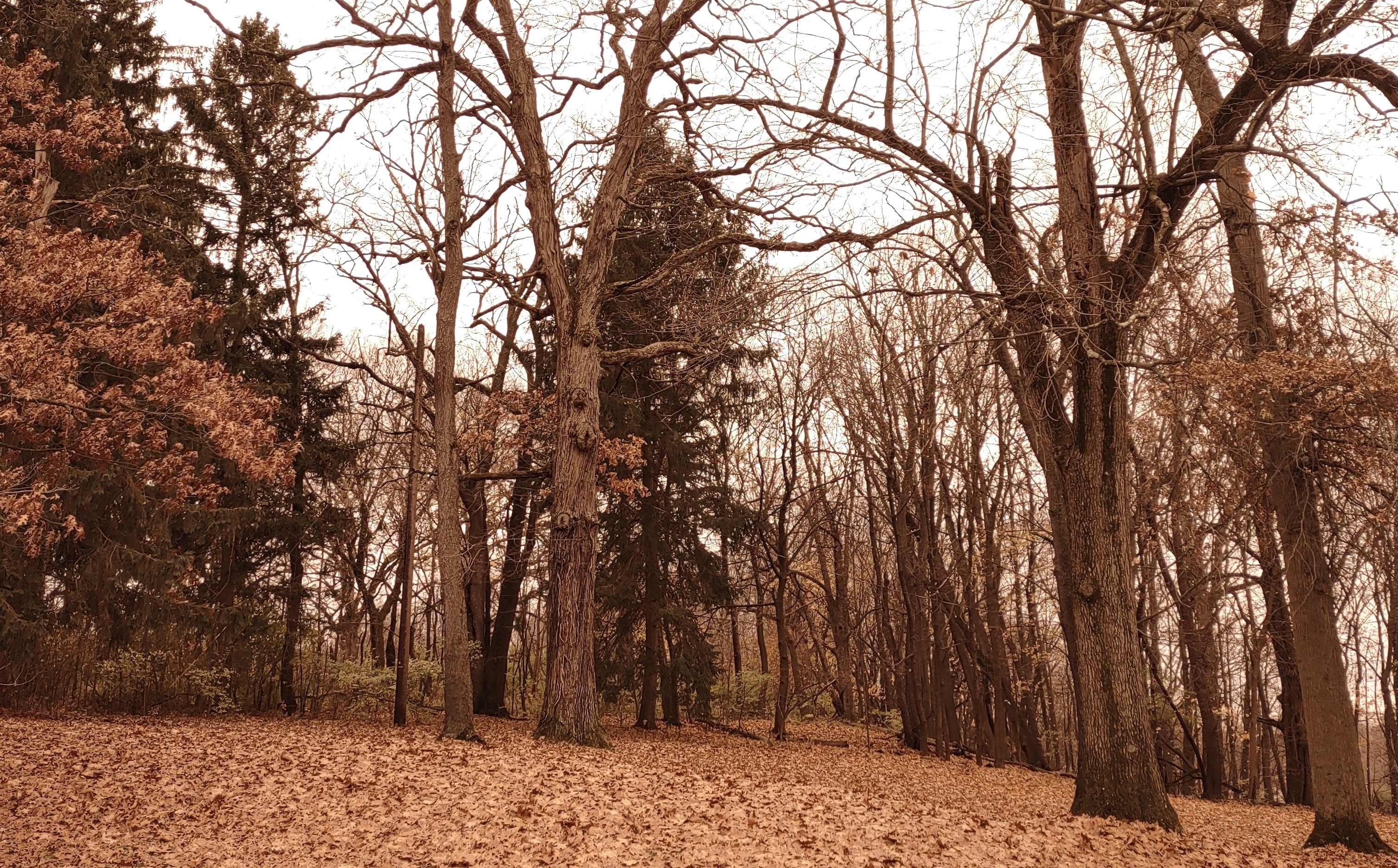
Tugging us away from the creek, our geotrail weaves an orange-brown worthy of Cleveland football. Arching branches pirouette, leafless, on the winter stage.
Cache logs tell us that a transmission went out on a traveler on I-80. Dad came from Michigan to get the car to the mechanic, and 27 caches were logged that day. There’s never a bad day in Cache Country.
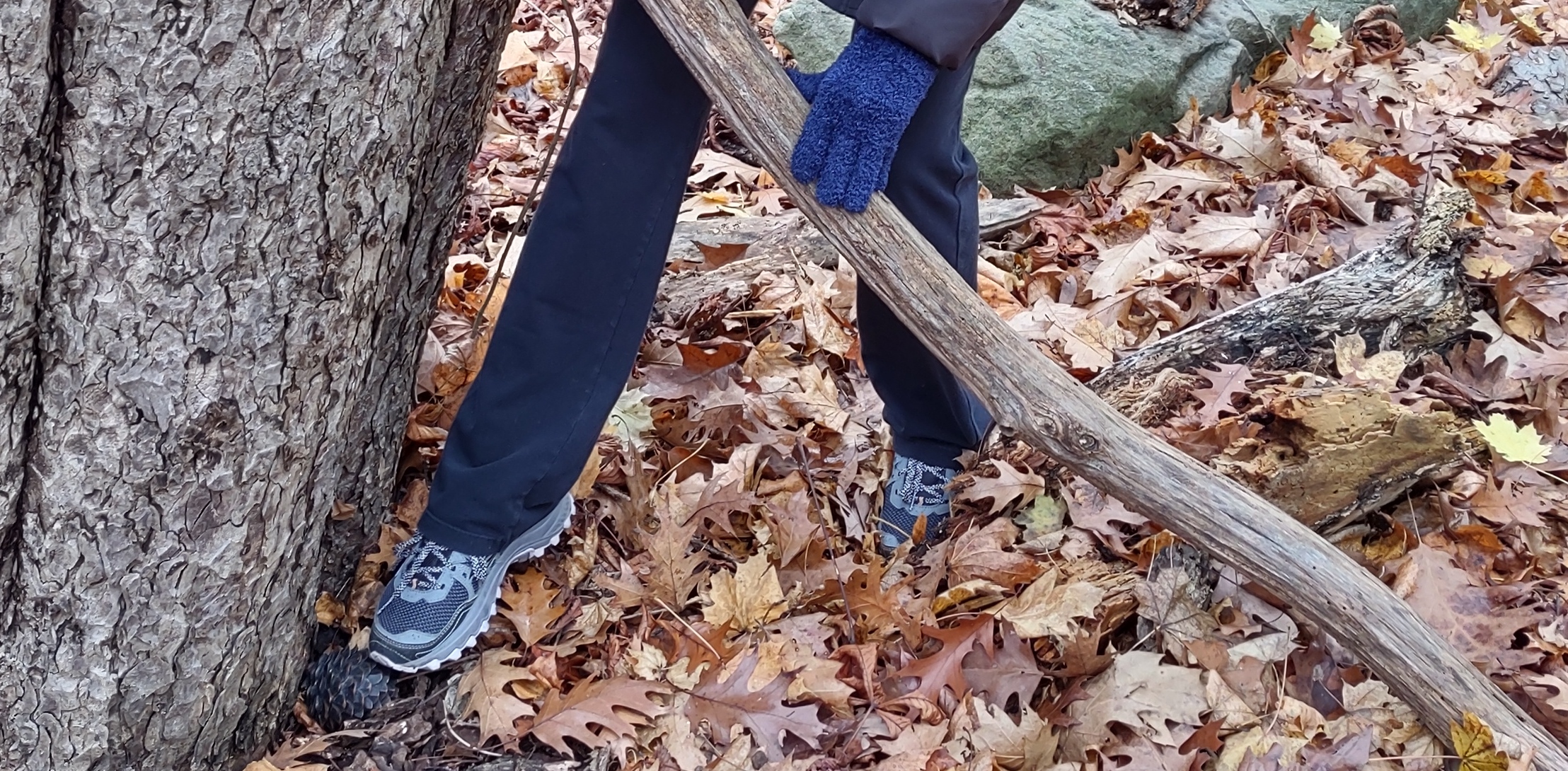
In an already busy cache log for a months-old baby, an early finder reported the coordinates were a tad bit off. The CO obligingly changed the coords by 36 feet. Later loggers politely recorded that they liked the old coords and used those.
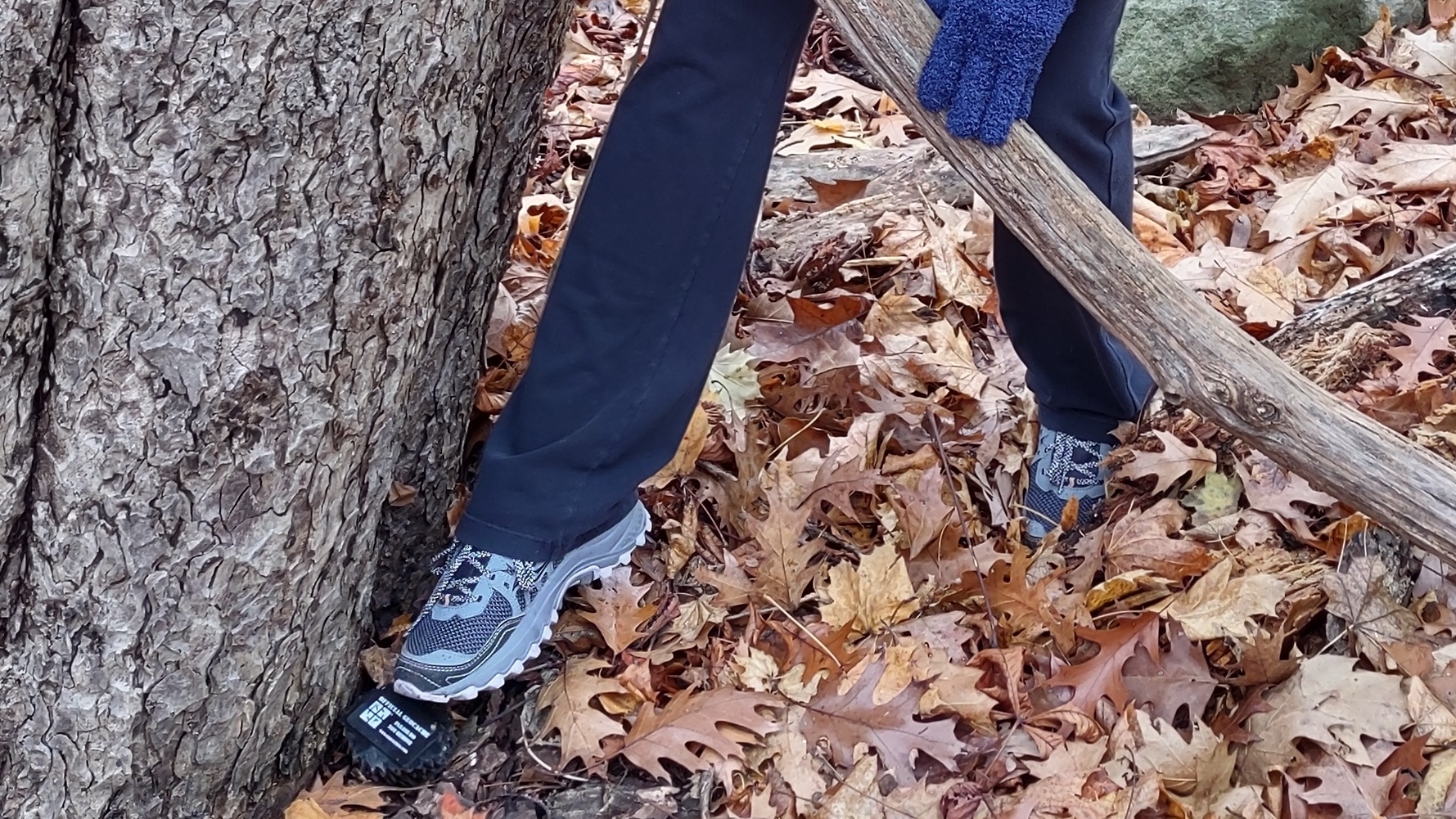
We record that this cache is absolutely perfect. A generous and creative Cache Owner heart serves up a splendid smile.
-
Golden Pond
Cache Owner short o’ cache placed then released this cache for adoption to CO skibug9 on or before 2006, making the date of birth a little smudgy.
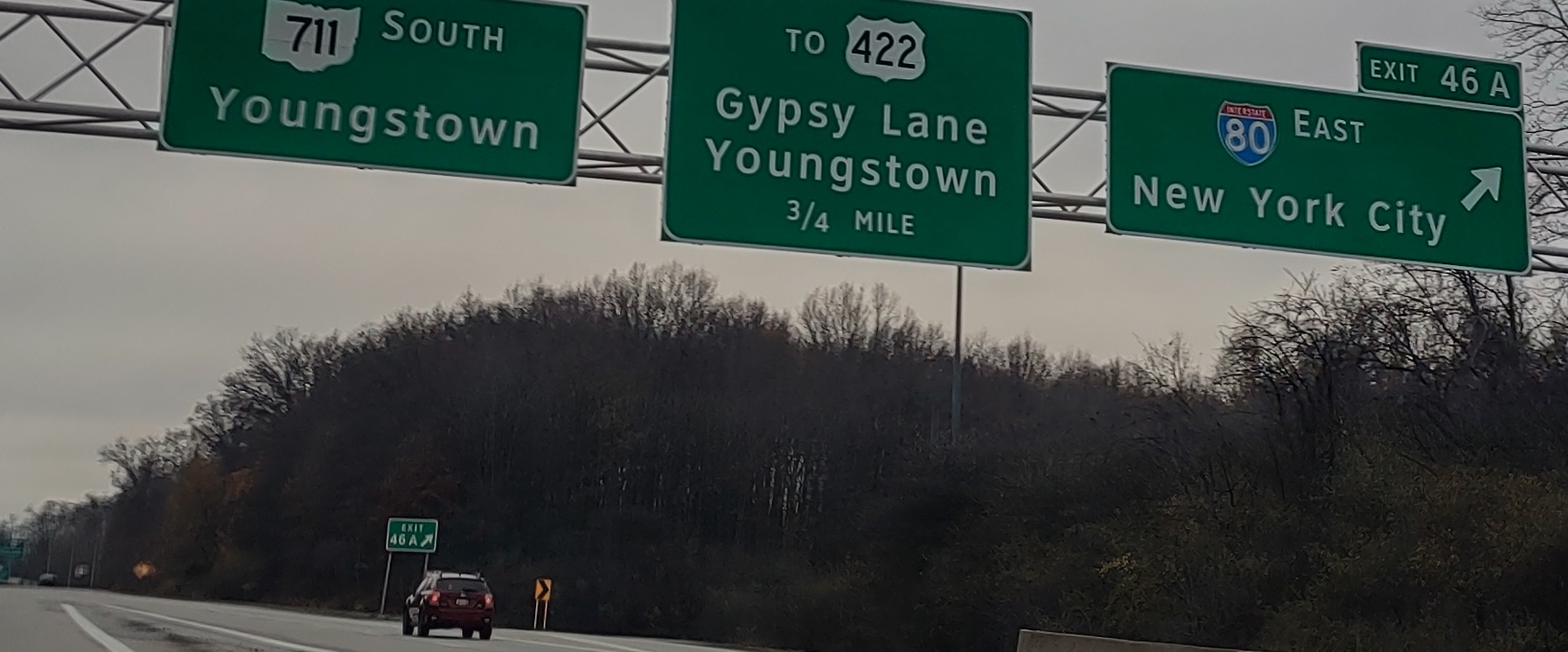
Our road leads to all roads, which lead to all other roads, interconnected in a hypnotic and irresistible web that shocked us, when it suddenly went dark on a 2020 March day. New York City will have to wait.
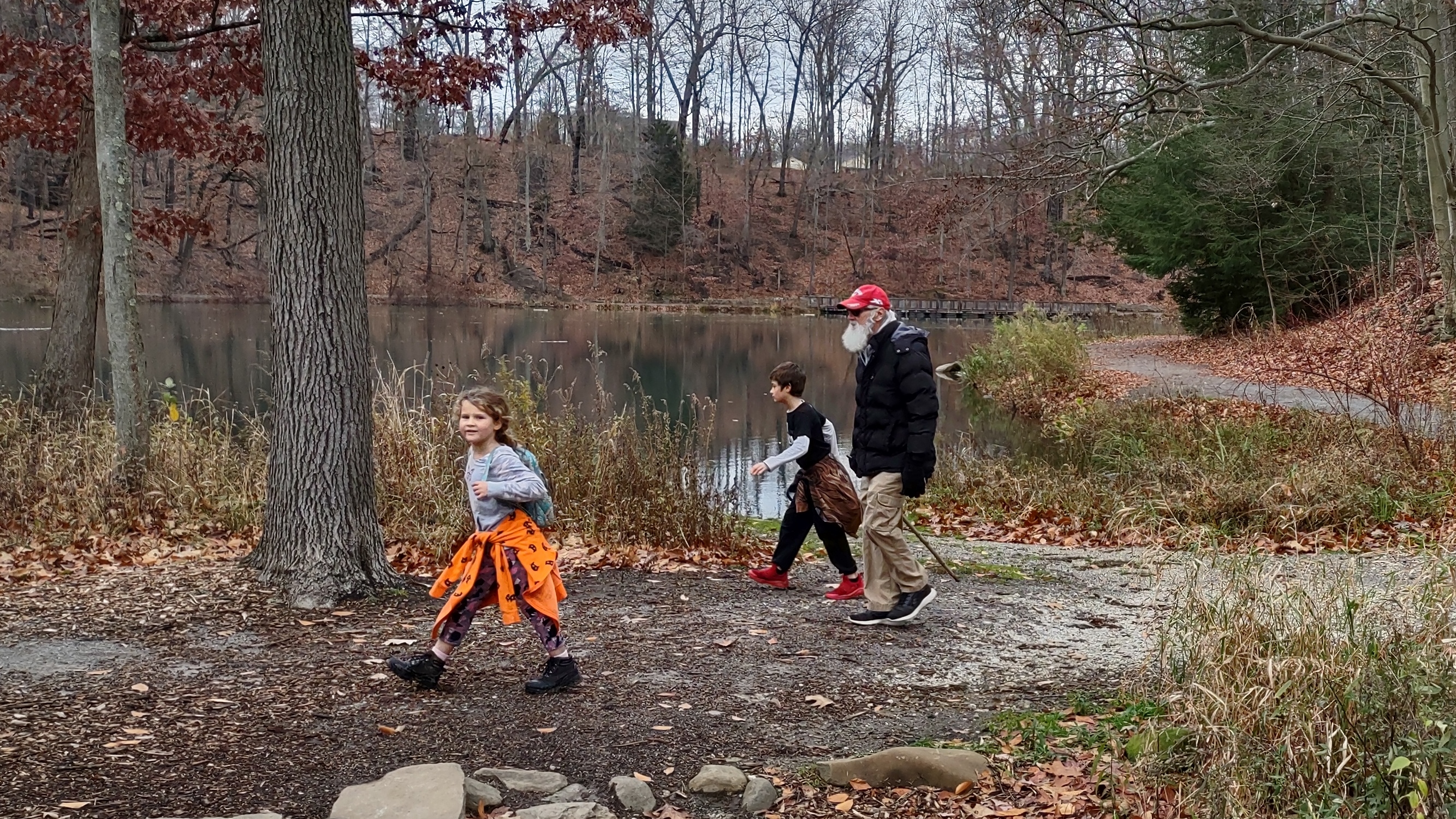
We reach Lily Pond, darkening in today’s clouds, a place where a century of children have grown into grandparents, anchored in a spot of earth.
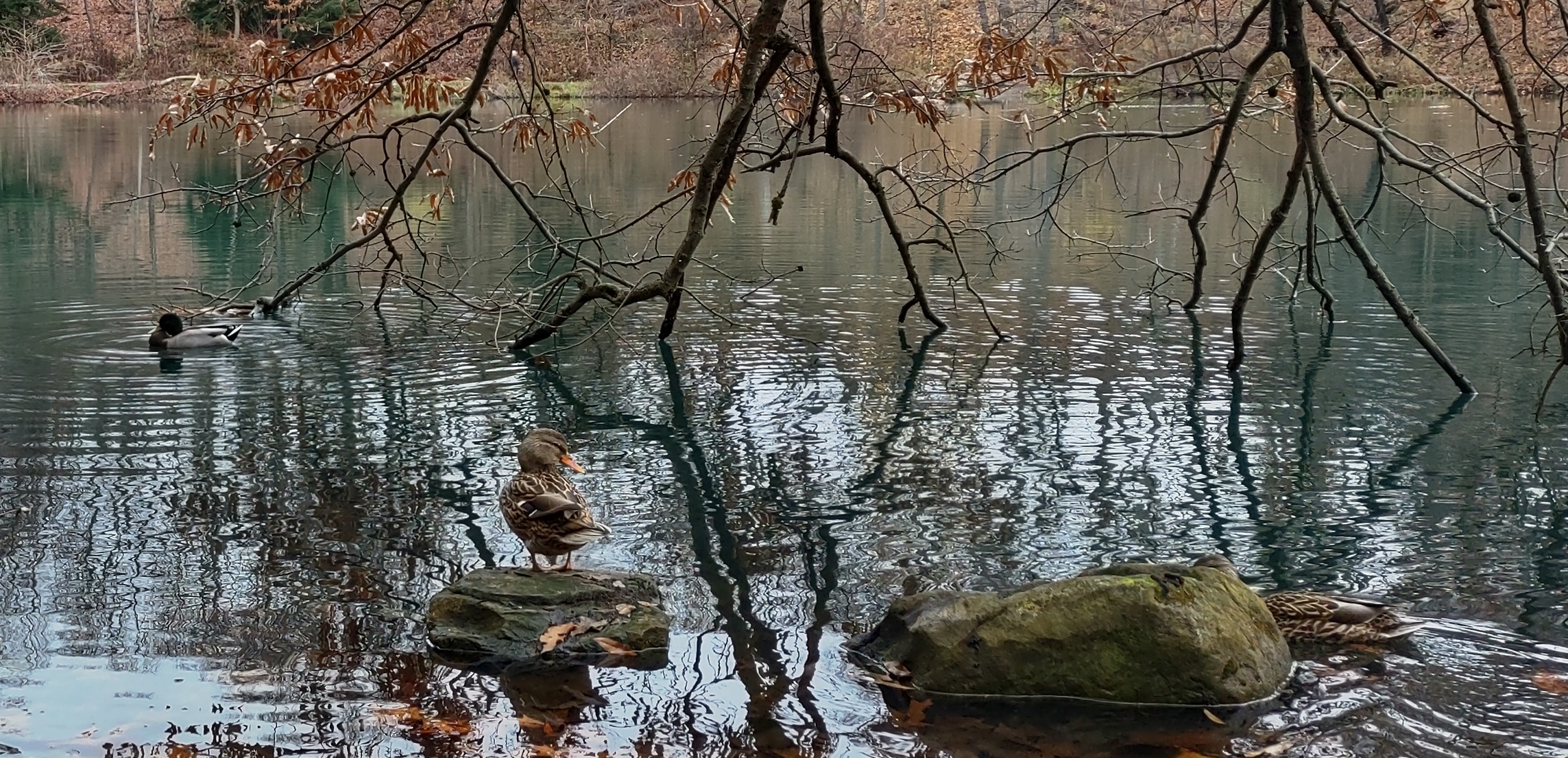
Created by Mr. Rogers in 1896, this neighborhood is populated with goldfish, carp, frogs, dragon flies, turtles, and happy ducks.
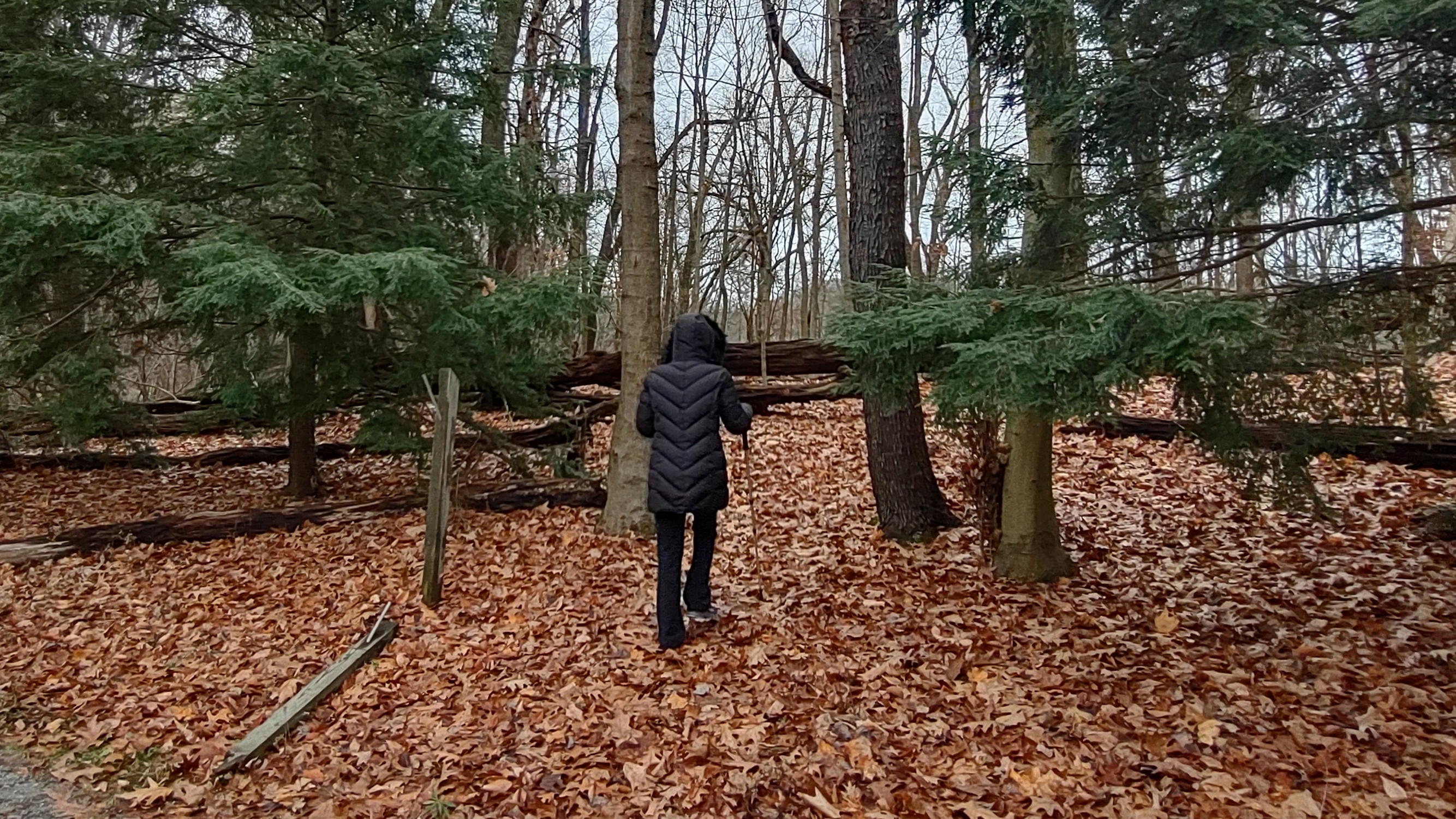
Scent of leaf mold tickles, drenched leaves smoosh, streams burble after the rain. Amidst the four geoseasons of mud, poison ivy, leaves, and snow, we are located squarely in wet leaves. Hopefully whatever is slipping and sliding under the leaves . . . stays under the leaves.
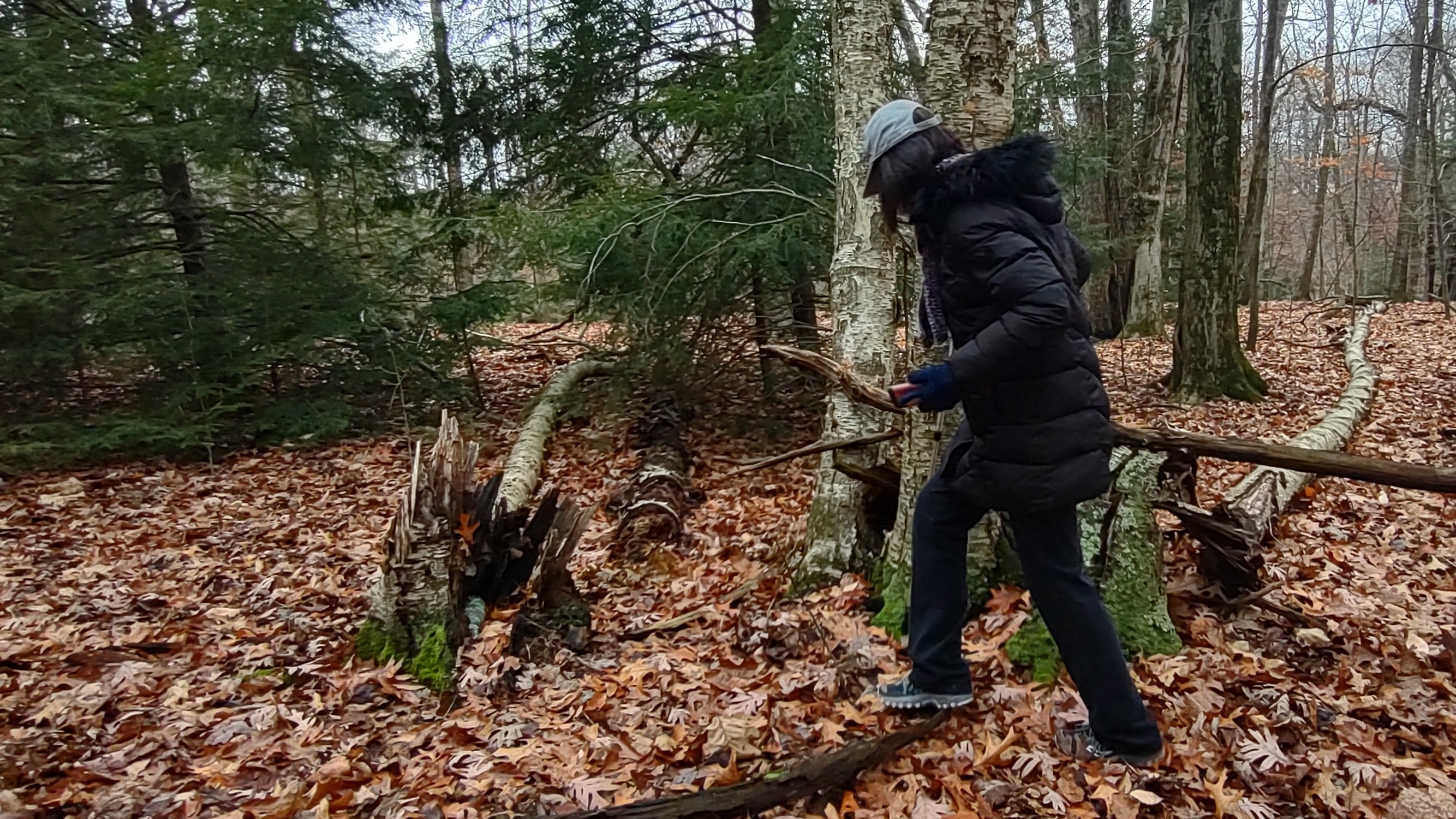
This one is hidden in plain sight. Hello, old friend.
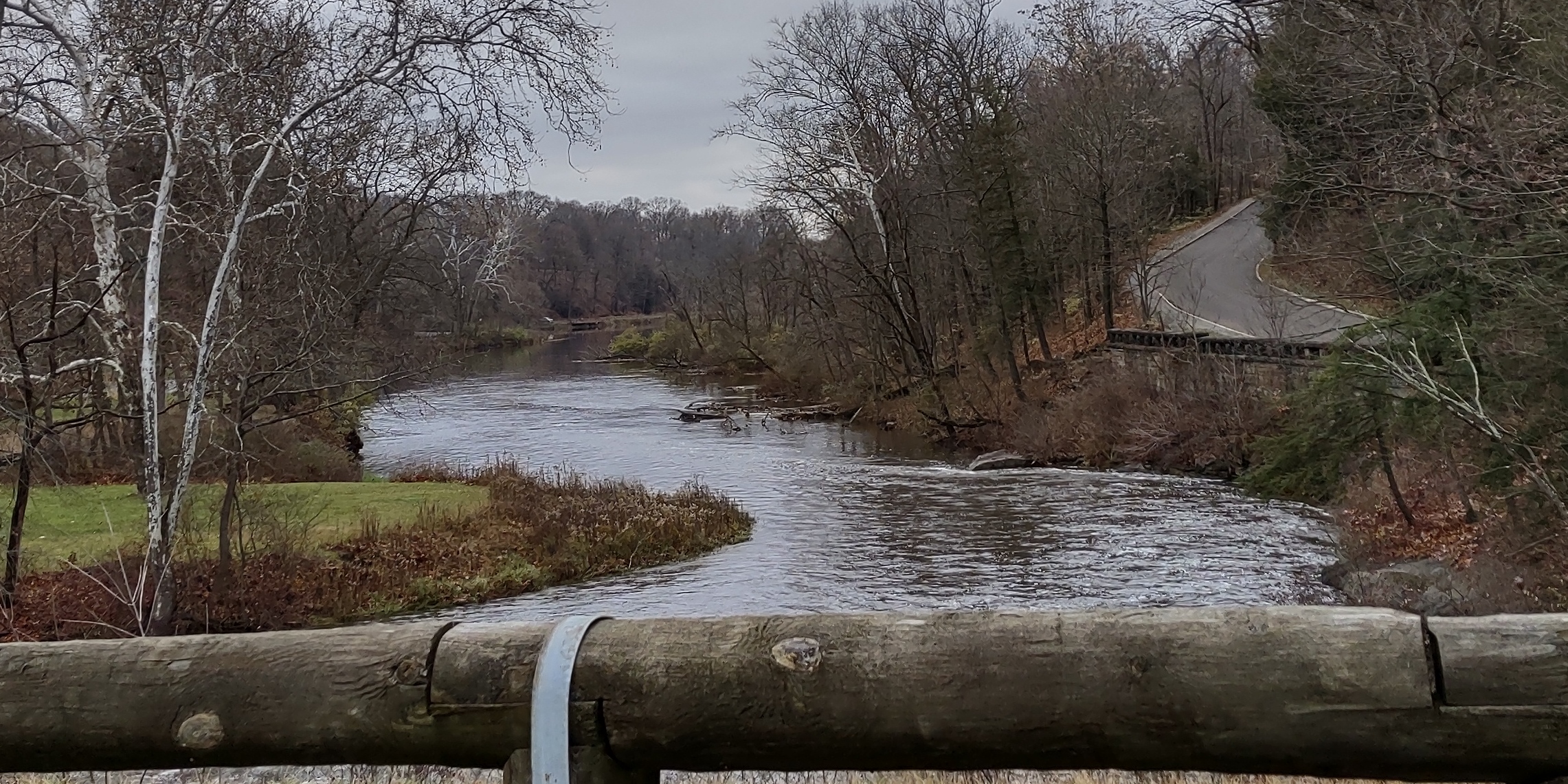
In this majestic country, where rocks and rills, and woods and templed hills still sing, the creek flows on.
-
Falling Water
Placed 20 years ago by Cache Owner BigDrano, Falling Water will bring us to a beautiful place.
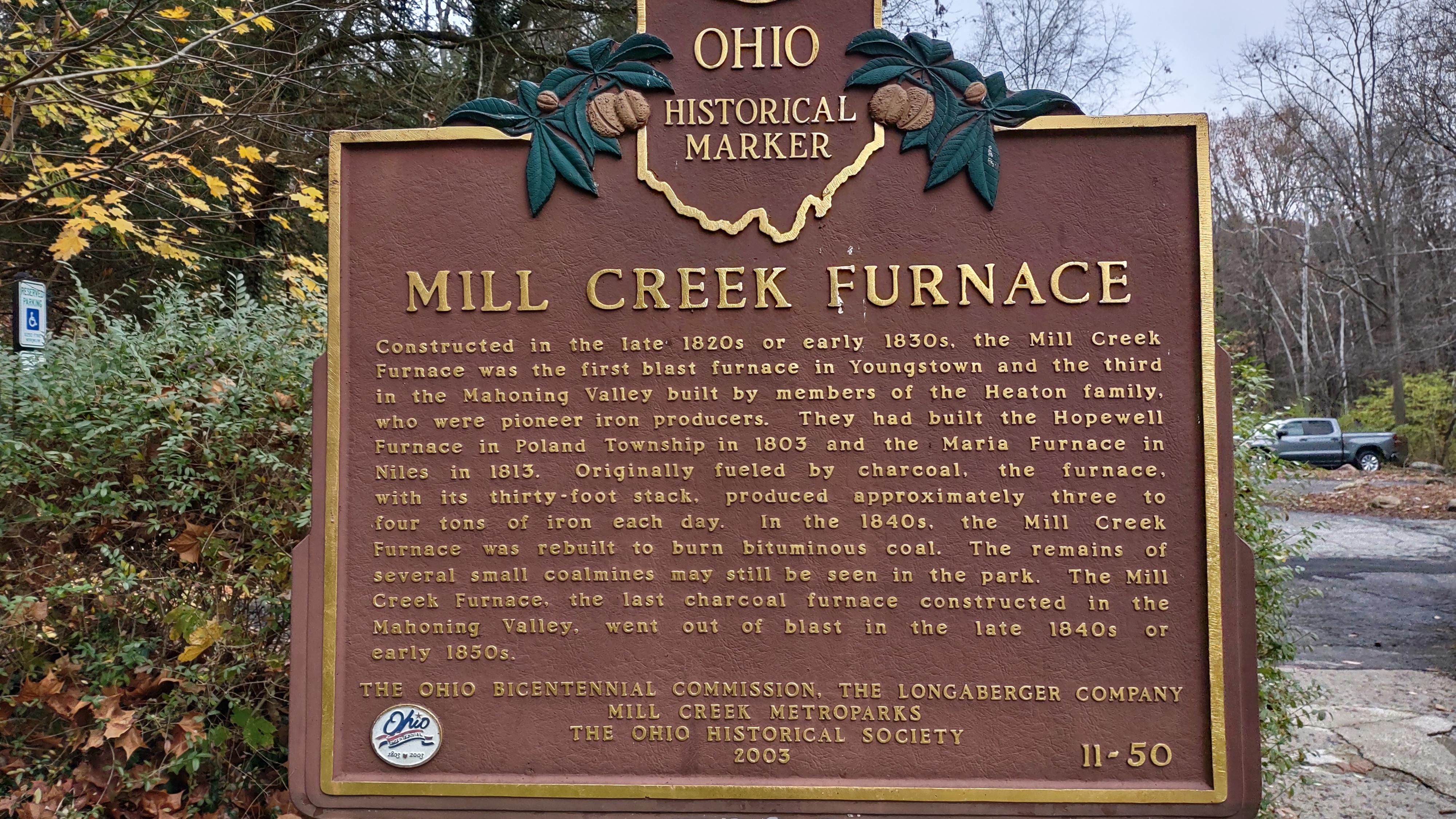
In the 1830s, iron investors discovered these rich veins, buried in vast stands of trees ready-made for charcoal production, and built coal-powered furnaces. By the 1840s, the Heaton family had switched to bituminous coal straight from the ground.
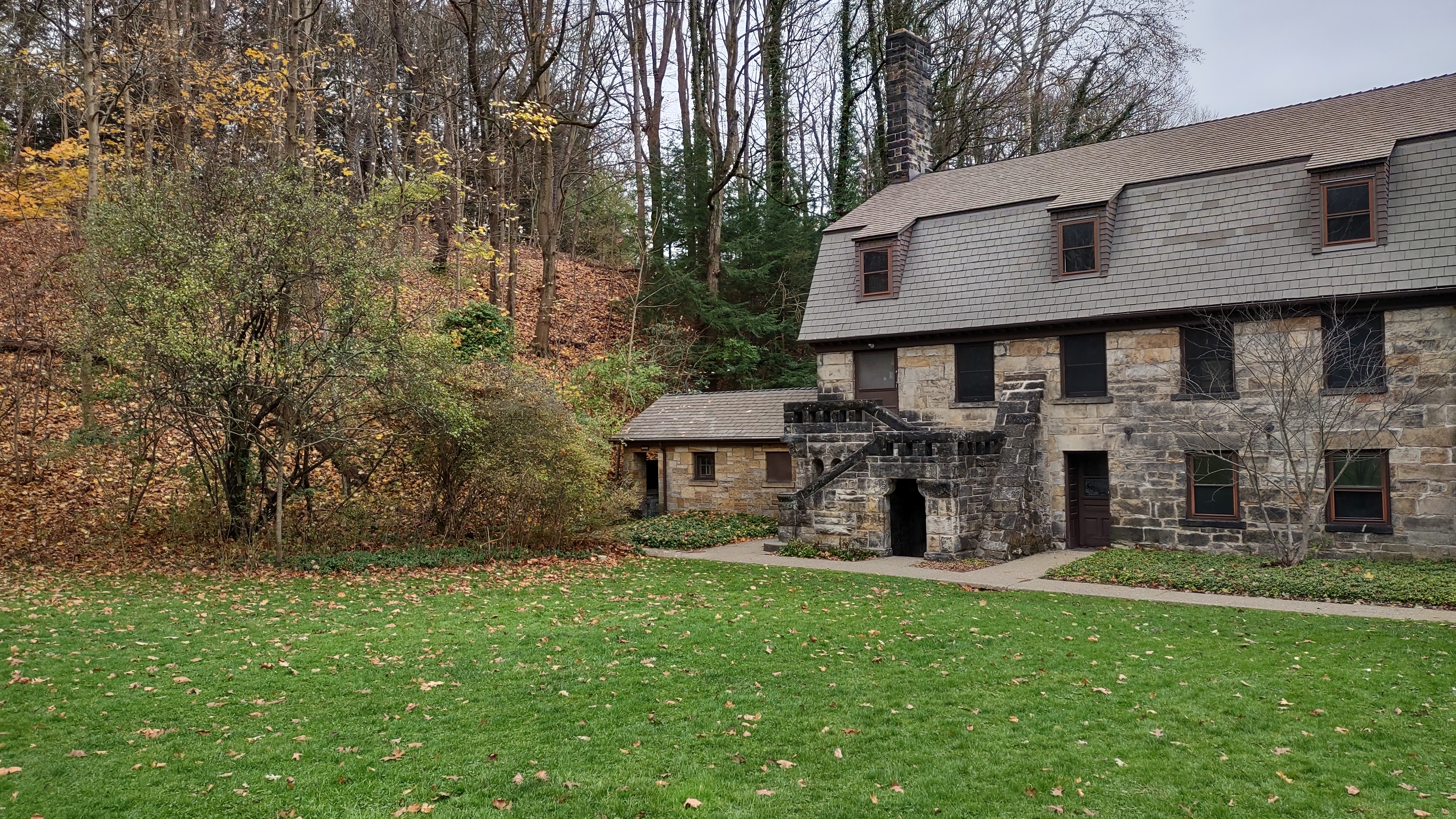
Hedging their bets, the family also constructed a mill for carding wool, powered by Mill Creek. Like Silicon Valley and the internet, Mill Creeks sprang up across the state, as industrious millers tapped into the vast network of streams and rivers. Think of a machine, and you could power it with a waterwheel and a creek.
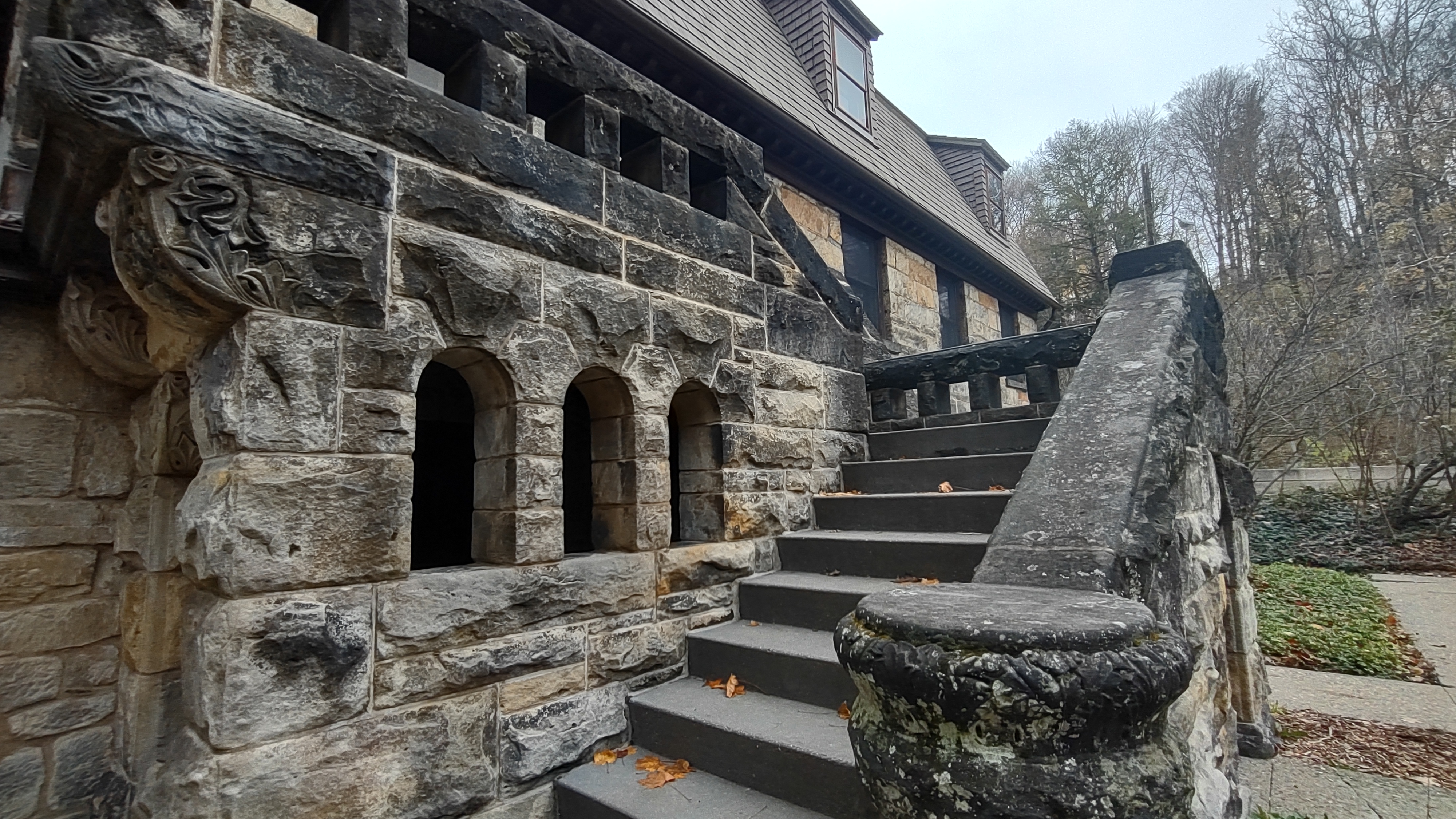
The blast furnace blasted off, and the millhouse turned into a storage facility for the furnace. In 1891, a man named Rogers opened the land and building as the very first park district in Ohio. An entire state and metro park system has followed his example. Generations have come to celebrate the joys of life, family, friends, and community, in this now public space, surrounded by the rich and beautiful stone of Ohio country.
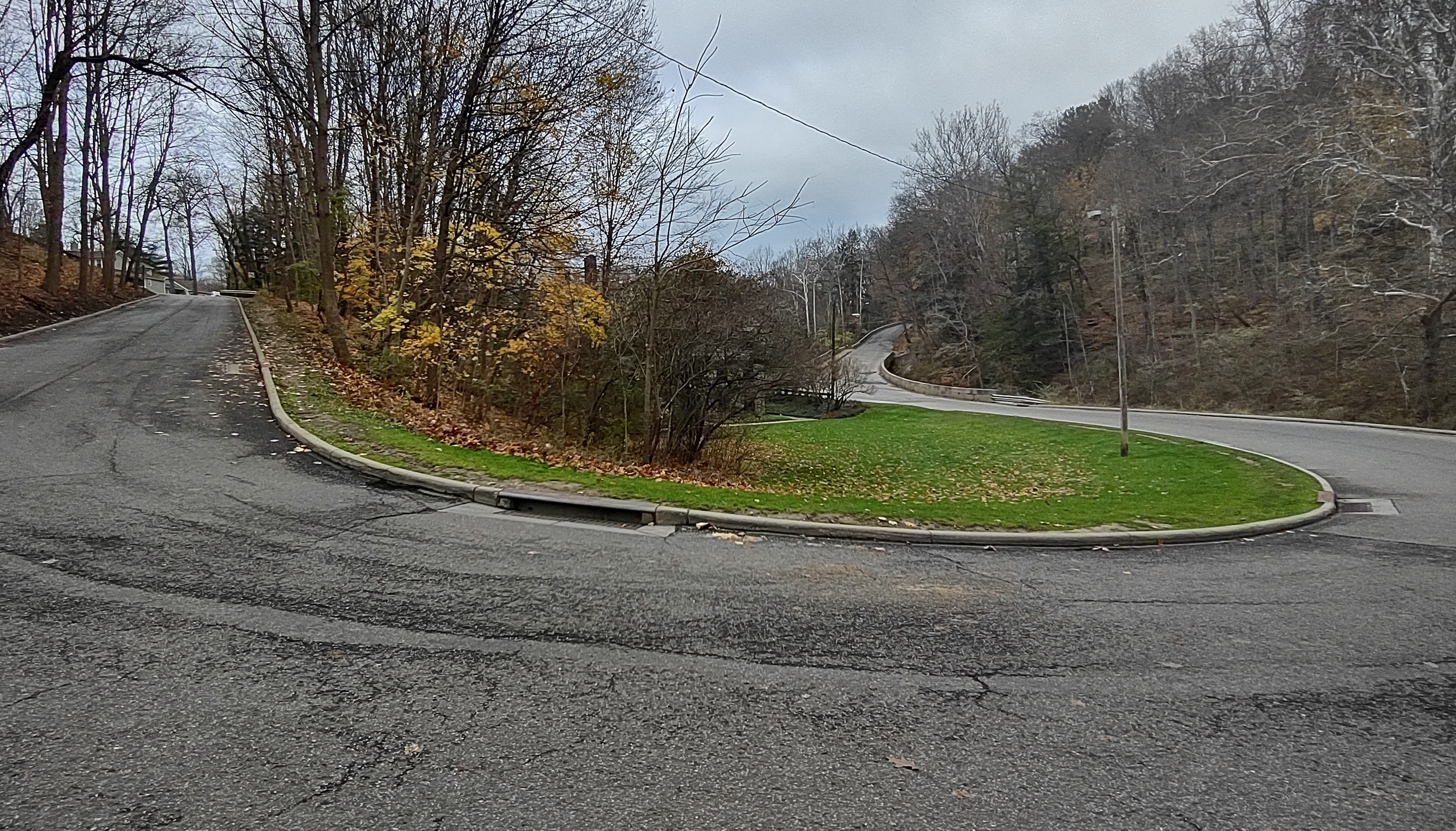
We park beside the Pavilion and walk the serpentine road of Appalachian foothills.
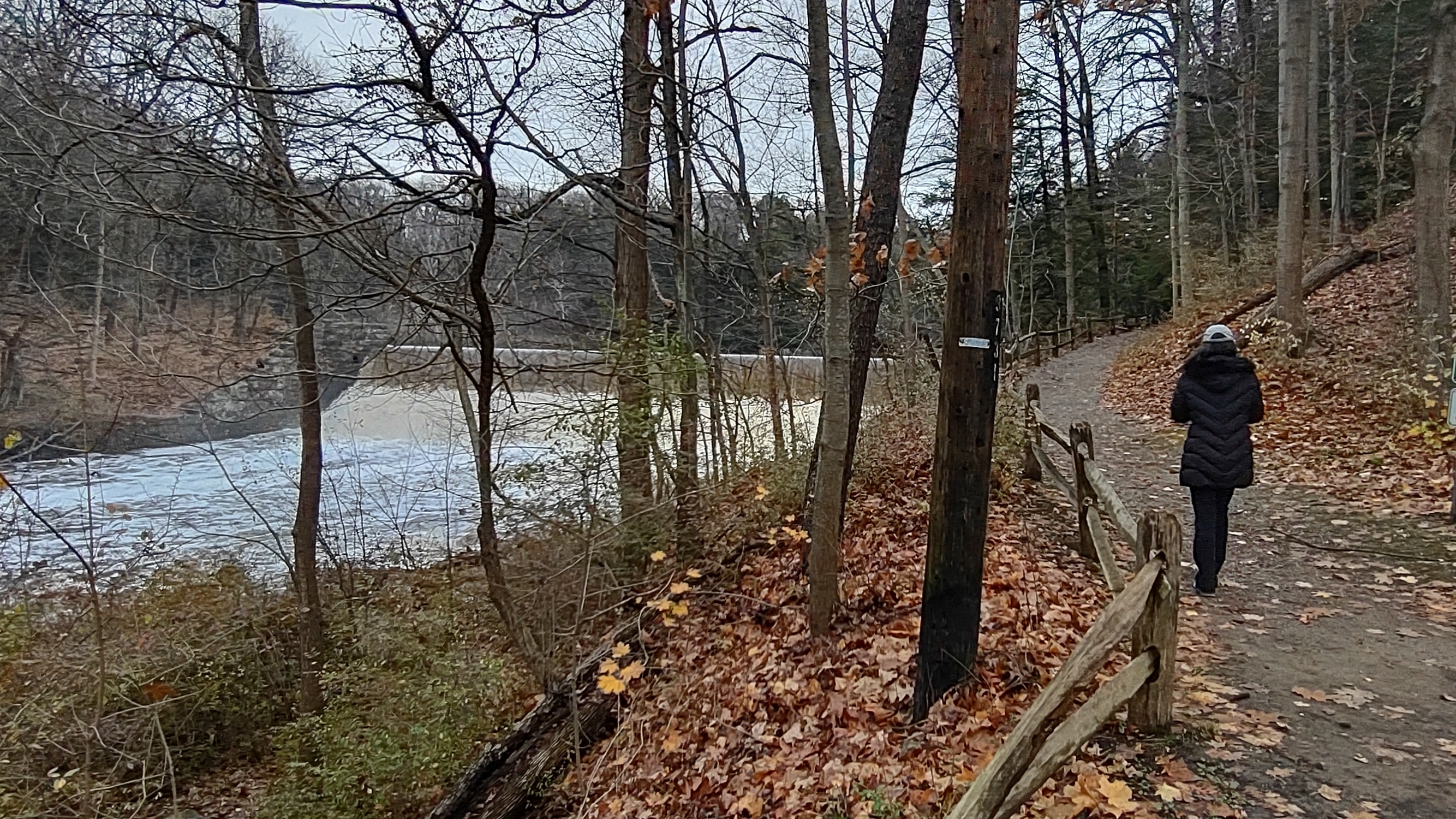
A lazy trail leads to the dam, and up the hill.
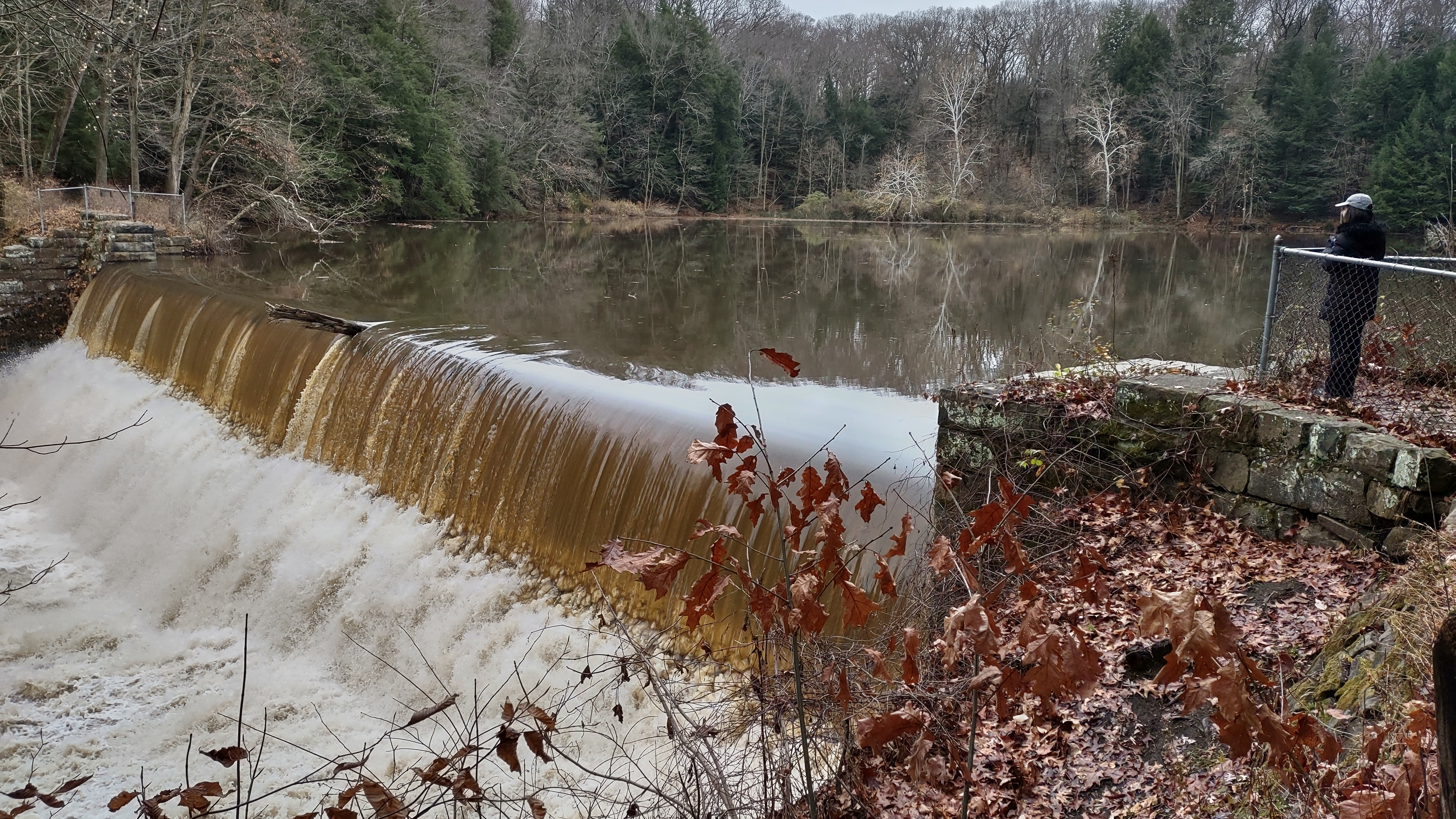
We watch Lady Autumn exit the stage, as Old Man Winter stubbornly steps into the spotlight. Rushing water soothes and restores.
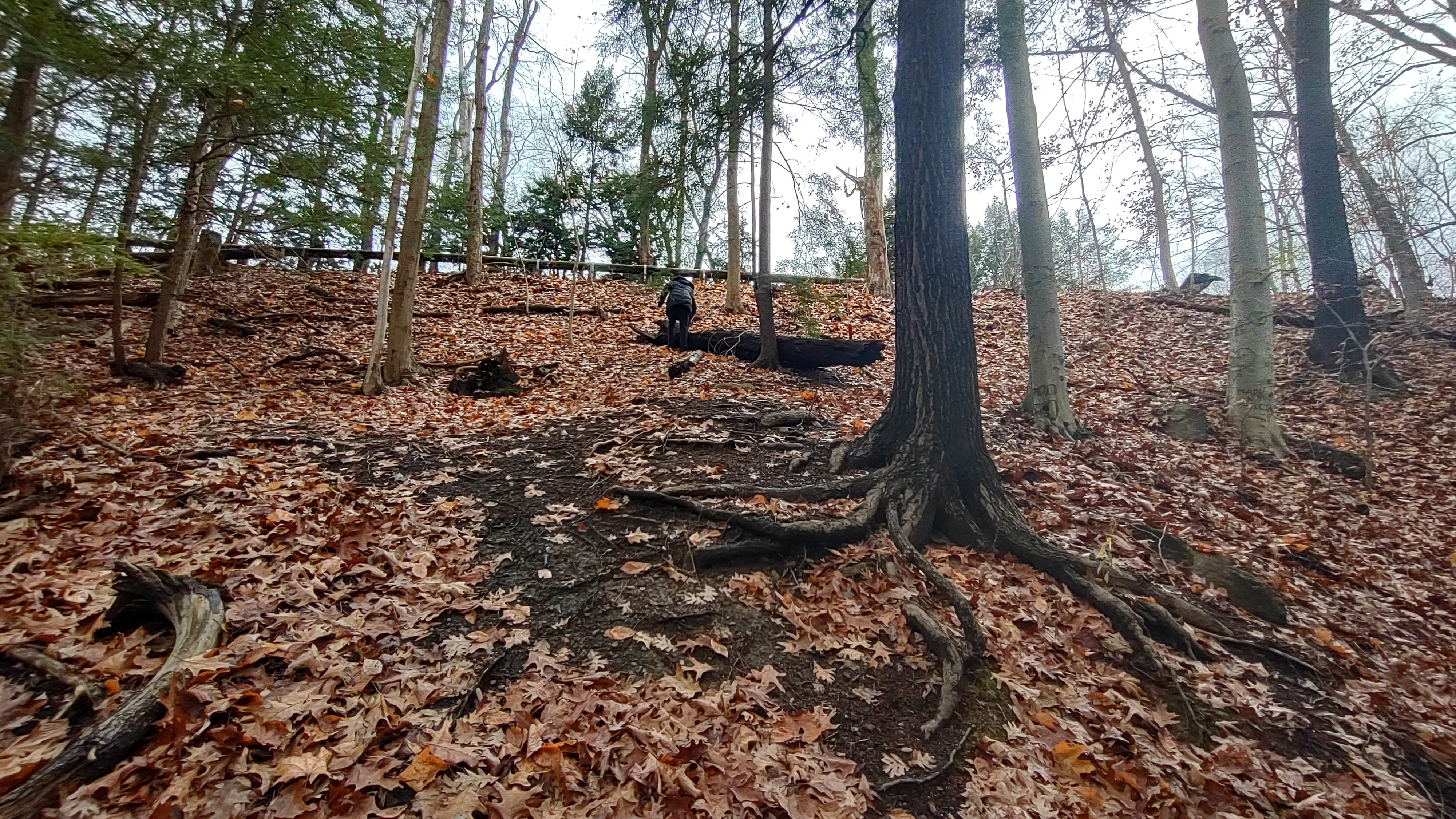
Across the spur, the degree of geotrail appears to be in the 40s. Exactly the average of our team’s respective ages. We got this. Now the ubiquitous question of how the (hint)rotten log might look after 20 rotting years?
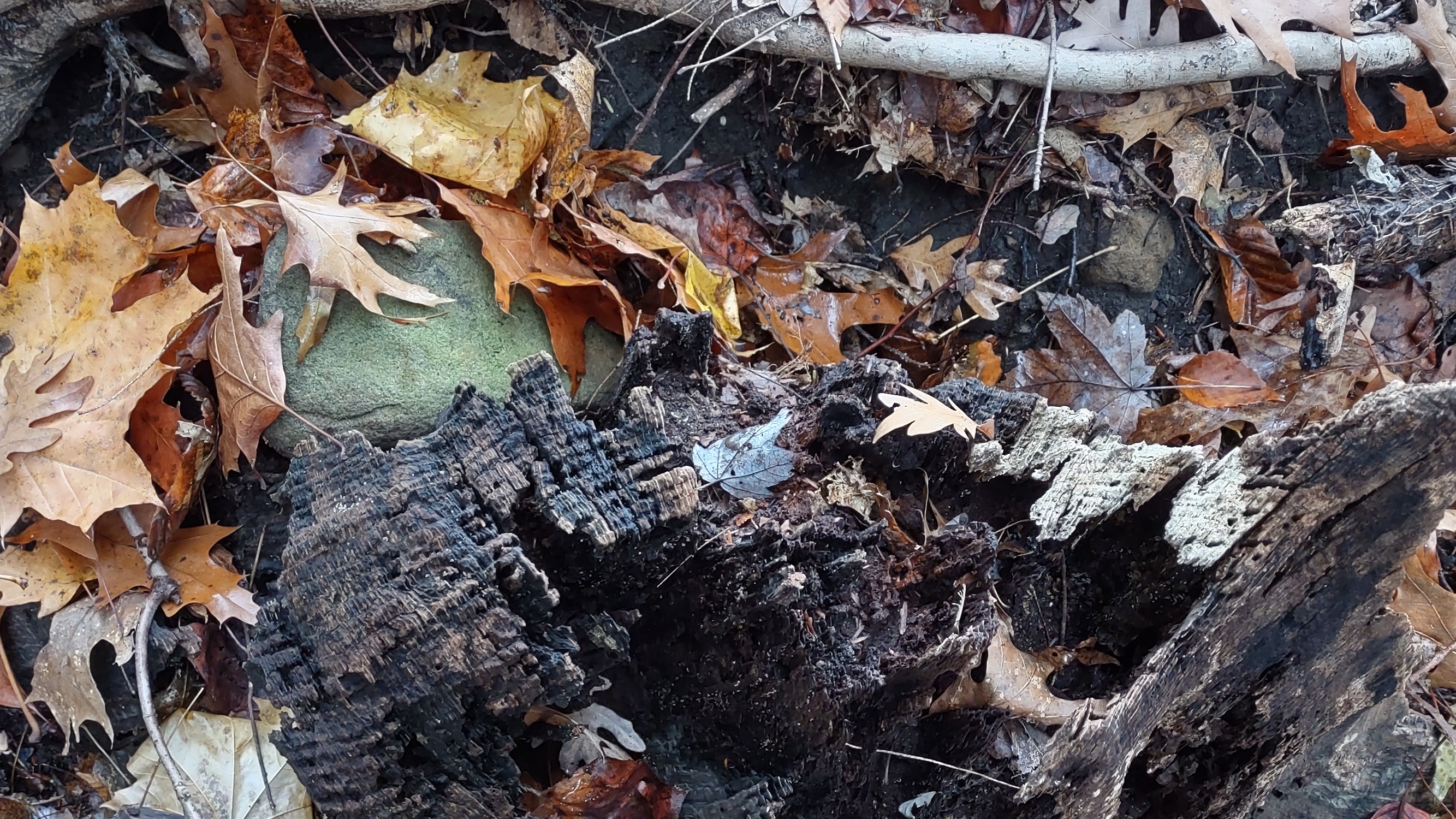
Maybe something like this. The geopile is snug, perhaps in a now-petrified log.
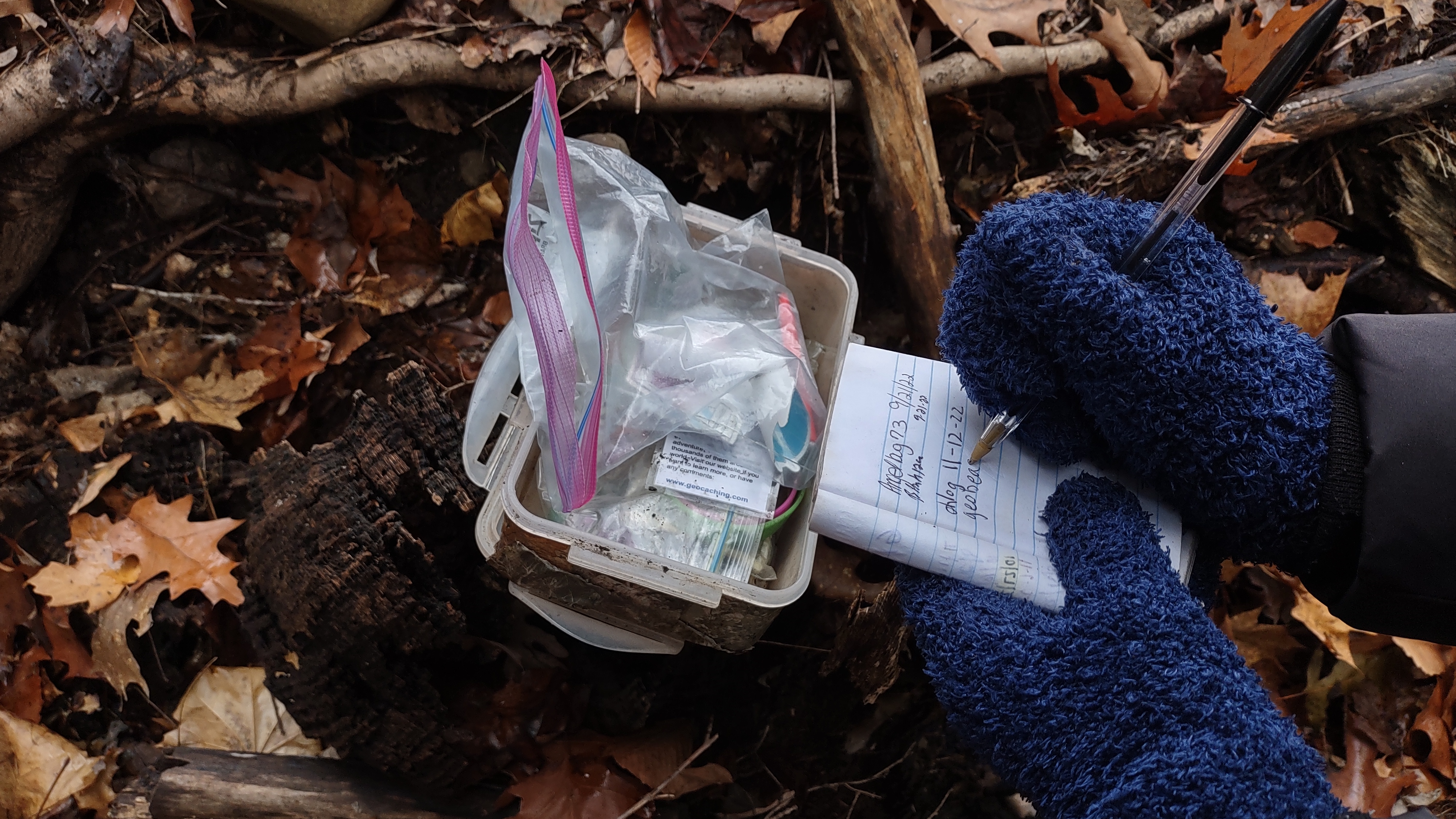
Our simple expression of individual and community effort joins the centuries. In this wild place, we leave a tiny piece of ourselves.
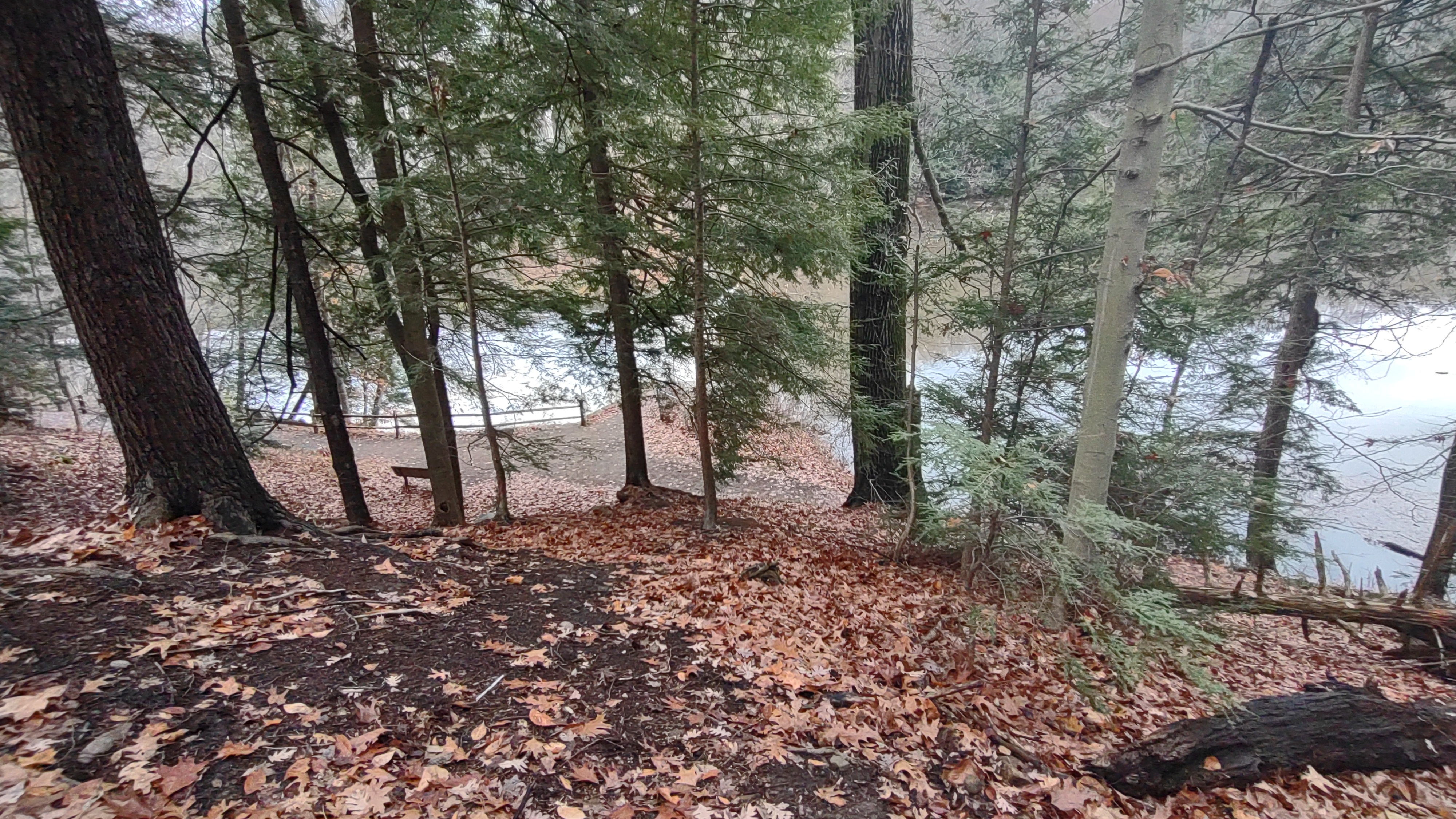
Welcoming all human pilgrims, trees reach for our hands as we slip, slide, gasp, squeal, and exclaim our way down.

We left the sticks for you.
-
Red Hot Chili Peppers
Cache Owner Blink12oz takes us to a quadragenarian band, and a song now 30 years old.
It’s one of those blurry days, when the signs won’t focus, but you just keep driving.
Our trusty pilot gets us there. And yes, it does. It does yet wave.
The Red Hot Chili Peppers opened the music world in 1983, cooking up all flavors of rock, morphing into metal and rap. With 121 million records sold, they have pondered the meaning of life, love, confusion, and happiness, for teens who have now become parents and grandparents. As the transistor radio morphed to the Walkman to the smart phone, music spoke directly into the ear of a generation. The system’s a relative bore . . . I don’t know what’s true anymore.
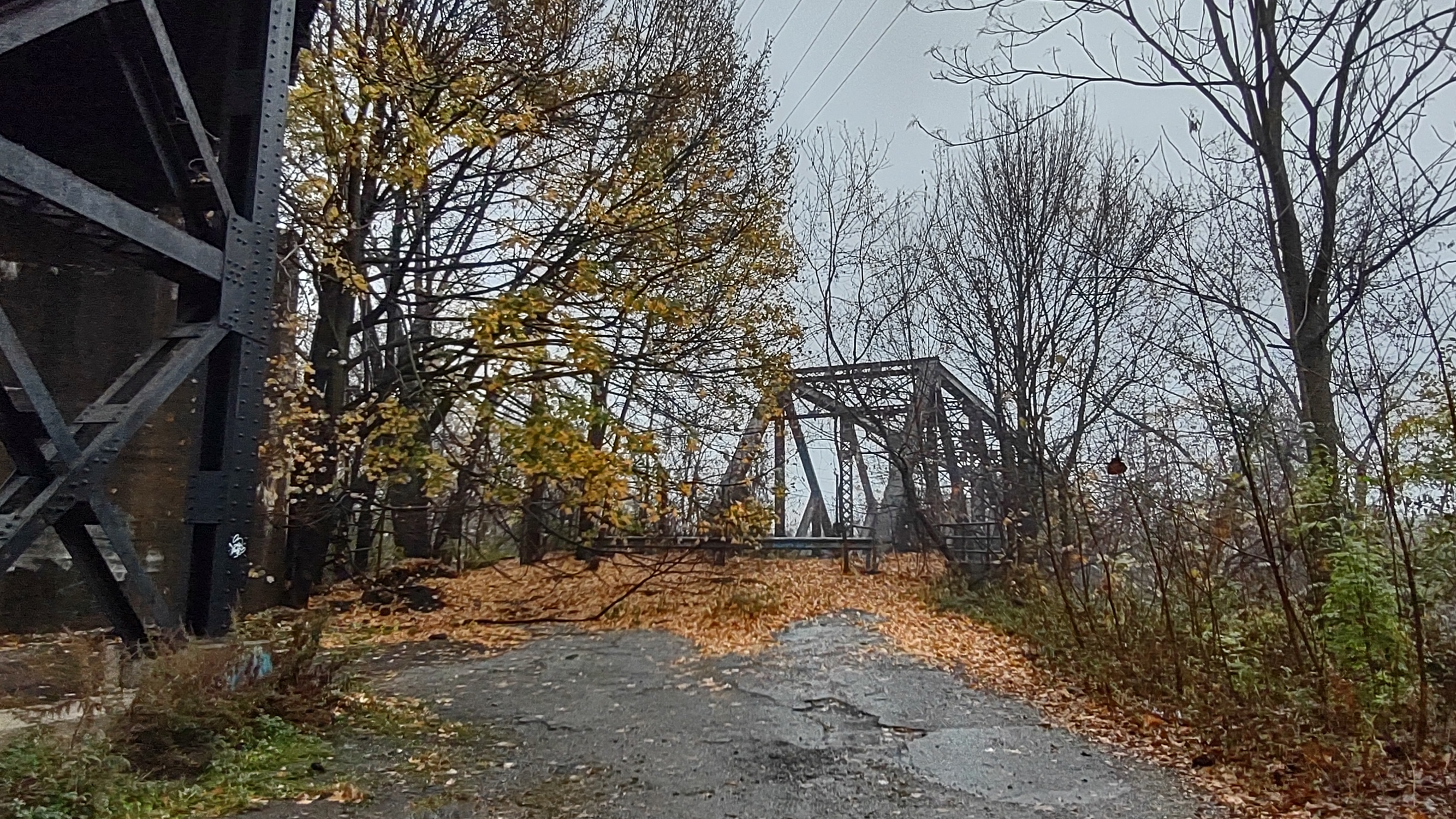
Under the bridge you will find me, croons the hint. We are in the groove.
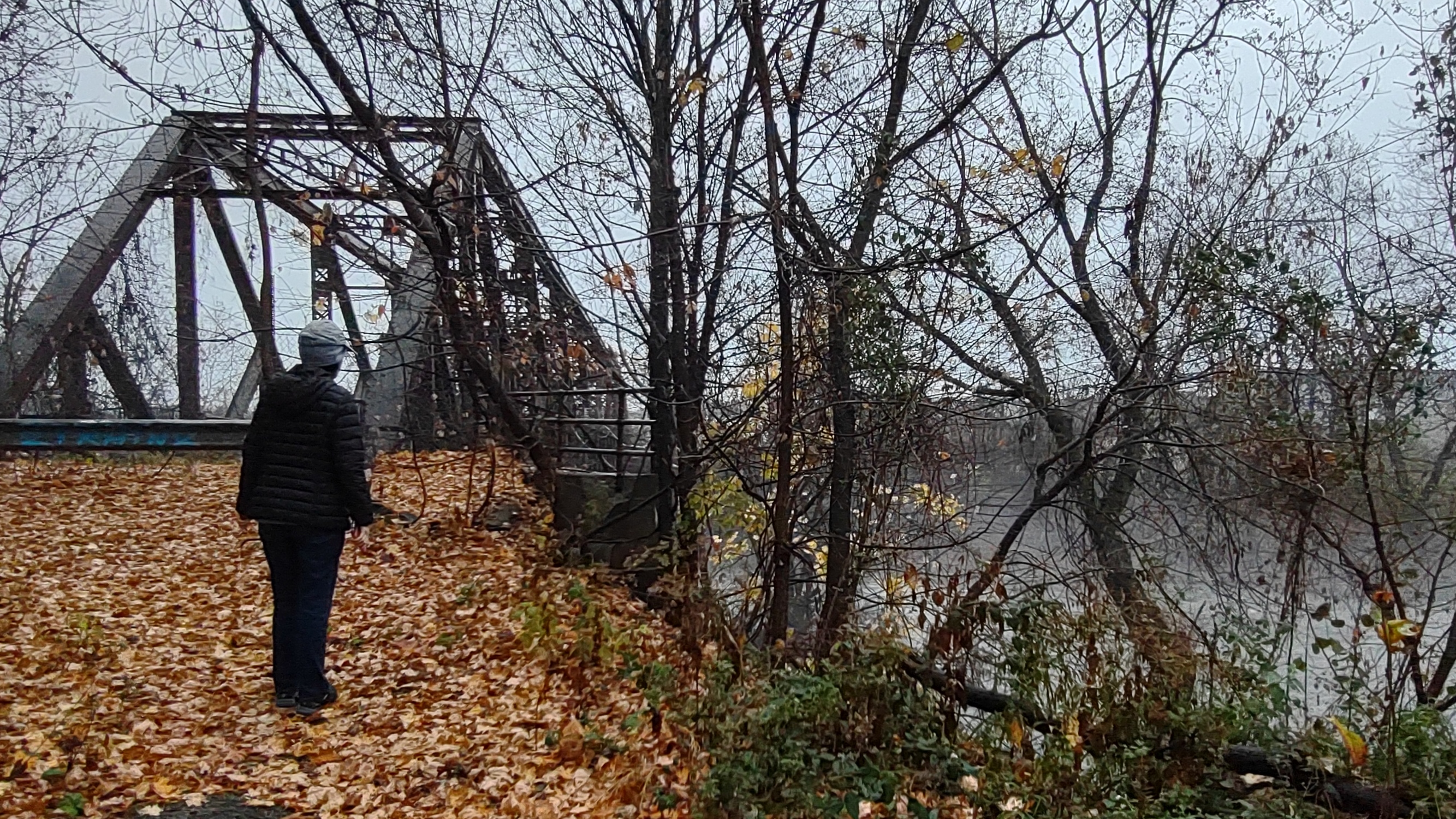
The river opens before us, flowing with the rains of autumn.
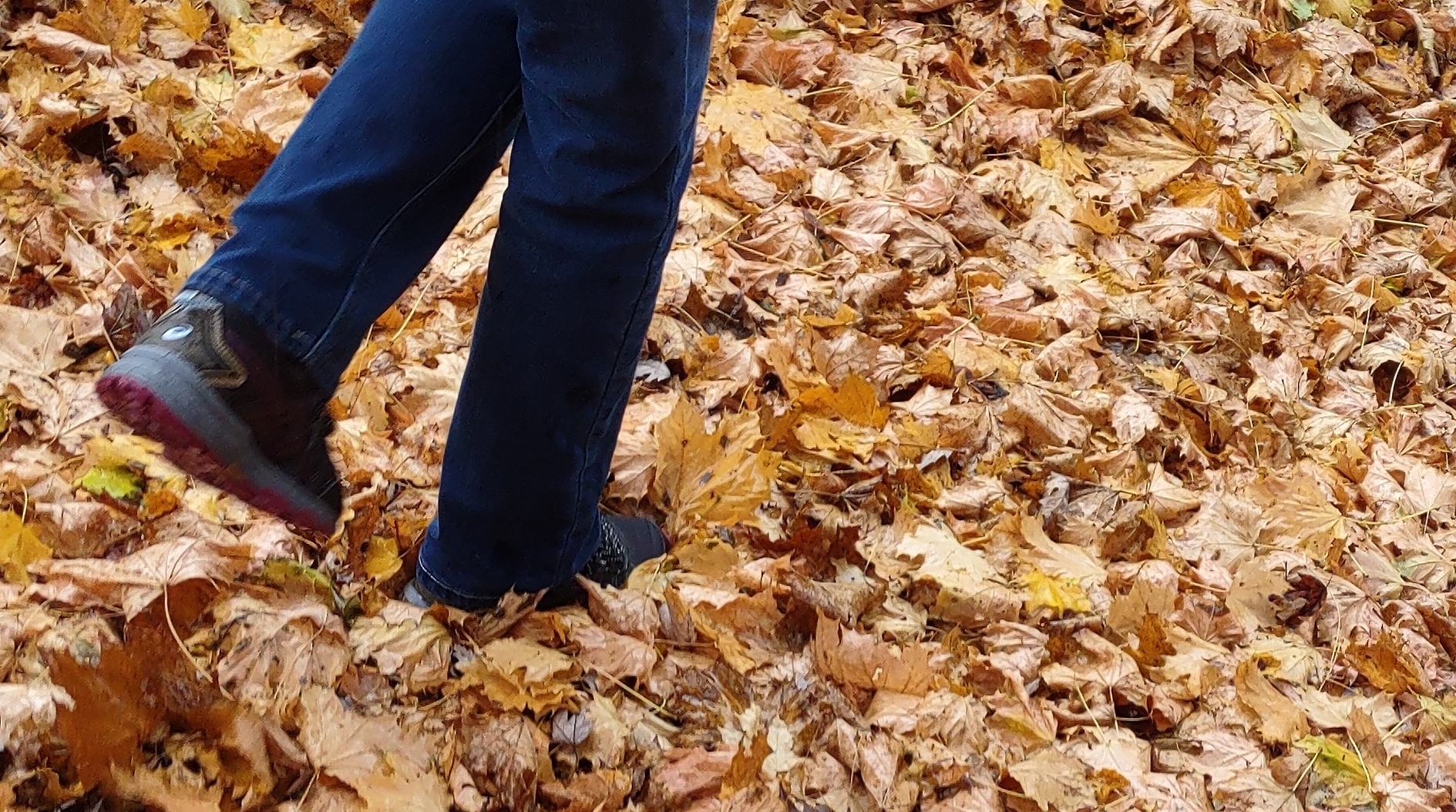
Bounty of wet leaves reaches socks and toes. Crunch downgrades to smoosh, in this downy duvet.
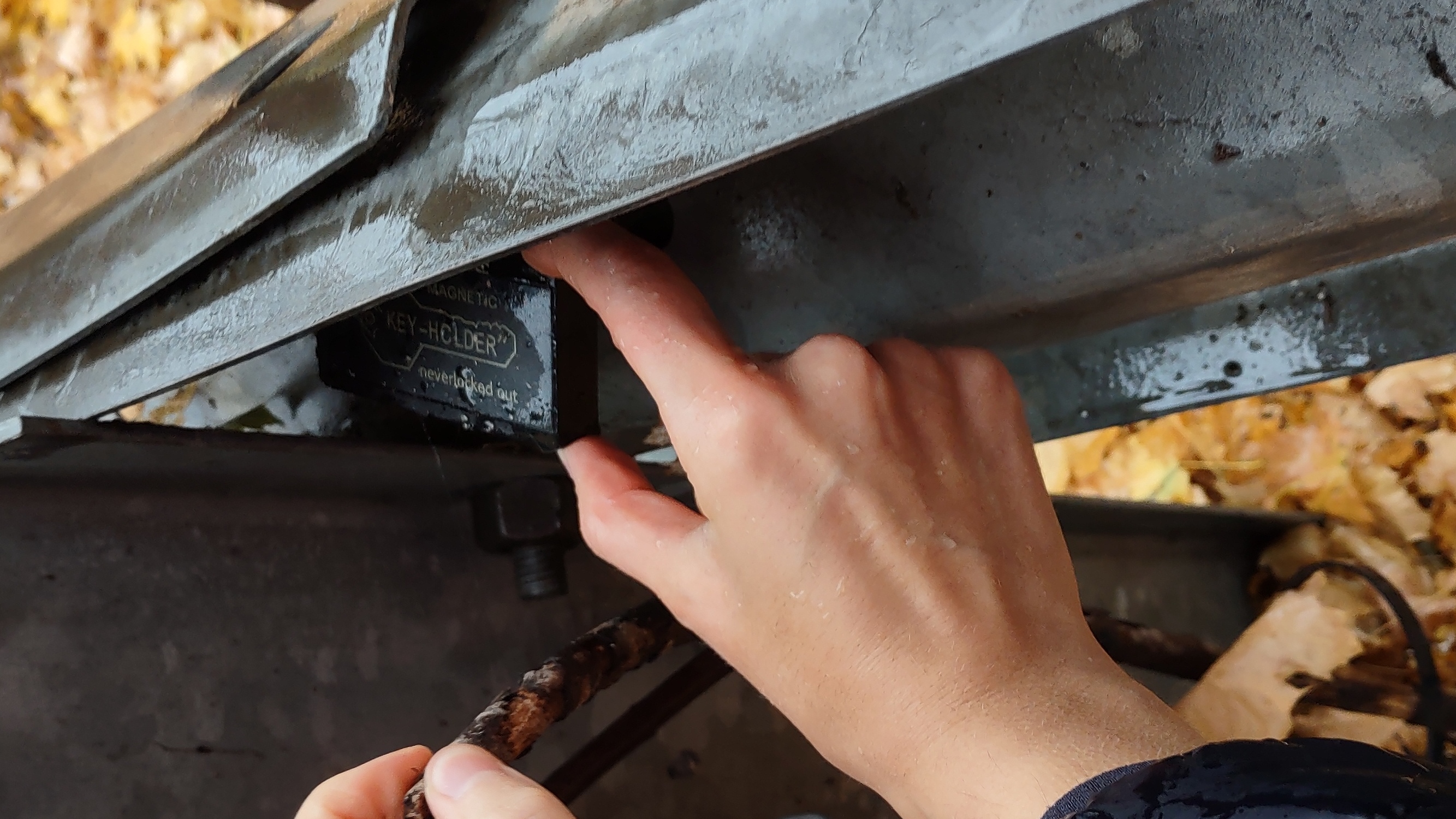
But we already looked there five times.
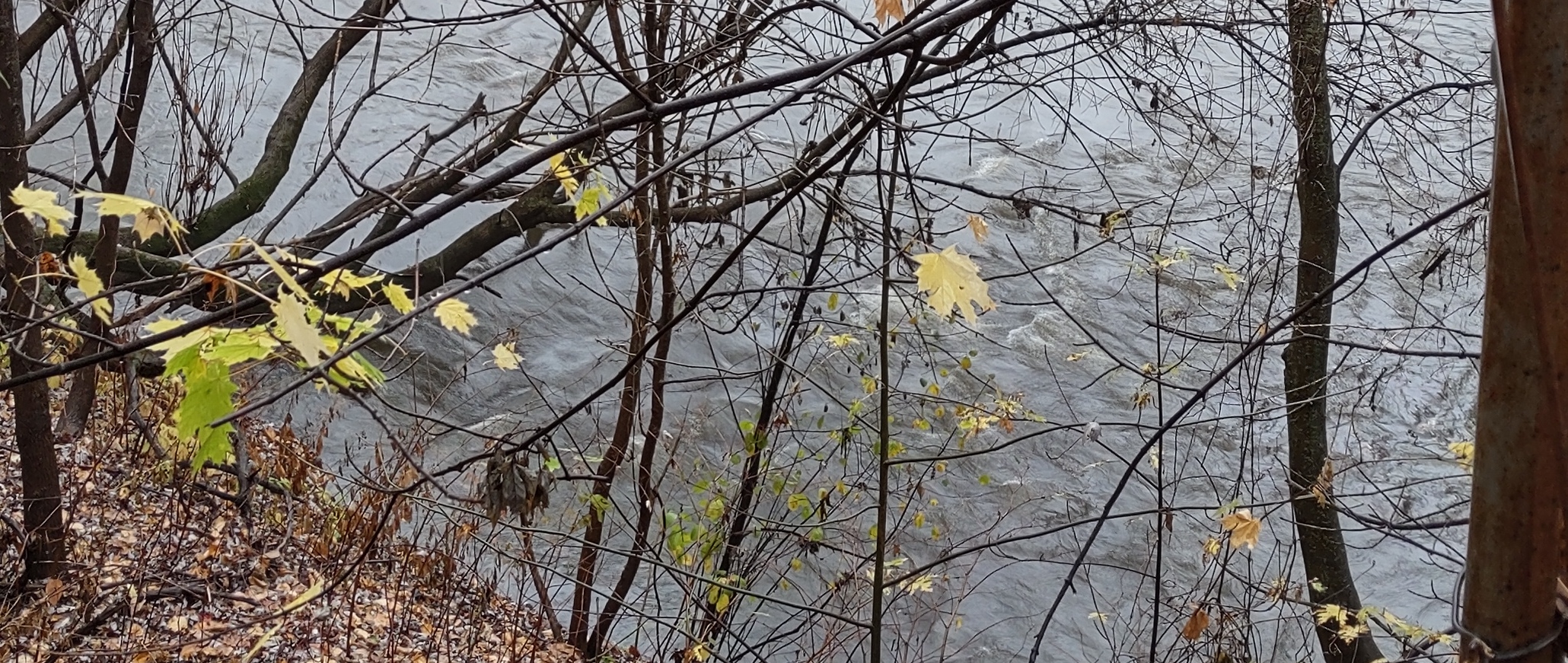
It’s hard to believe that there’s nobody out there
It’s hard to believe that I’m all alone.It is hard to believe, when there’s always another log to sign.
-
Mr. Peanut
Cache Owner Rattlebars beckons with monocle, top hat, white gloves, and hopefully a supersized-can. This drive should be worth it.
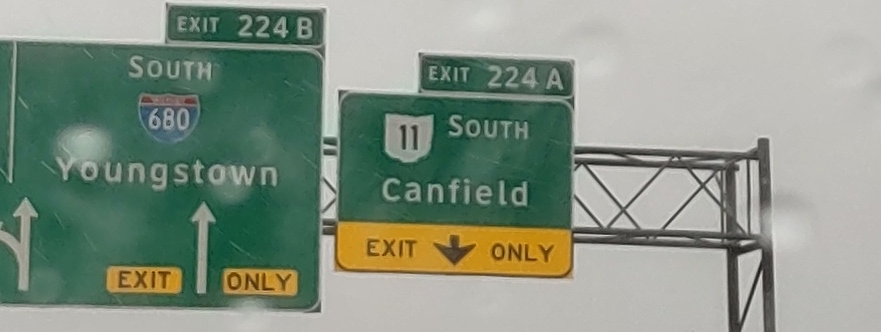
We are closing in.
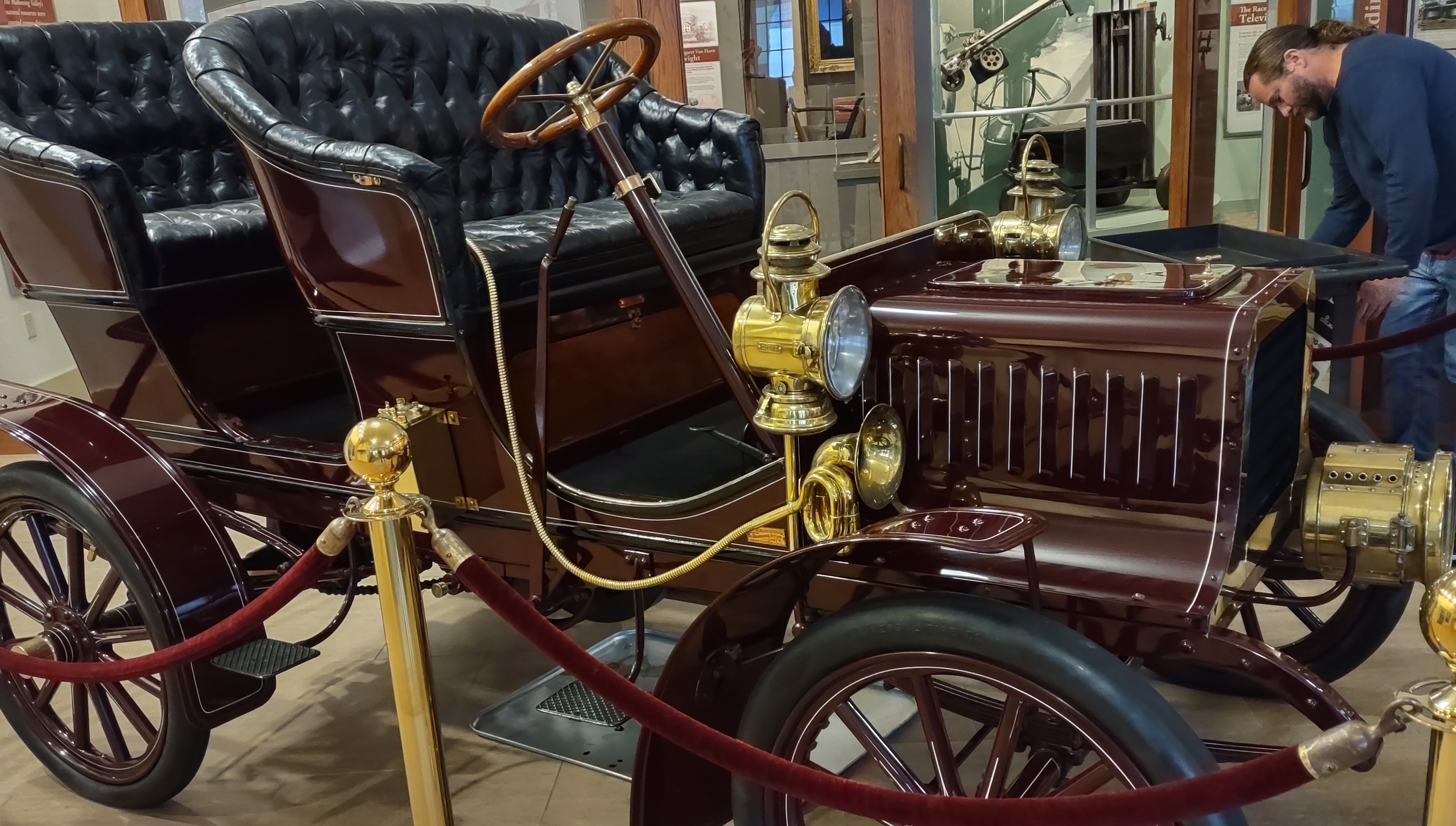
Passing the Mahoning Valley History Center, we hear the only surviving Mahoning calling our name. This two-cylinder was custom made in 1904 by the Mahoning Motor Car Company.
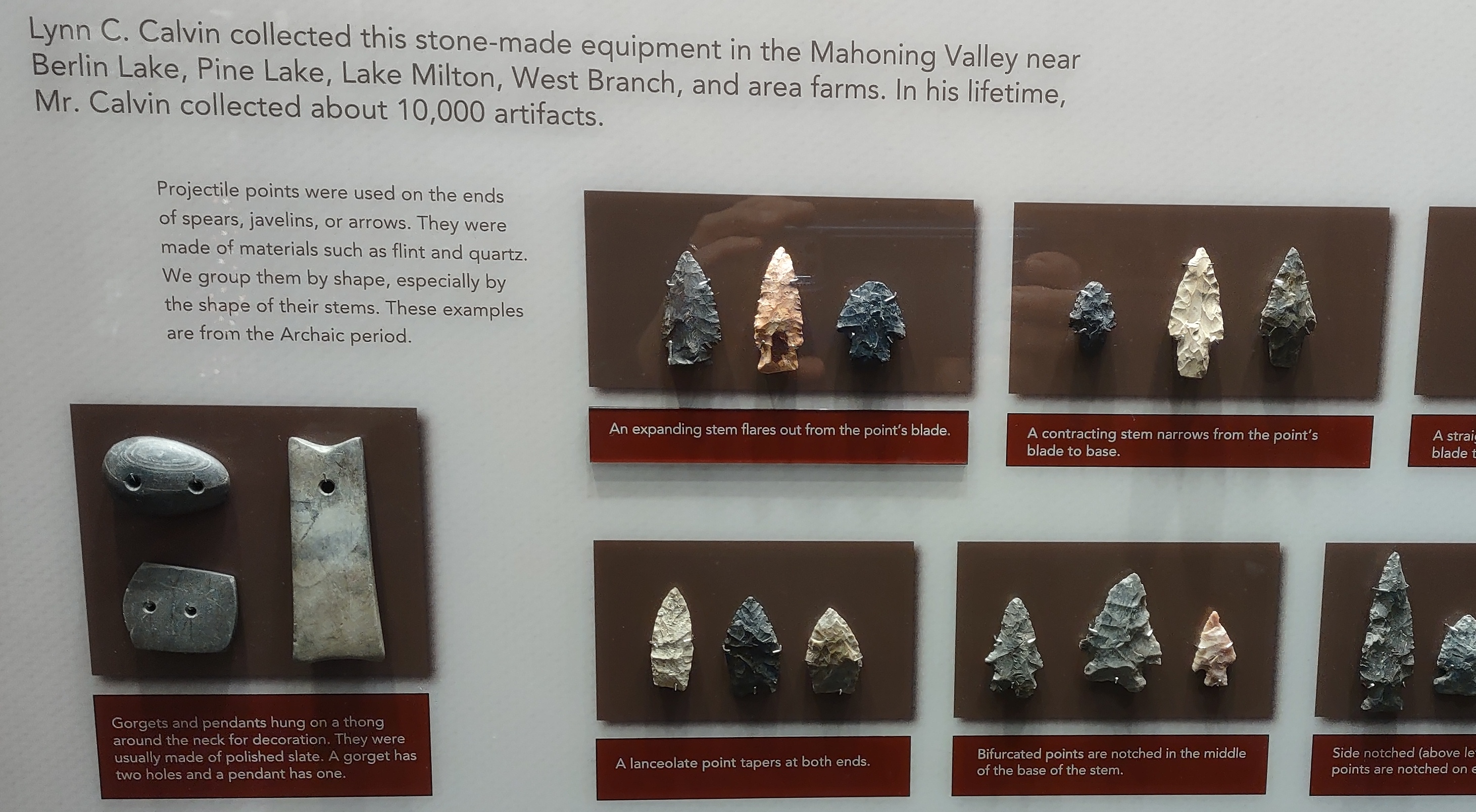
And then the family album draws us in. Imagine Mr. Calvin’s astonishment as he opened rabbit drawers and gopher cabinets on his land, and found things left by the last tenants.
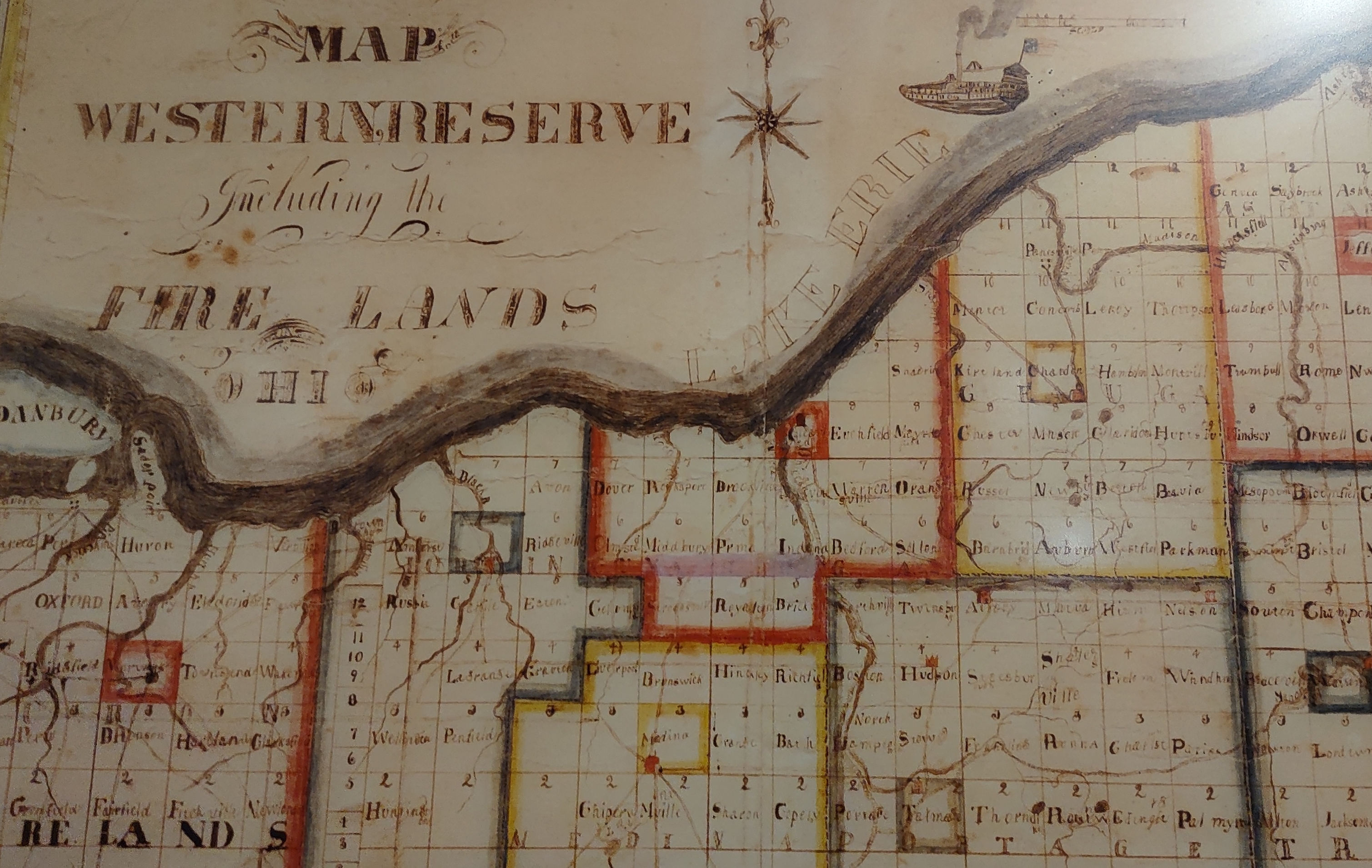
Far-away Connecticut first claimed this land as the Western Reserve, then sold it to speculators for 40 cents per acre, who then sold it in parcels to settlers migrating from New England.
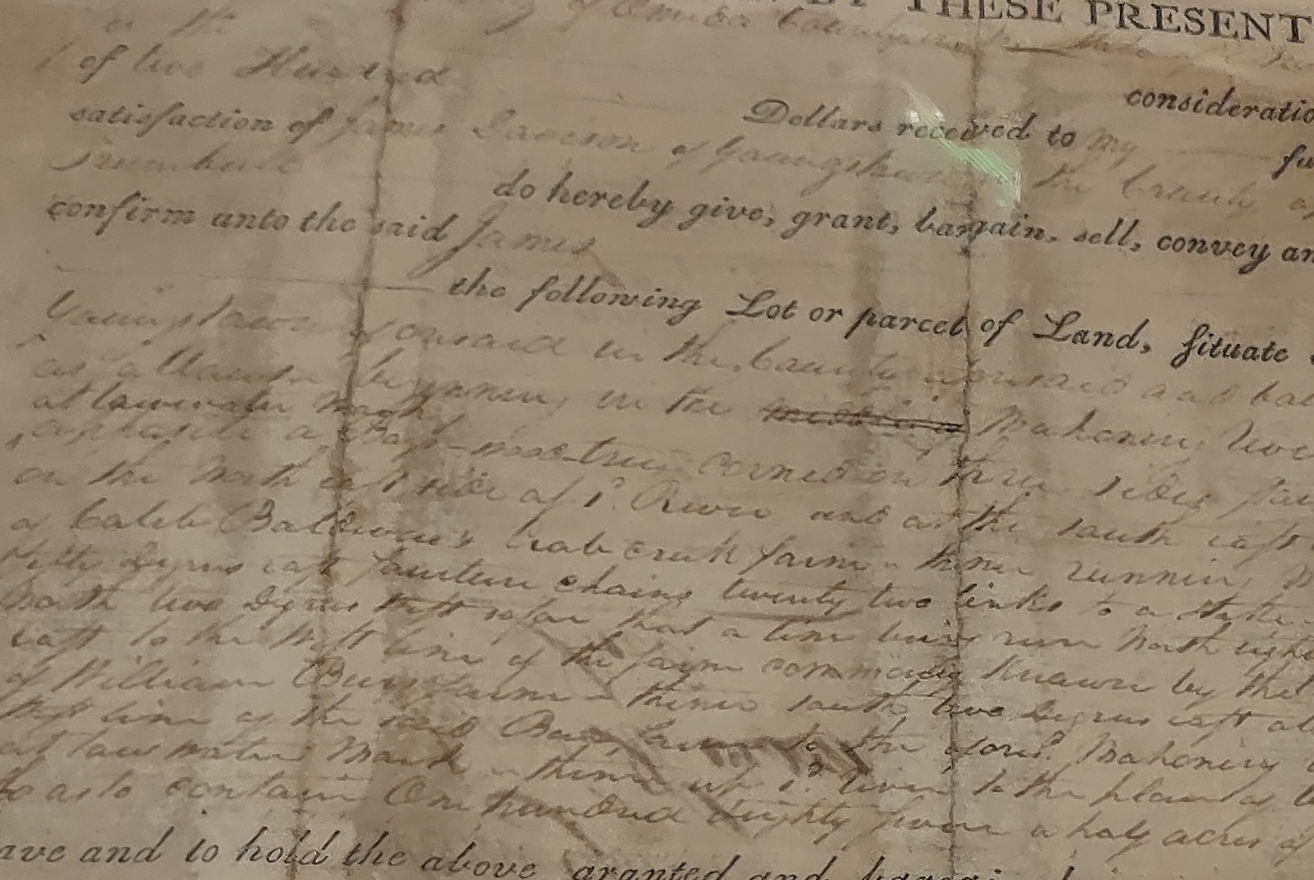
In a market as hot as the 2020s, land in the early 1800s was the commodity for profit, for farming, for business, for individual definition, identity, and prosperity. Most of all, for a place to put down the roots torn from other soils across oceans.
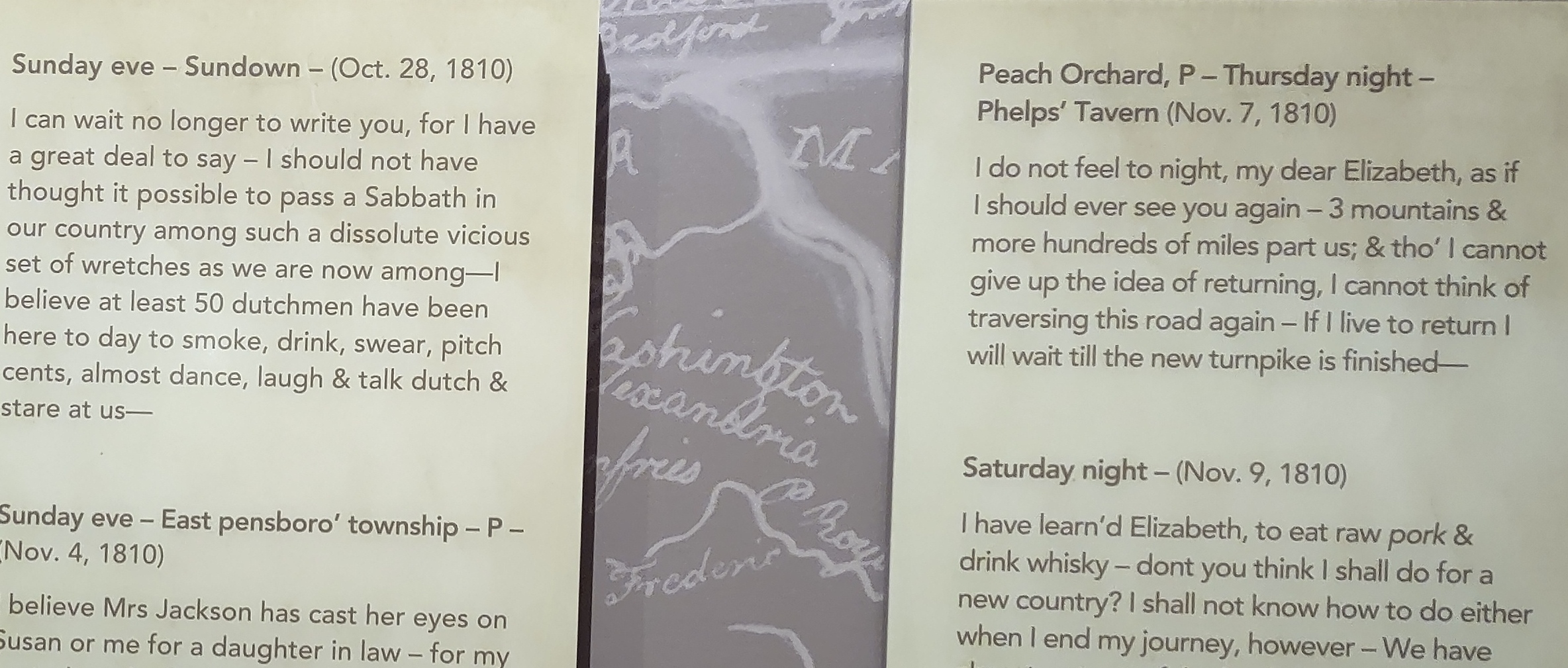
20-year-old Margaret’s letters, as she traveled from Connecticut to northeastern Ohio in a wagon, where she got married and had 13 children.
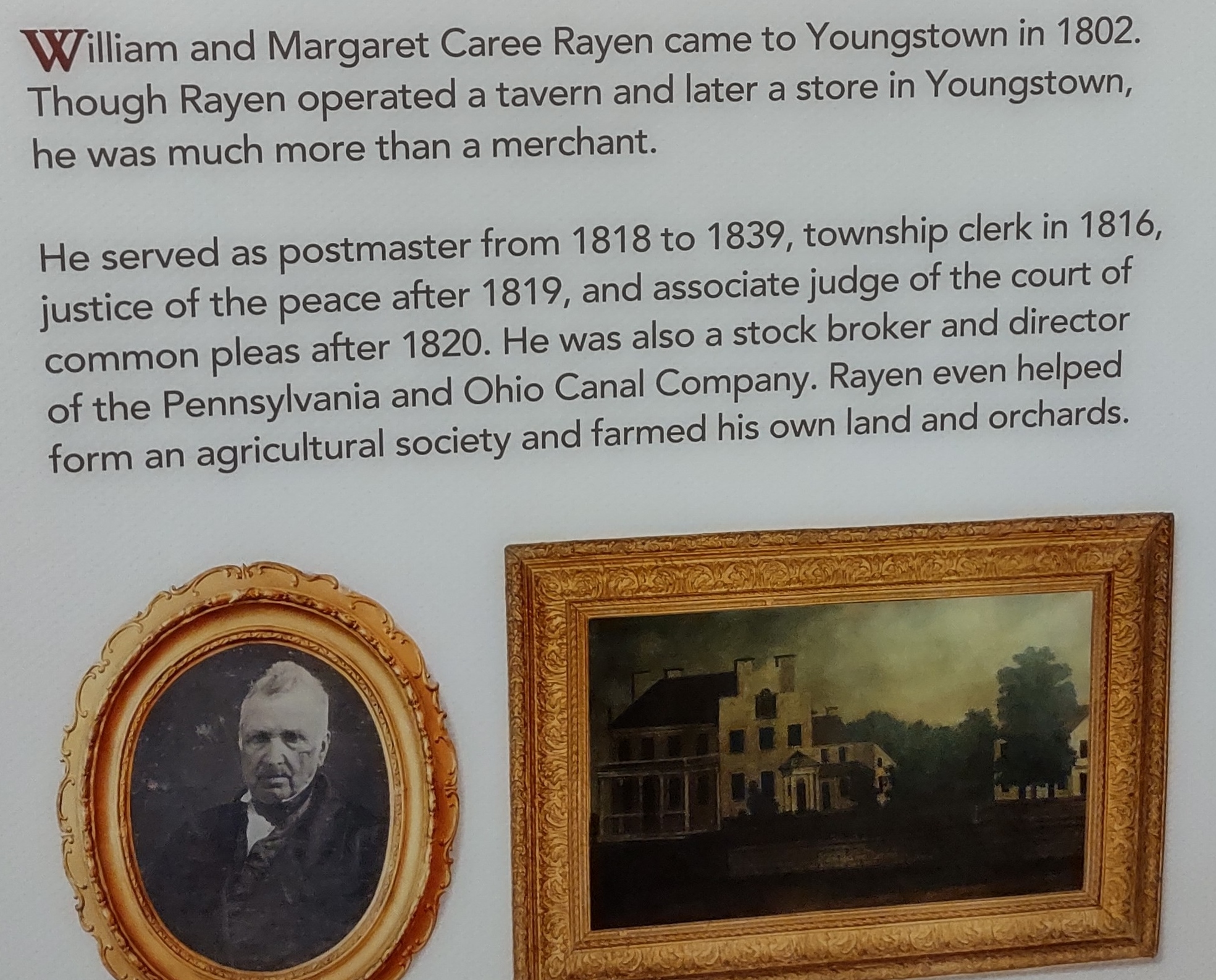
The Rayens arrived in Youngstown in 1802. For the next 30 years, they defined their place in the emerging social pyramid. A tavern and dry goods store provided profit for serving as post master, clerk, justice of the peace, and finally judge.
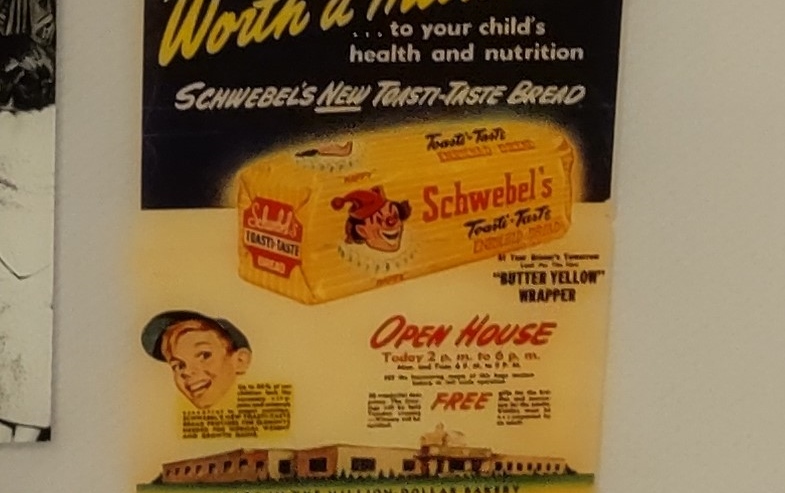
By 1906, Mr. Schwebel was baking bread while Dora sold the loaves on the street. Three generations later, there are Schwebel plants serving the entire Midwest. An American success story carries on.
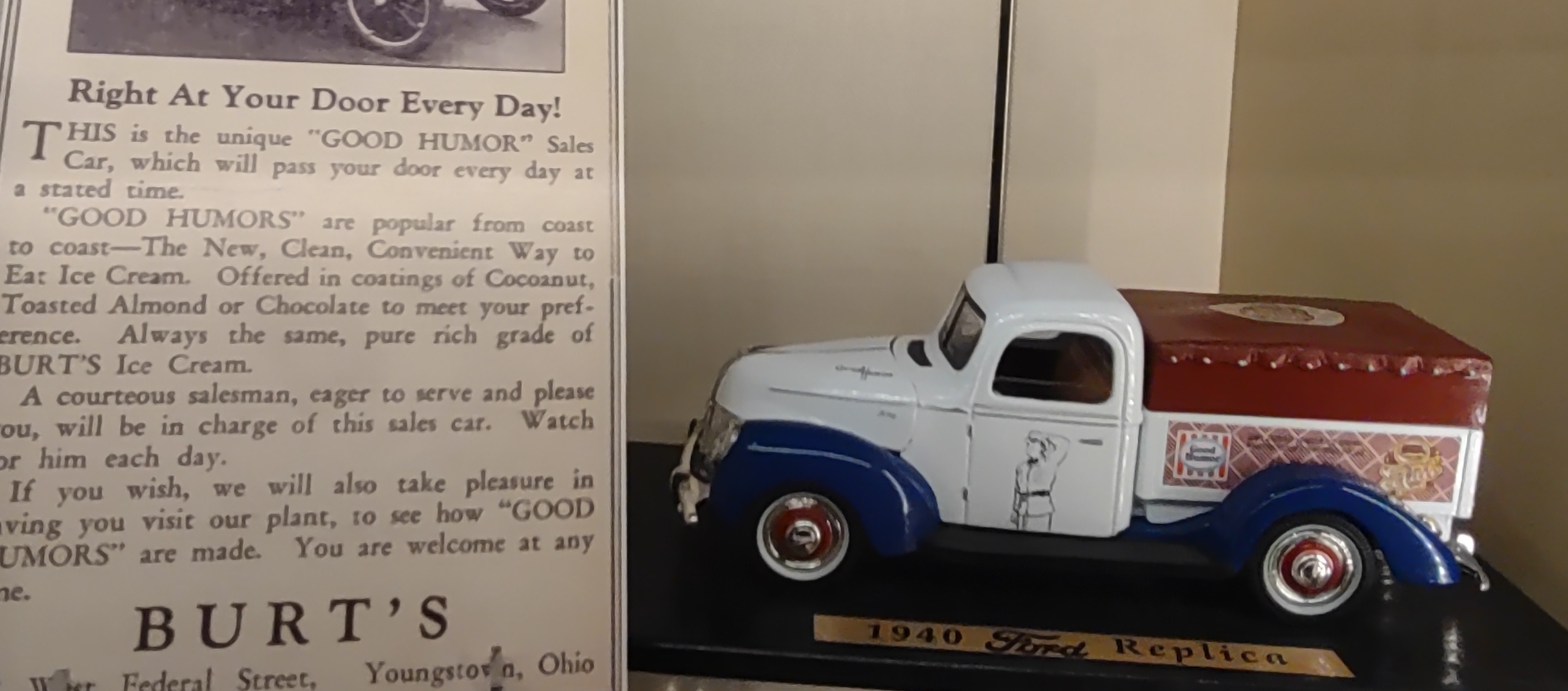
In the 1920s, Harry Burt began transporting his wildly popular “Good Humor” ice cream bars and other sweets. The Good Humor brand is still alive and well today.

Black families arrived after the Civil War, as brick masons, bakers, stone masons and farmers. By 1930, the Stoneworks were store owners and community leaders. Welsh, German and Irish immigrants went to the iron mills, where they had worked back home in Europe. They set up drugstores, bookstores, and lots of grocery stores.
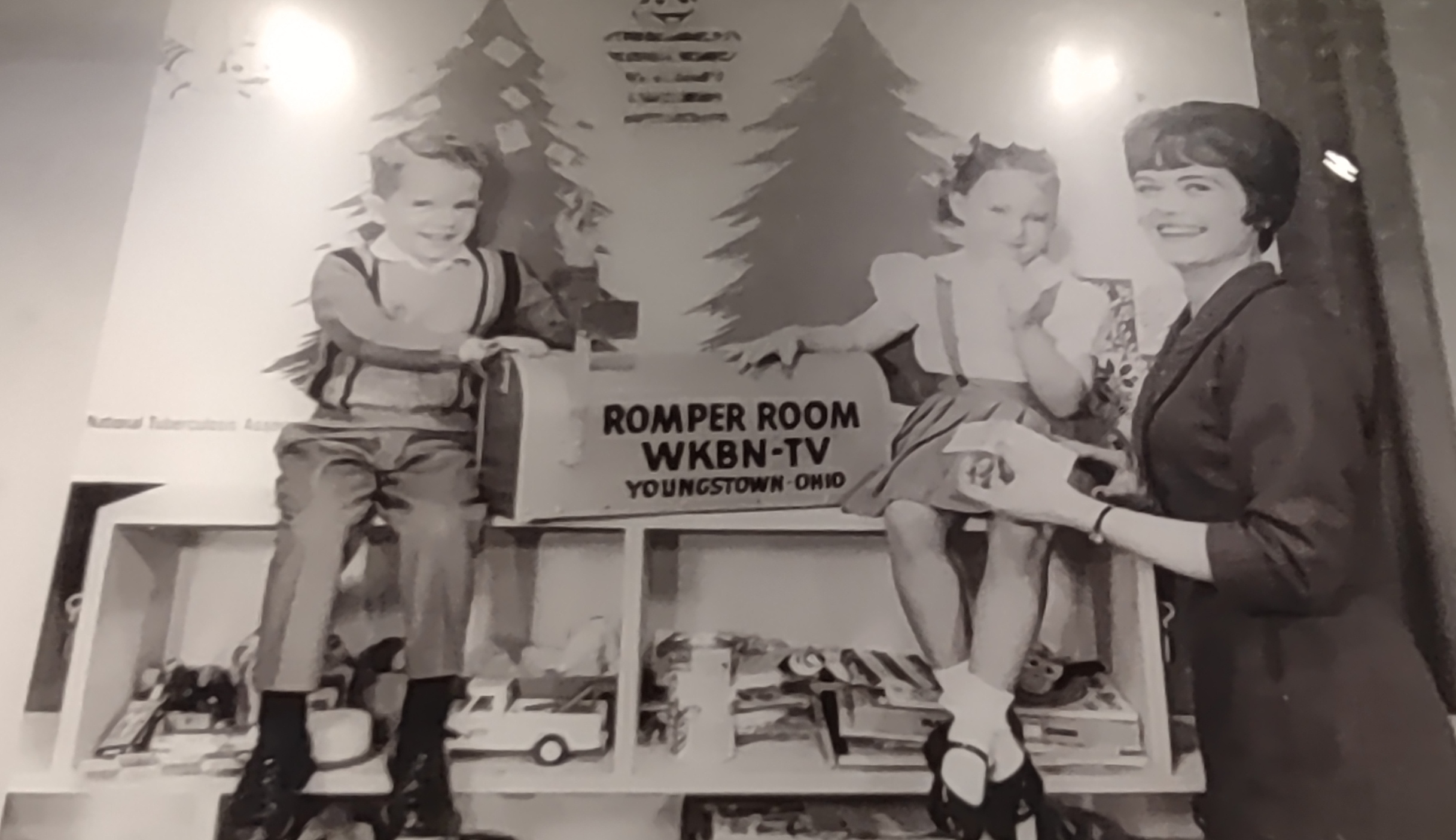
The early 1950s brought television to Youngstown. Fast-moving, visual, perfectly packaged, and designed to entertain, programming delivered instantly. Human interaction moved to the screen, where values, ideas, and especially advertising poured into home audiences.
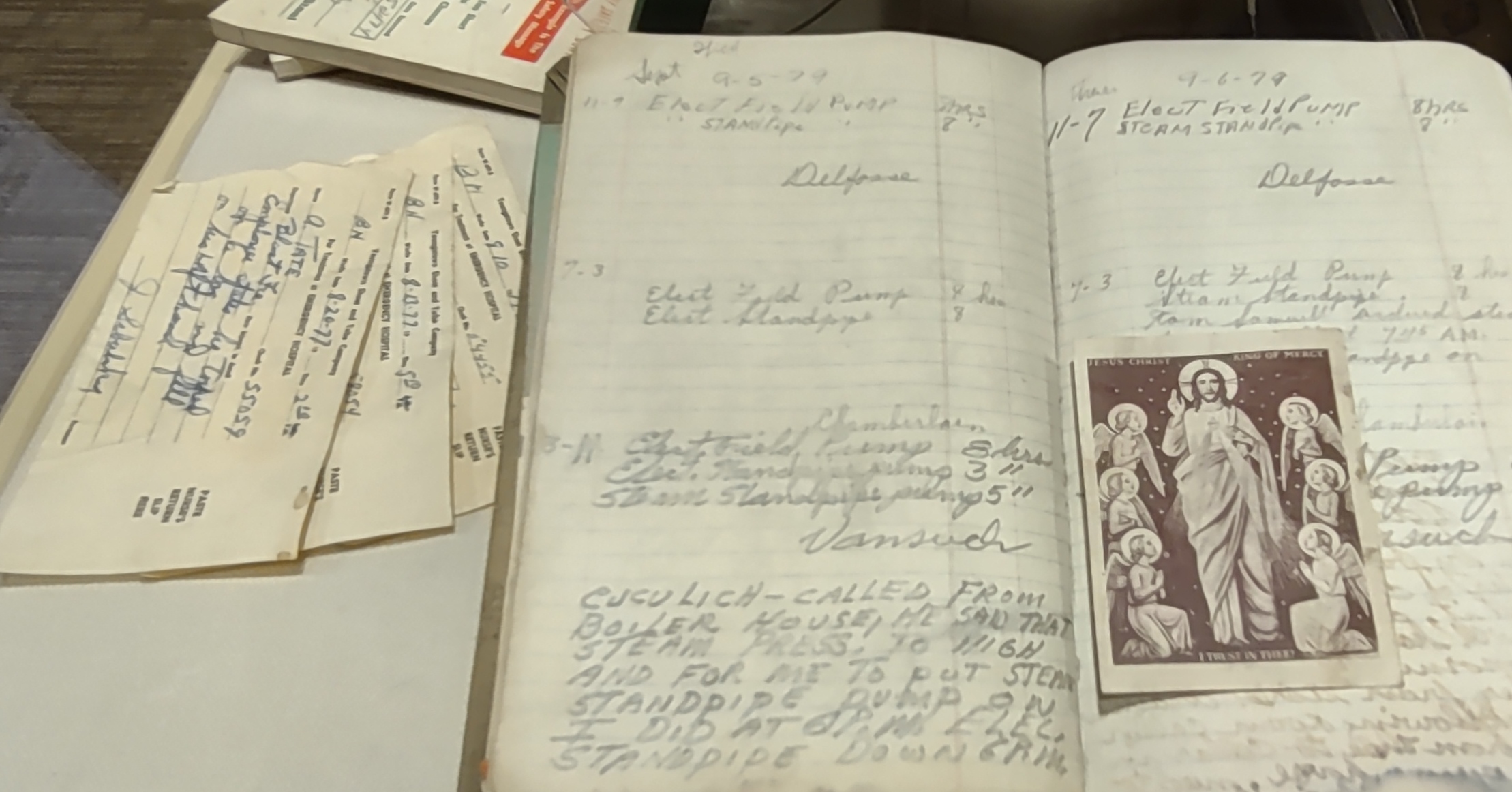
In the background, the steel mills hummed, day upon month upon year upon decade. The 1979 House Report book from Briar Hill Works.
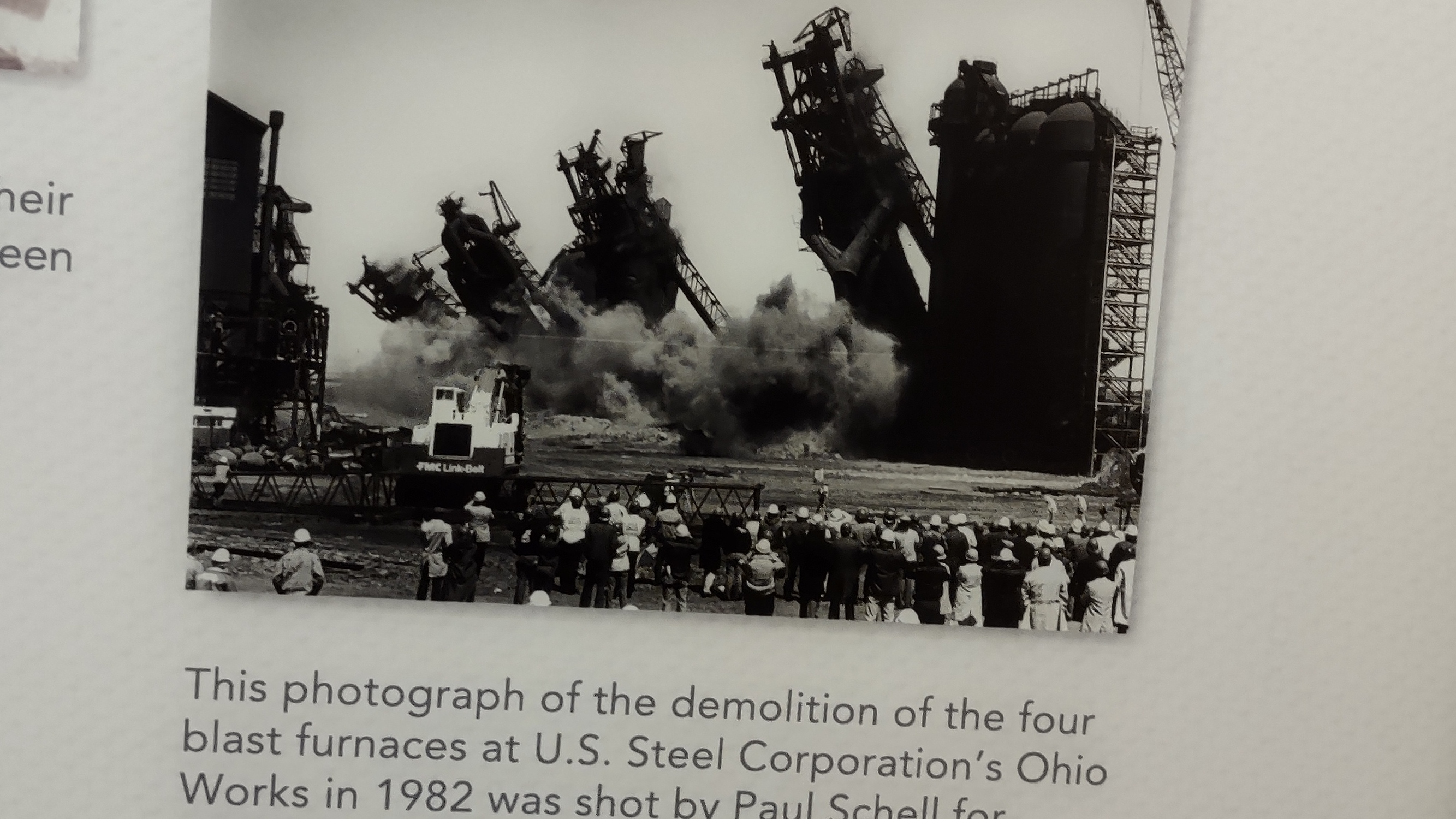
When the steel mills closed, everything changed in Youngstown.
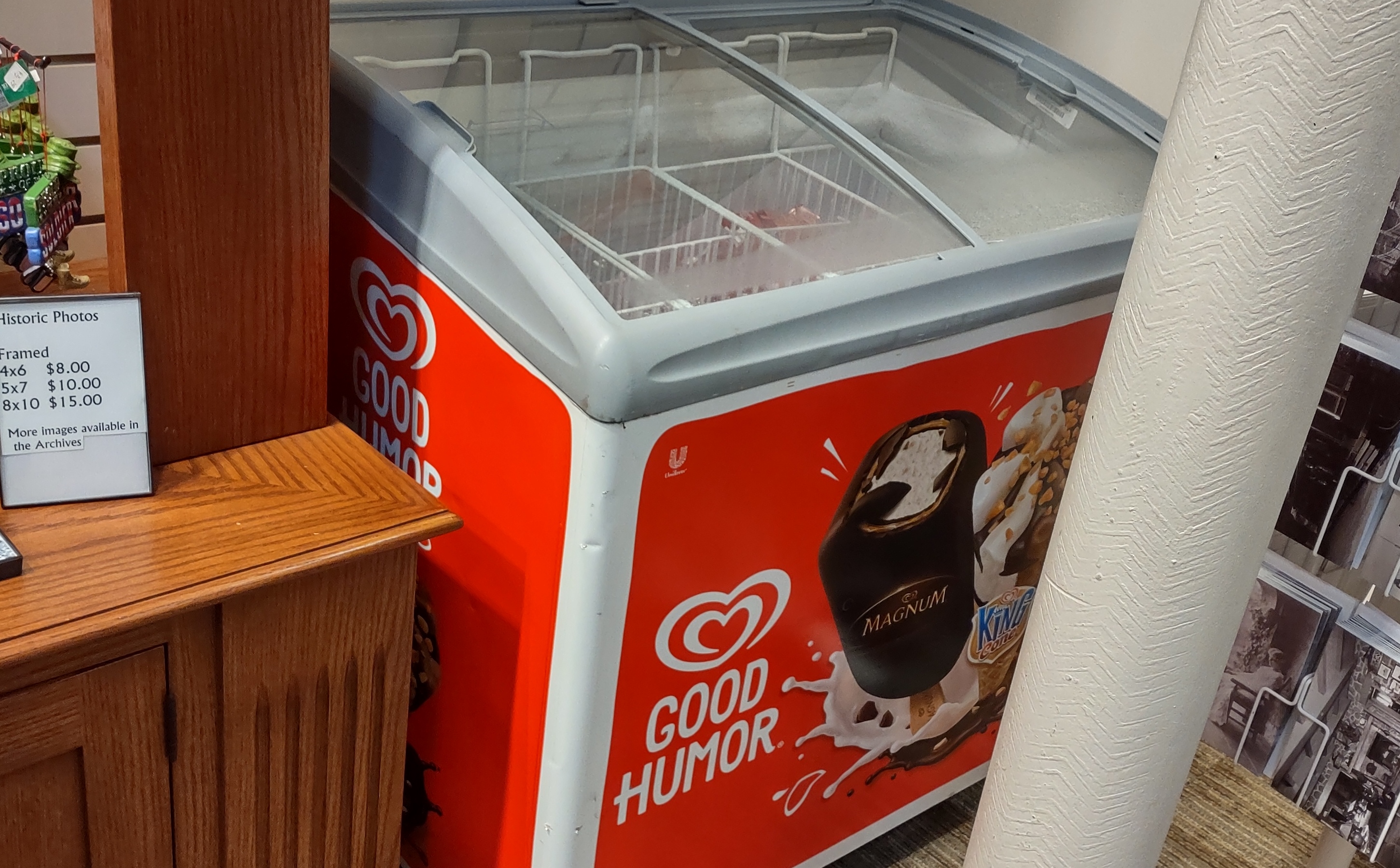
On our way out, a smile from the Good Humor cooler.
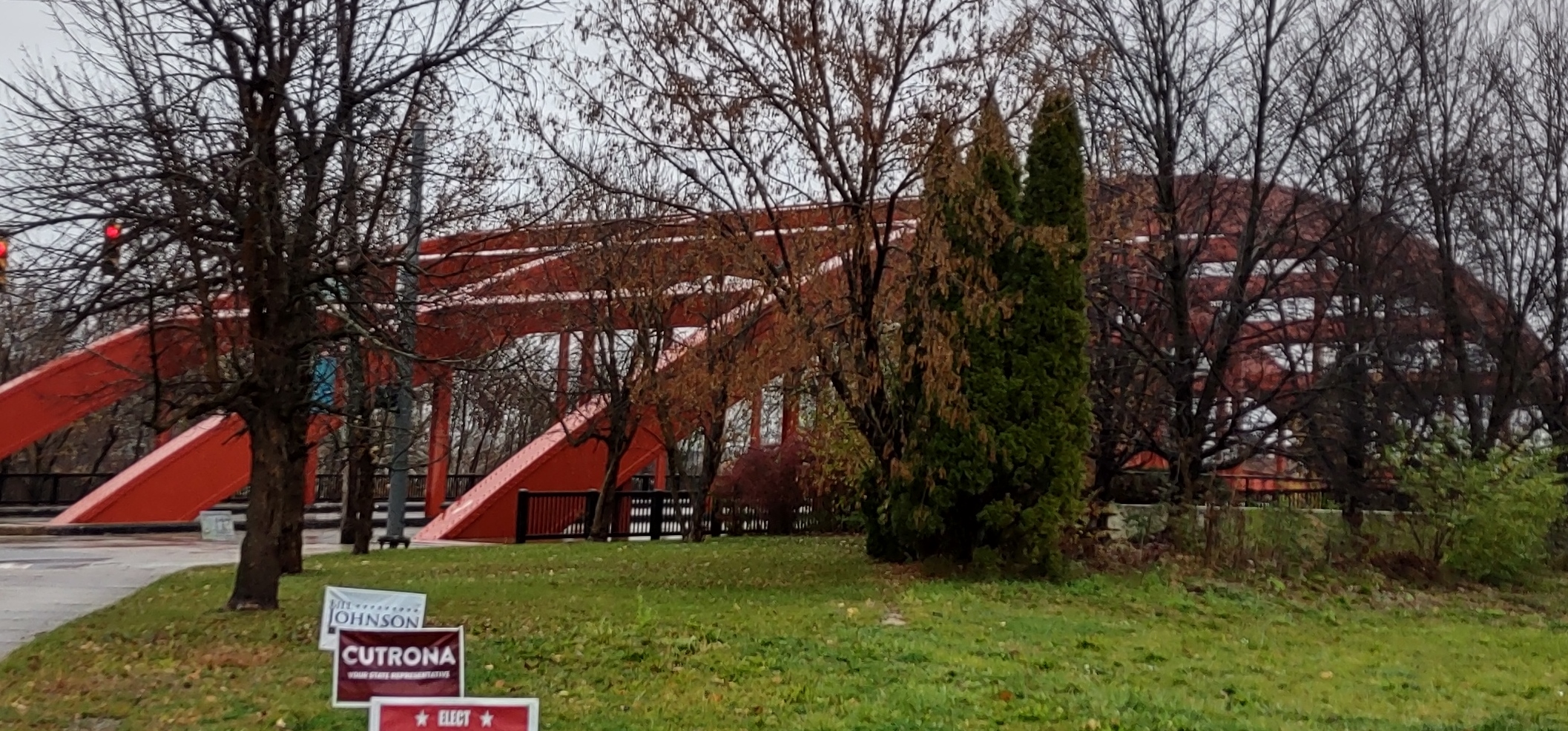
Back on the geotrail, we pass old election signs, as sure a sign of fall as the changing leaves. Now fallen.
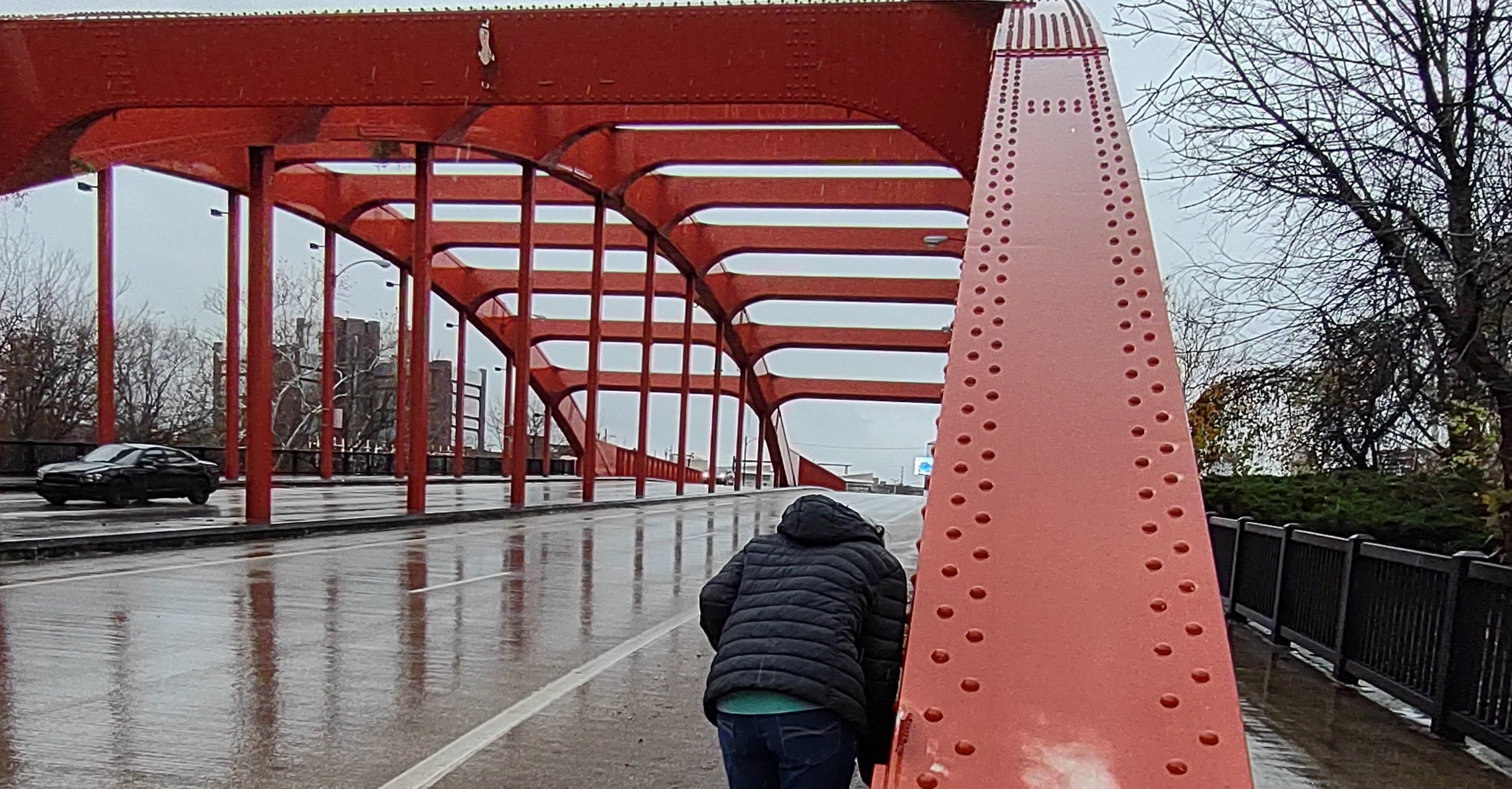
We see you, Mr. Peanut. And now for the cache, please?
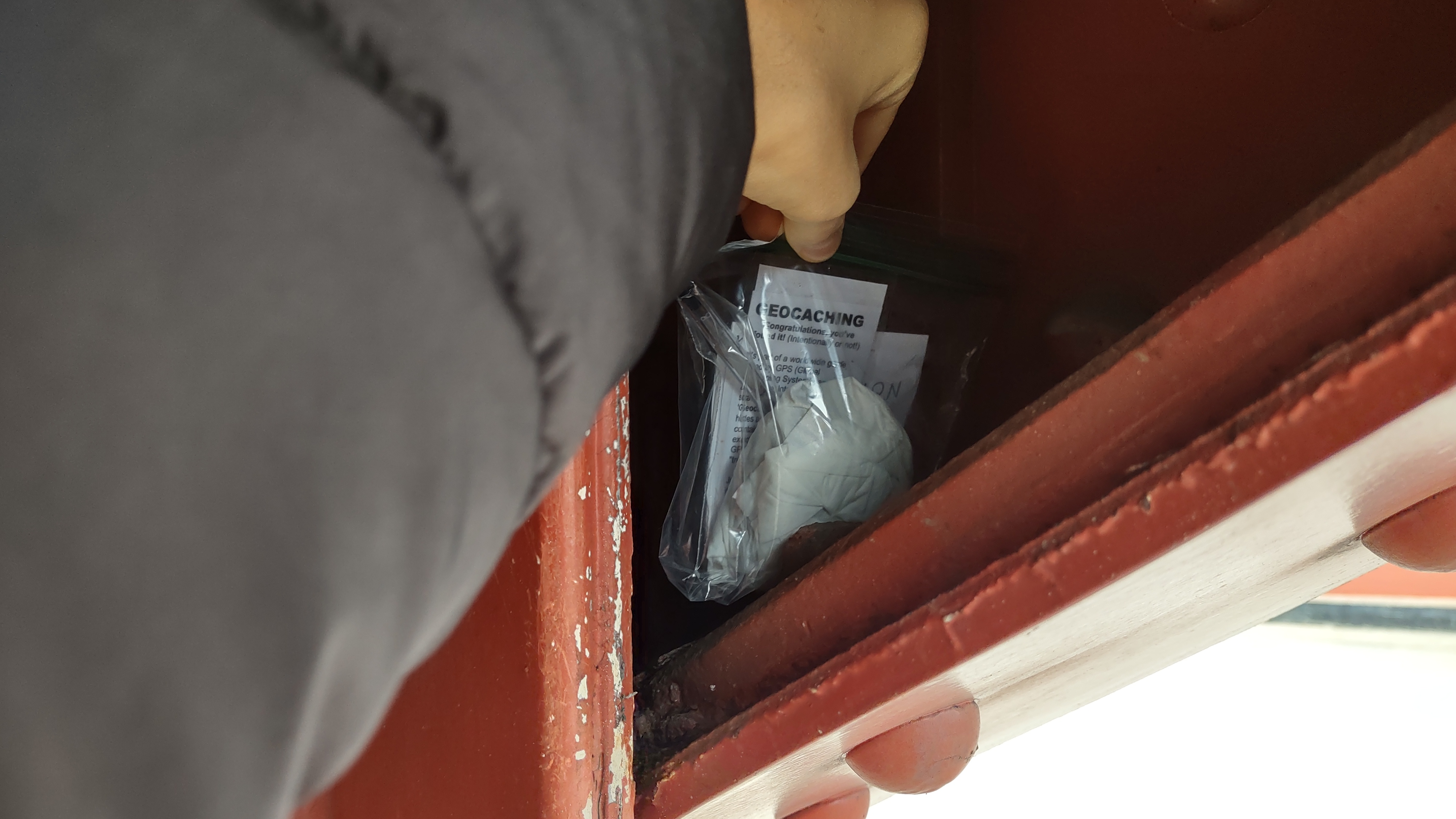
Only the salted legumes are missing.
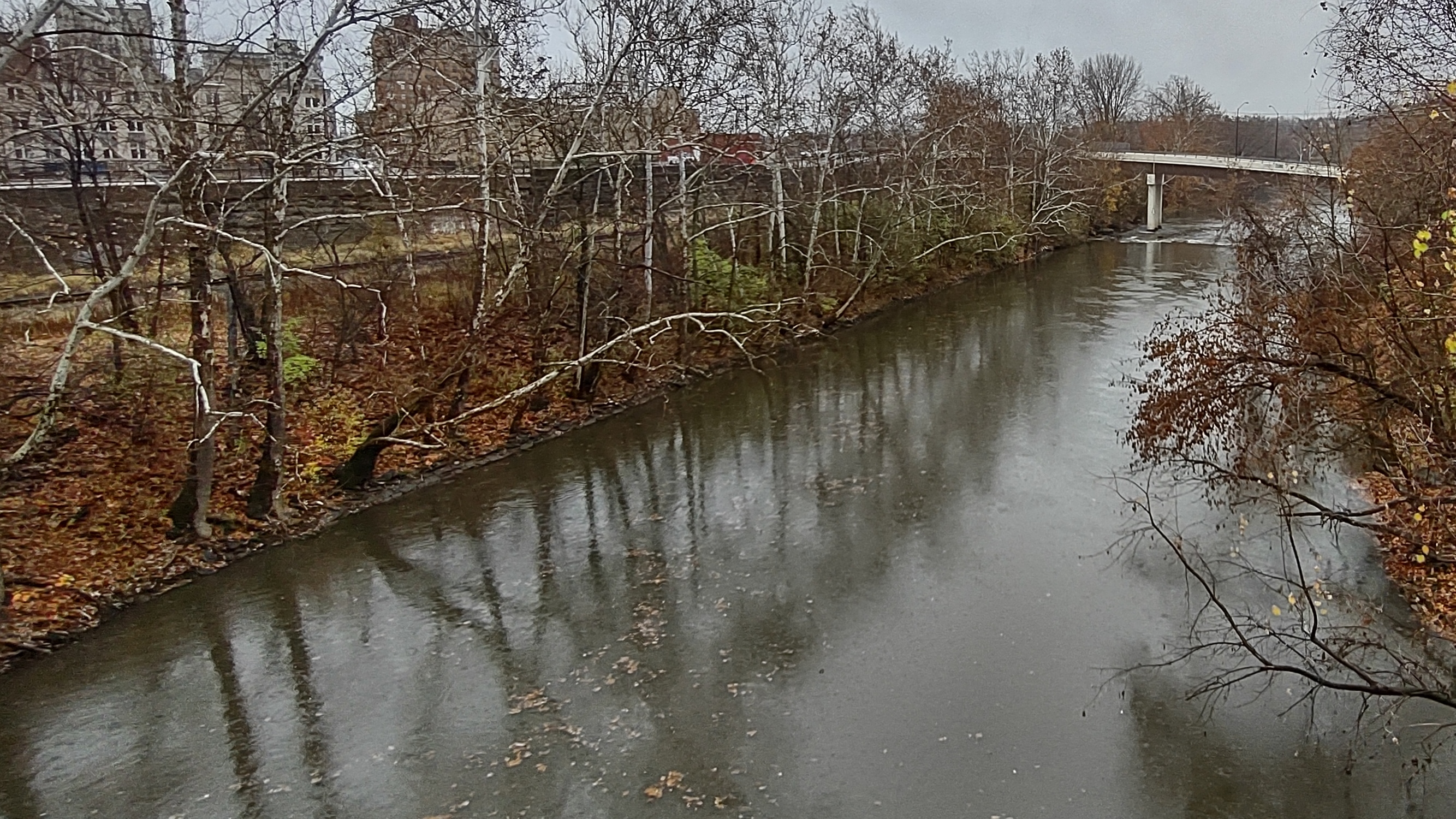
The Mahoning flows onward below, nourishing new hopes and fresh dreams for the next page of the family album.
Skip to content