-
Between a Rack and a Yard Place
In 2021, eleven years after previous placements, Cache Owner Pioneer Ts decides it’s time to do another one.

Wending our way westward, we bypass megatron options for health enhancement, choosing instead to find fresh air, fellowship, fruitful cogitation, and fantastical finds.
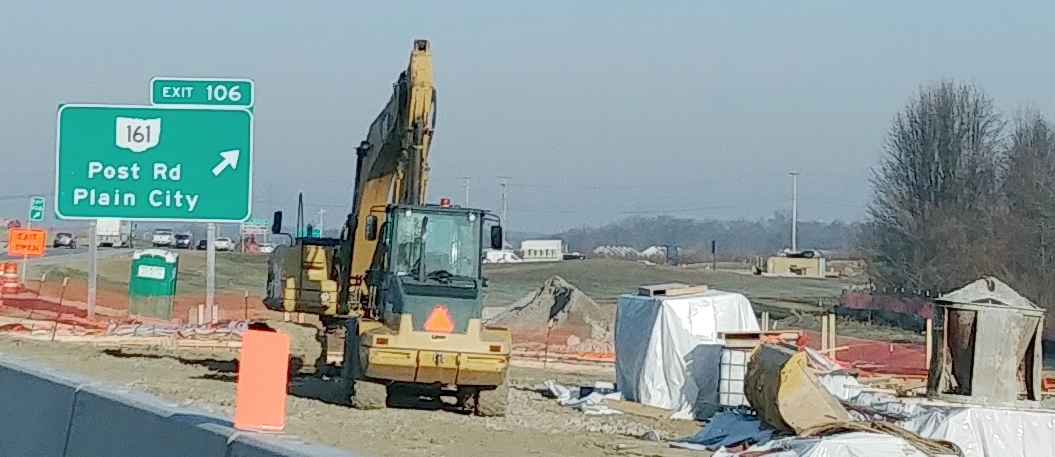
The plains of Plain City unfold, an endless war zone between bulldozers, caterpillars, contractors, and hungry home-hunters.

The skyline fades from roundness of silo to boxy enclosures. Lingering and sighing through investor balance sheets, long-forgotten forests whisper in the wind.
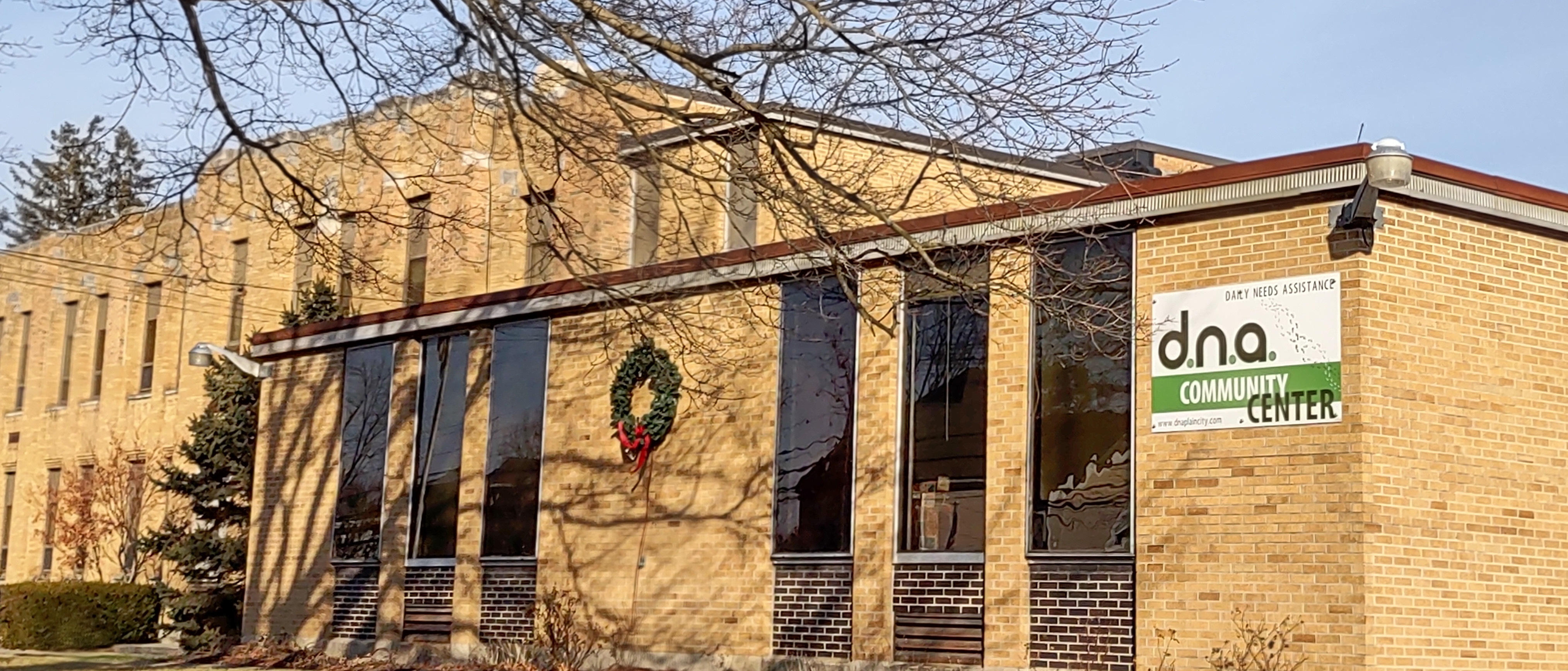
The old elementary school refreshes into a community outreach offering a hand when times get tough.

Looking for a rack and a yard place, we land inside a faith-based thrift store racked with bargains. In this paradigm, profits go to missions across the seas, where poverty-stricken recipients await.
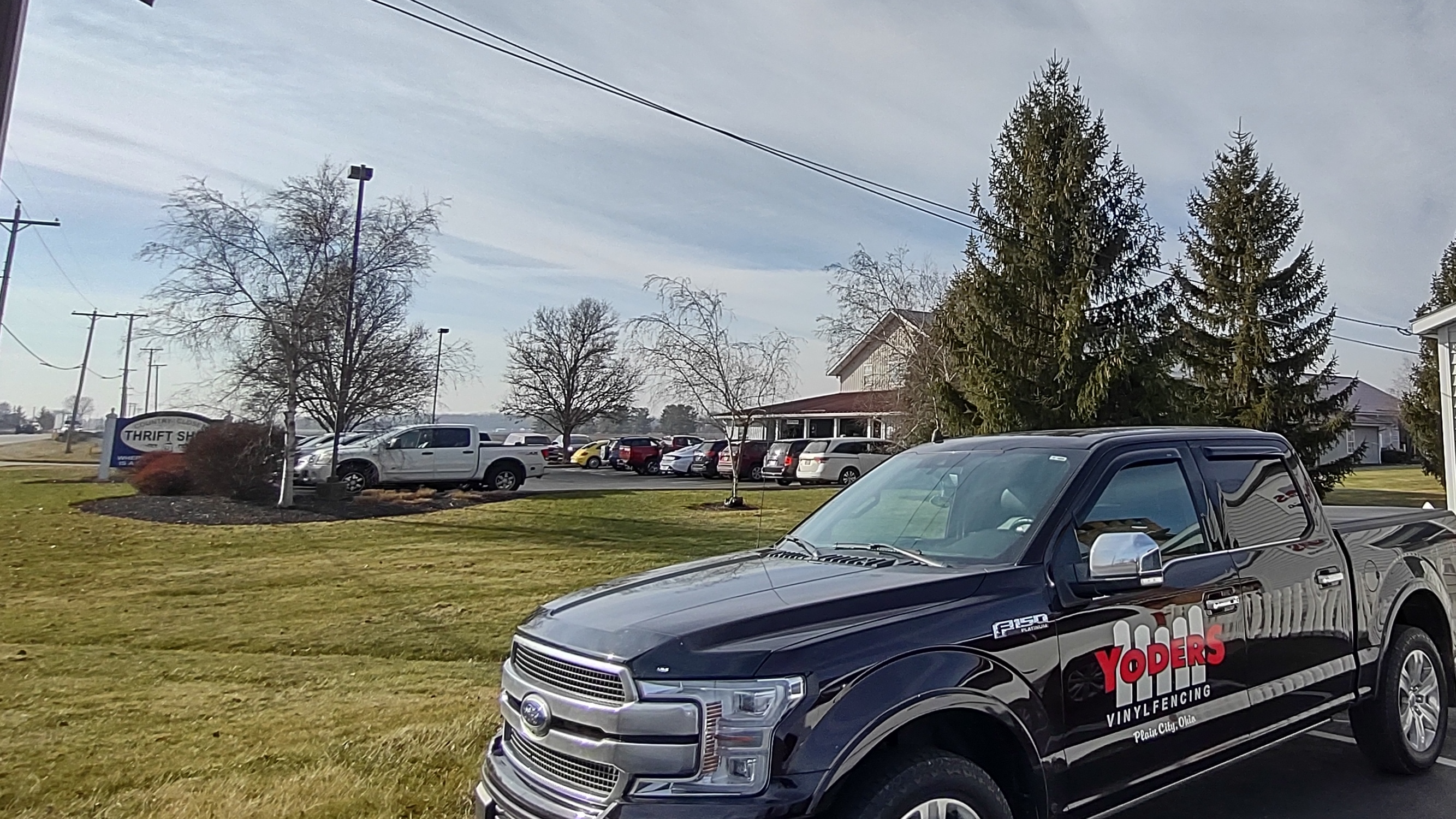
Across the way is the yard place, selling fencing with the family name. And in between . . . majestic monarchs inviting a prickly, pine-infused, primeval paradise.
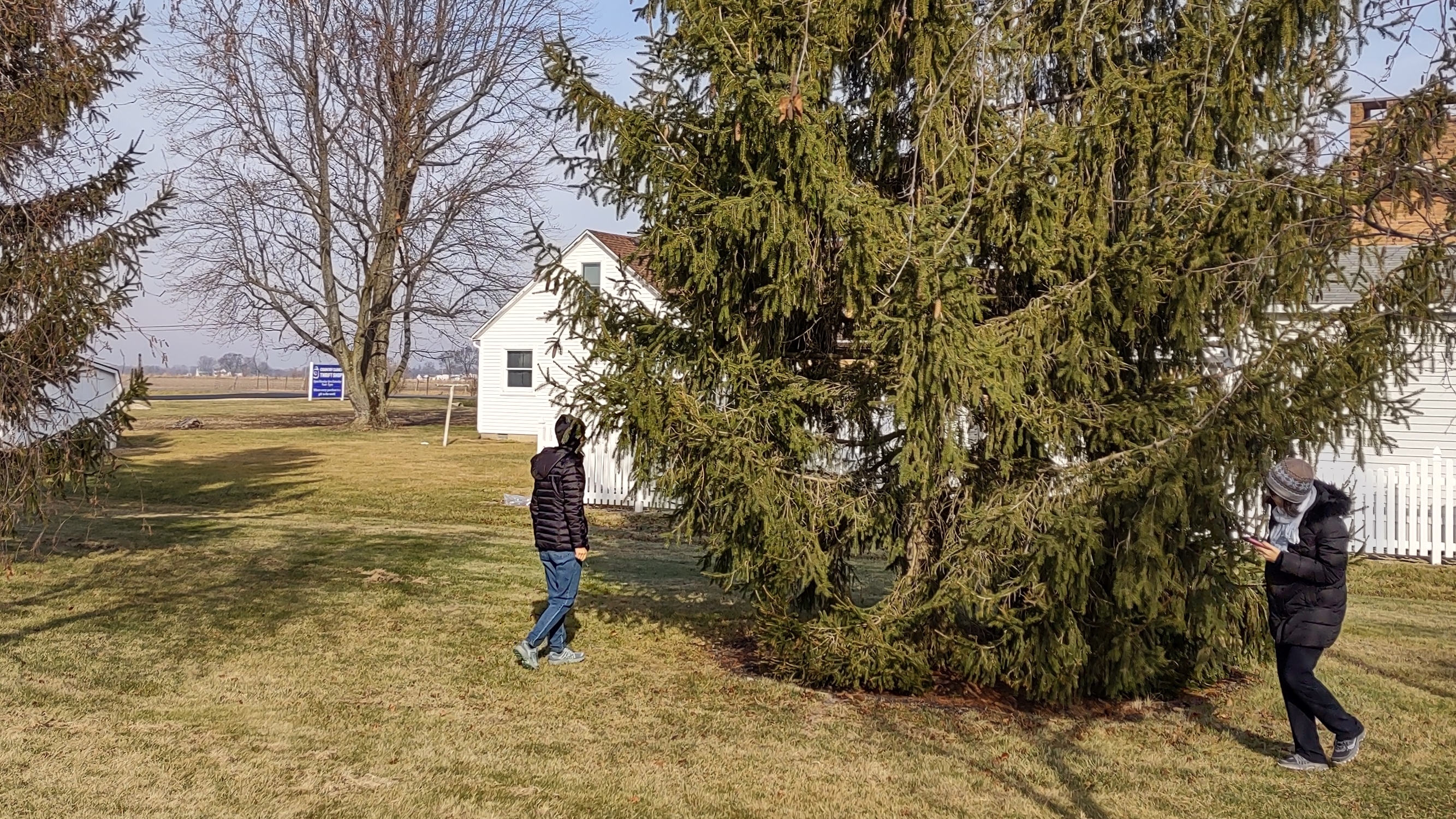
Planning the plunge . . .
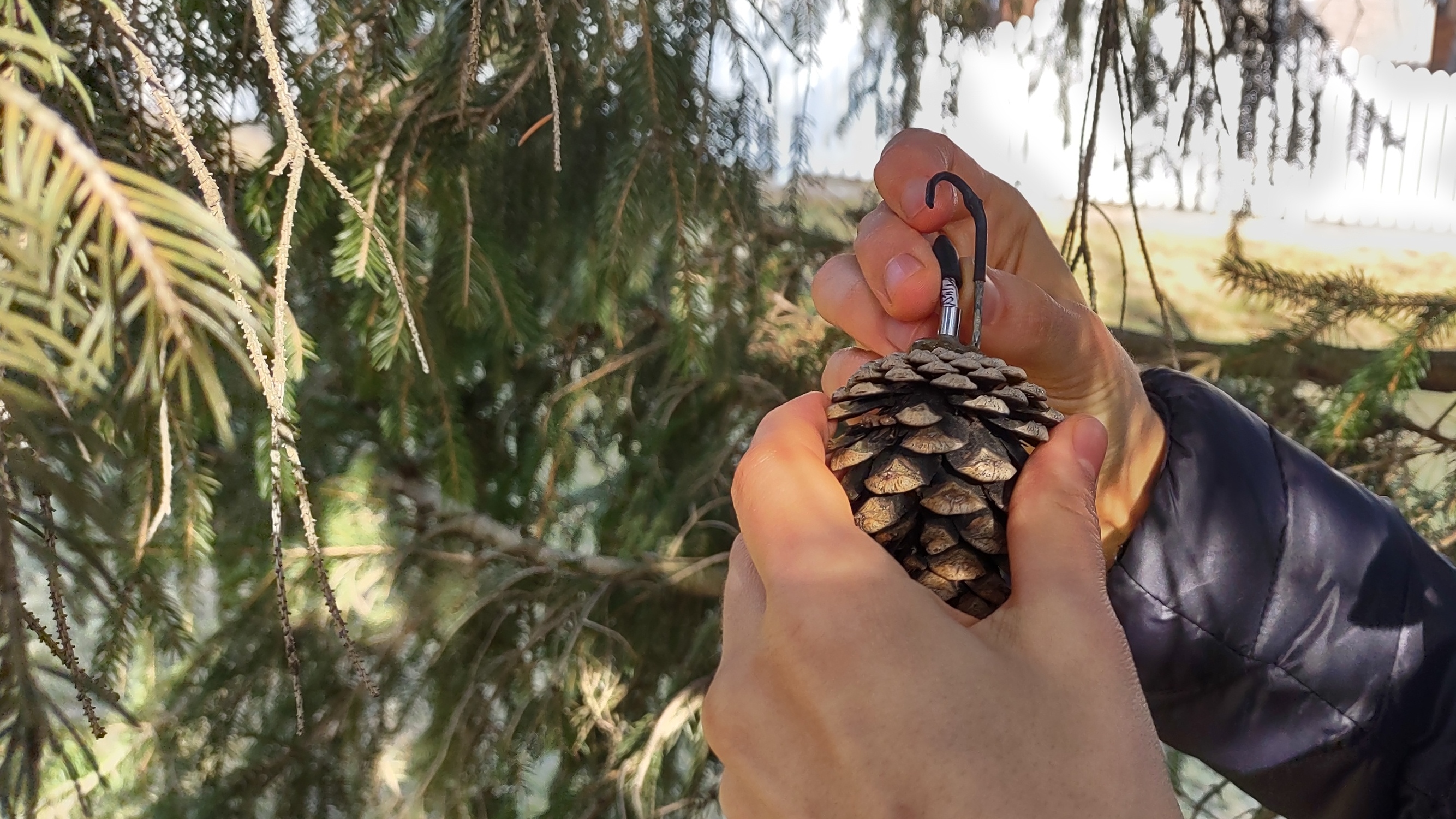
Conquering a cache paper so tiny, it qualifies as a laser beam.
-
The Spice of Life
Placed by Cache Owner Pioneer Ts in 2010, this riddle recalls Yoder’s True Value Hardware, a Variety and General Store for 40 years.
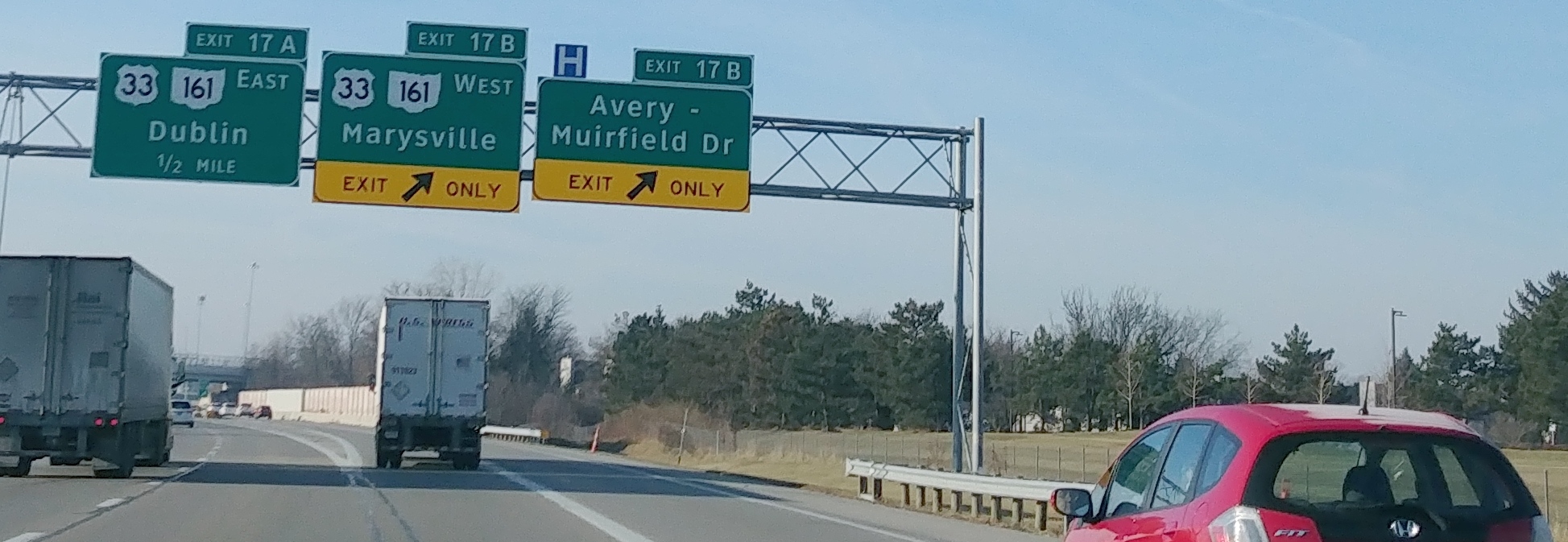
While an Arctic storm hurtles toward us, we revel in today’s sunshine, hopping from the 270 outerbelt onto Route 33.
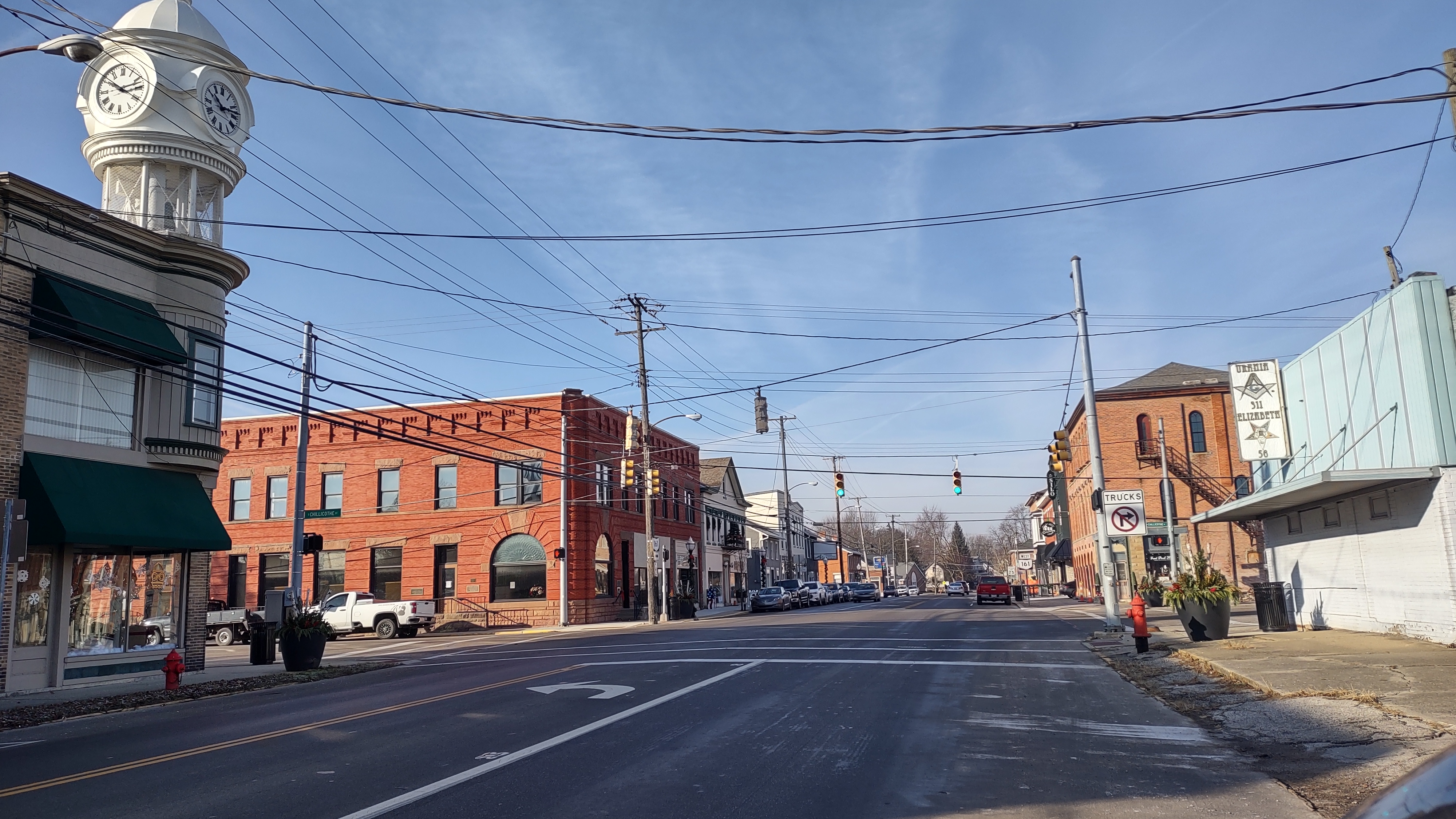
Removed by one small 30-minute drive, and one giant time warp, from freeways and outerbelts, we are at the traffic light on Main Street, Plain City.

No geotrail through this town can resist the Gingerbread Castle, where chocolate flows and Mom’s cooking tantalizes.
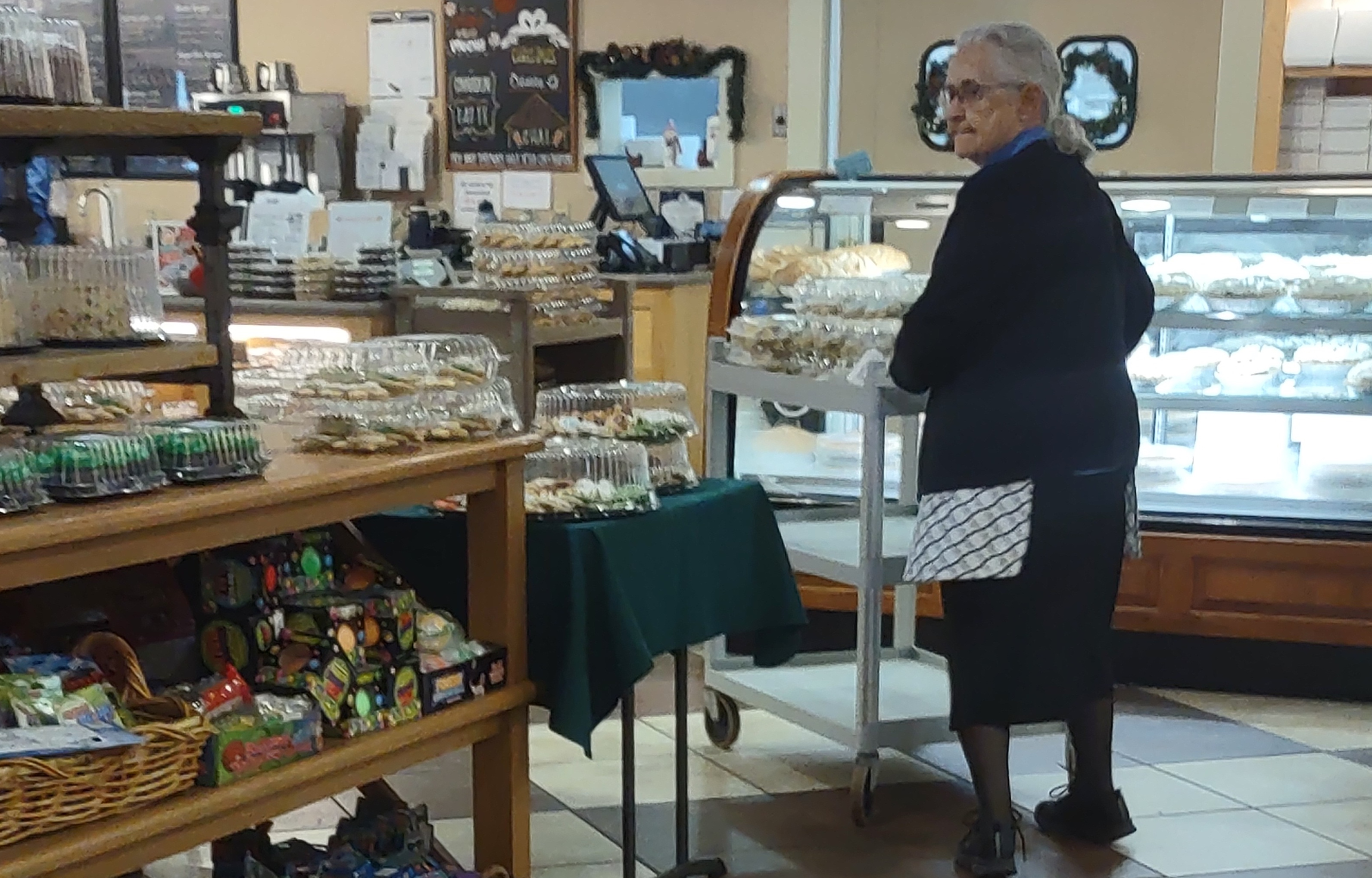 The unique Dutchman mix of food and faith is selling well today. This workforce of deeply entangled ethnic culture wraps itself in religious and family histories. Completely rural roots look askance at communal constructs of town and township.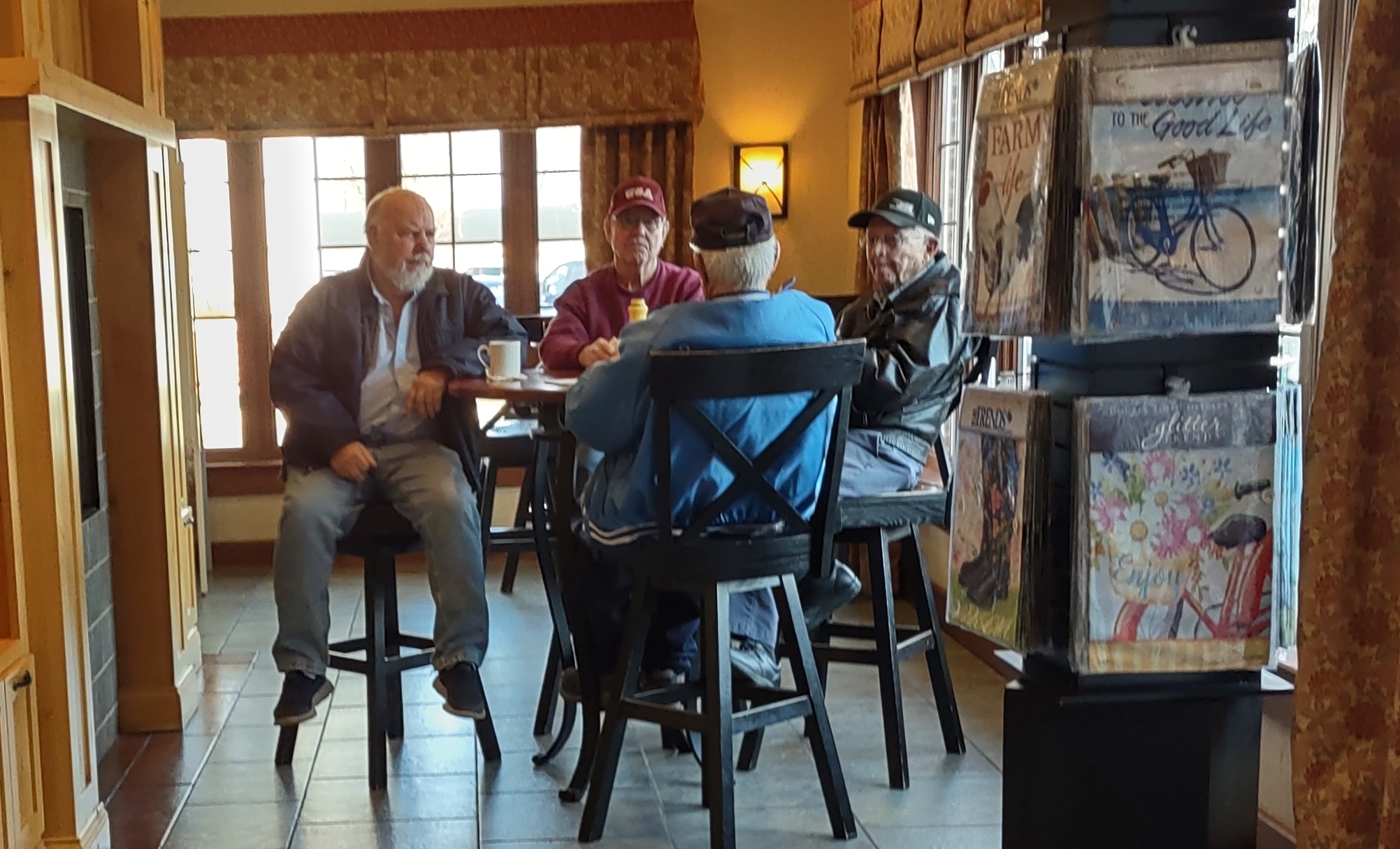
Family patriarchs keep track of grands and great-grands who intersect and interconnect on a giant Scrabble board of last names. Gingeriches marry Troyers marry Schlabachs marry Millers marry Yoders marry Hostetlers. Ethnic cousins from afar slowly transplant and blend in, blurring and reshaping cultural identity. A digital world burrows beneath and upends cultural roots in never-before-dreamed-of universes.

Full of gingerbread, we follow our geotrail. In 2021, Yoder’s True Value sold out to become Plain City Hardware. Mr. Yoder personally served his variety store for four decades, then, childless, his name capitulated to the town. Customers ponder the change, with a forlorn feeling of father lost and era ended.
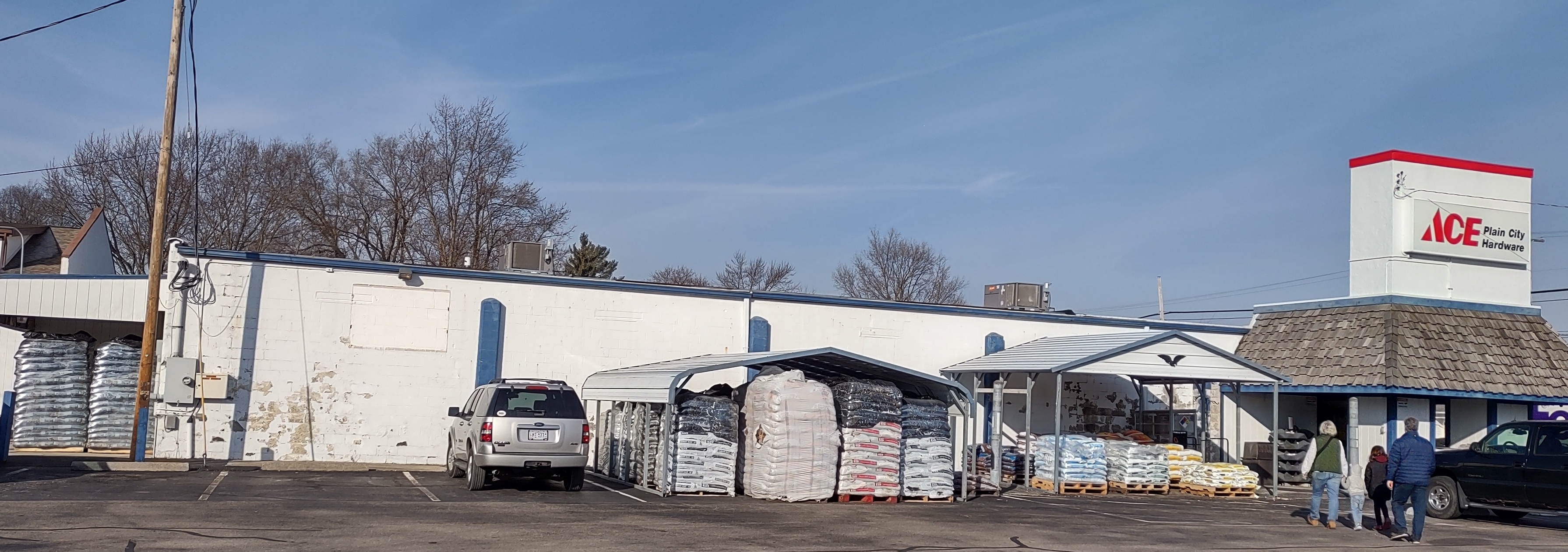
As new generations are conducted into hardware heaven, our geotrail winds to the back of the building. No longer can cache hunters expect to encounter the adventures of past logs: poison ivy, a wild cat colony, or a doggy-paddling baggy struggling to keep its head above water.
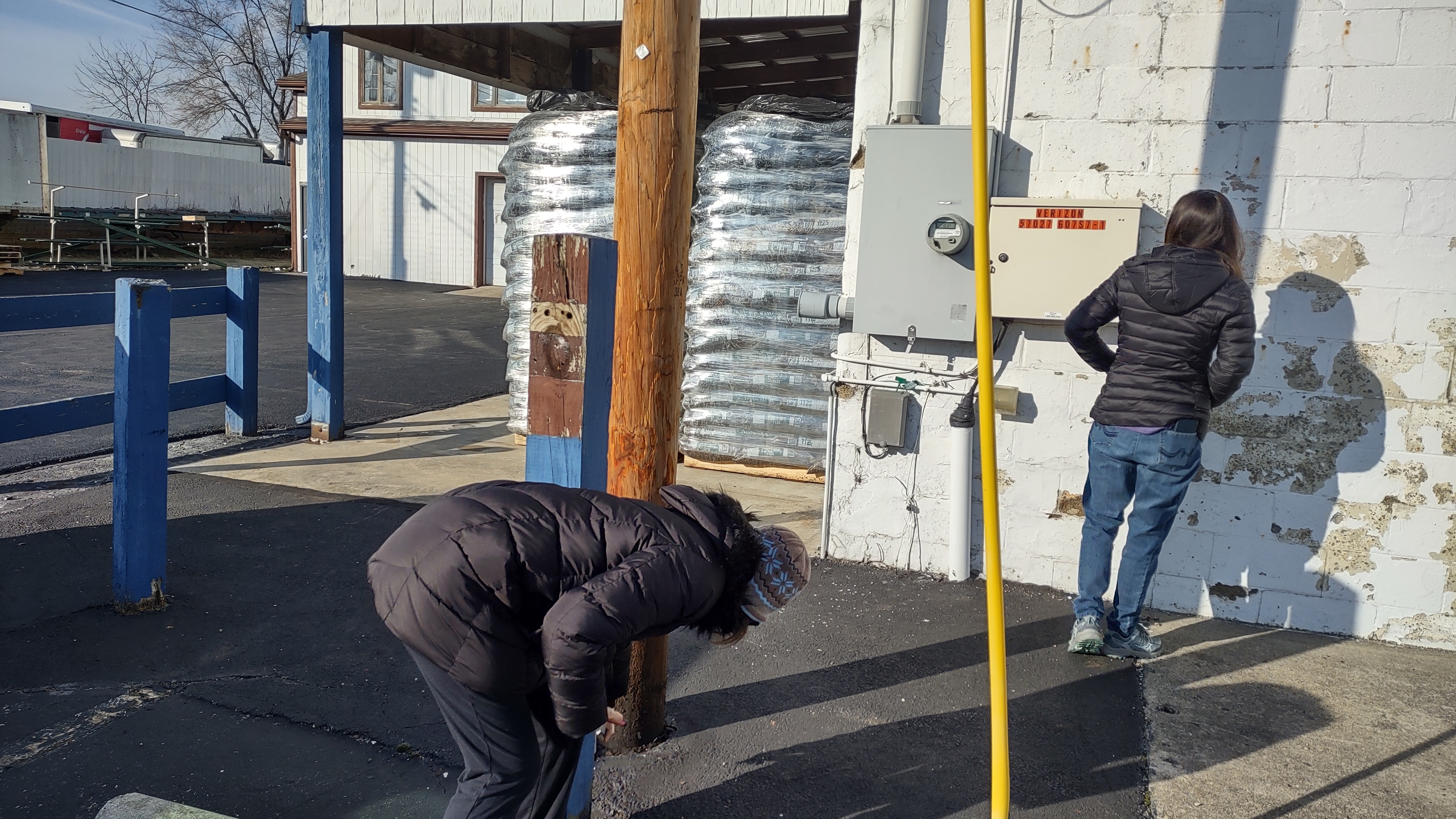
In 2019, the CO moved the bounty to a tame and docile place within the sterile confines of a parking lot. Fully appreciating the expectations of Cache Nation, clever rascality makes up for removal of untamed wilderness.
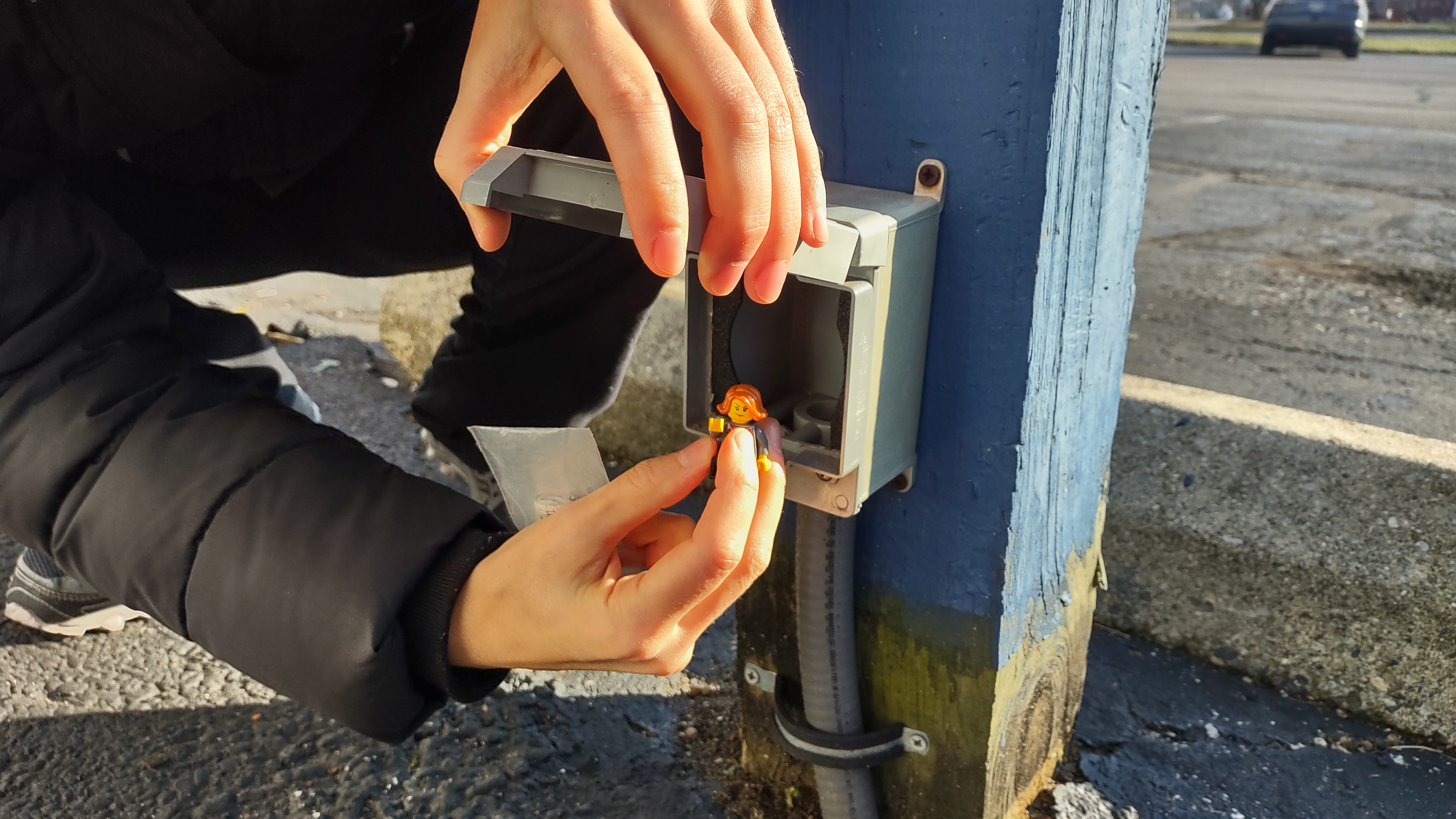
The Cache Countess greets with brilliant, tiger-dyed hair and a fist bump.
-
Bank Barn Remnants
Placed by Cache Owner MVG in 2016, this treasure hunt tantalizes with something resembling a remnanting bank or barn.
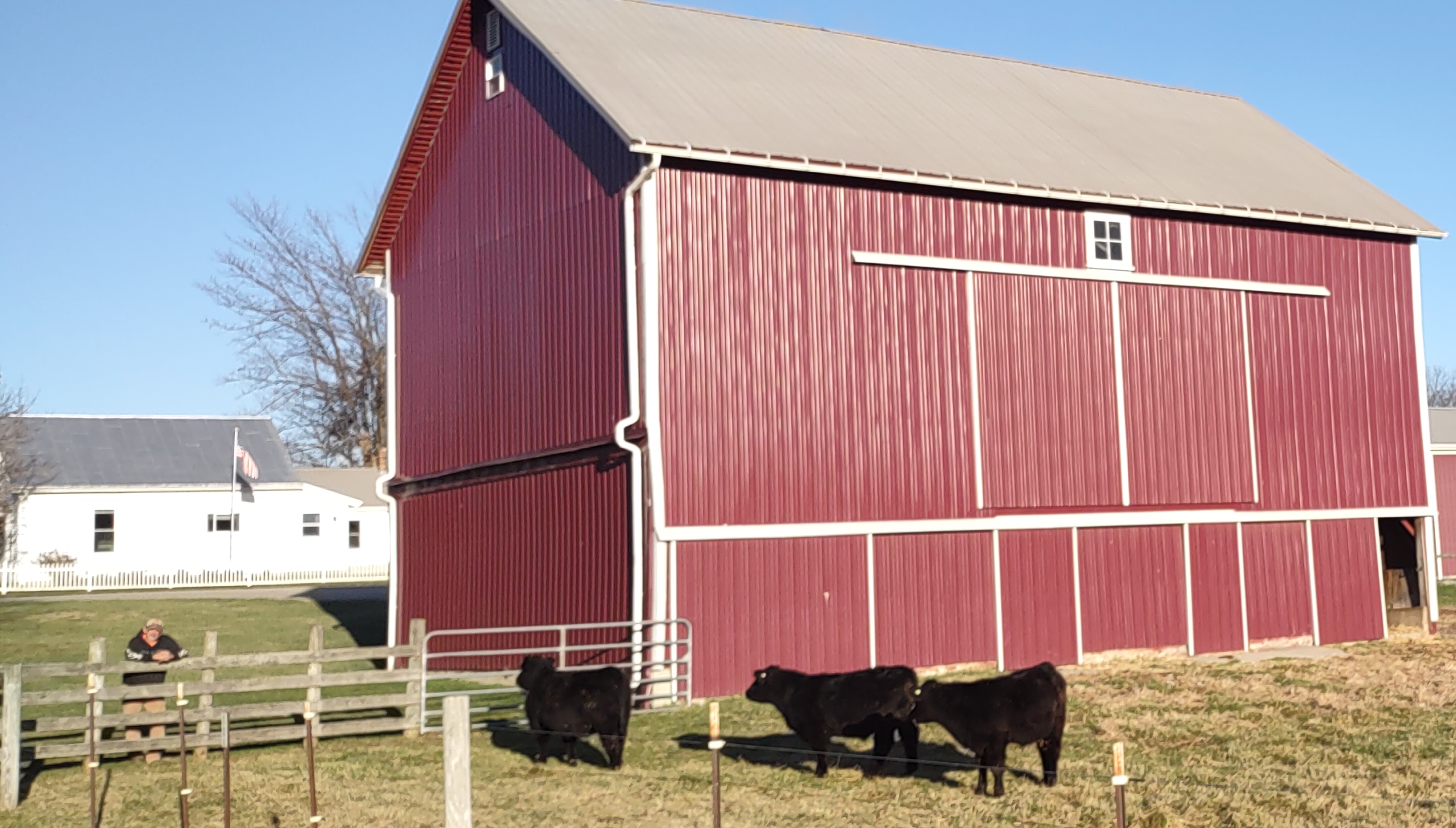
With a nudge of our trusty Honda west and south, we leave city lights behind. Barns spring upward from fields, where black, brushed cowhide matches methodical manicure of any suburban lawn. The farmer hunches and watches, keeping his thoughts about cow-starved city drivers well under wraps. With rotational grazing, cover crops, and no-till cultivation, small stock raisers are revitalizing soil into a living organism.
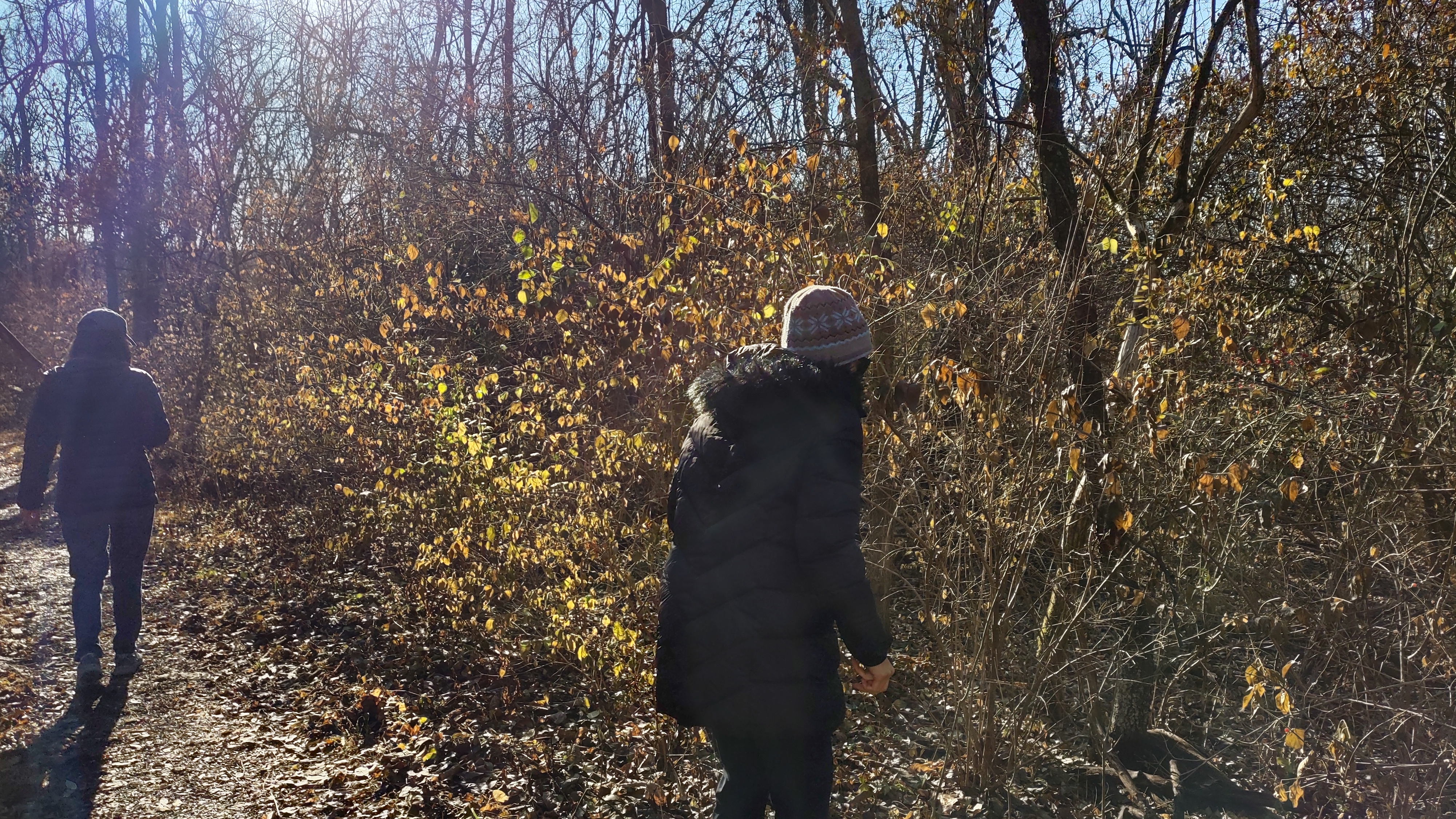
The geotrail unfolds at John Bryan, where sun dapples and forest critters scuttle. Following along in the careful foot-crafting of past cachers, next-to-finders avoid random ruckusing through underbrush, preserving tiny homes of wood-dwellers.
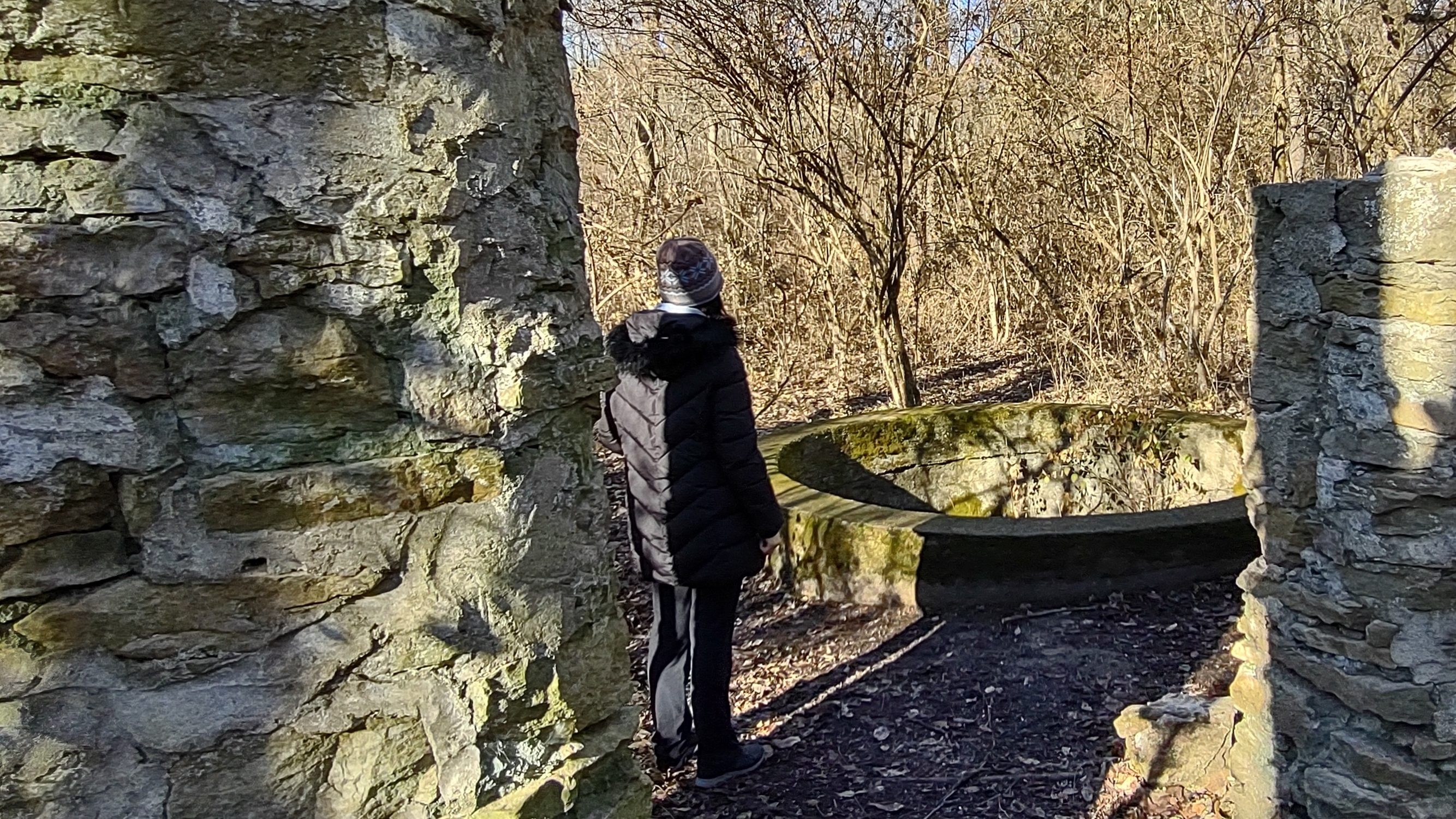
We don’t miss the Bank Barn. It once towered tall enough to be approached on two levels, the upper side embedded in the bank, and the lower side on the ground, perhaps at river level. Stagecoaches on the Cincinnati-Pittsburgh route stopped for water, and, if sensible, switched to fresh horses before making the climb back out of the gorge.
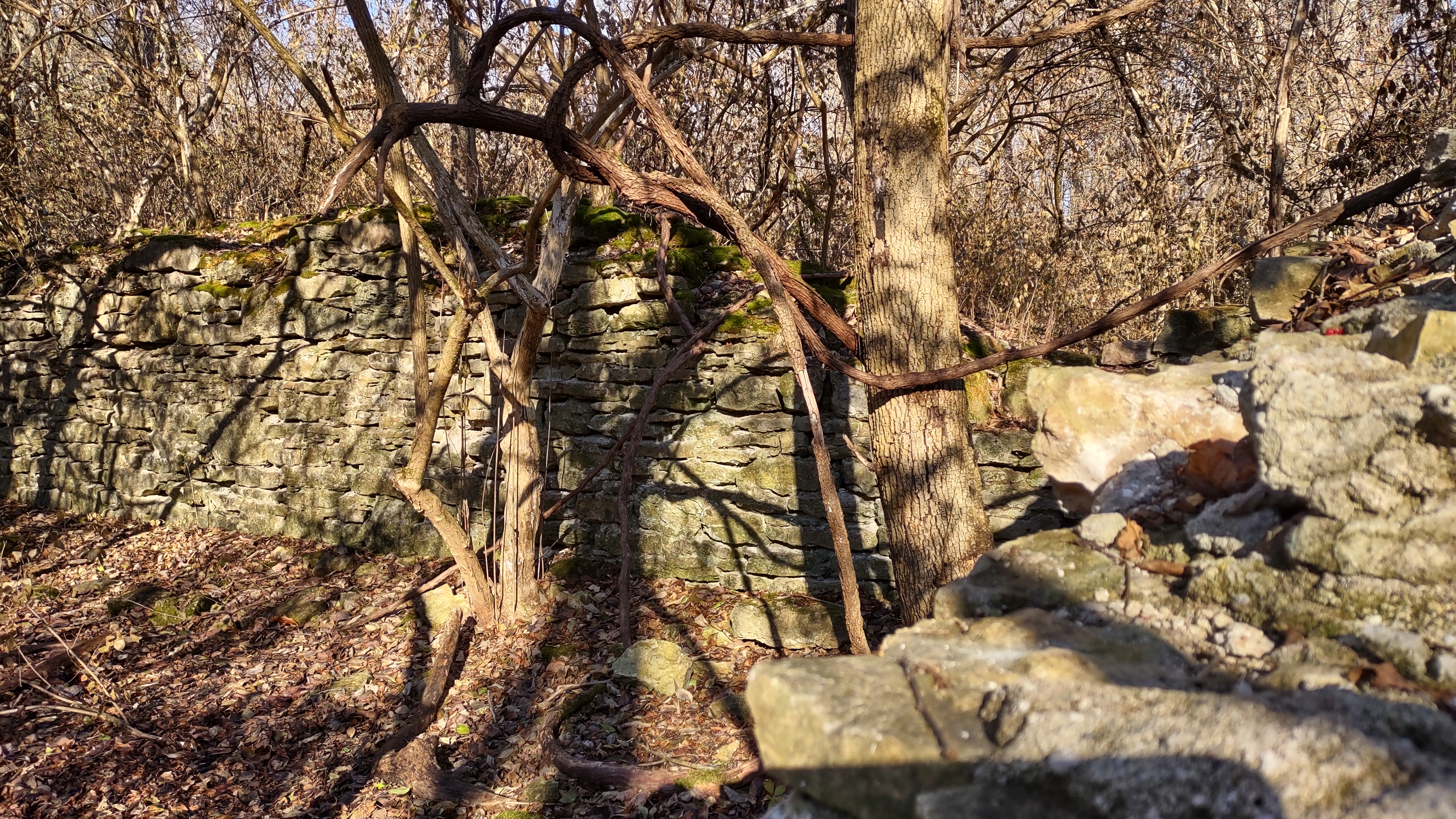
Now the trees lean, dance, and carouse, on walls raised by the placing of infinite large stones. Time and air hold the nicker of tired horses, groan of passengers stretching cramped limbs, and twitter of news vocalized, not digitized. Blood passed to descendants from these stones carries imprint of granite strength.
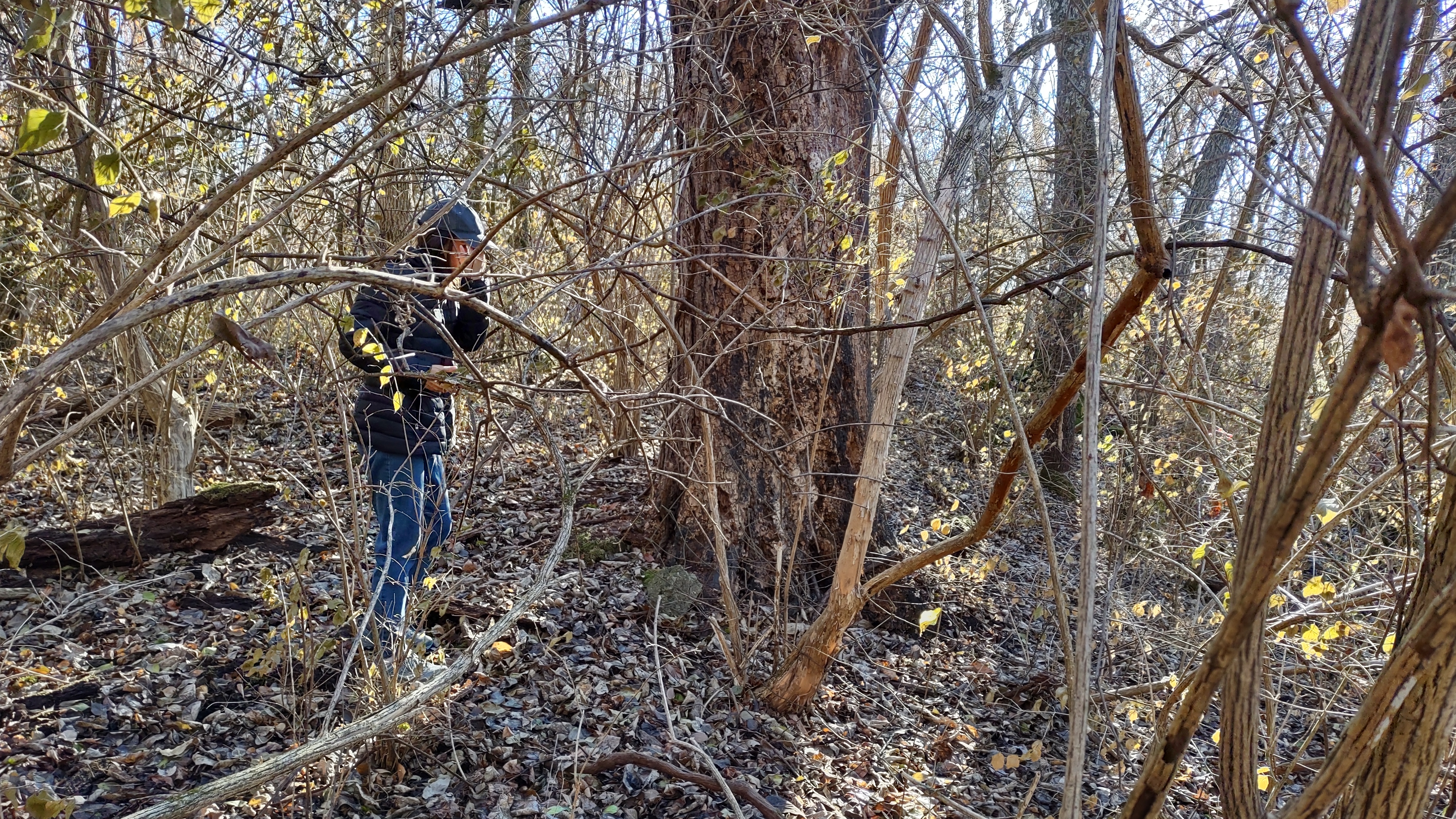
And then the UPS, or in this case a UPB, because, while it is definitely Unnatural, it is technically not a Pile of Sticks, it is a Pile of Bark. Technicalities matter, as any cacher who feels irked by untechnical coordinates will gladly share.
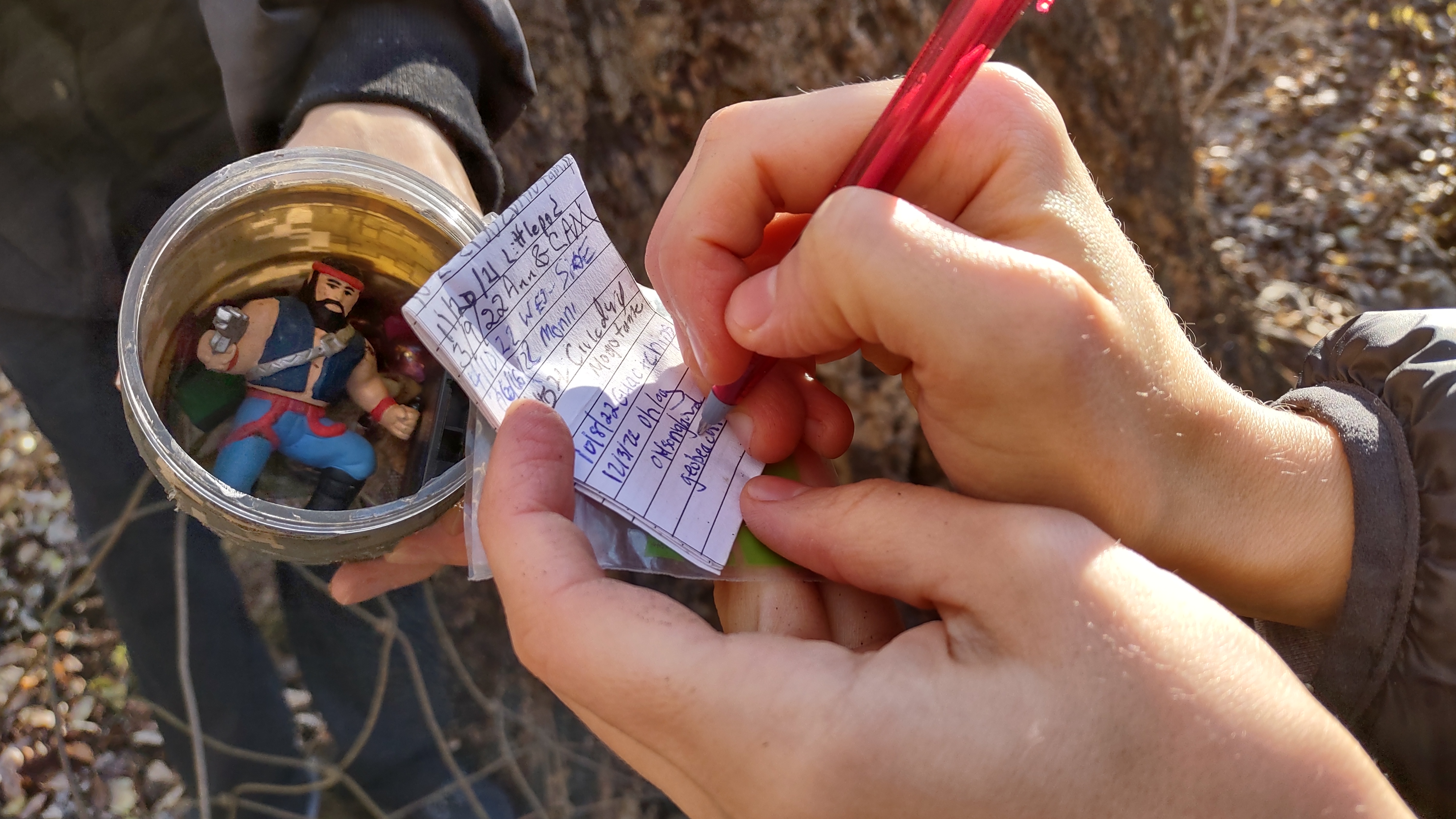
Guardian of the Cache, we salute you. We leave a piece of ourselves entrusted to your rockstar galaxy.
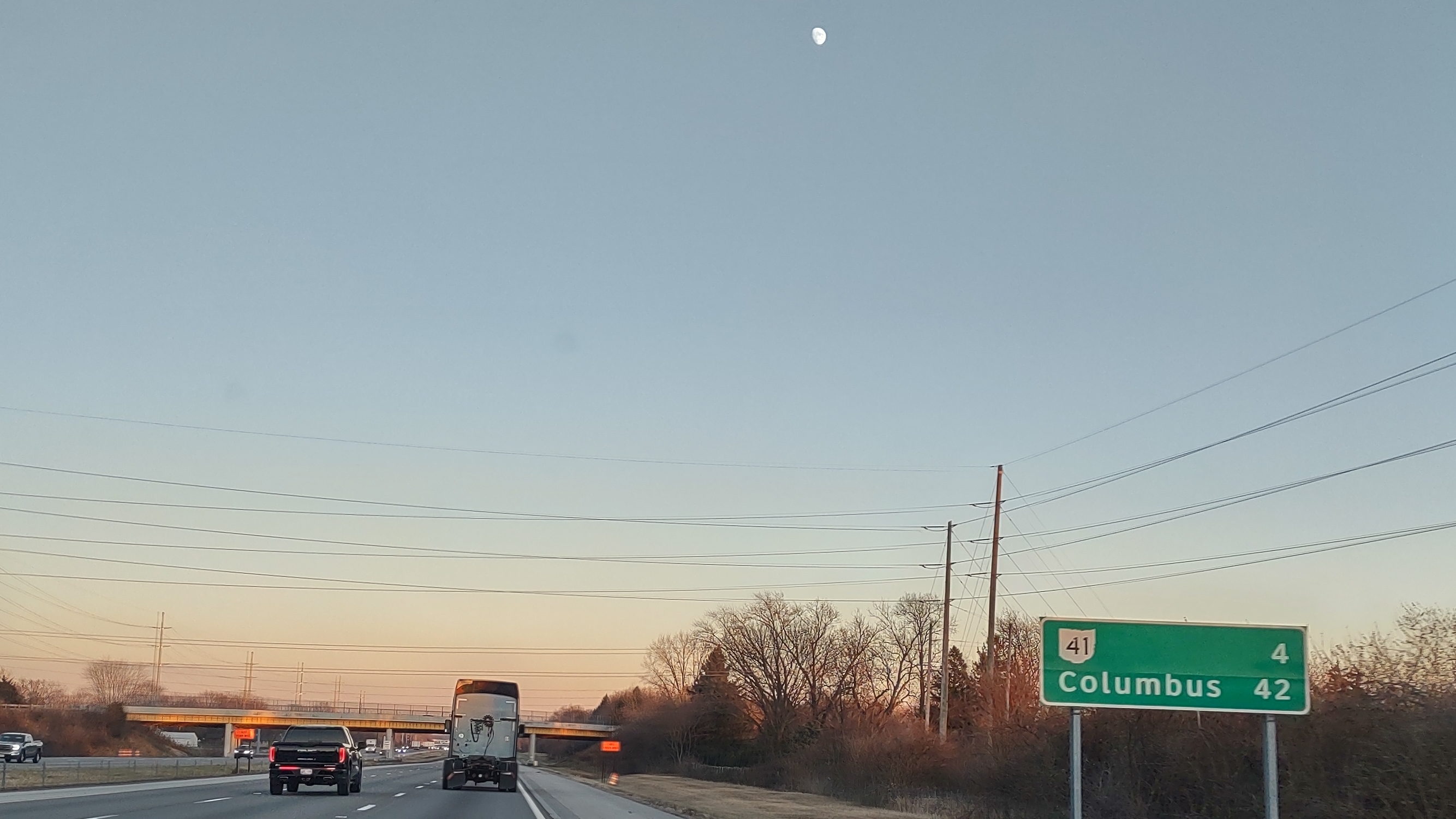
The moon has crept into our sky. Our place, as all places, calls back the ones it owns. We trace our footprints home.

Where barn-builders still must build, stones and farmyard red are replaced with a glittering glow.
-
Treasures of Scouting
Cache Owner boydfamily asks us to scout around for a 12-year-old cache.
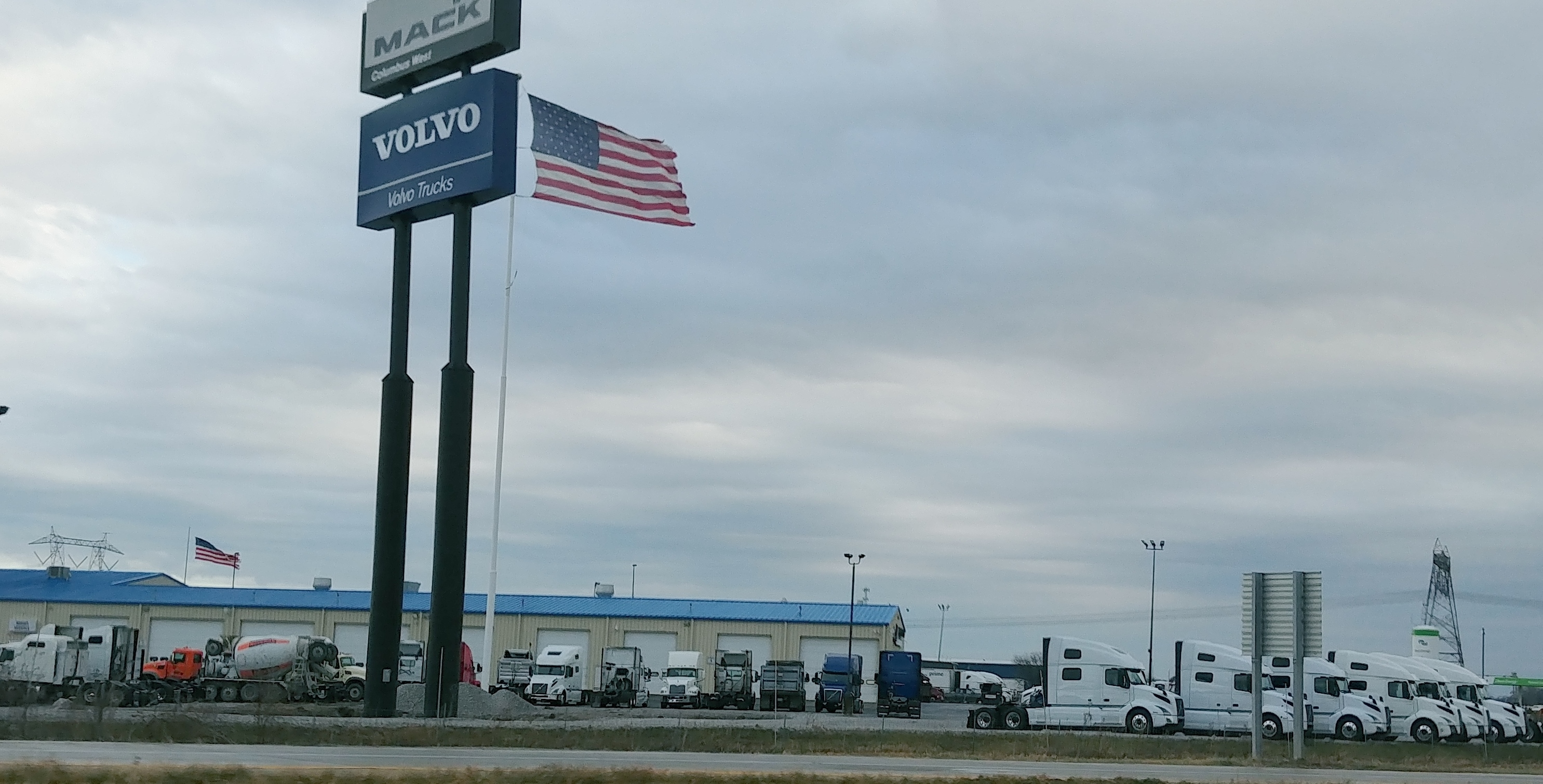
Passing a truckers’ shopping mall, today’s answer to the 208-year-old question billows above: “Yes, it does. It does yet wave.”
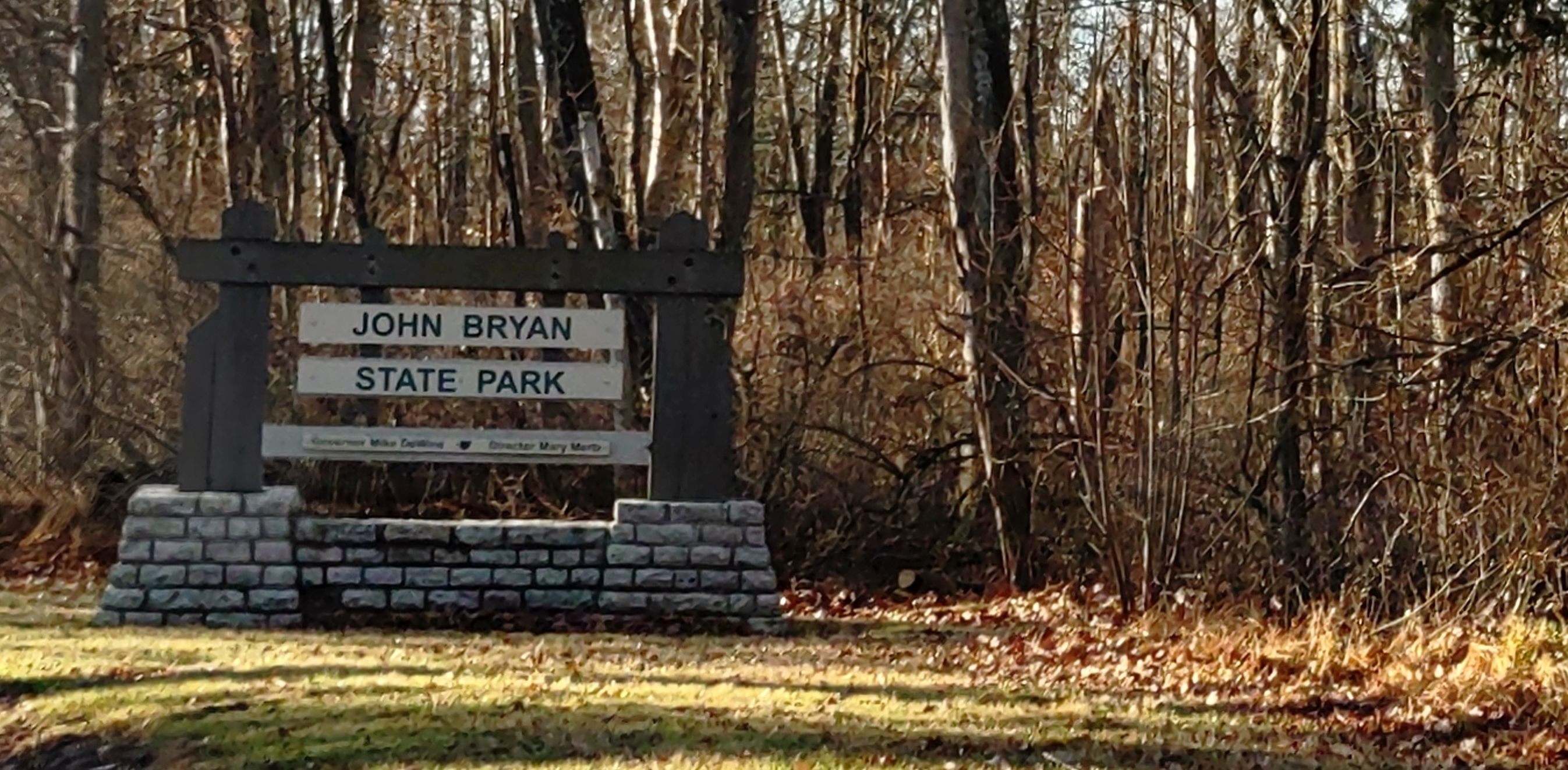
Our coordinates are taking us west and south, to the edge of John Bryan State Park. This land fell under the Bryan name in 1896, when John wanted to build a huge barn and needed 335 acres along the Gorge to do so. His barn is gone, and so is the public swimming pool that lived in the park in the 1940s. He left a legacy that continues today, donating owned lands to public institutions for preservation, public enjoyment, and protection from profit-seekers.
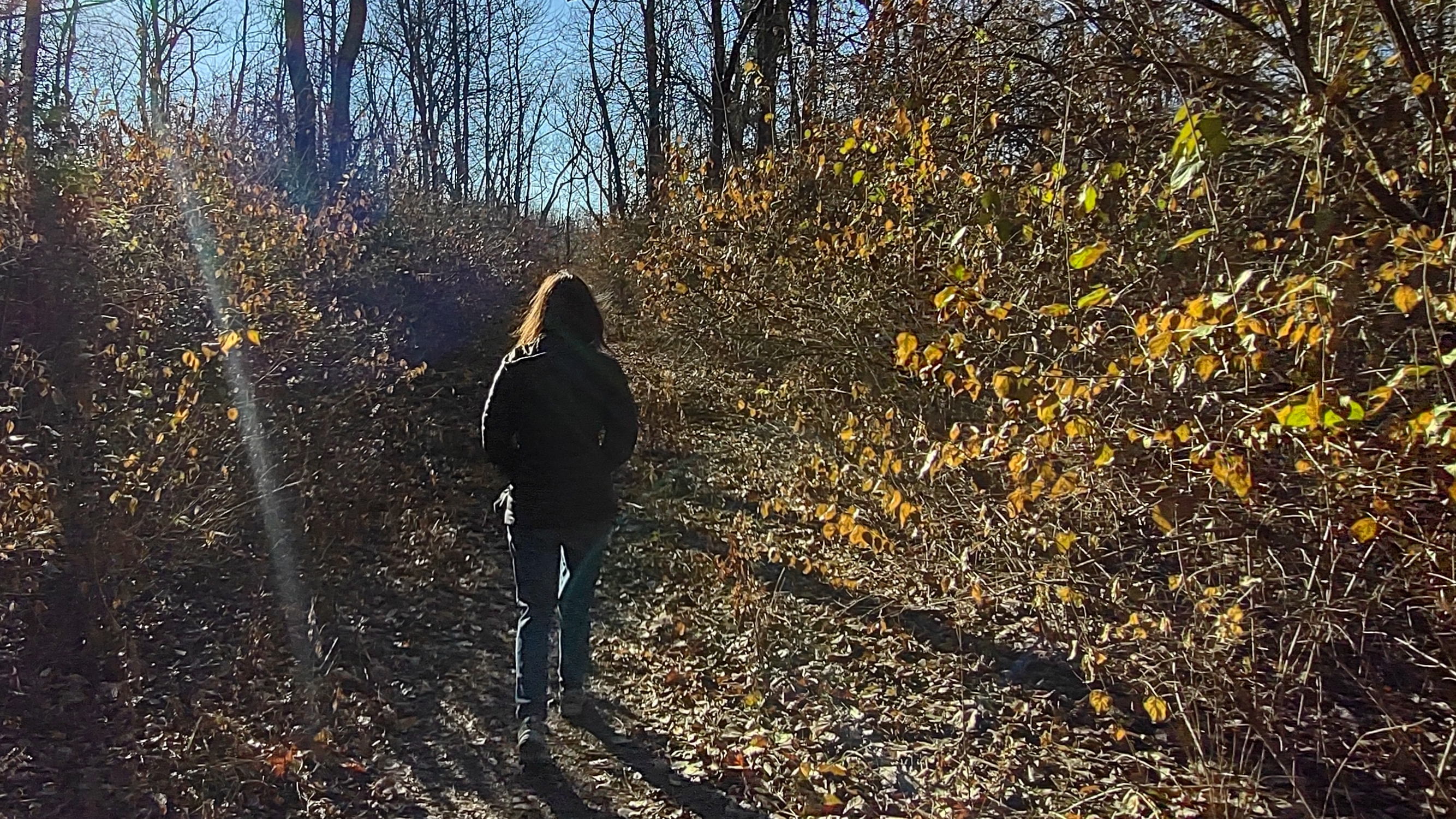
Saturday morning yawns and stretches, as sunlight shivers in the wind, and feet feel the Earth’s tremor beneath. GPS spans satellites spinning in space, perhaps passing the lone space cache living on the ISS, with all of four visits logged so far.
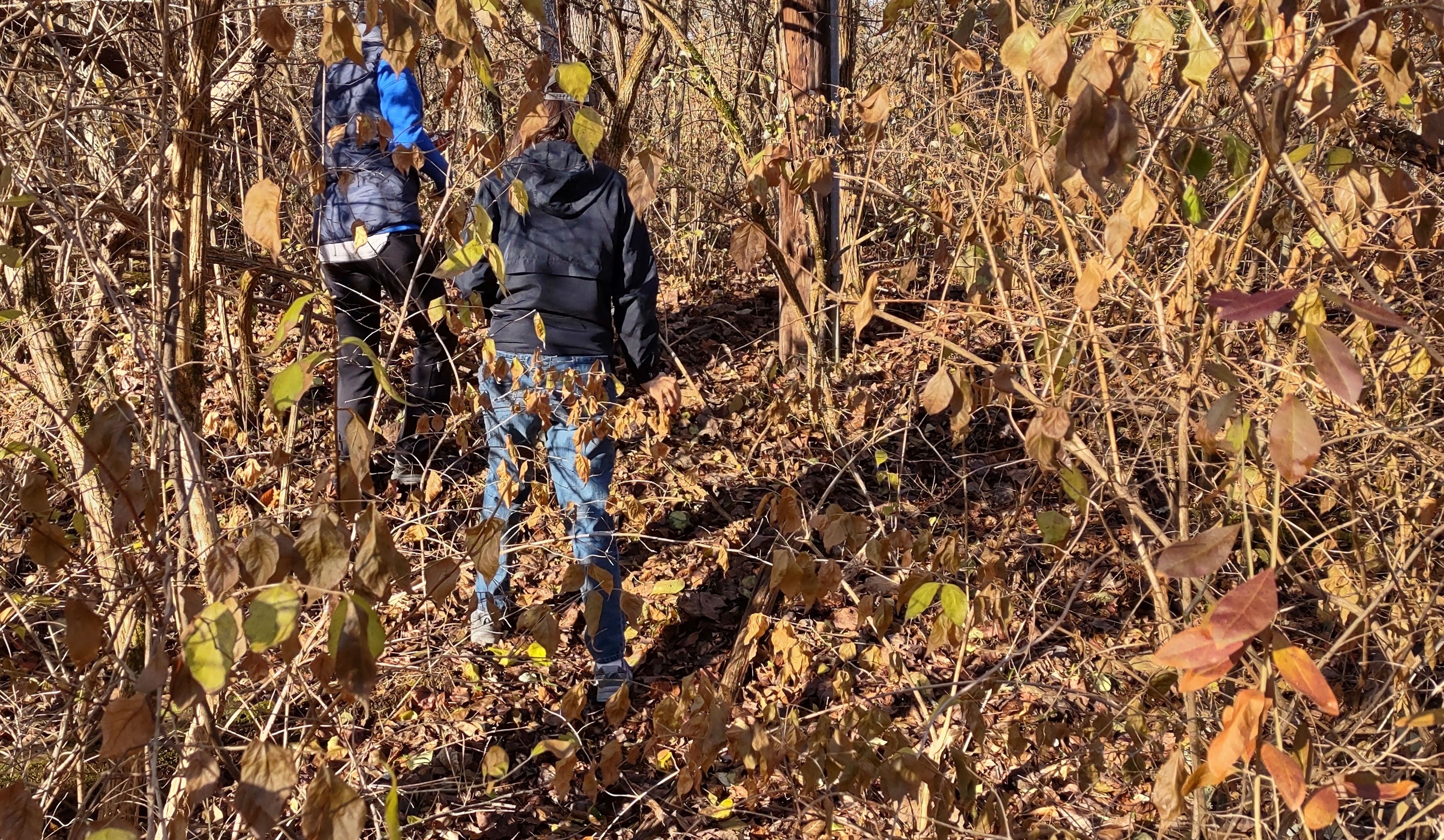
Squarely on Earth, we pause to remove brown squishiness from shoe soles. The geotrail scraggles and drags through leaves and underbrush.
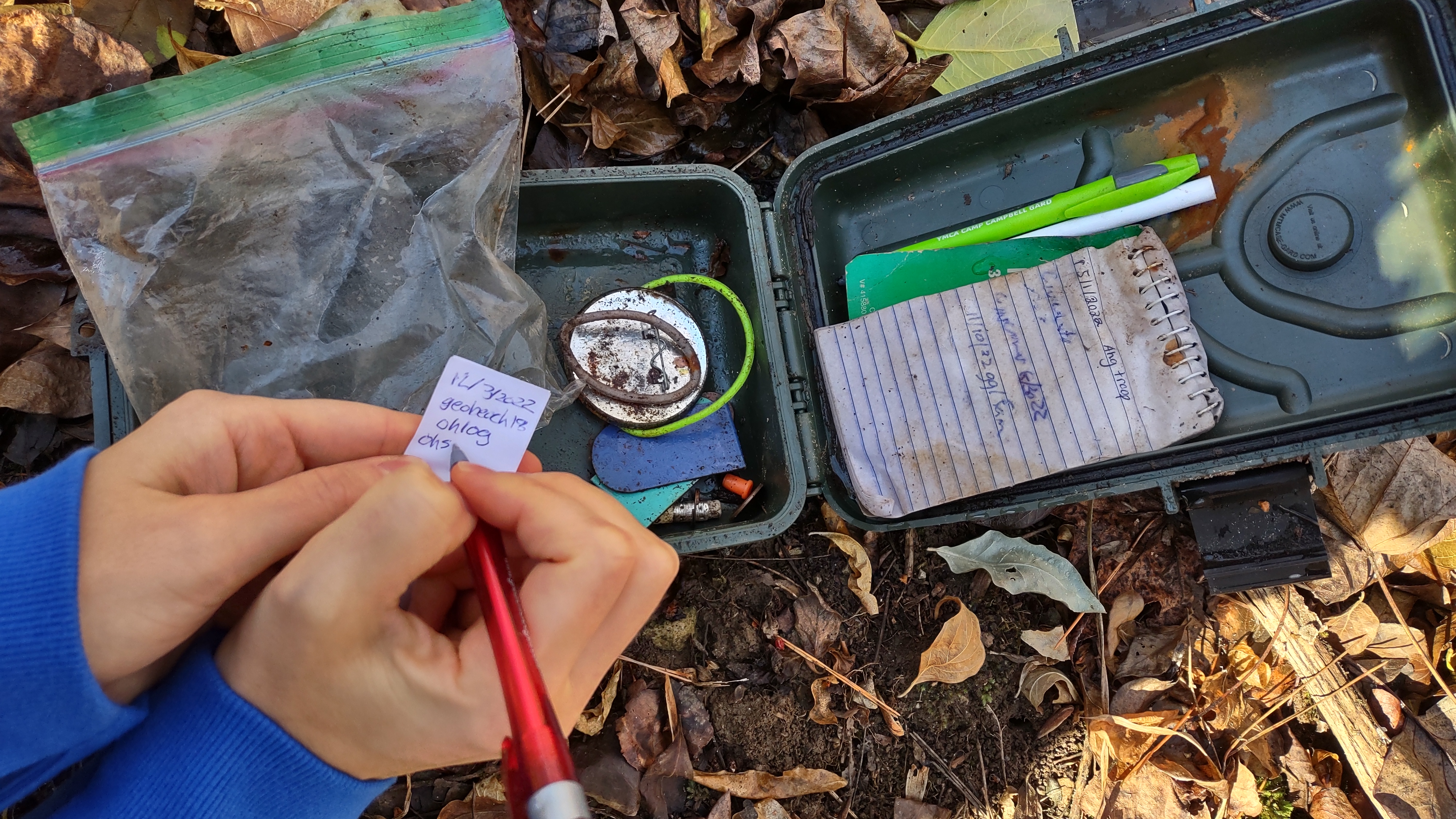
A bit wet behind the ears, the log appears. Our geolexicon expands: We will log our names on the waterlogged log in the log, before logging our find on the weblog. Scout troops, Eagles, and Scoutmasters have signed the log before us. A 2016 cacher assures, “No knot skills, first aid, fire starting, knife, axe or saw skills, no climbing, canoeing or camping, nor wilderness survival skills were needed to find this cache. I dumbly stared at my GPS screen, walking blindly until I bumped my head into a tree, and there it was.”
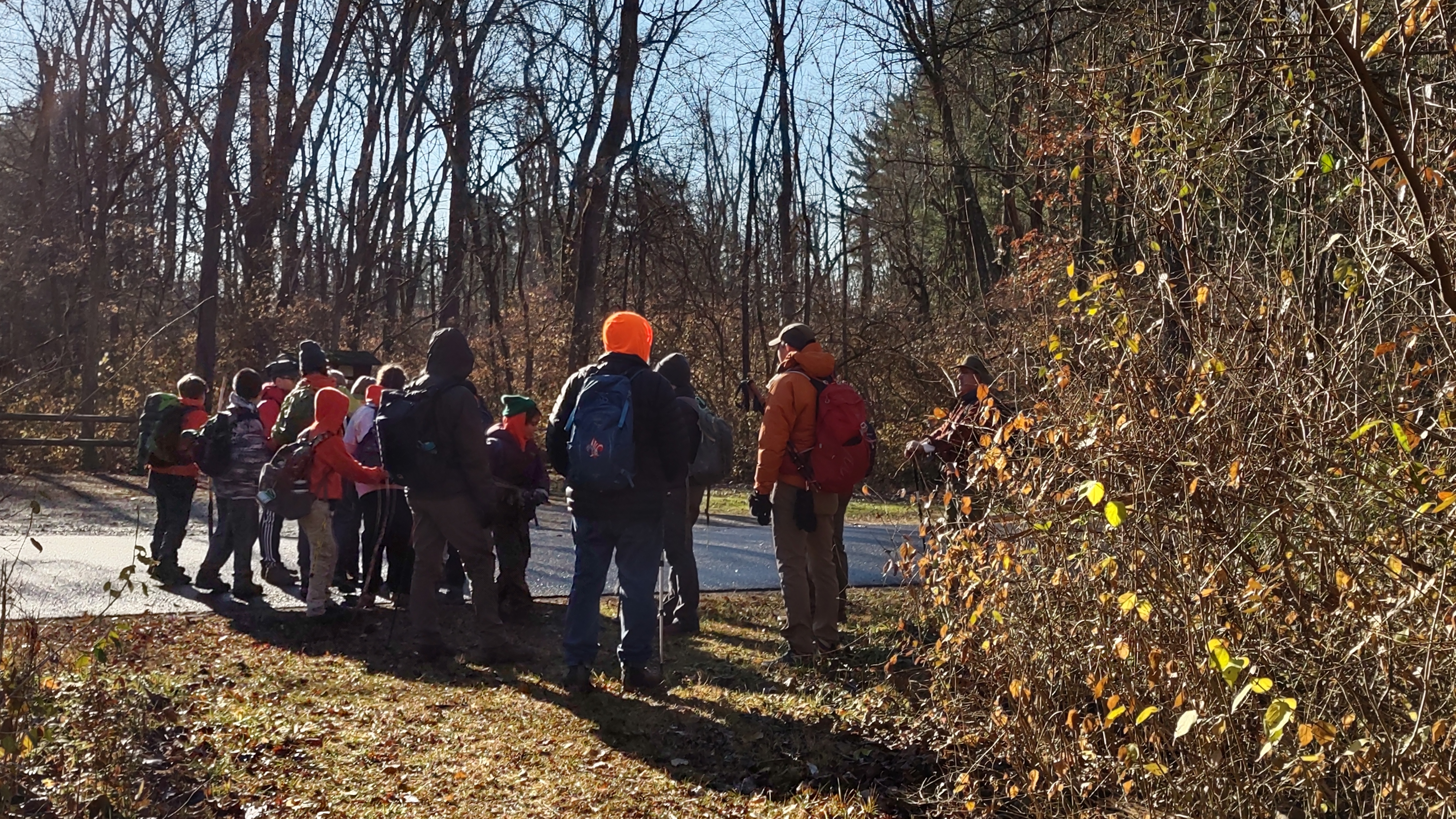
As we emerge from the brush, history comes to life. Today’s dads and moms carry on Scout choices for patriotism, courage, self-reliance, and care for others. Weathering bankruptcy on the national level, along with charges of bullying, abuse, and mismanagement, local Scouts preserve the best of scouting. Eagle Scout footprints are on the moon, anchoring and inspiring a time-honored American institution. In the chilly exhilaration of this perfect scouting excursion, dads linger in the back, phones down.
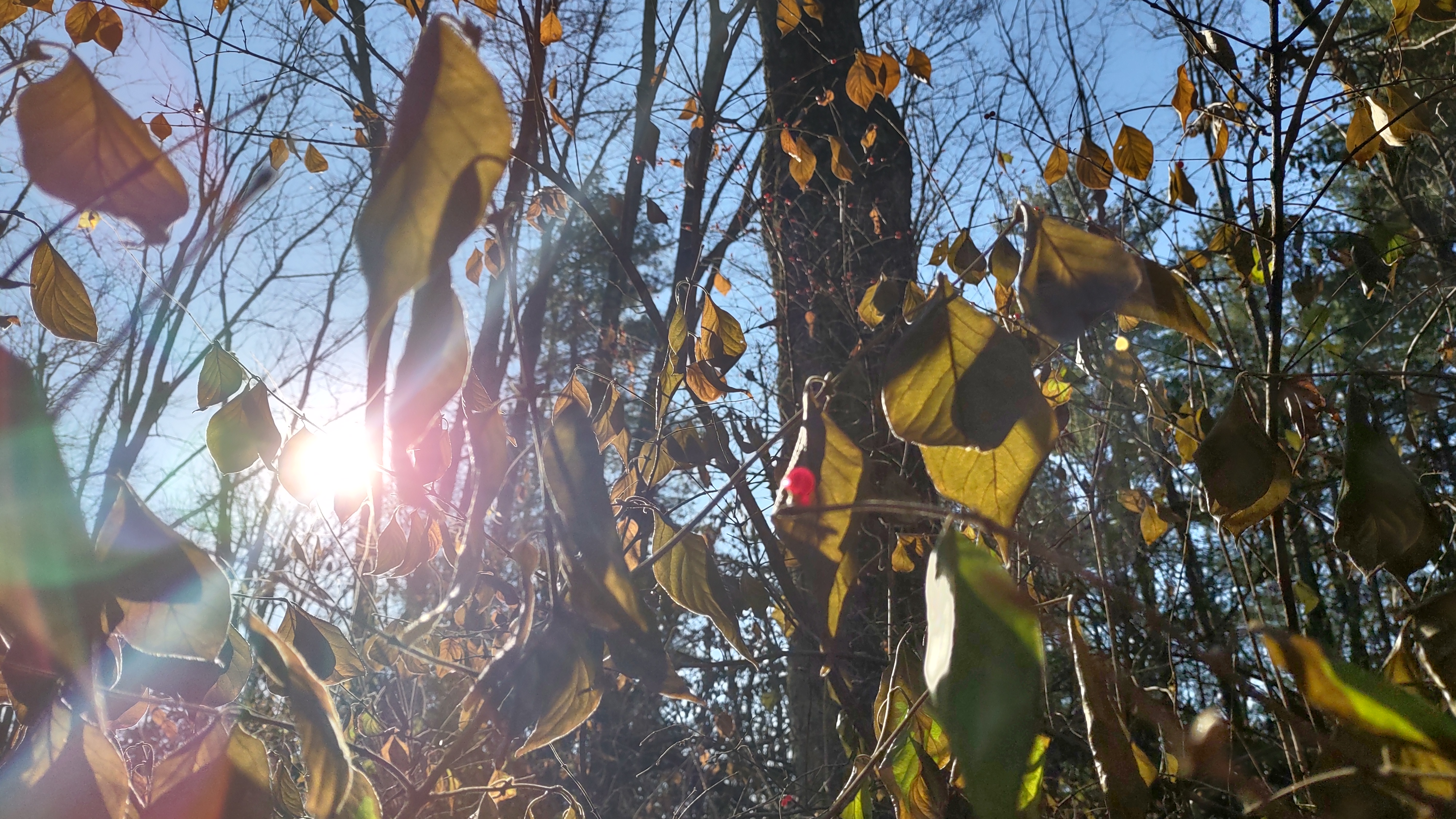
We say goodby to CO boydfamily, owner or adopter of seven of our Wilberforce caches, and Guardian Angel to all nine, who has shared with us these quivering, blazing, splendid wonders.
-
Charlton Mill Road Covered Bridge
With a secret just turning nine years old, Cache Owner boydfamily requires a rural reconnaissance.
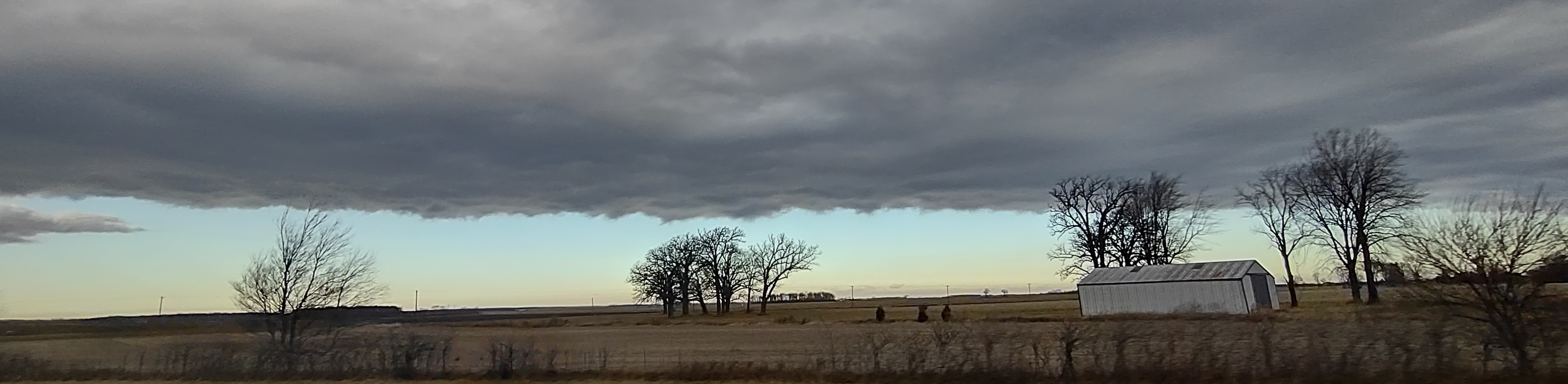
Chuckling clouds tickle trees huddled in negative space, waiting for winter’s warm, white wardrobe.
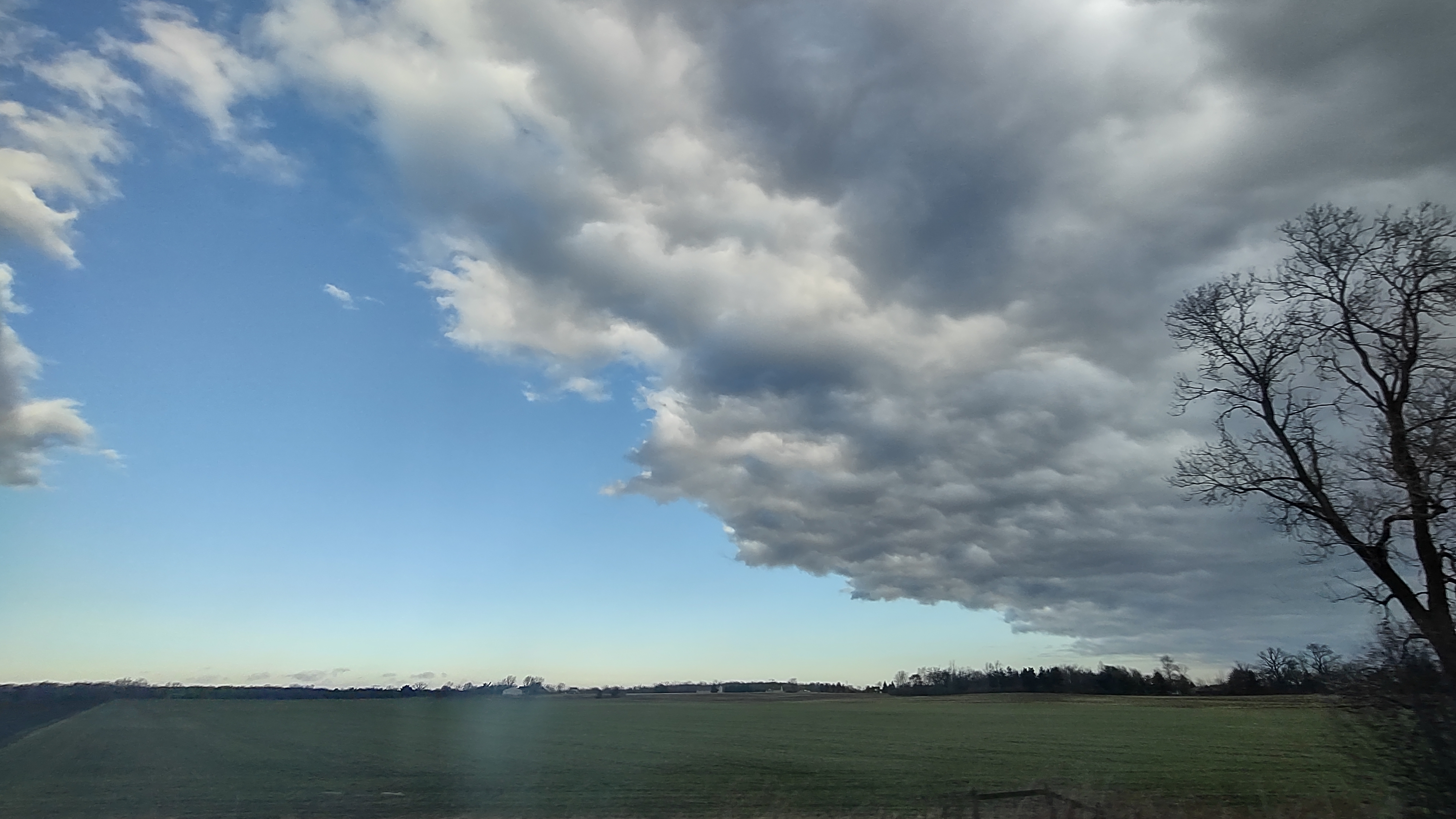
In tattered defeat, a scuttled retreat is mobilized. Softness of blue, white and gray wrap the soul in lullaby.
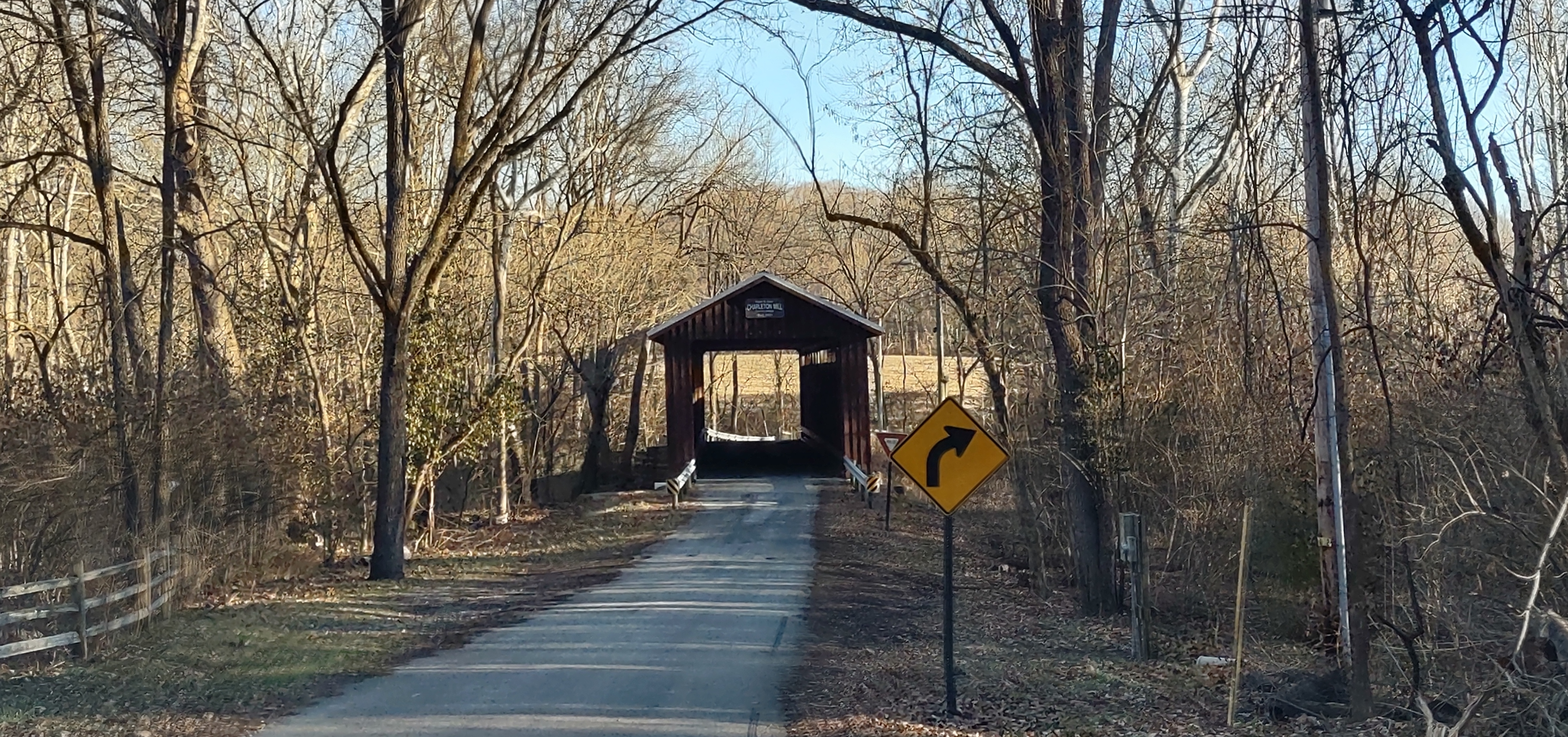
Our coordinates bring us to a country road. As hand-hewn wooden planks crossed creeks, they succumbed to floods and ice, giving birth to a monument simple, cherished, and elegant – the covered bridge. Charlton Road bridge was built in 1883 and lasted 130 years. In 2011, the county decided it was worth replacing.
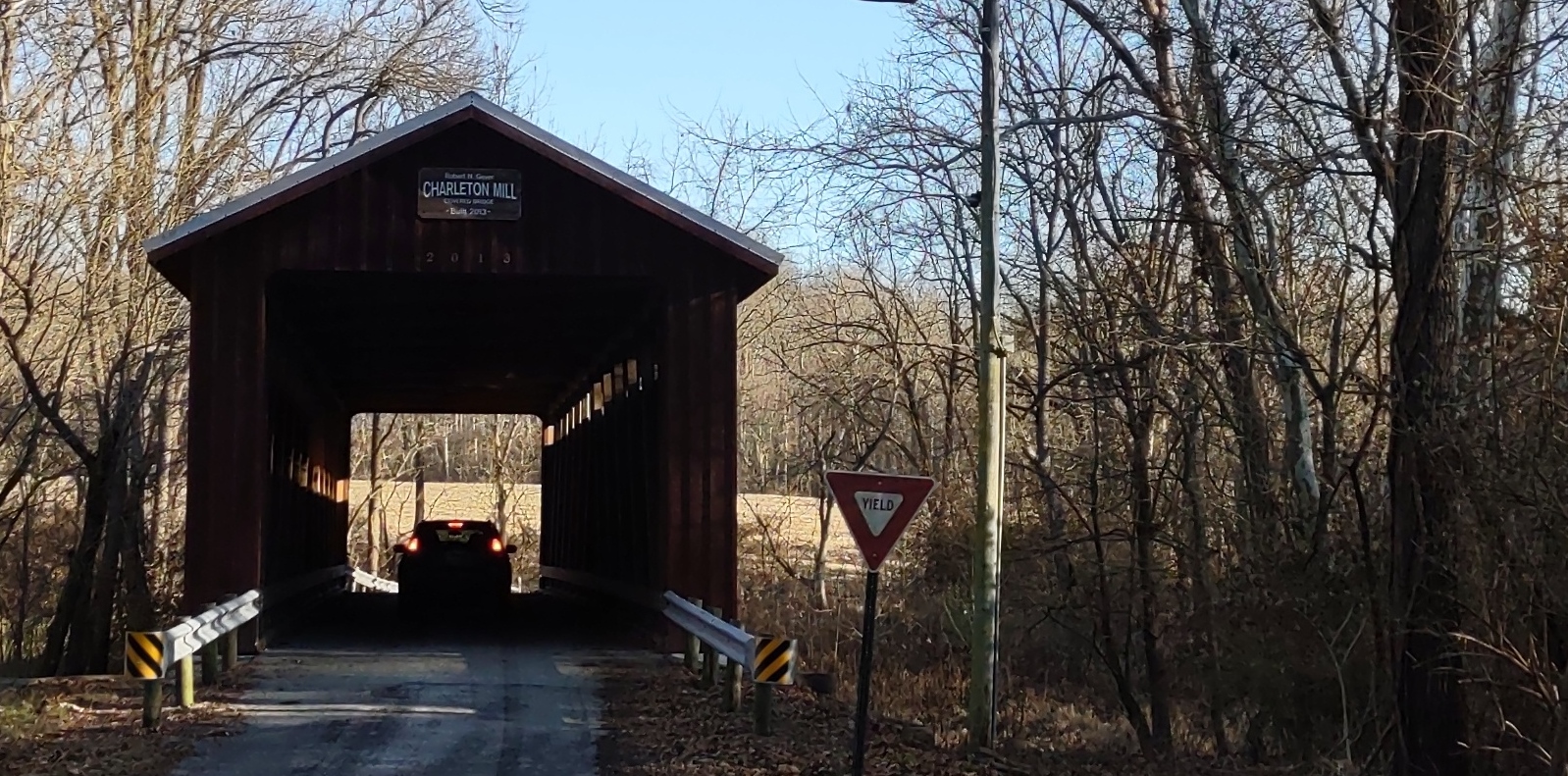
Cache notes follow the progress of the bridge as it is replaced. In 2014, a logger discovers the engineer doing some final touch-ups, on something beautiful he has made. The excitement of watching a covered bridge being built circles from 1883, through two changes of centuries, and one change of millenium, and six rounds of grand-babies, to water still cycling through Massie’s Creek, to a galaxy of geocachers.

Not all covered bridges go somewhere. This one does, but be warned, it is a one-lane journey. You can walk or ride. If you are walking, you may hear the noise of a vehicle coming from the other direction. Then you can run. The echo of gunfire from hunting parties begs a question of whether you will be roadkill or deer meat.
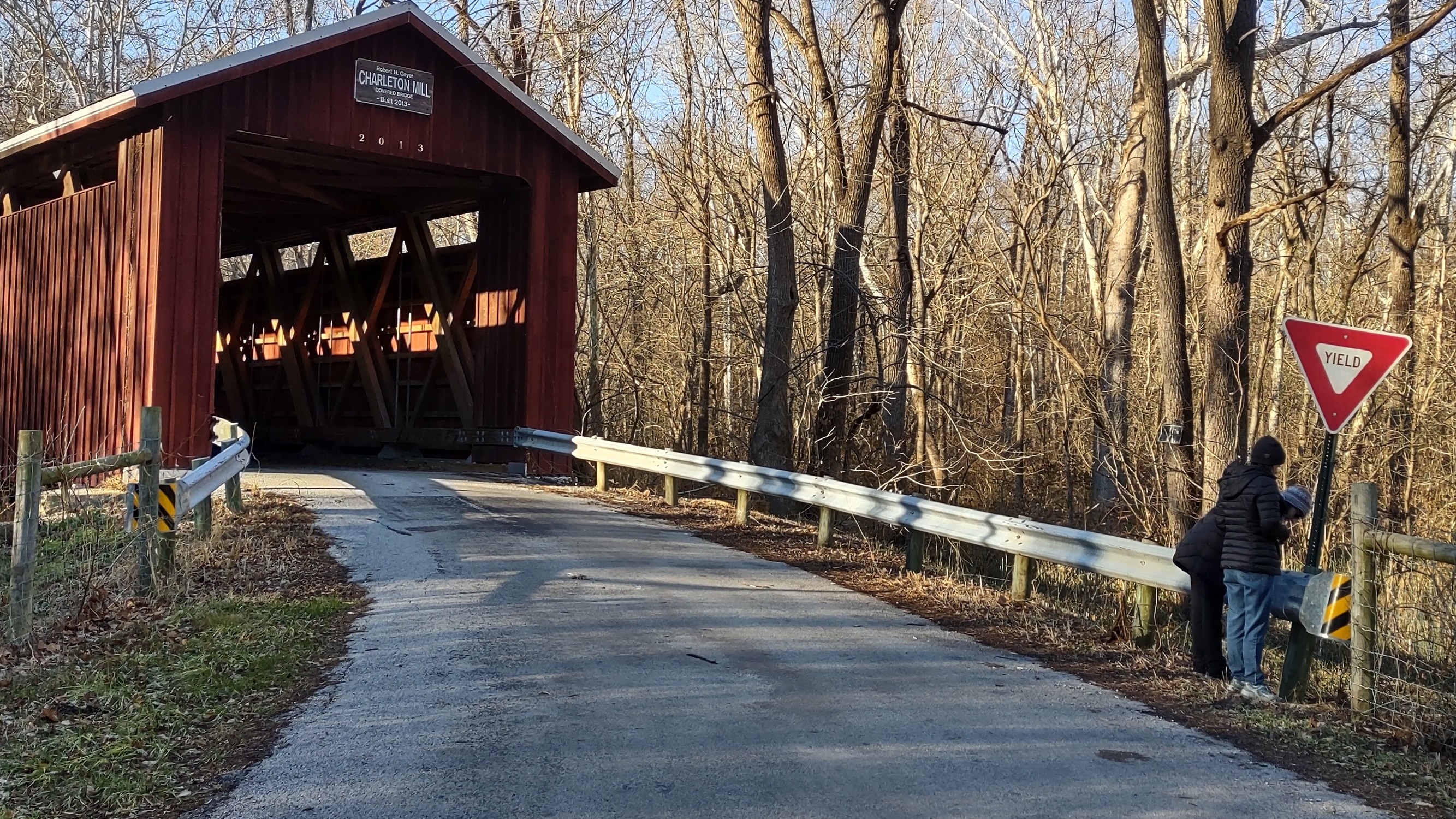
True to the cacher’s code of placidity, equanimity, and serenity, heartbeat returns to normal and a find is calmly logged. Fingers of sunlight touch the red, wooden wall with a goodnight kiss. Shoes rest on dirt, lungs relax into breathing trees, familiar chill of winter enfolds.
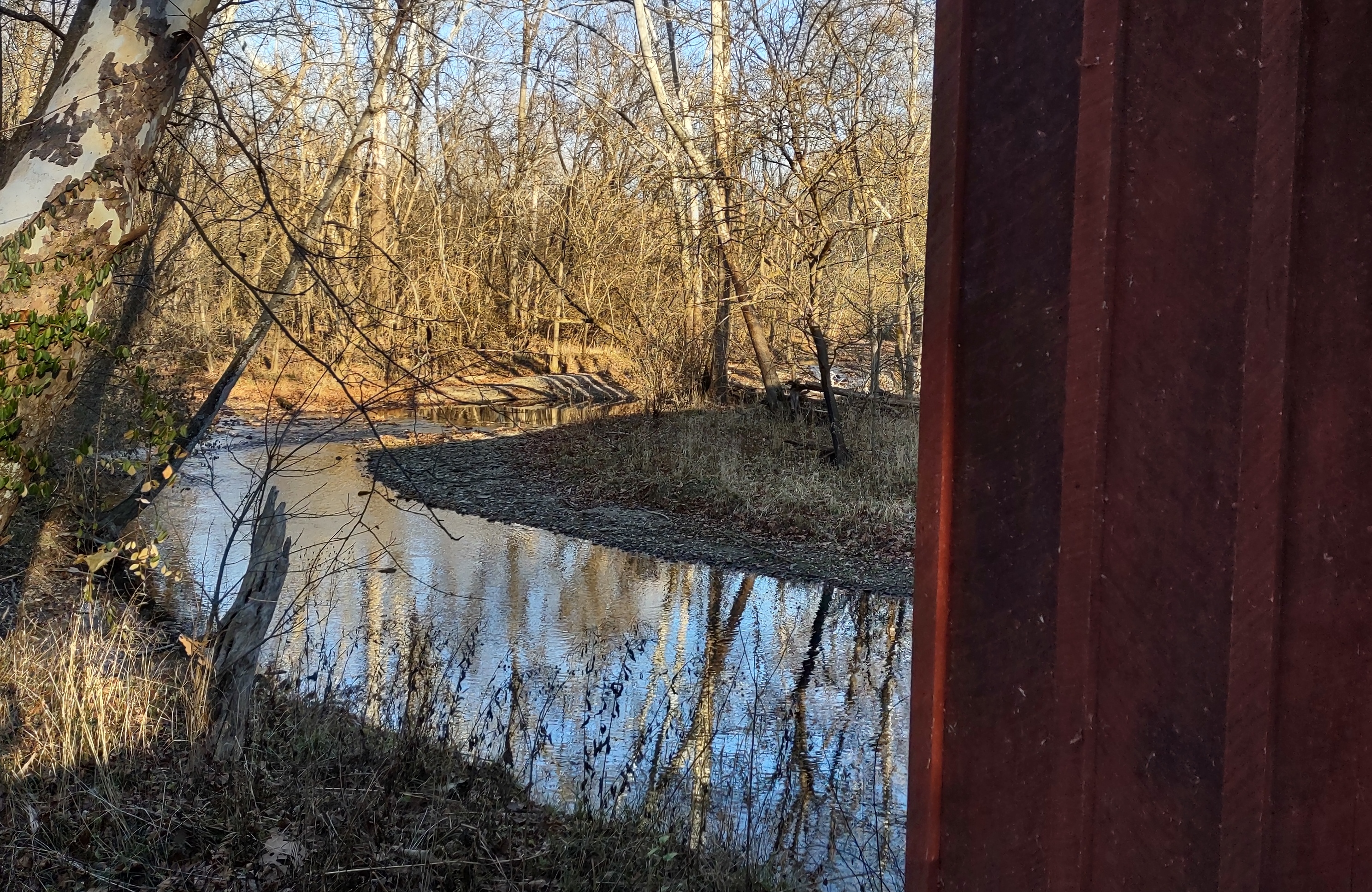
Looking forward to another 130 years.
-
Stevenson Cemetery – Robinson
A boydfamily cache, only six months old, this baby sends out a howl.
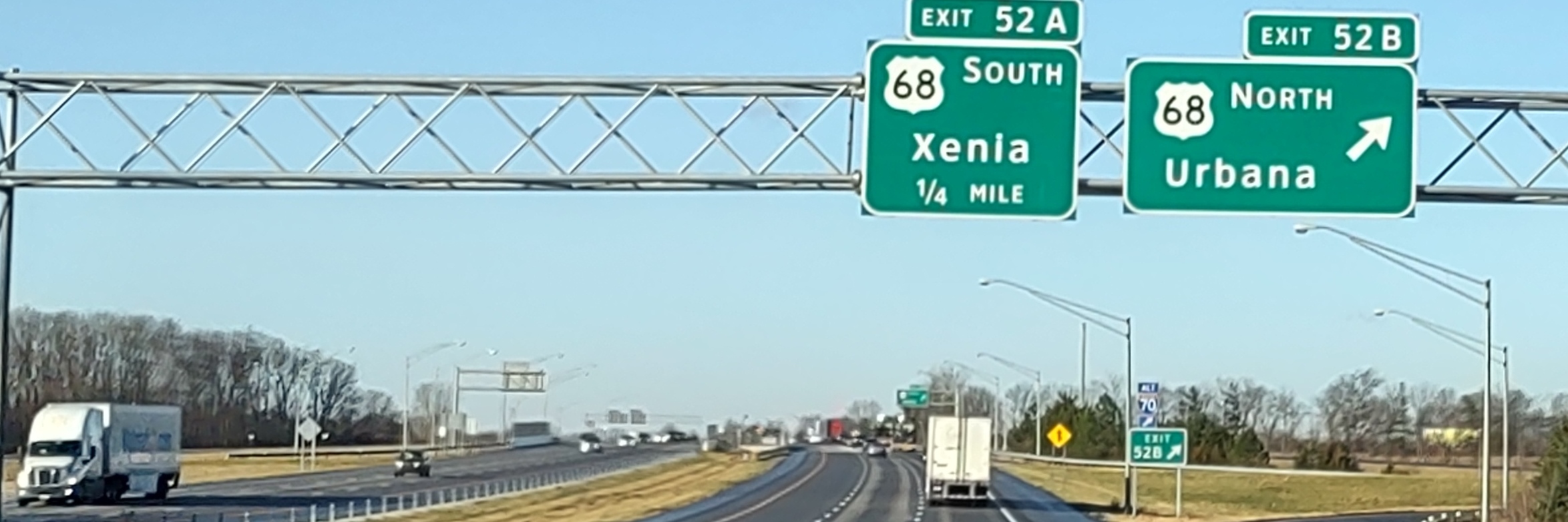
Ranking as an Xtra special place with an Xceptional name, Xenia calls.
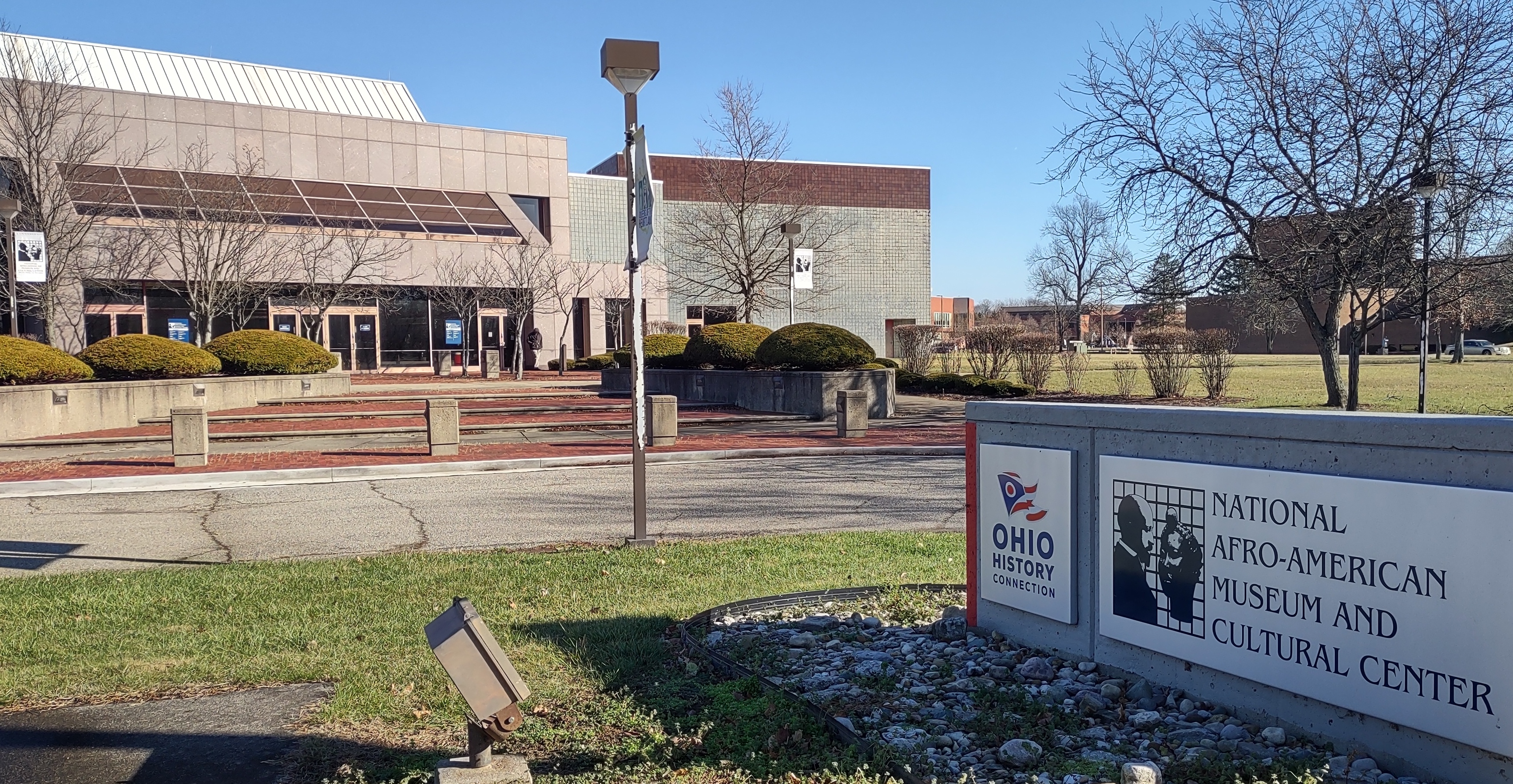
Route 42 and Brush Row Rd magnetically pull us into the National Afro-American Museum and Cultural Center.

Set in the middle of the Wilberforce and Central State campuses, it will illuminate and elucidate things we need to know. For example, when Spanish explorers arrived on this continent in the 1500s, they thought it was fine to use superior weaponry to compel Southwestern tribes into forced labor. Like any gulag, guns held power of life and death.
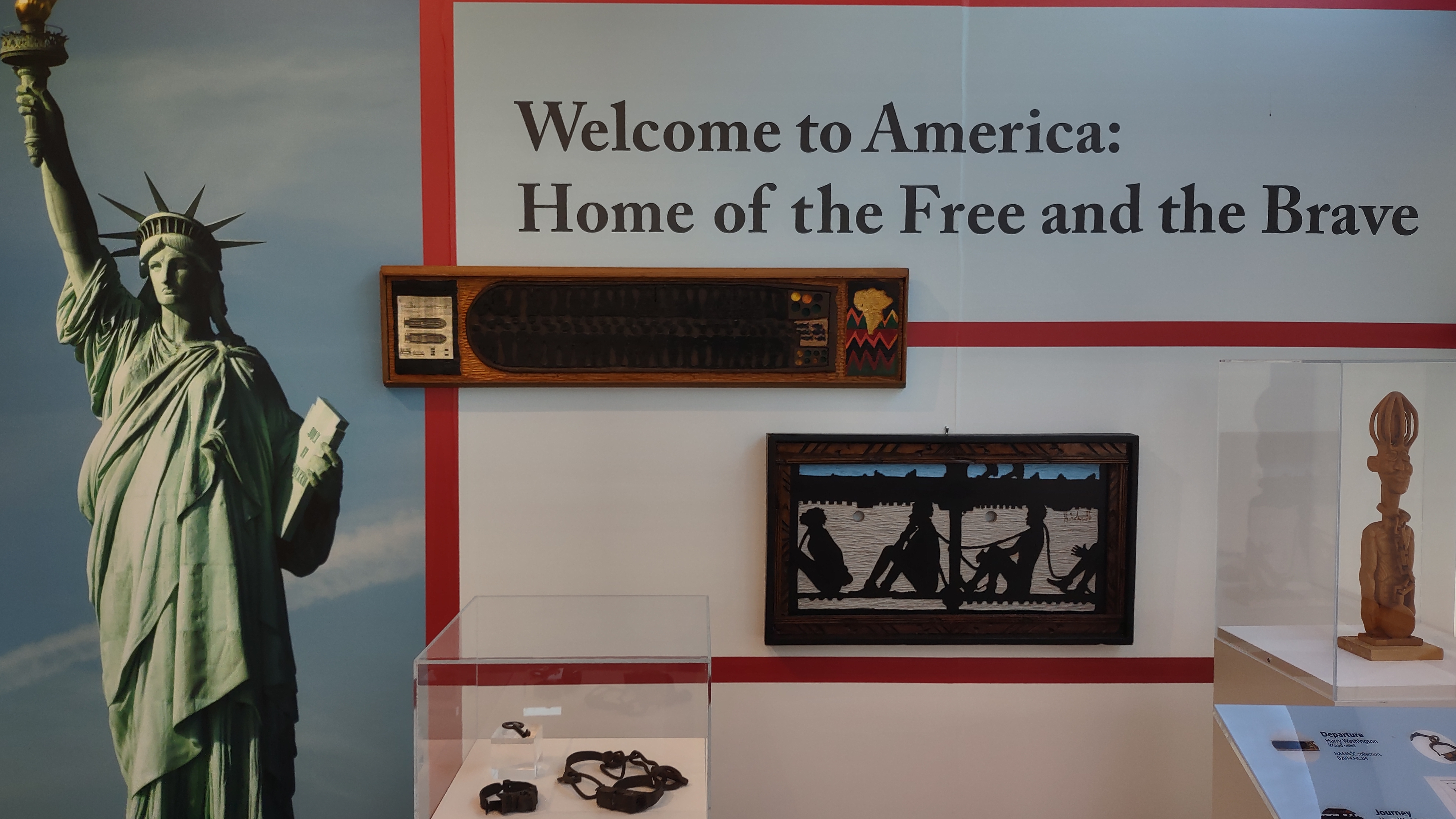
In 1619, 20 captive Africans were turned over to paying customers in Jamestown, Virginia. The floodgates opened for European settlers to traffic humans as a cheaper, more plentiful labor source than contracted workers in the servitude paradigm. Some Africans managed to come as indentured servants. They eventually earned their freedom, buying their own land and, in some cases, also using captive labor.
Tobacco, rice and indigo plantations from Maryland to Georgia gradually rebranded to cotton. As the textile world went industrial, only captive labor could keep up with picking all that cotton. Northern states outlawed human labor trafficking by 1808, but Southerners kept the whole thing going. By 1860 there were 4 million Americans living in captivity.
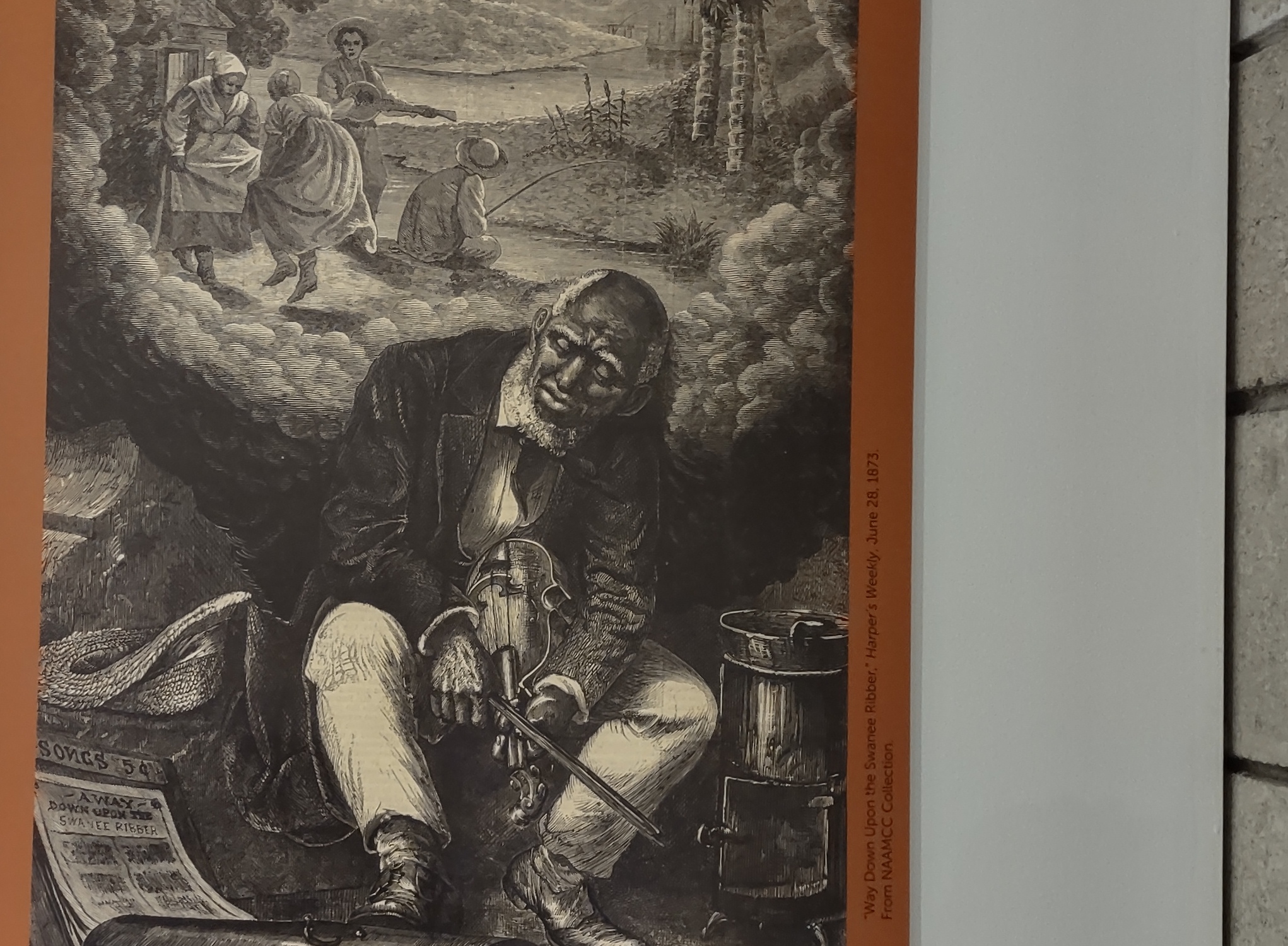
Fully aware of the injustice of their situation, Black captives fought back. Escape and passive resistance two-stepped with music, songs, prayers, tap dance, and other forms of a brutalized humanity unwilling to relinquish identity.
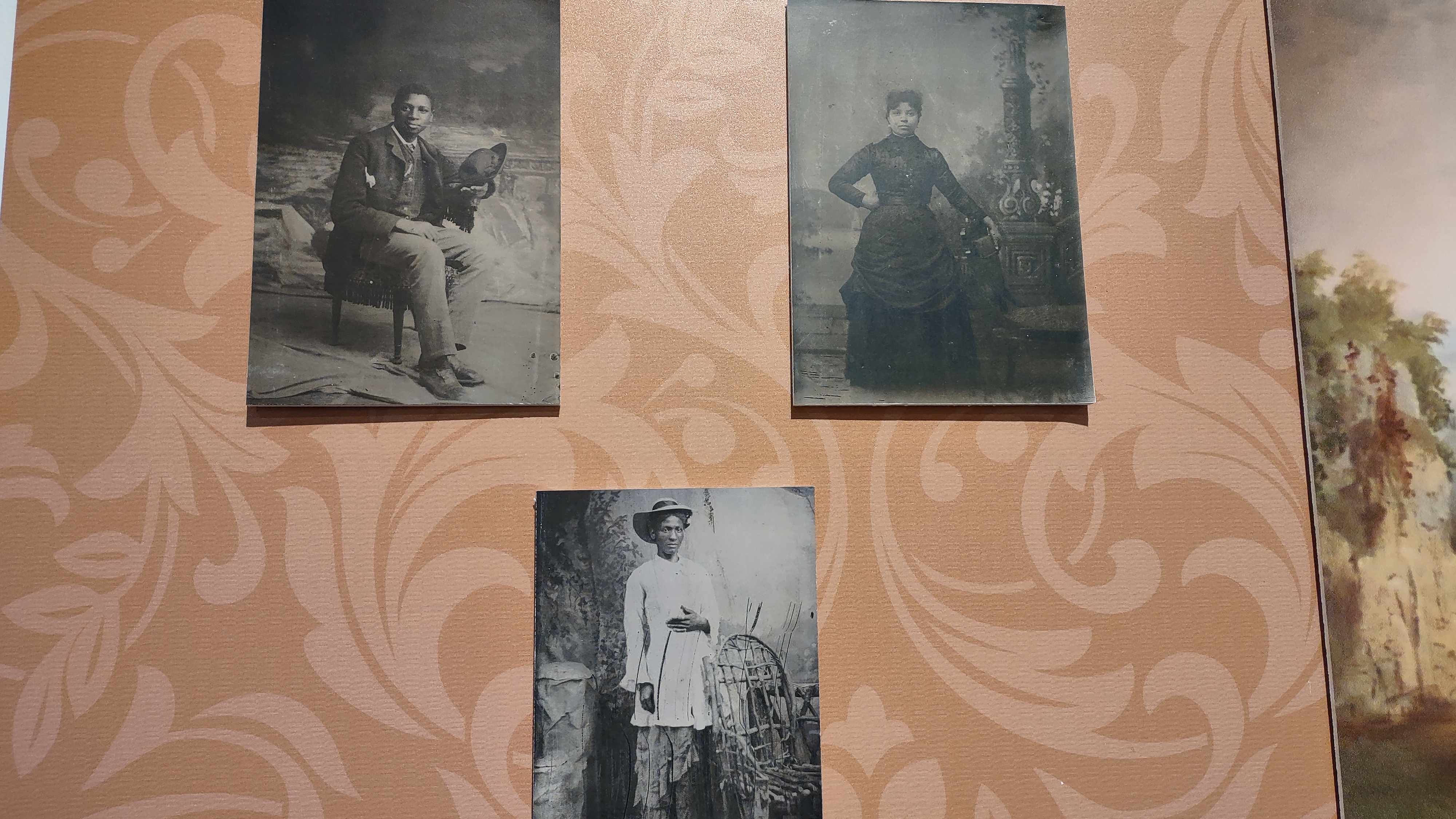
With the same cotton used to exploit them, captive Americans created unique ethnic clothing, and thus became owners, a defining factor in American identity. Photographs returned whole personhood to those labeled 3/5.
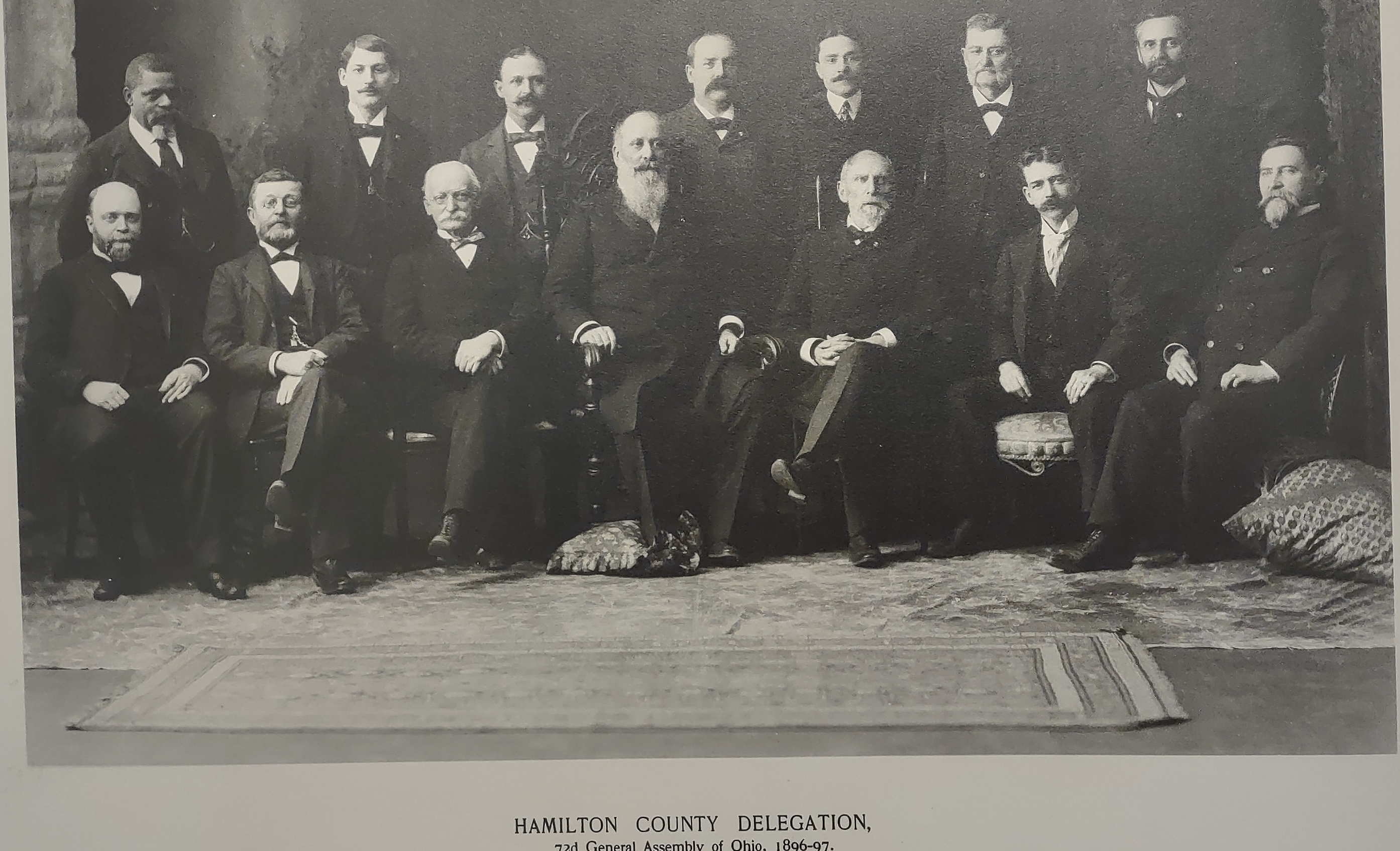
Black communities sprang up in northern towns, including Wilberforce University. In post-Civil War Ohio, William Parham, Benjamin Arnett, Jere Brown, and Robert Harlan were elected to the Ohio General Assembly, chipping away at the deconstruction of segregation and discrimination.
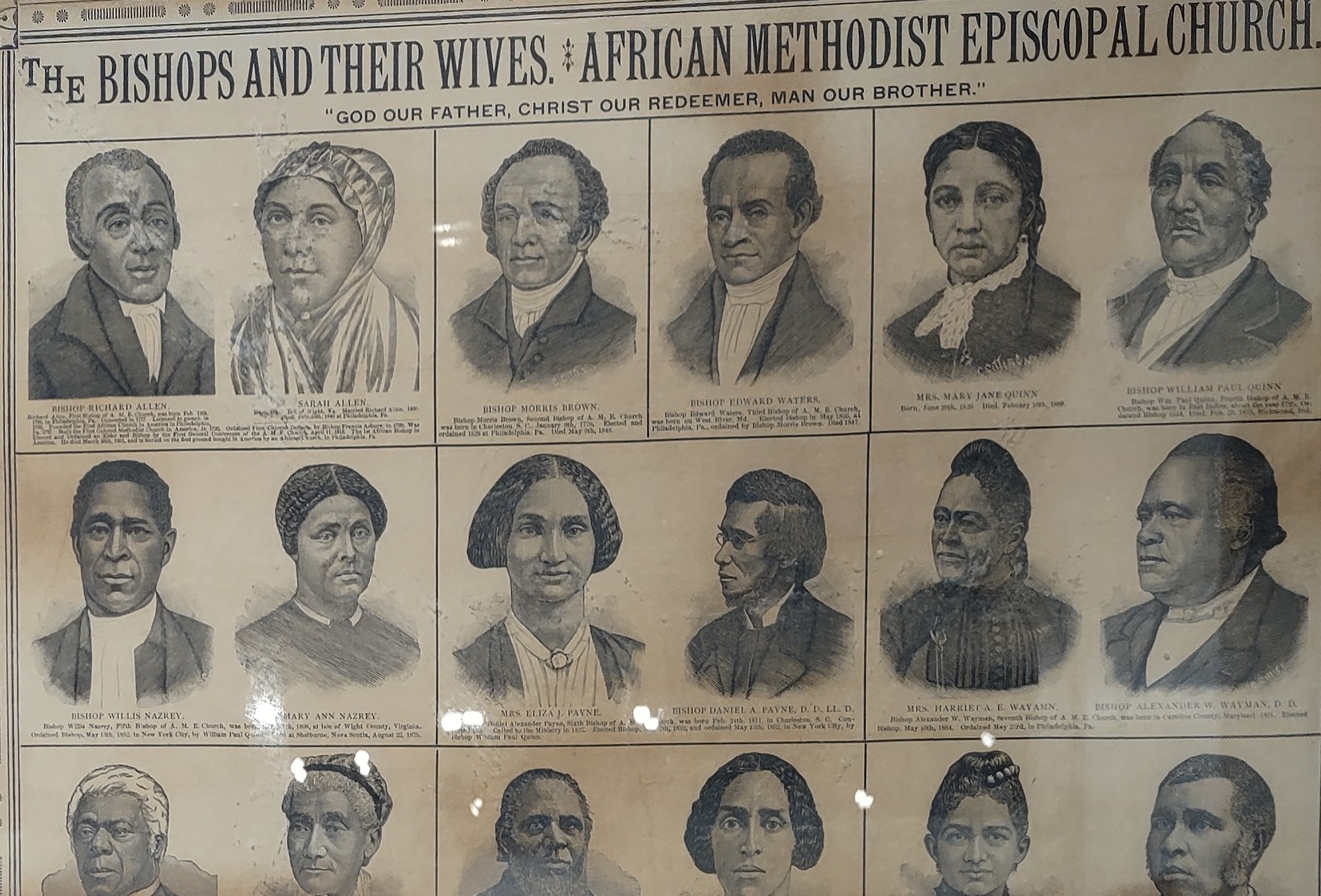
The African Methodist Episcopal Church, founded and populated by Black Americans, eradicated illiteracy and catalyzed religious and cultural definition in emerging Black identity. Like the slow blending of European immigrants post-Revolution, strands of divergent African nationals merged into a shared post-Civil War culture.
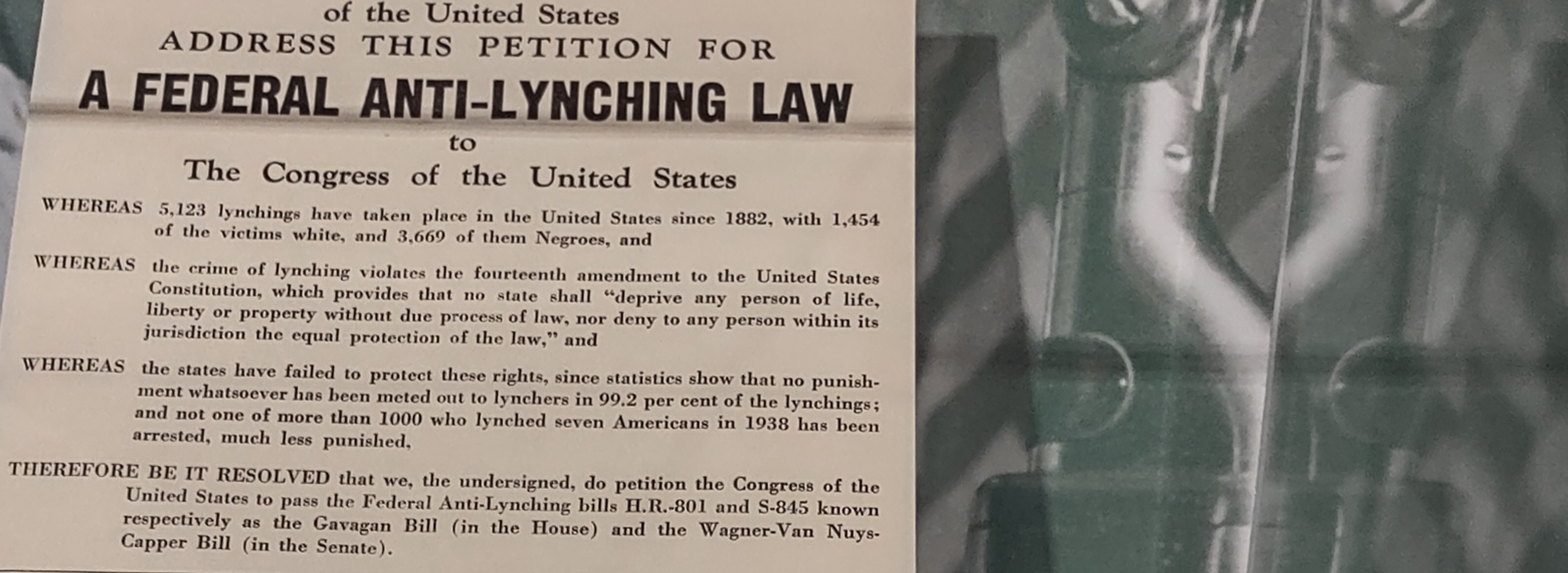
When President Hayes removed federal troops from the South in 1877, Reconstruction imploded, and mob justice returned.
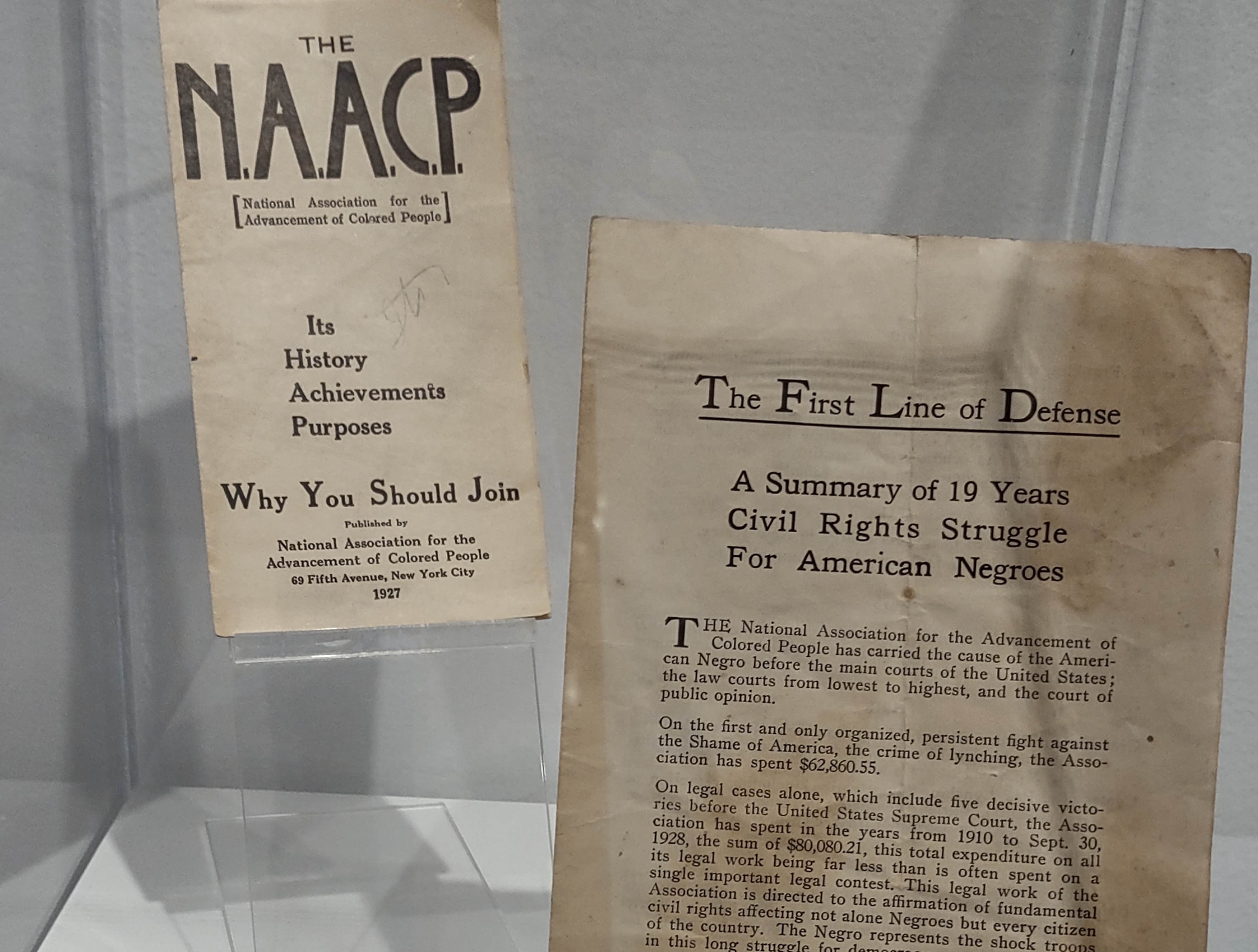
The NAACP was founded and Black-directed change took root at Wilberforce University.
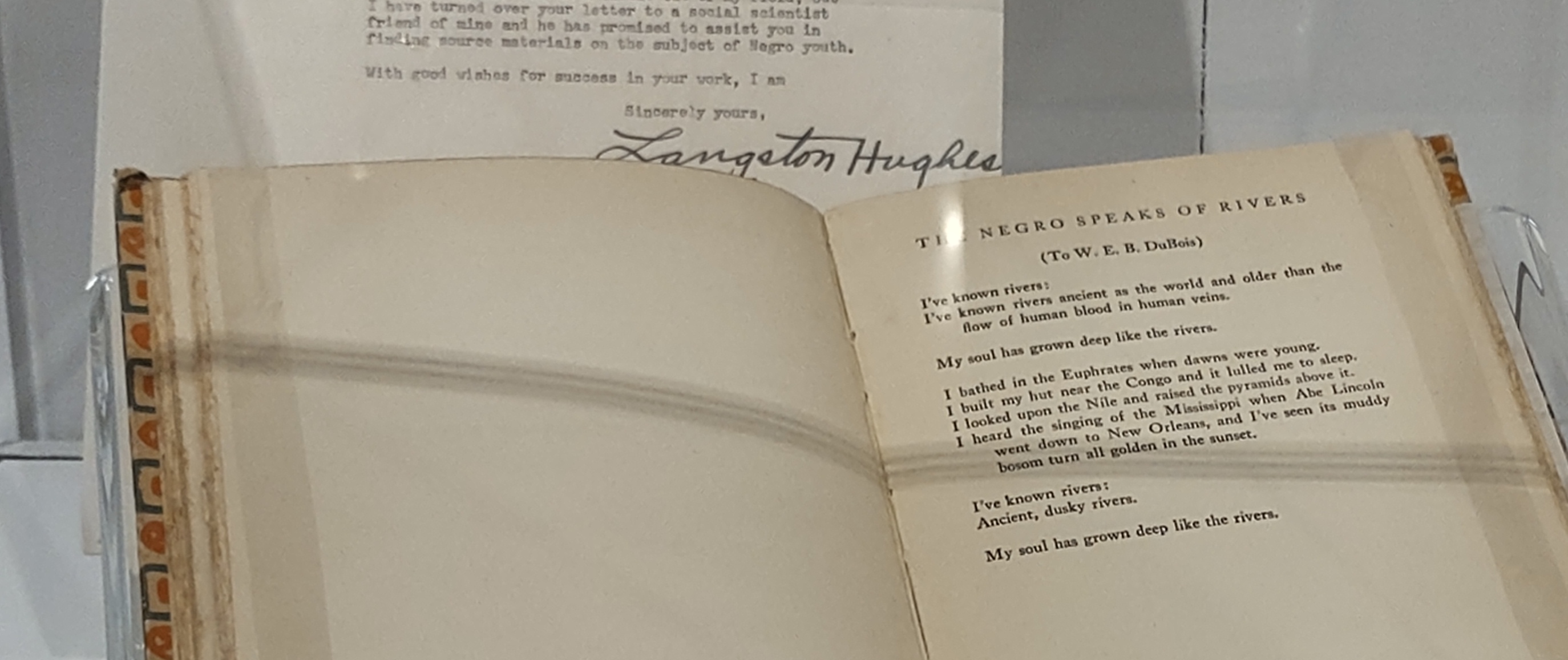
As the nation moved into the Roaring Twenties, Black musicians spoke out through jazz, a musical conversation incorporating Black voices into everyday life. Ragtime and blues followed suit, creating unique American expressions from full-fledged American souls. The rhythmic poetry of Langston Hughes echoed cadences of Black music and shattered innocent ignorance of Black experience.
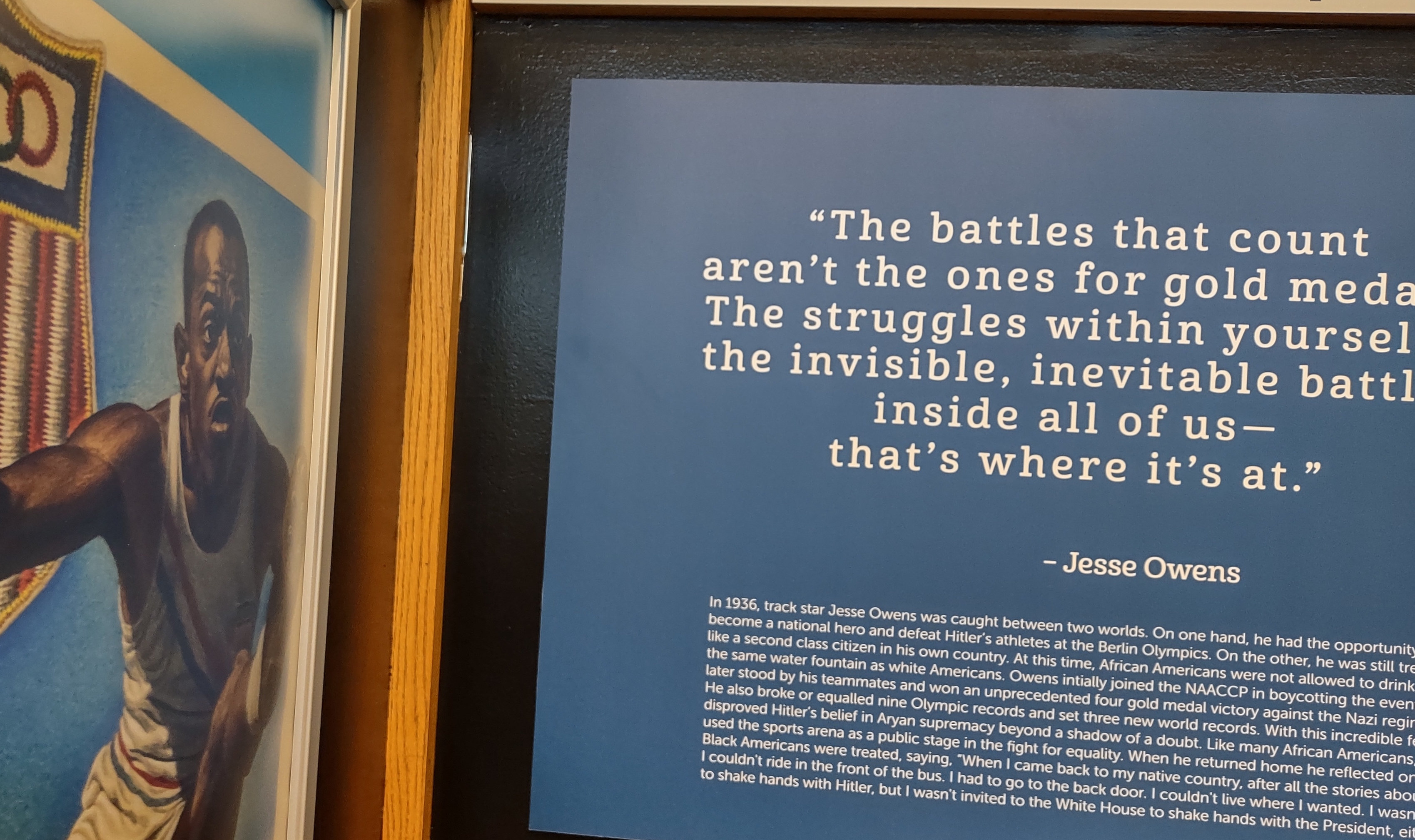
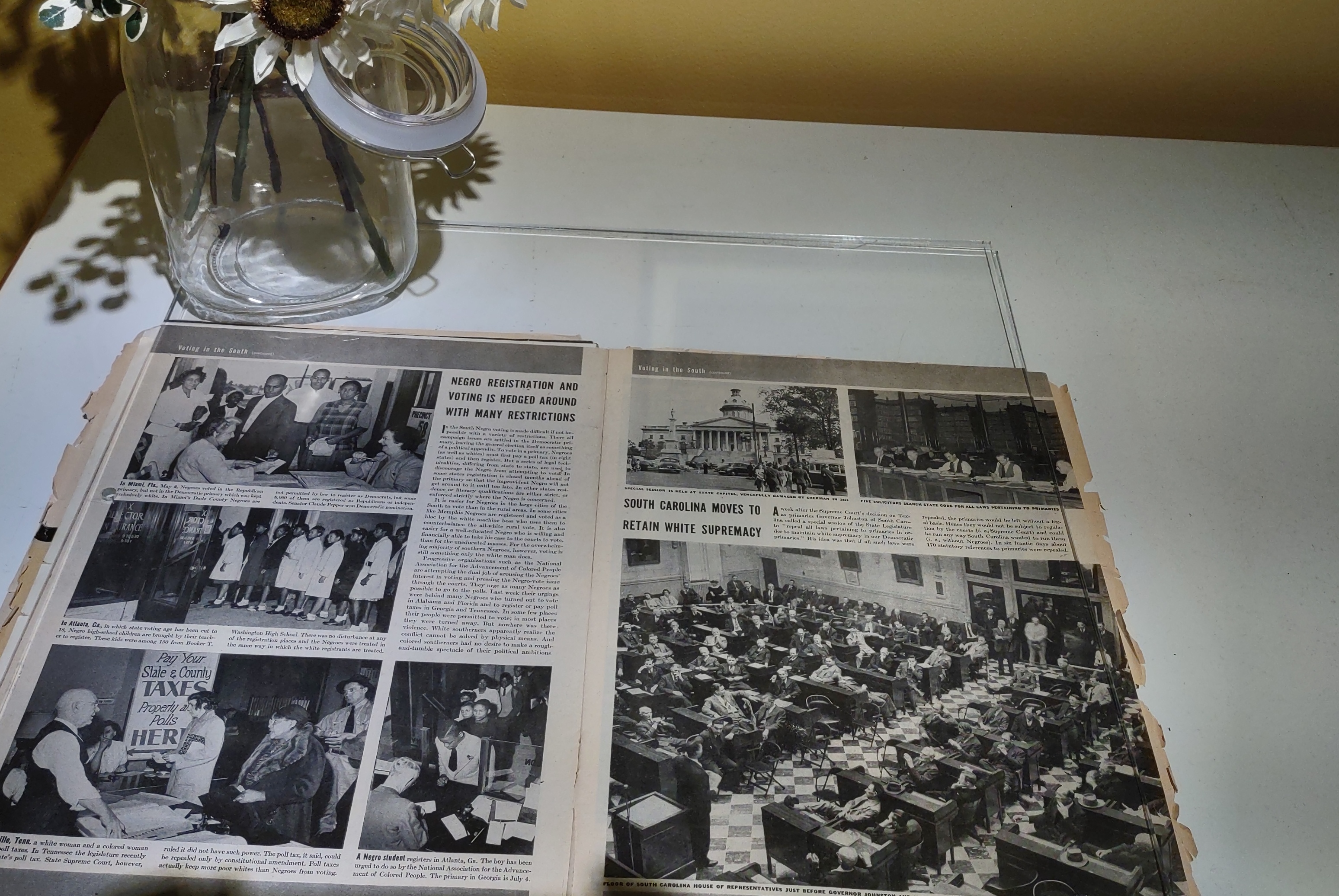
The Great Migration of the 1920s and 30s brought Black musicians and athletes into a northern audience, which enthusiastically welcomed the entertainment, while keeping doors to housing and equal access firmly locked.
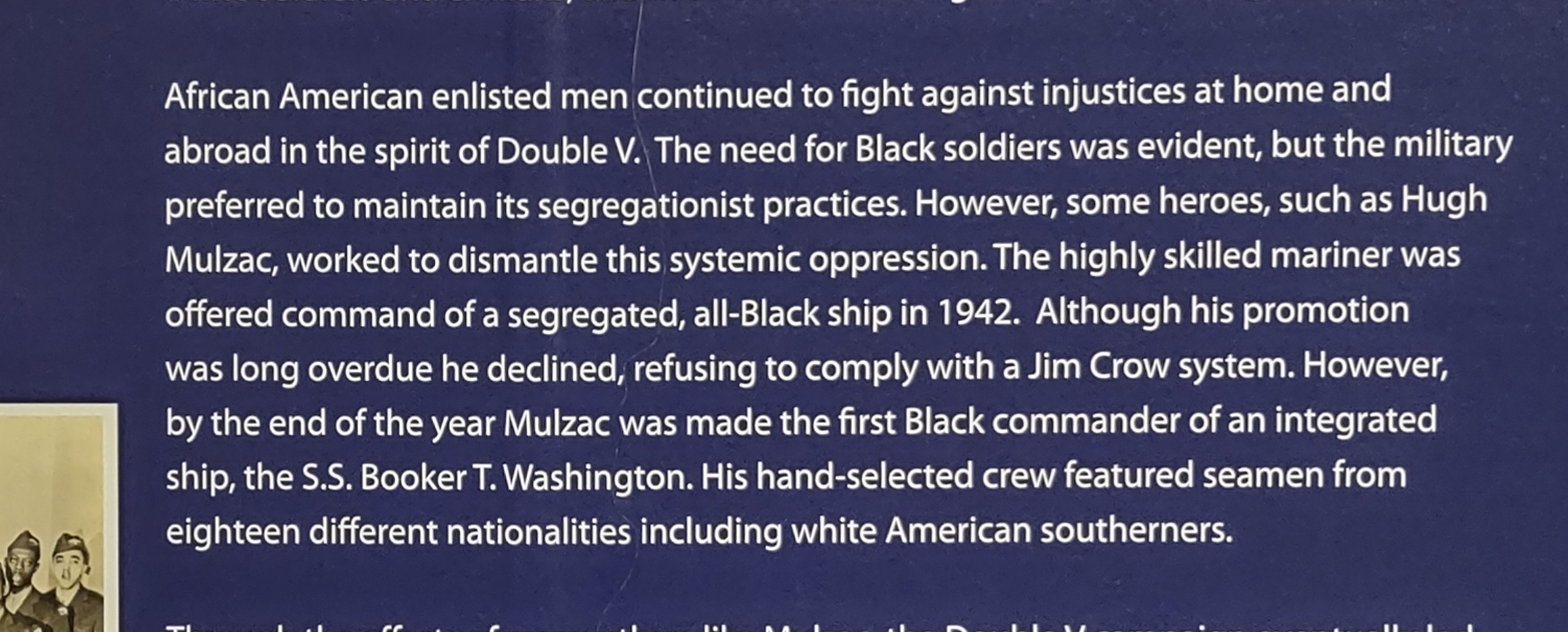
By 1945, as WWII drew to a close, more than a million Black men and women had logged military service.
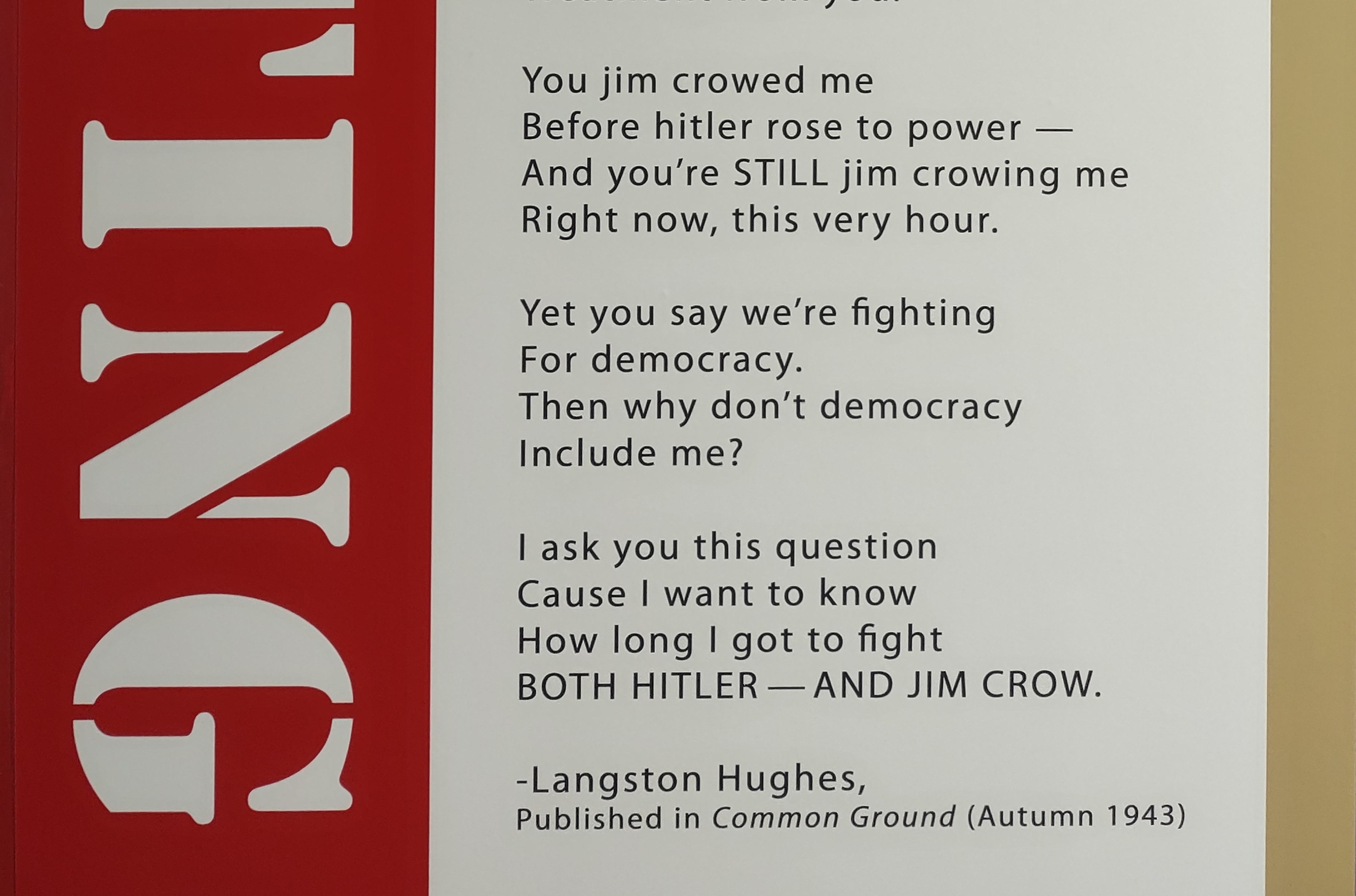
They returned home to inadequate schools, homes, and neighborhoods. The world of segregation reverberated thunderously and embarrassingly in the face of willing blood and sacrifice.
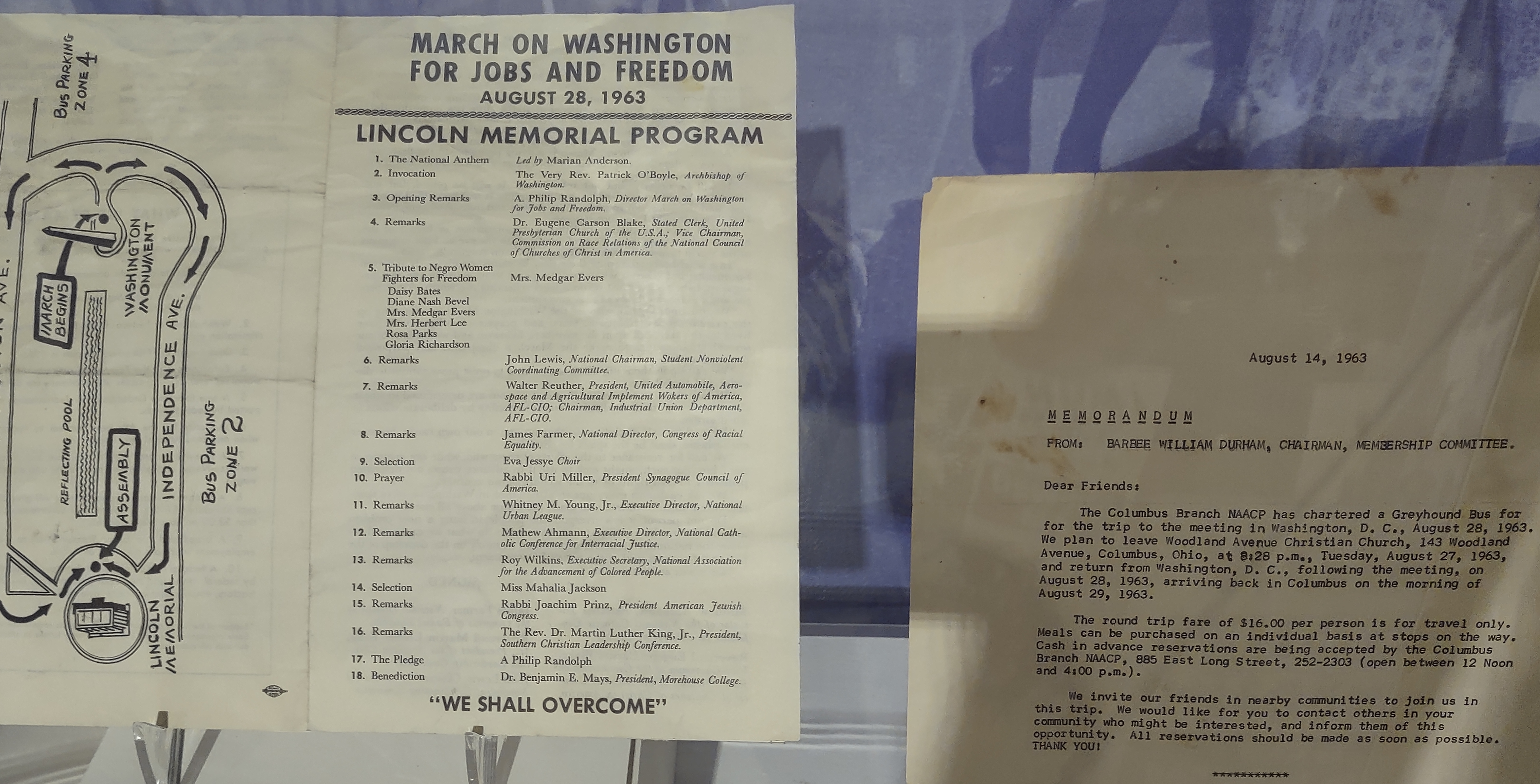
Dr. King’s March on Washington in 1963 hammered the words of freedom, “We shall overcome.”
Black artists continued to fight for equal footing in defining their own experience as an authentic thread in the American tapestry. Breaking down doors to prosperity and political engagement became the next threshold, led by rap and hip-hop musicians.
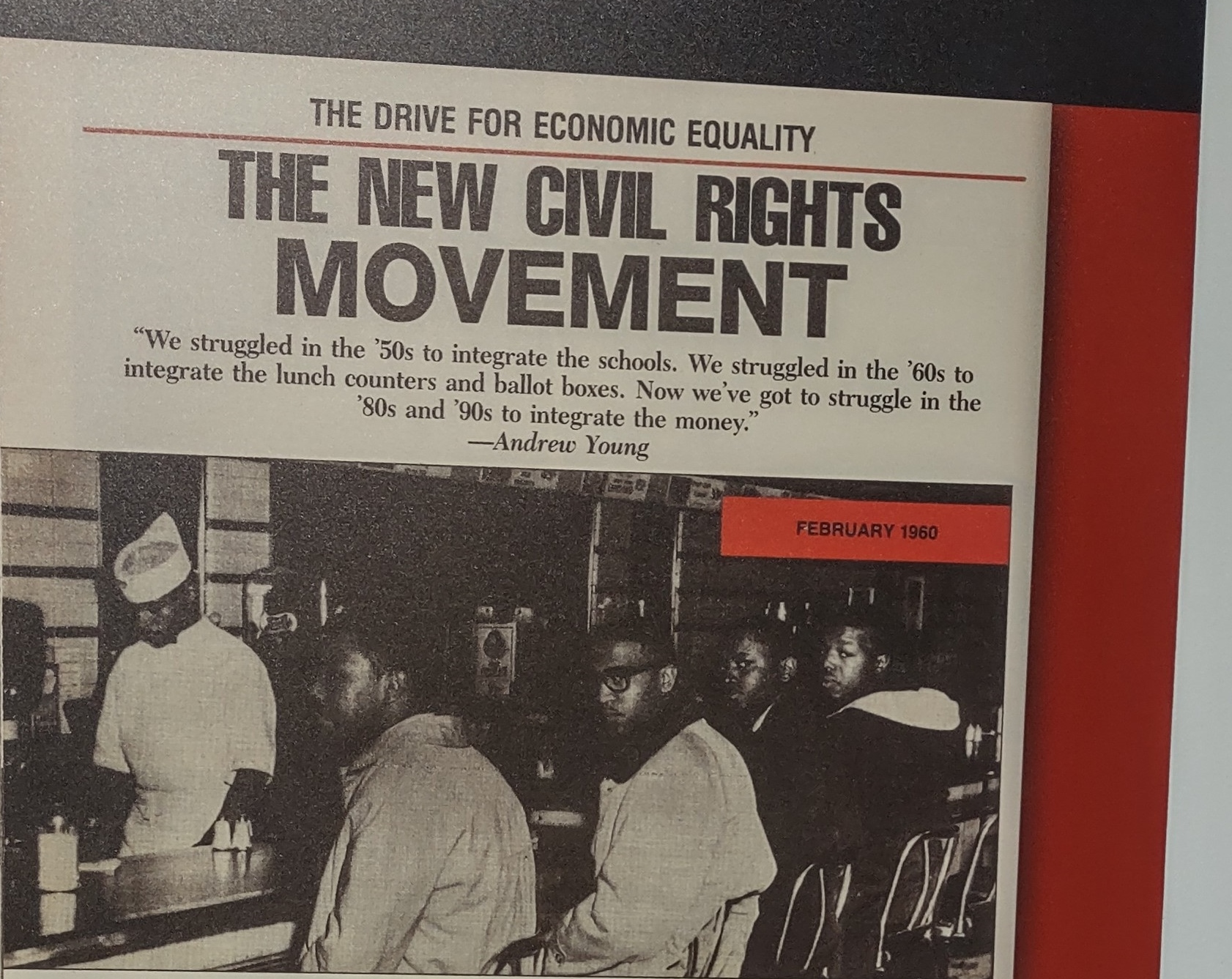
Law enforcement, prisons and court systems, and economic oppression worked against young Black Americans. Two terms of Black presidential leadership did not do enough.
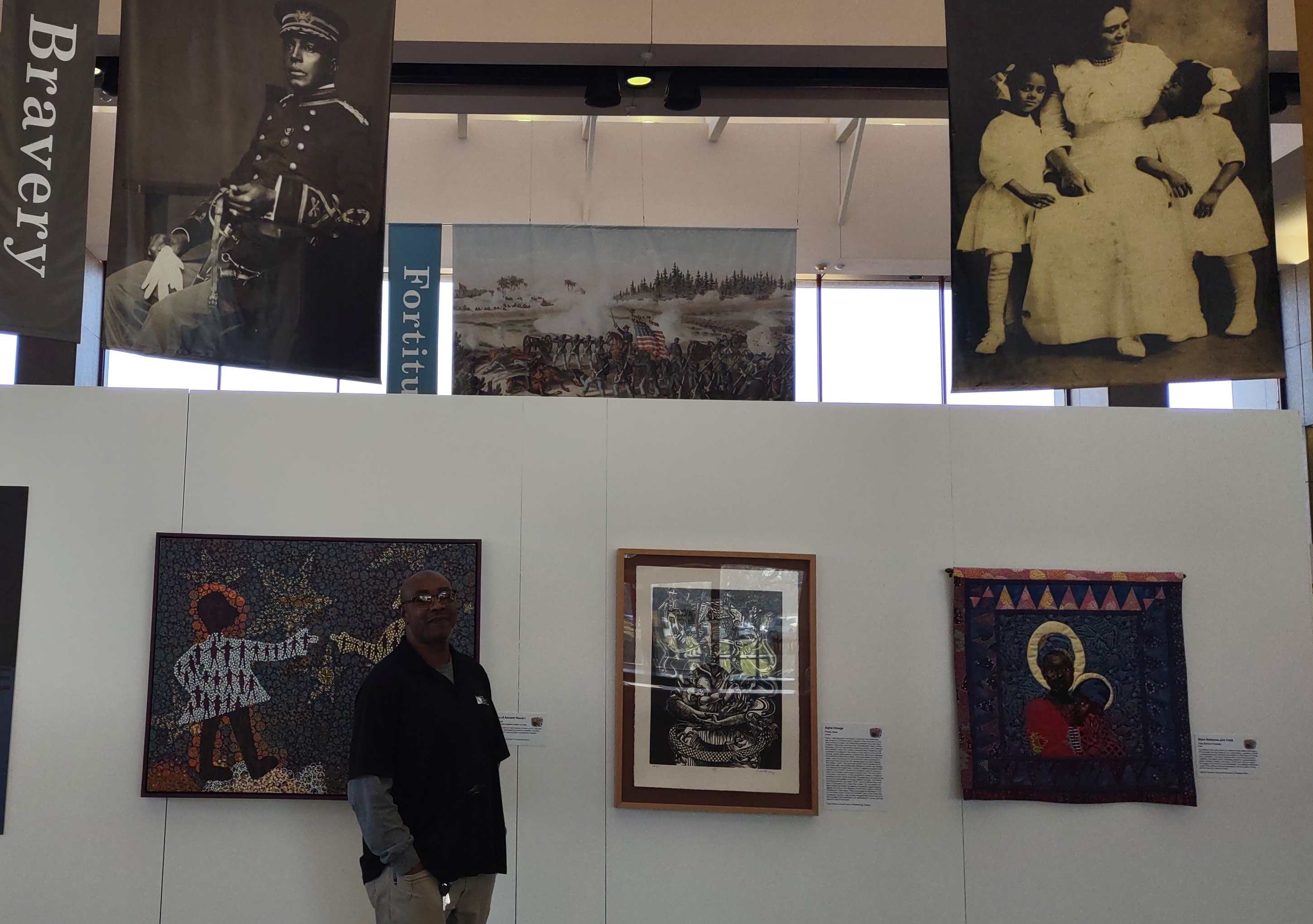
In the shadow of Colonel Young, our museum guide gifts us with history, shared humor, and the difference he is making in this one small day.

In a sudden shaft of sunlight, Mother and Child ask us to do the same.
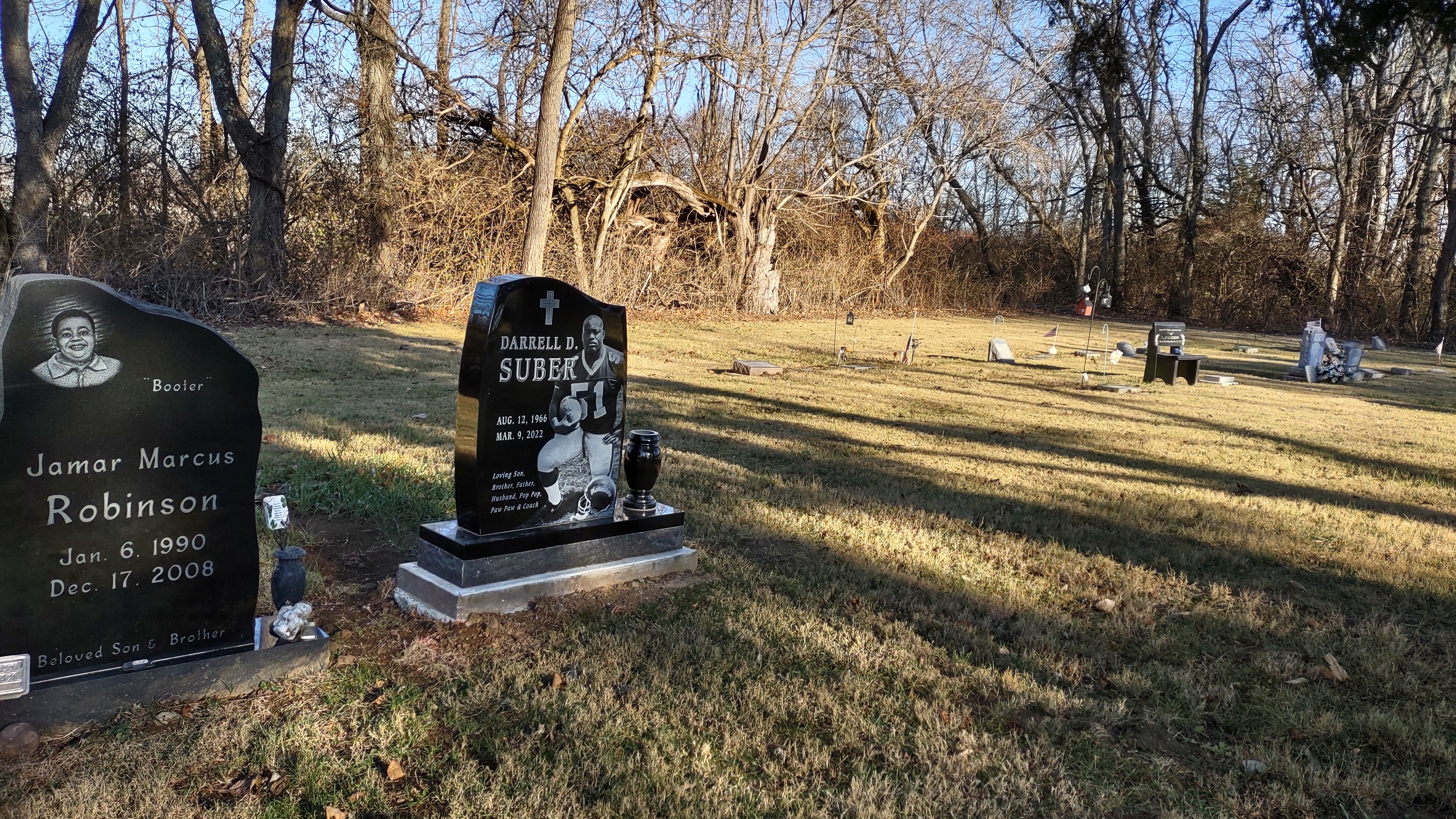 Two miles north, in the slumbering graveyard marked by our coordinates, Americans rest together. Stevensons and Robinsons sort out the strengths and satisfactions of shared history within diverse culture. Seventeen years after placing the first hide in this cemetery, the CO honors a second one.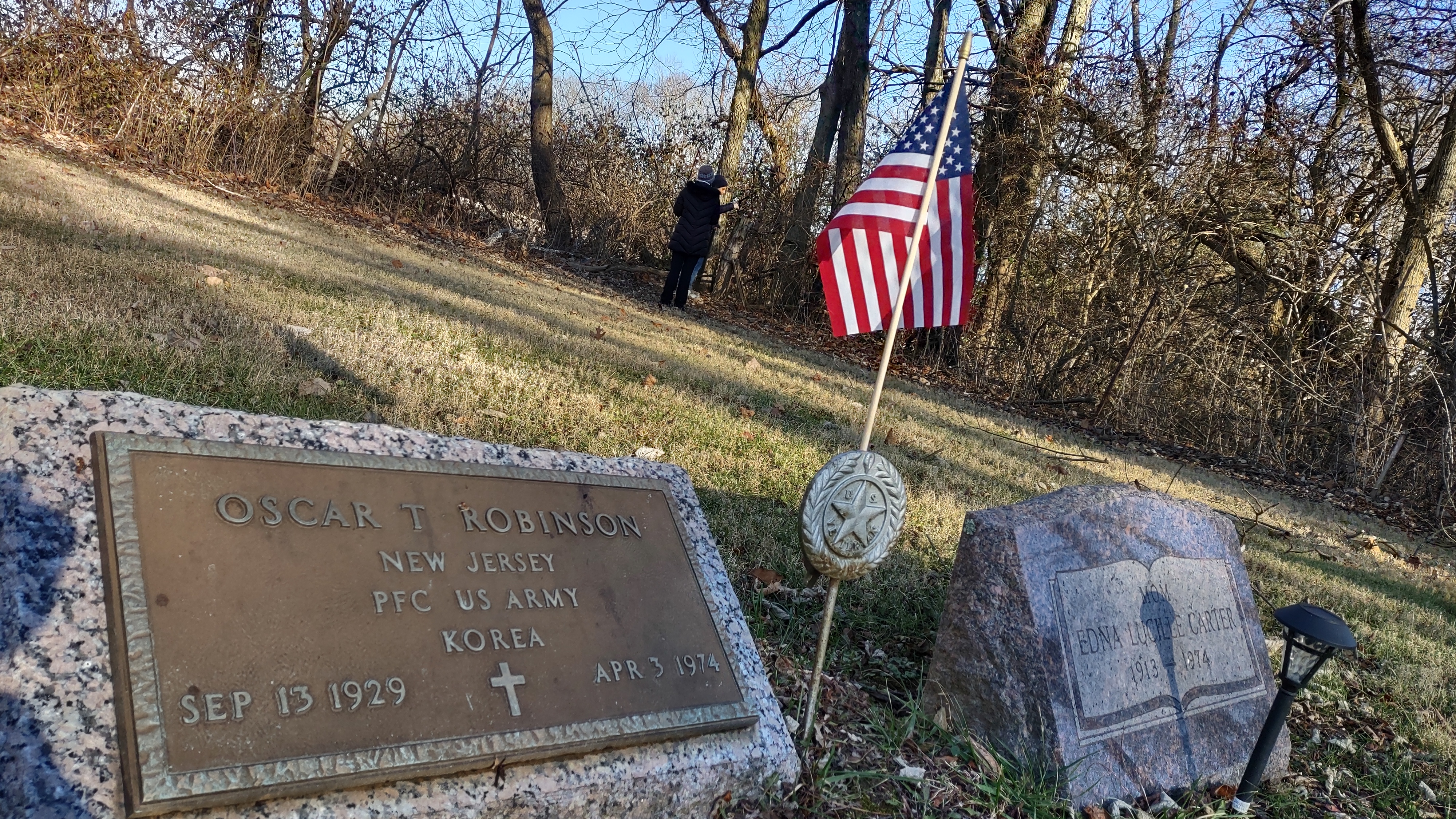
Cache notes share the history of Oscar Robinson, who served in the Korean War, then came home to work in the Wilberforce Post Office. Like 9/11, his tomb marks a memory forever attached to a number — 4/3/74. An F5 tornado swept through Xenia, devastating 3,400 homes, businesses, and factories. Moving east, the funnel cloud ripped over Wilberforce and Central State University, leaving five fatalities. Oscar was 44 years old.
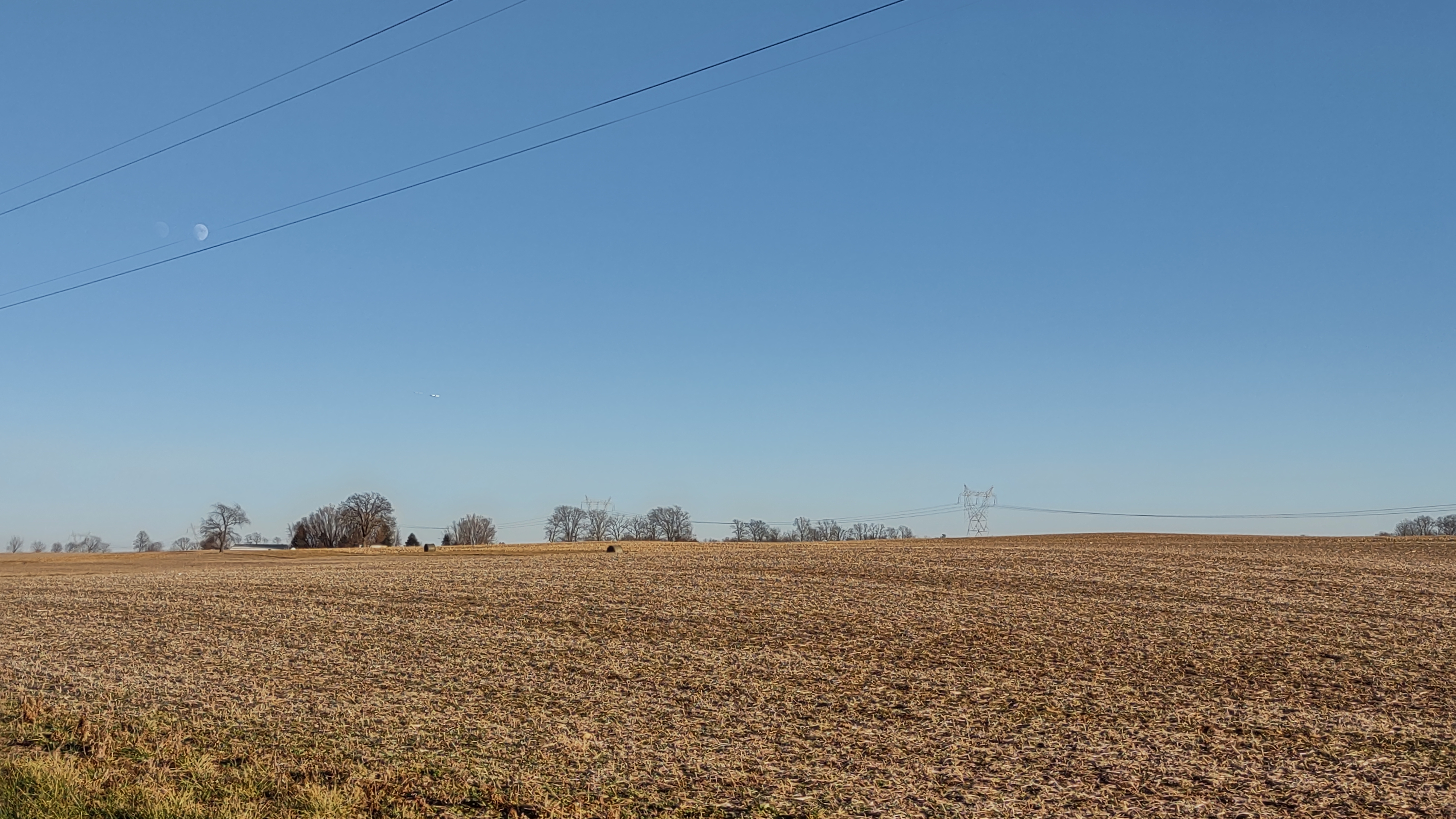
Buckeyes from all over Ohio spent the next weeks and months driving through the flat farms of Greene County to clean up and rebuild. Calamity transformed to community. Today, each tornado warning sounds an opportunity to move in and put things back together.

The guardian log holds the names of those who have walked these shadows of the departed. Our tiny rootling joins that soil. We quietly make our Xit.
-
Stevenson Cemetery
We will follow Cache Owner boydfamily’s 2005 hide, to a place of final rest.
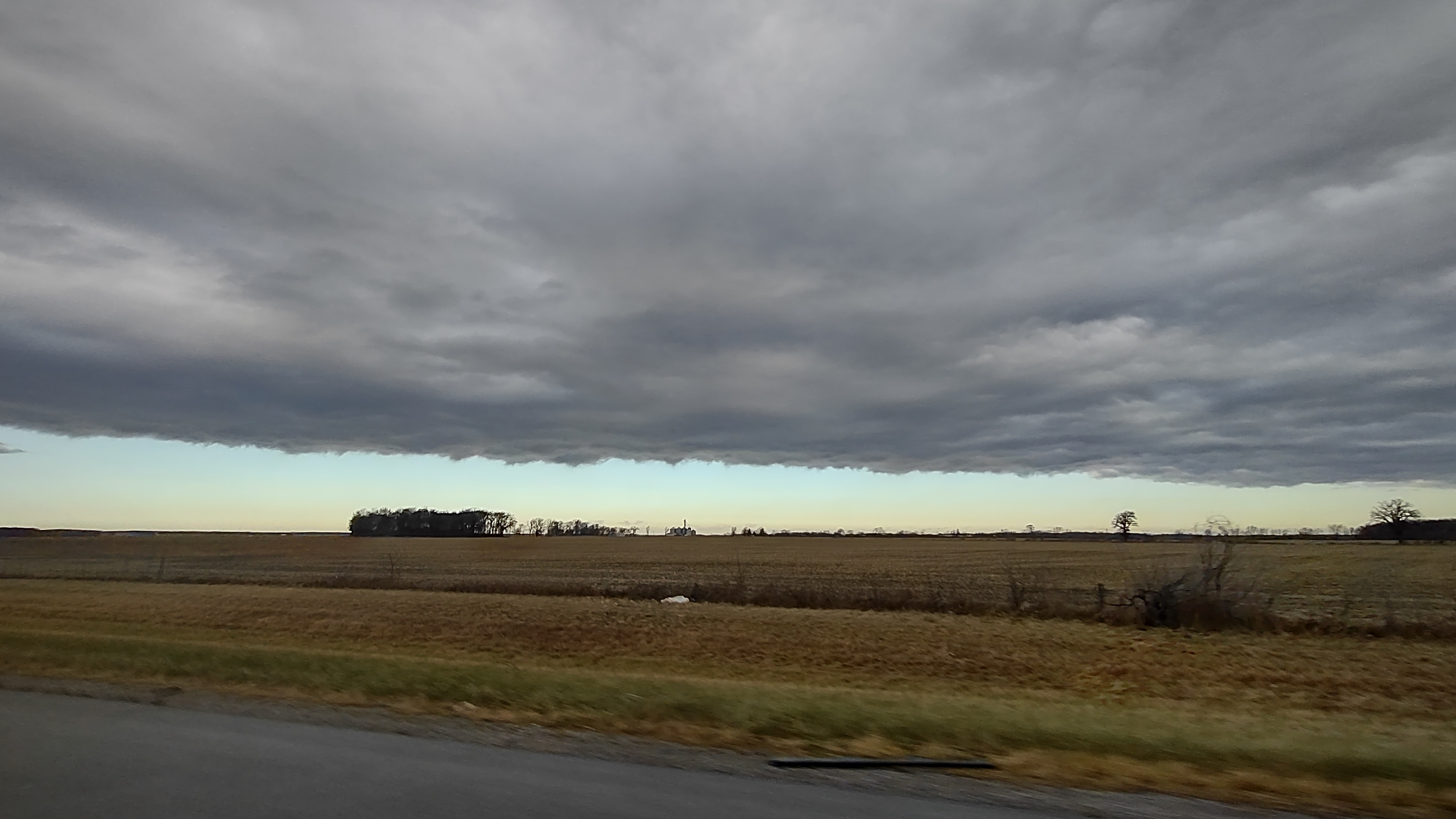
Hunkering down for their long winter’s nap, the stratonimbus up above are getting a little too cozy.
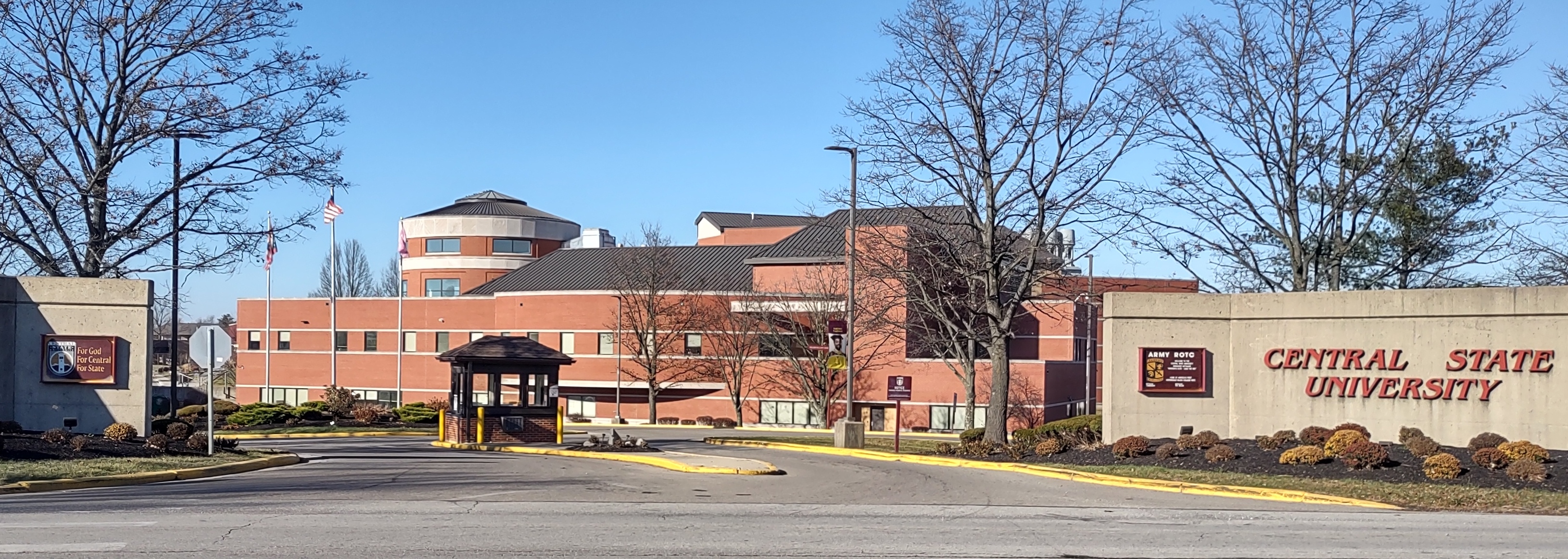
As we leave the city behind, clouds wonderfully wash away. Our geotrail winds past Central State University. Created to be a vocational college next door to Wilberforce University, CSU now reaches more than 5,000 students across business, education, science, engineering, technology, and the humanities.
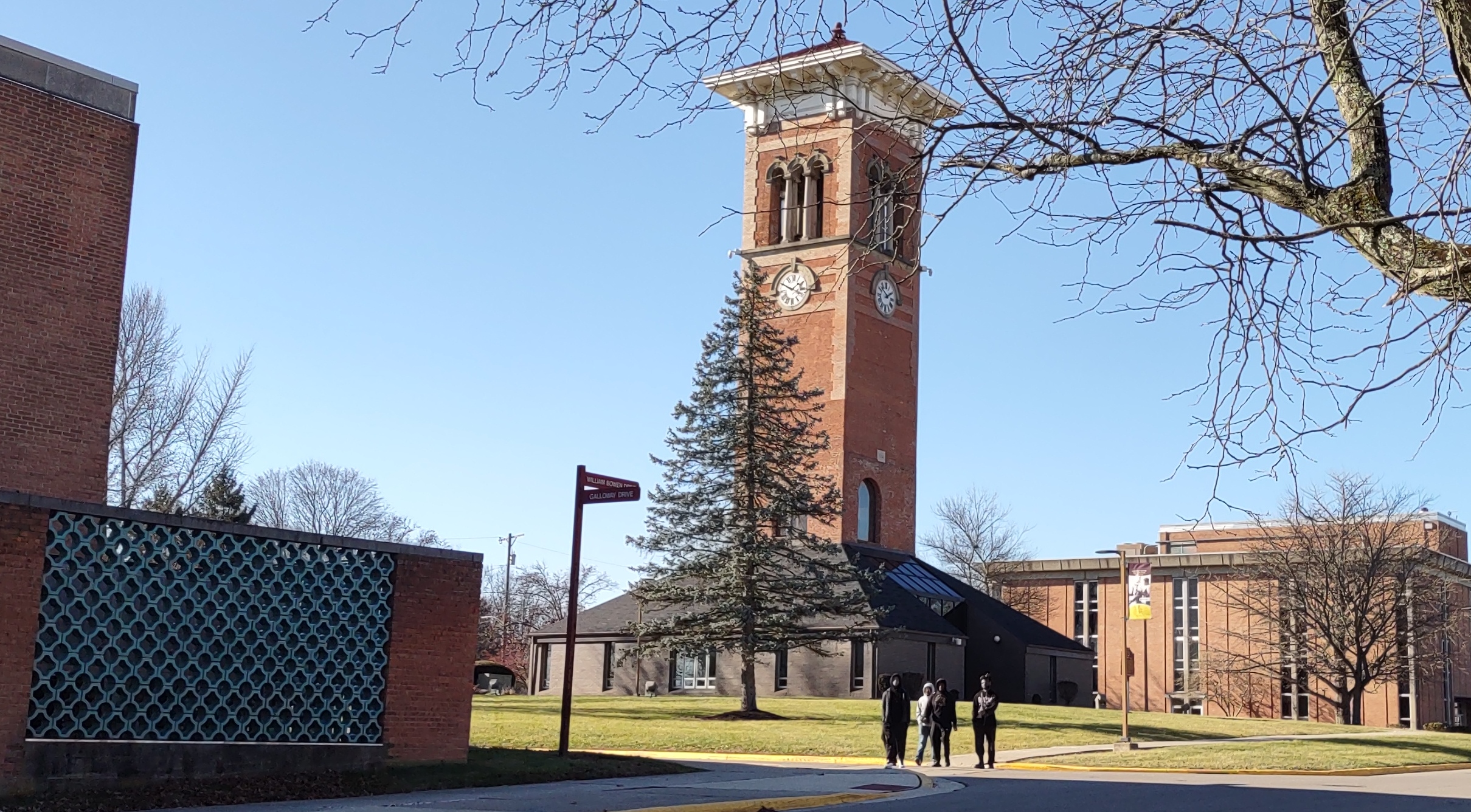
Under the iconic bell tower, children of Tiktok and a global pandemic intrepidly grow up and become someone.
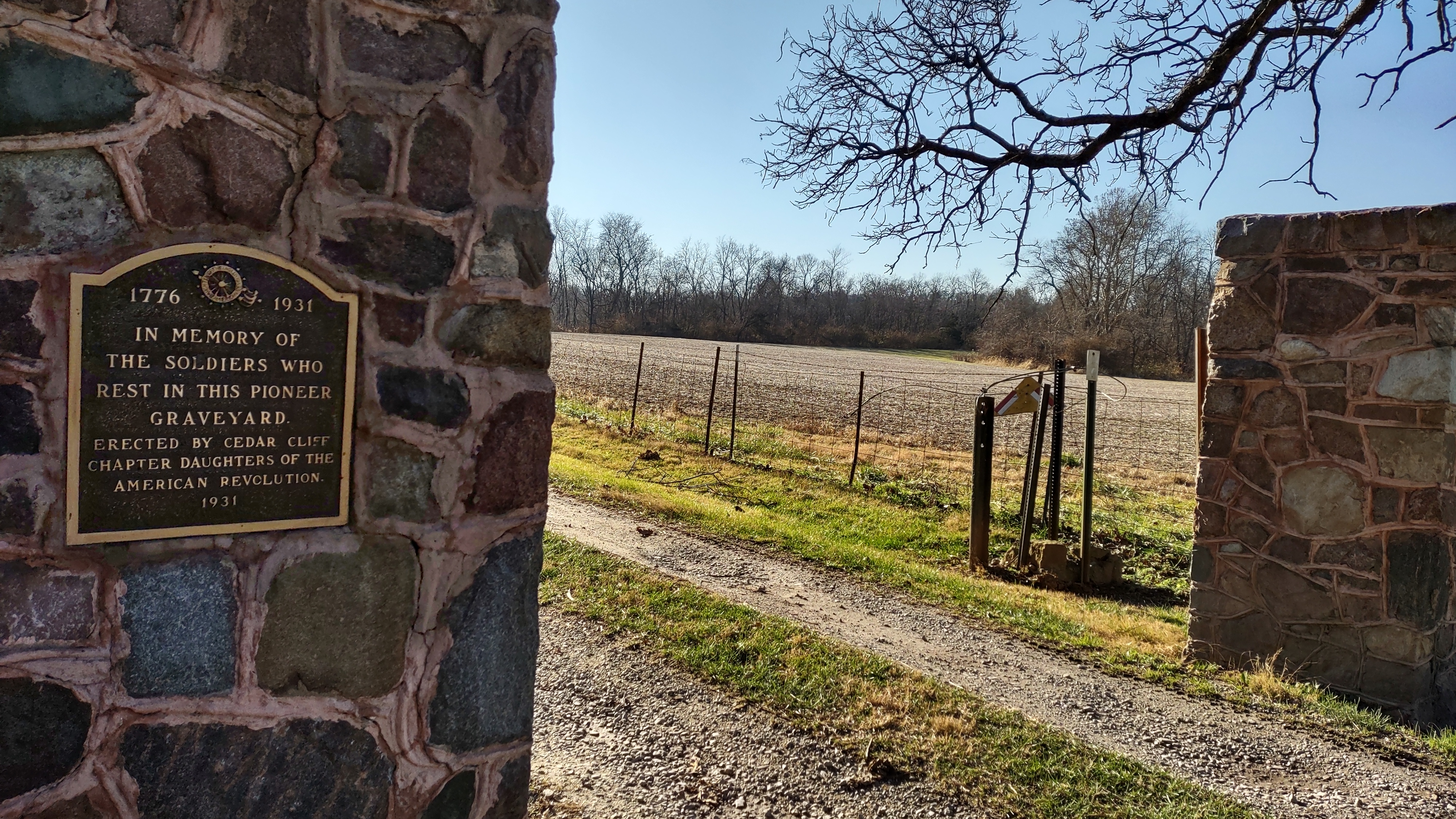
We weave along a rambling route to our cemetery. When eastern farmers came searching for fertile soil, the Land Act of 1804 allowed installment payments on 160 acres of land at two dollars an acre. Sacraments for the departed mandated a church and a cemetery, and the Stevensons obliged, from their farmland along Massie’s Creek. Stretching back a thousand years into the past, an Adena Mound rose along this creek, those stories now resting beneath Shawnee warriors and maidens, frontier settlers and pioneer farmers.
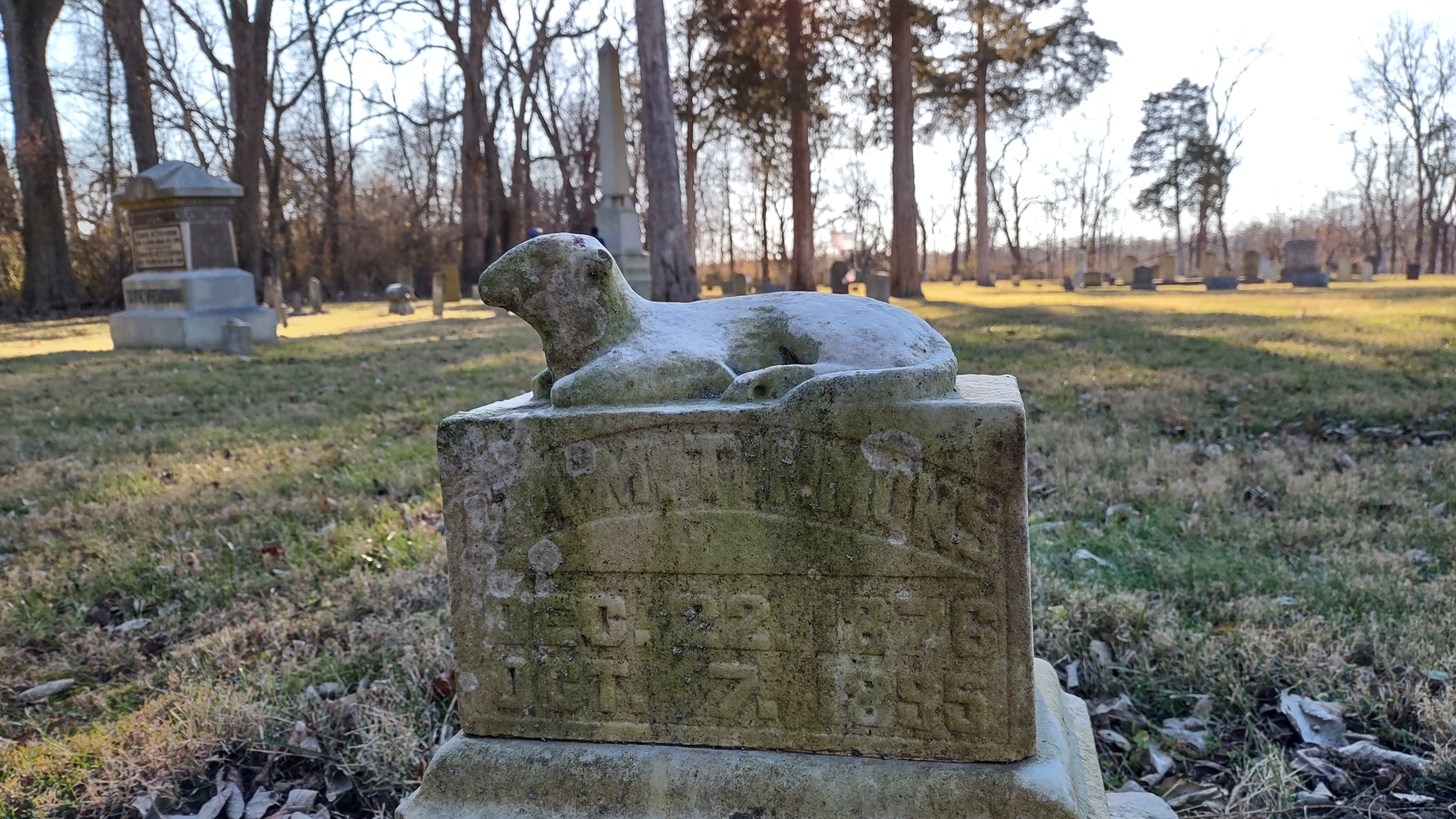
Generations were born, and buried, entrusted to the care of the Shepherd. Evening shadows lengthen, the cold wind mourns the losses, caressing the inscriptions of these roots so deep. In 2005, a cacher shares that buried here is a Revolutionary War grave honoring his Great Grandpa (times six). In this circling of hearts, each is remembered, honored, and loved.

The log records unusual swag found in the search – critter skulls, dead raccoons, metal-detecting bearded muggles, and large-faced spiders. No such luck today.
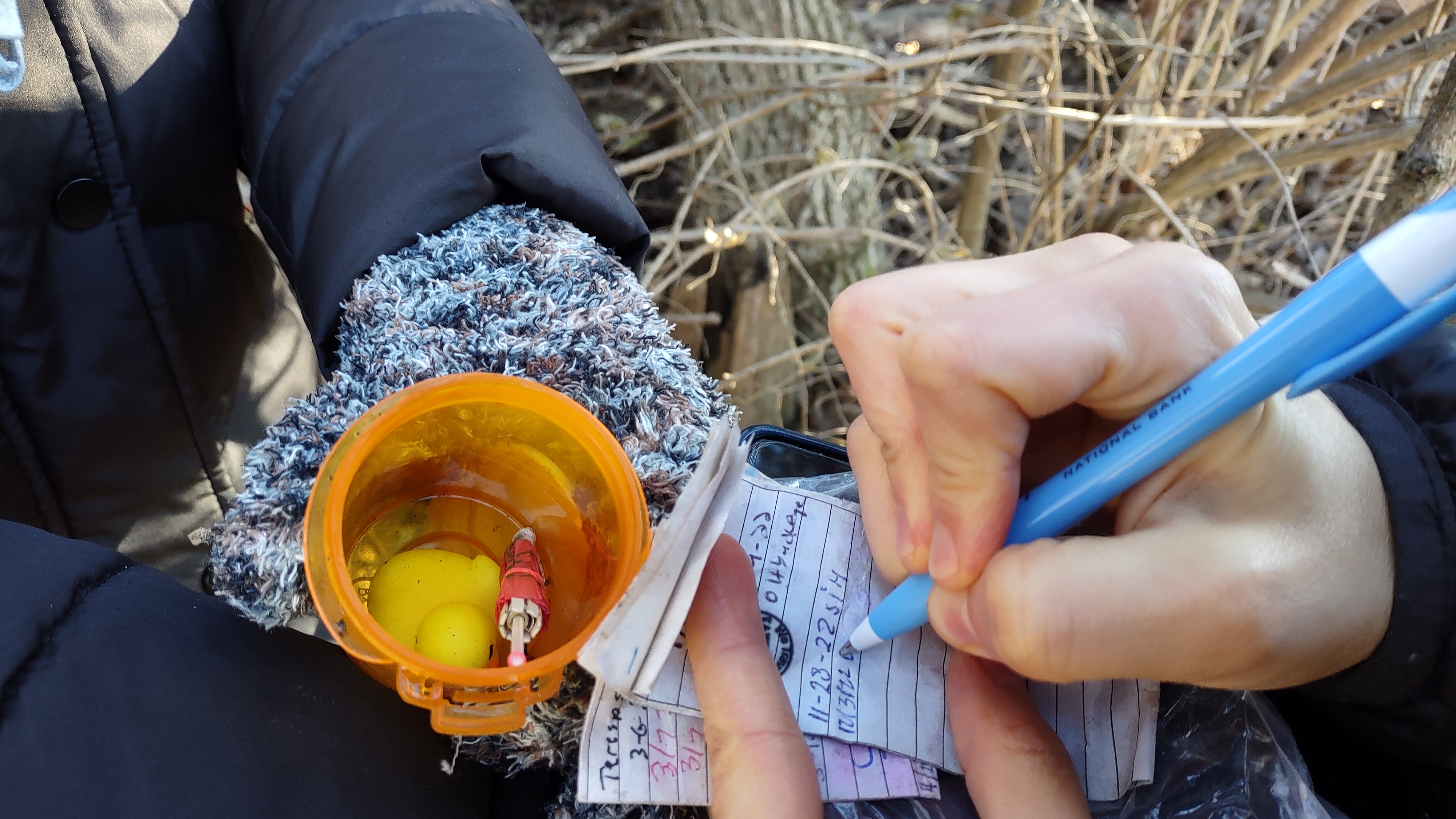
Just frozen fingers, and a yellow duckling ready for rain.
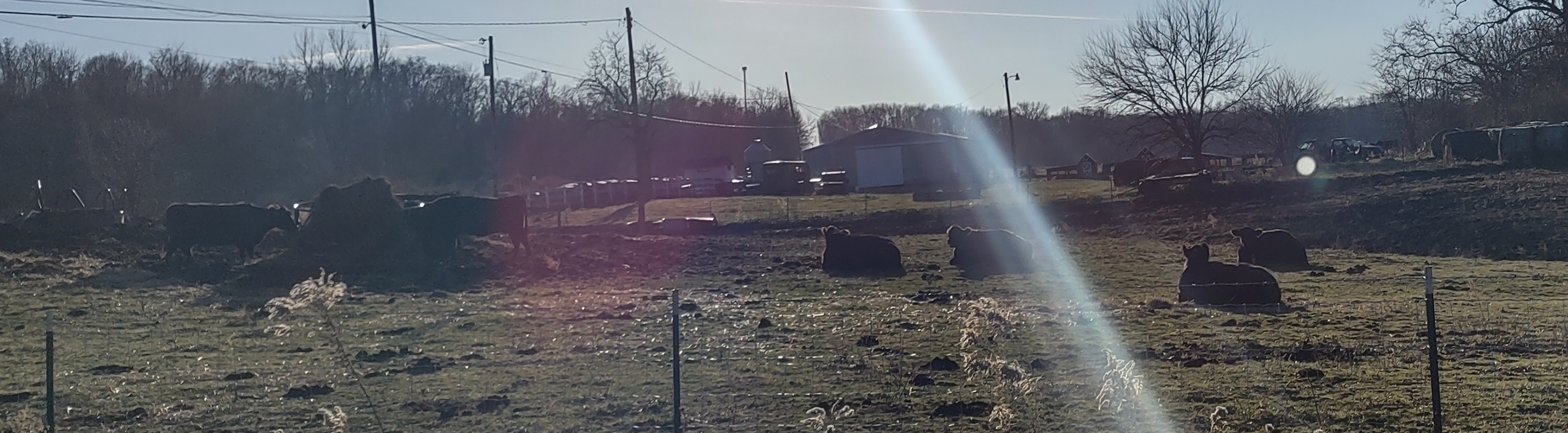
On our way home, cud-chewing cows curl into the cradling earth.
-
Stevenson Road Covered Bridge
Seeking that, without which how many marriage proposals could not have happened, we will follow Cache Owner boydfamily to a covered bridge.
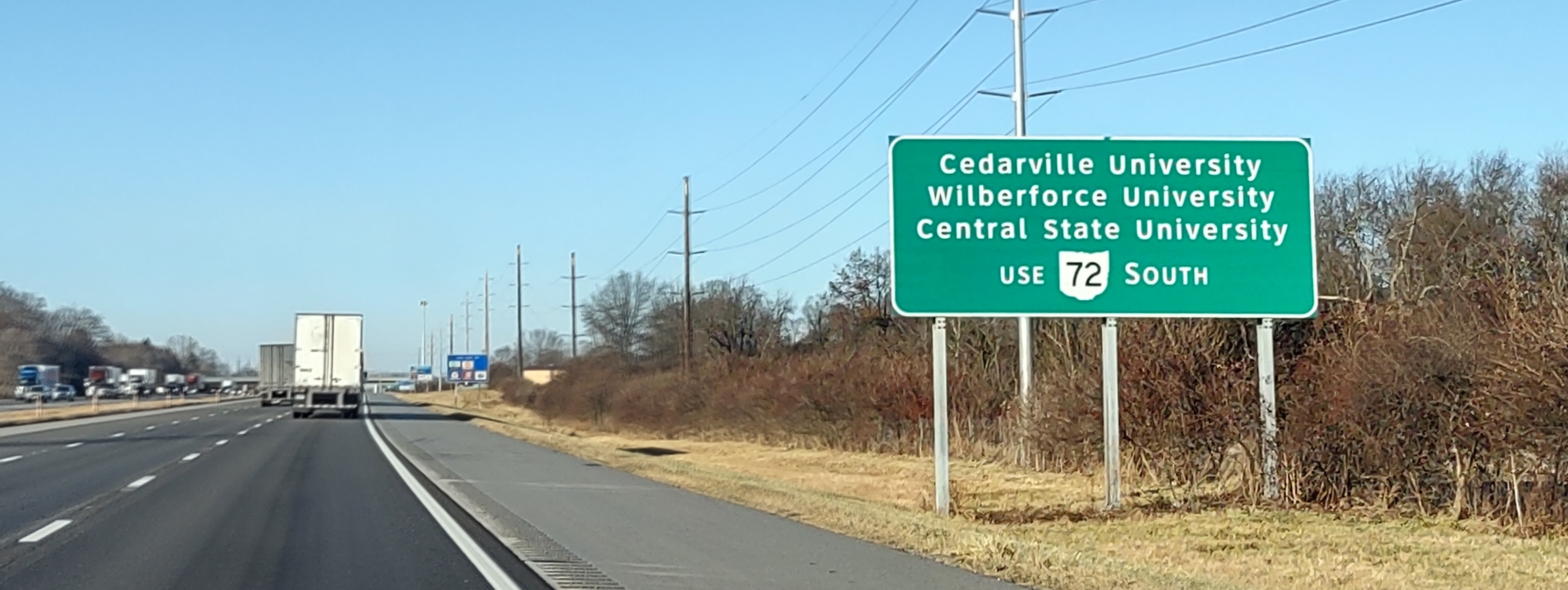
Our geotrail leads west, then south, as the cerulean sky purrs innocence of recent cloudbursts.
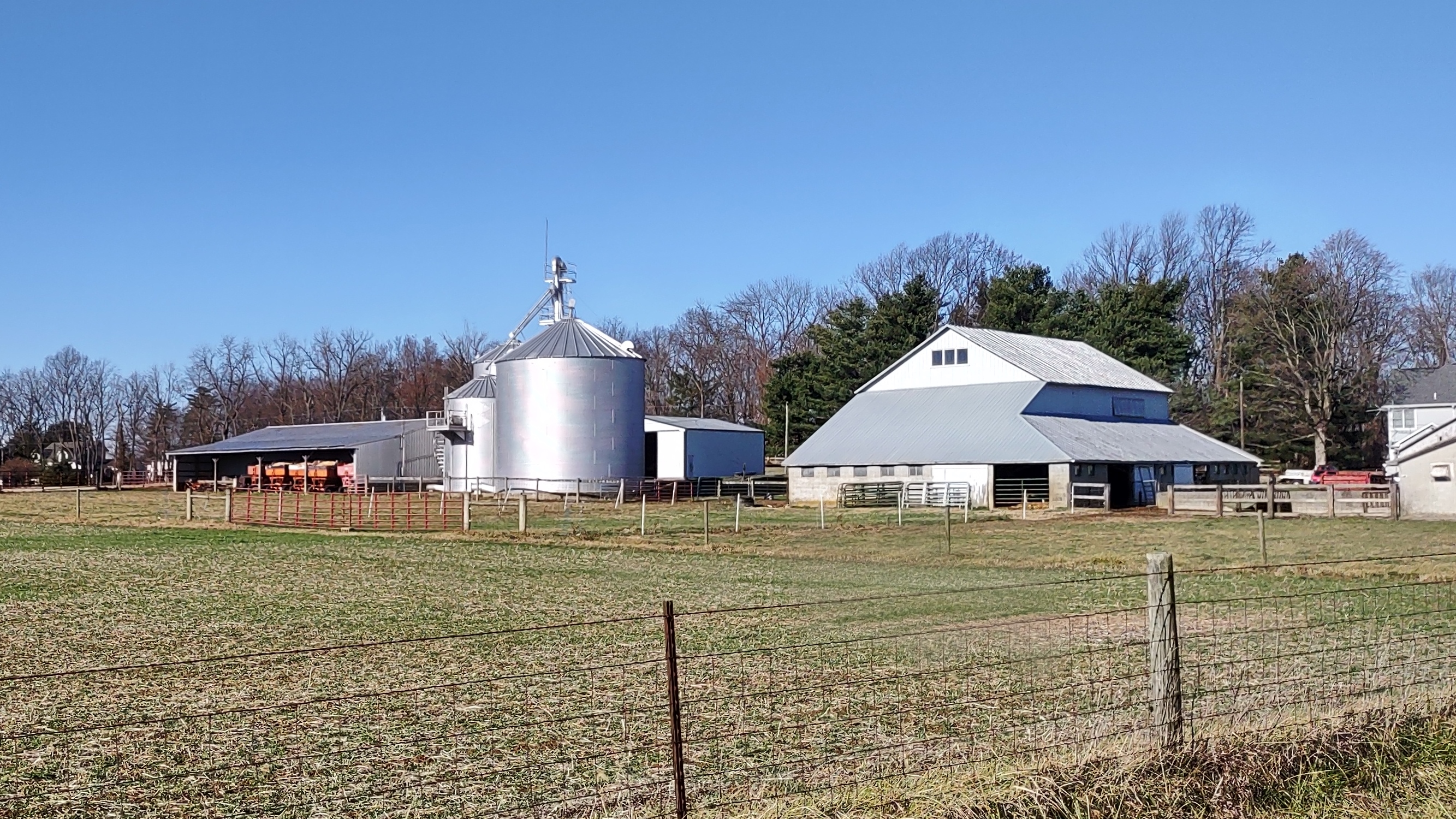
While industrial agriculture turns soil into corn and soy deserts, family farms, with small silos and smaller tractors, cultivate 25% of available farmland to produce 70% of our food. Connected to a living landscape, invigorated by generations of hearts rooted in dirt, small farmers figure out how to hold on.

Our geotrail crosses the campus of Wilberforce University. Two hundred years ago, as Wayne and his army pushed Ohio tribes to the northwest, farmers bought and settled this land. In 1850, Elias Drake saw fit to develop the land into a resort, where he welcomed Southern land owners, along with their entourages of captive American women. Annoyingly unpopular with his abolitionist neighbors, Drake sold out to the Methodist Episcopal Church, which then helped to found Wilberforce University. In this small town, free Black students lay down to rest, in the cottages where no captives would sleep again.
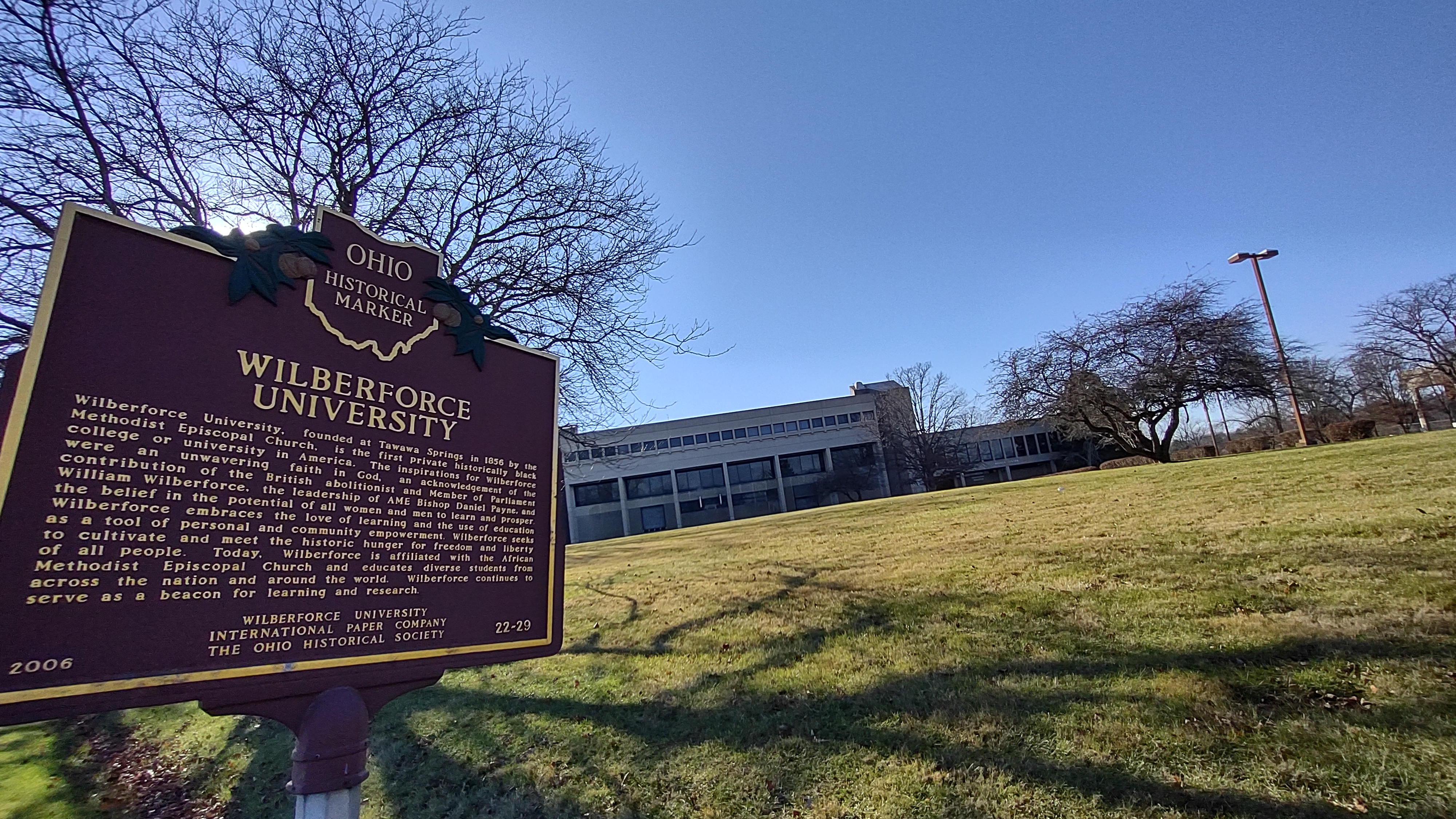
Crediting the abolitionist William Wilberforce, Bishop Daniel Payne, an unwavering faith in God, and their own conviction that opportunity must empower all, the institution stands strong 166 years later. From this Historically Black University have risen educators, philosophers, military heroes, athletes, opera singers, physicians, and politicians — all nurtured and empowered within a safe haven for Black culture.
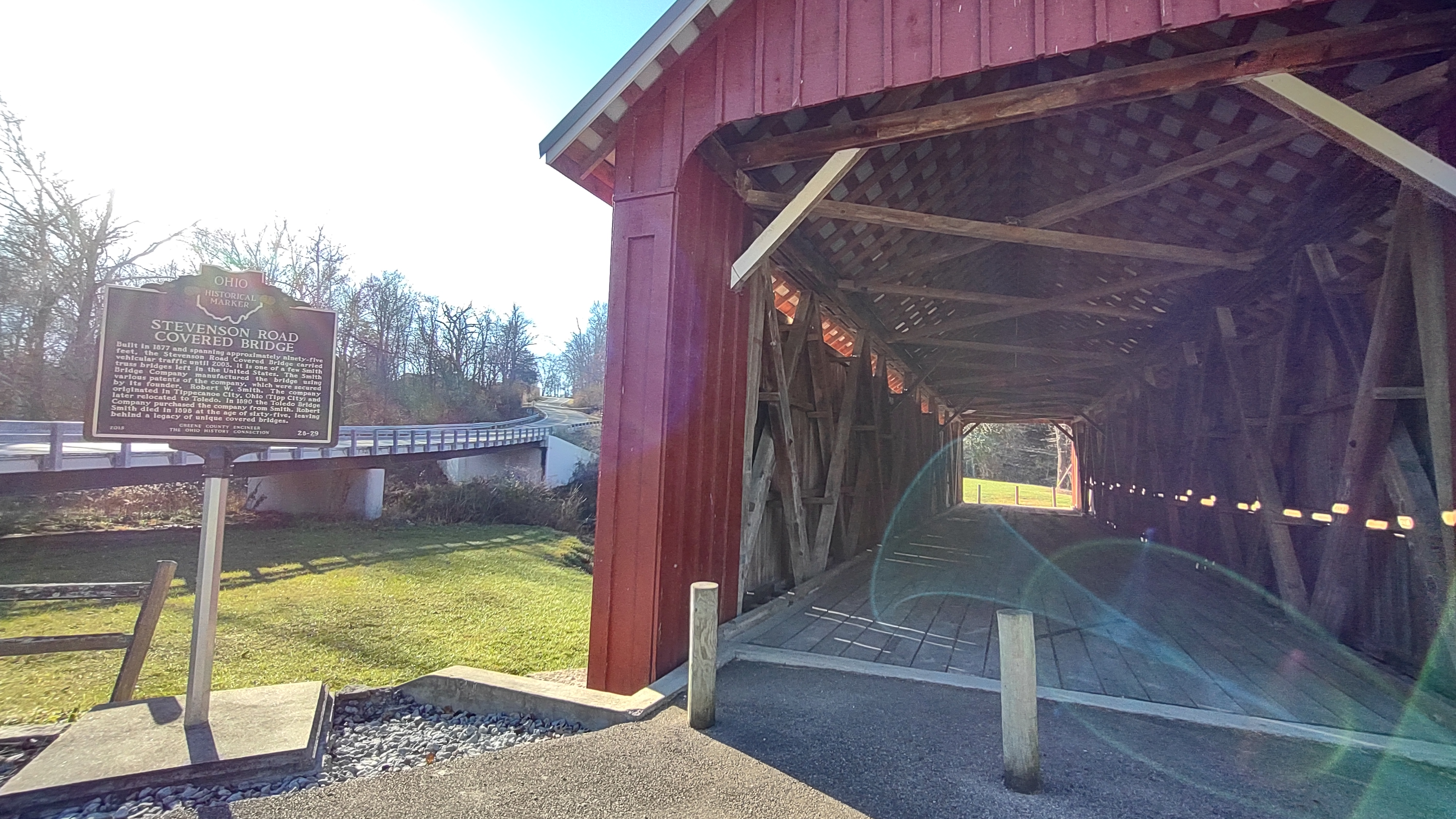
As we wind north on Brush Row, then Stevenson Road, the 1877 bridge rises before us above Massie’s Creek. The patented Smith Truss diagonal specialized in longer spans and heavier loads. Out of use for the past 20 years when the road wandered over to its ugly stepsister, the bridge was nevertheless rebuilt in 2015.

Logs tell us that if a muggle is around, apparently posing for touristy type pictures, and you are posing for your own fake pictures, as you both edge closer to the cache, one of you will finally catch on.
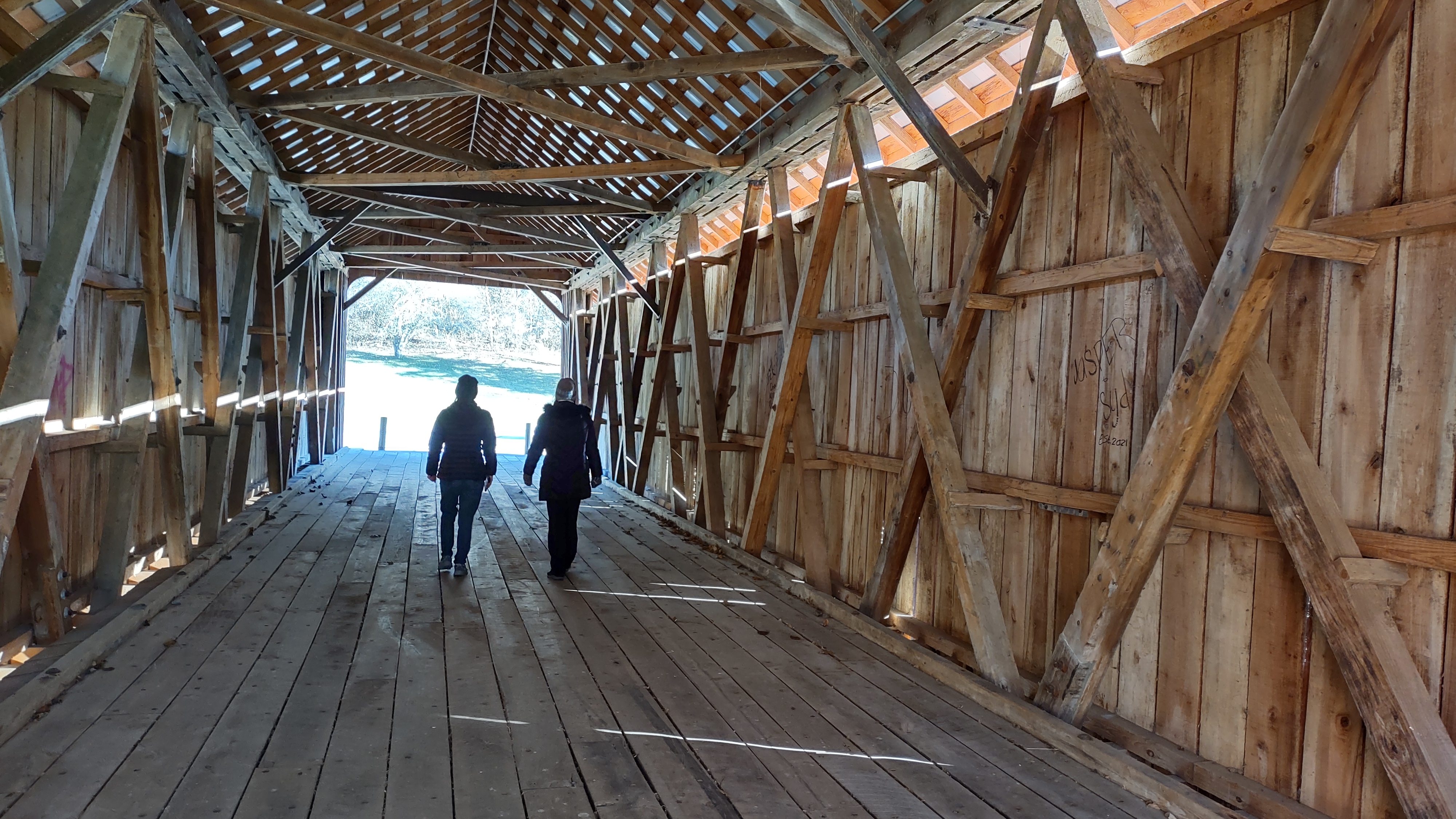
And both of you will dissolve in boisterous belly laughs, and find a new friend.

In 2013, a cacher stood beside the dilapidated and worn 136-year-old bridge, and logged a treasure for us to find, about ourselves, and why we cache.
Spent too much time indoors today
so I headed out for a cache
before dusk came.
-
Deeds Not Words
Cache Owner boxen-hunters, with a 2014 hide, asks us to ponder somewhere yonder.
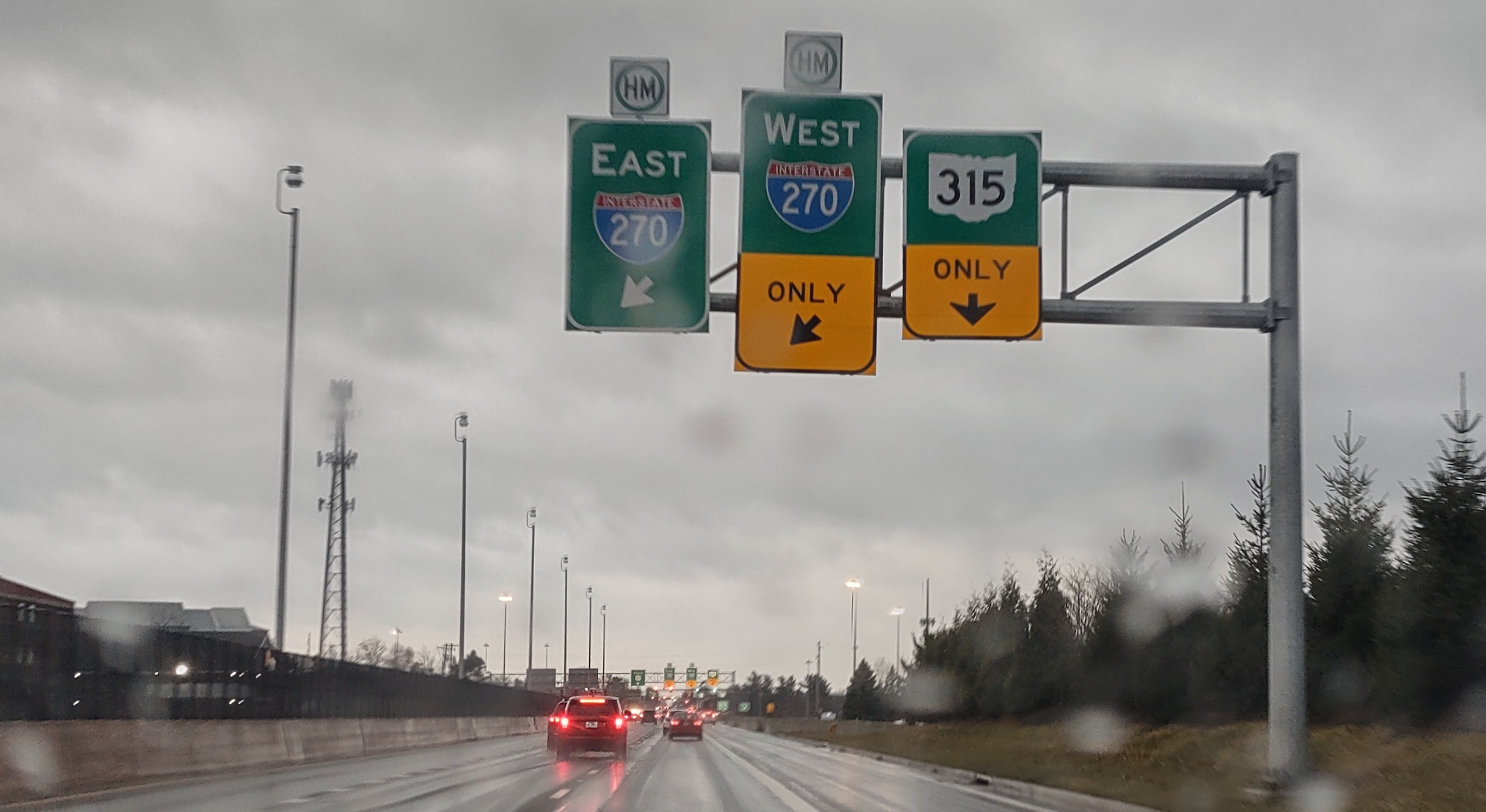
We will head southwest to Wilberforce, and a triangular corner where the Wilberforce-Switch Trail shakes hands with its long and winding neighbor, the Ohio-to-Erie Trail.
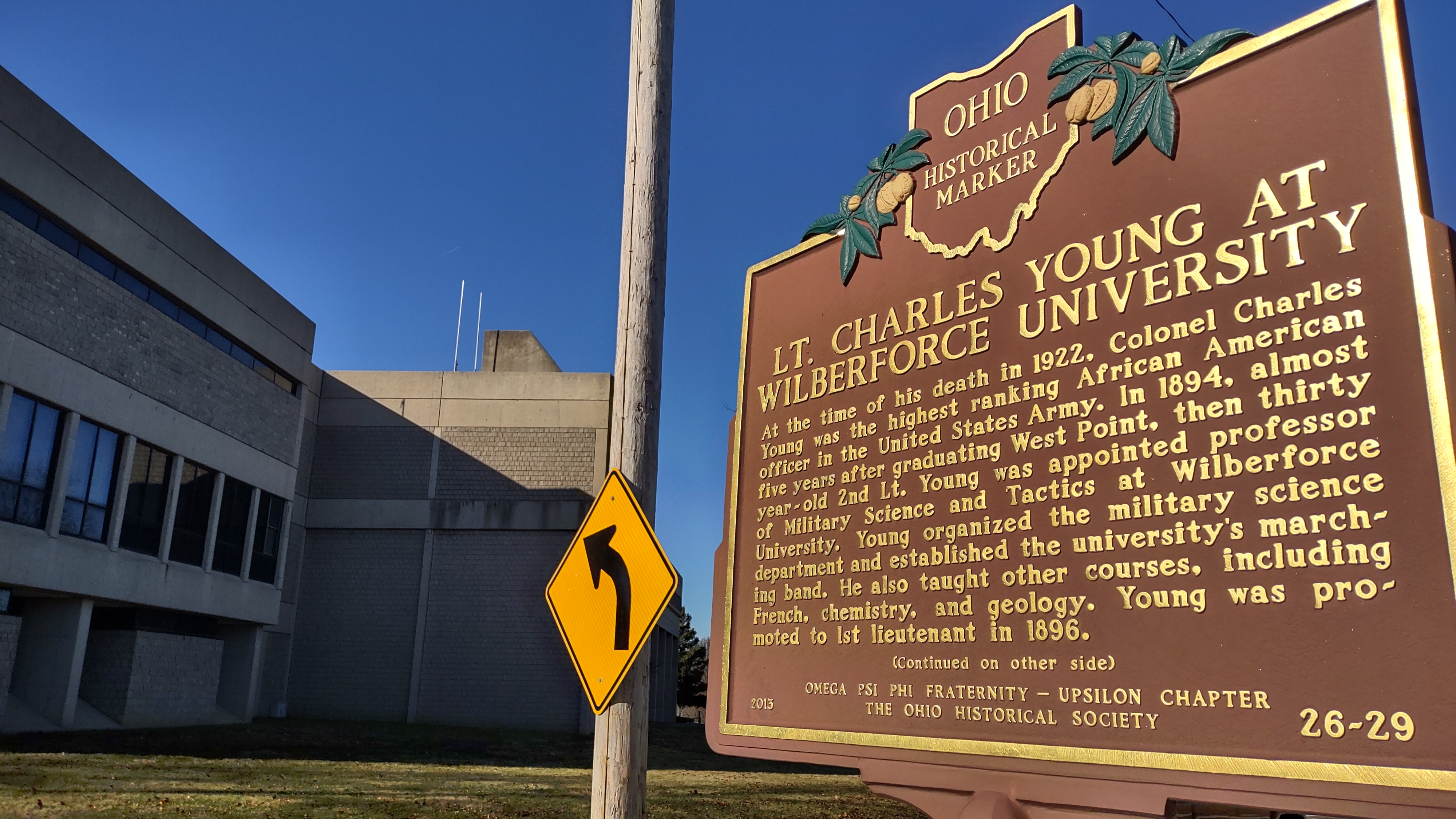
The CO writes that, as a member of the Reserved Officer Training Corps at Wilberforce/Central State University, he pounded these trails. Boxen-hunters now returns to honor the man who began the ROTC program here.
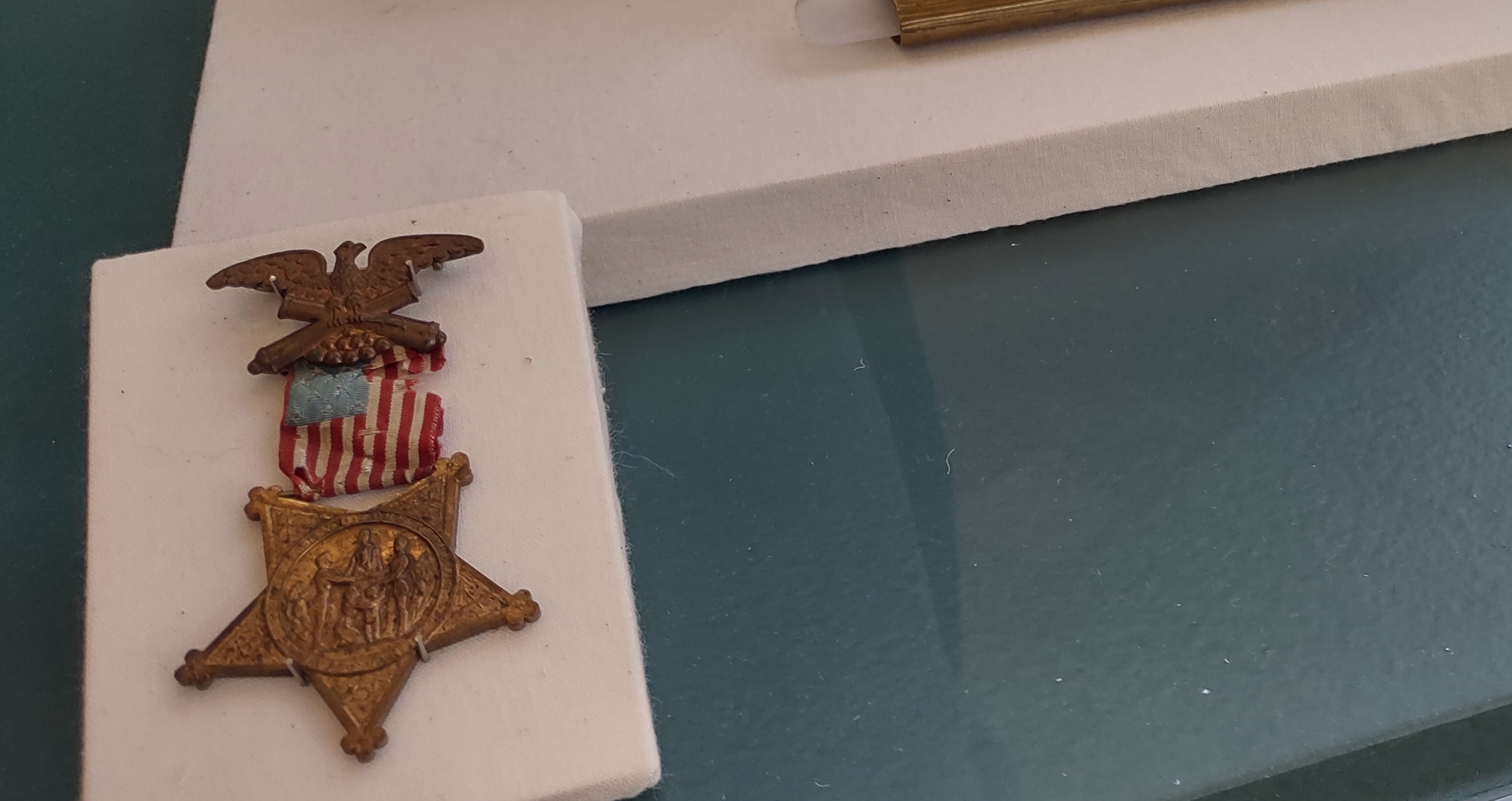
Born to parents held as labor captives in Kentucky, Charles Young grew up hearing about his father’s escape to freedom in 1865, in order to enlist in the Union army. This 150-year-old medal, awarded to his father by Union Army veterans, is still preserved. By 1889, at age 25, Charles Young had graduated from West Point. Five years later, Wilberforce University called on him to organize the military science department. When he left the university in 1898, 113 cadets marched proudly in the brand new ROTC unit. Fourteen of those cadets would follow him to the Ninth Ohio Battalion, the only Black regiment in the Ohio National Guard, serving as a guard unit during the Spanish American War.
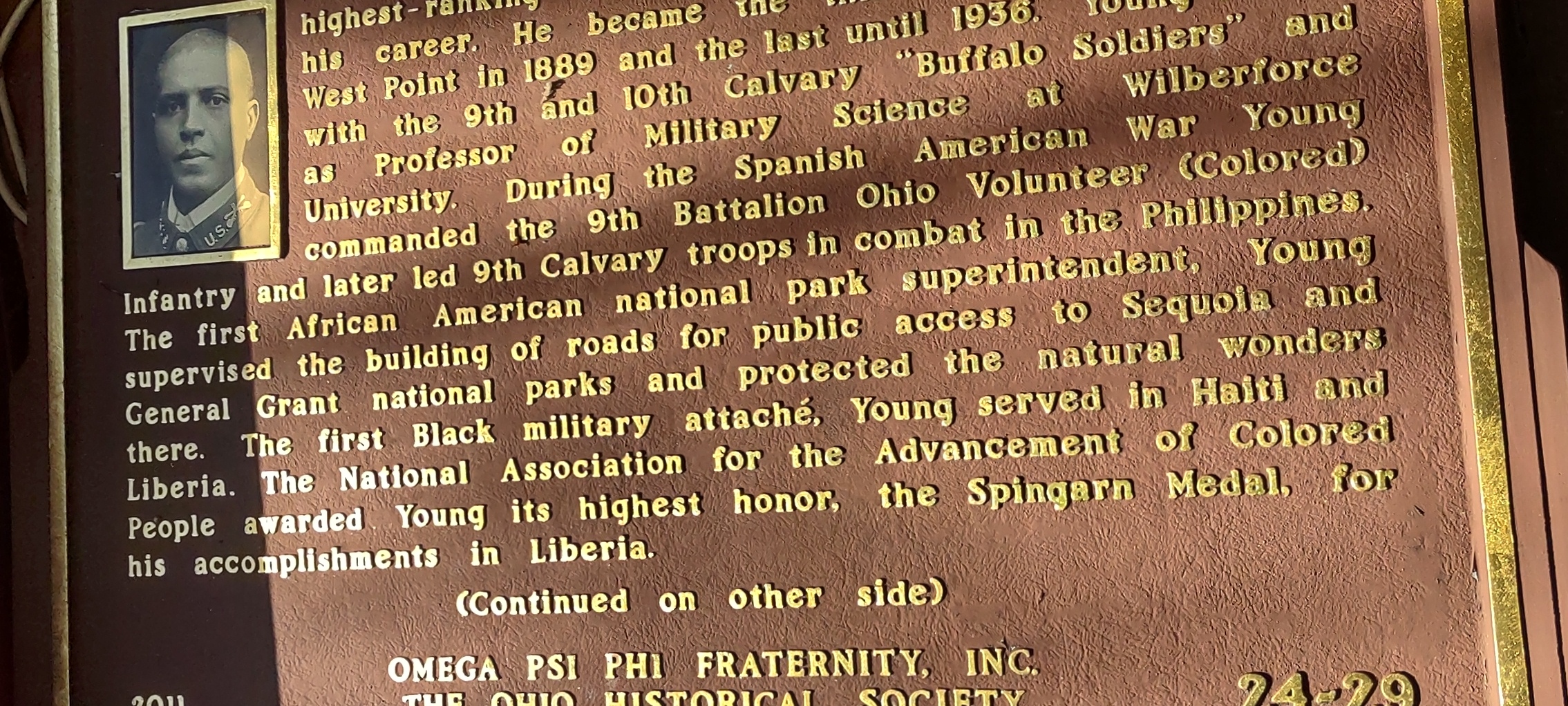
Given leadership of Sequoia National Park, Colonel Young organized his Buffalo Soldiers to build roads and protect unsettled land, fighting Mexican revolutionaries in 1916. Then the first World War broke out. At age 53, Colonel Young was the highest-ranking Black officer in the United States. The Army declared him physically unqualified to command, and refused to appoint him to lead Black troops in Europe.
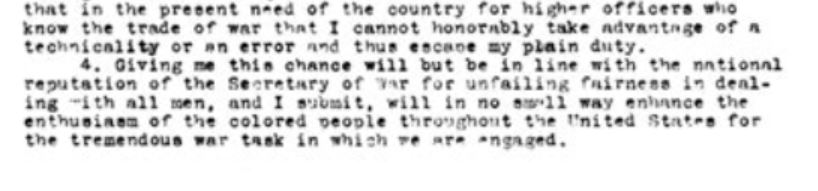
Colonel Young spent a year appealing the decision. It would be another half-century before Dr. King would write, in a Letter from Birmingham Jail, “. . . when you suddenly find your tongue twisted and your speech stammering as you seek to explain to your six-year-old daughter why she can’t go to the public amusement park that has just been advertised on television, and see tears welling up in her little eyes when she is told that Funtown is closed to colored children, and see the depressing clouds of inferiority begin to form in her little mental sky, and see her begin to distort her little personality by unconsciously developing a bitterness toward white people . . . when you are forever fighting a degenerating sense of ‘nobodiness’ . . . there comes a time when men are no longer willing to be plunged into an abyss of injustice where they experience the bleakness of corroding despair.”
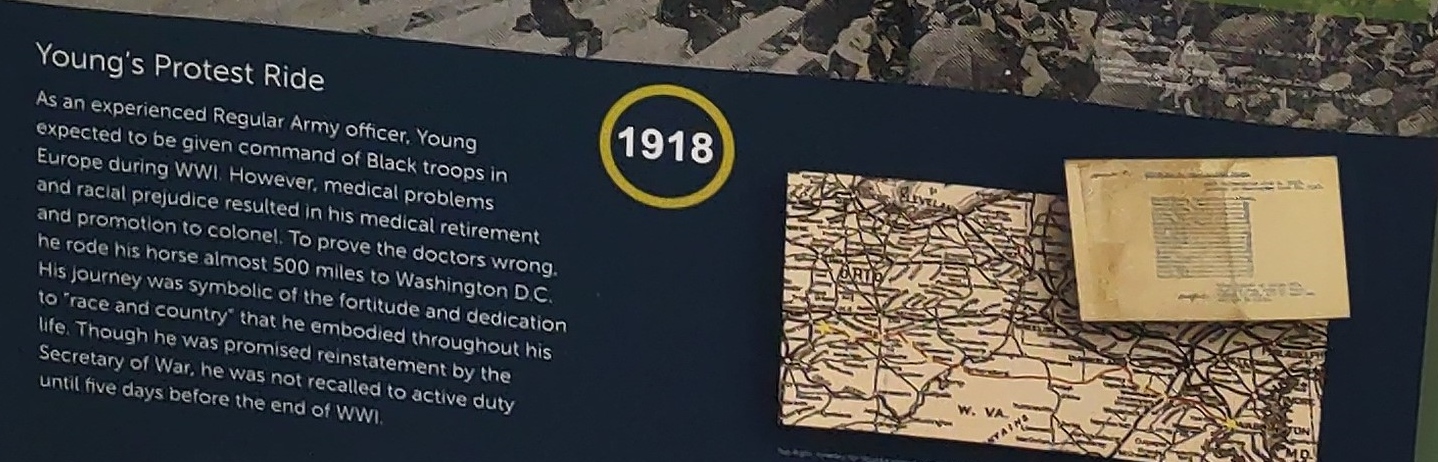
For Colonel Young, that time had come. Mounting his best horse, he rode 497 miles, from his home in Wilberforce, through Circleville, Logan, and Athens, across West Virginia, and Virginia, into the halls of Washington DC, to discover what health restriction such a man who could make this journey might have. Unmoved, the Secretary of War signaled to a watching nation that legal segregation and discrimination still had a place in the land of the free.
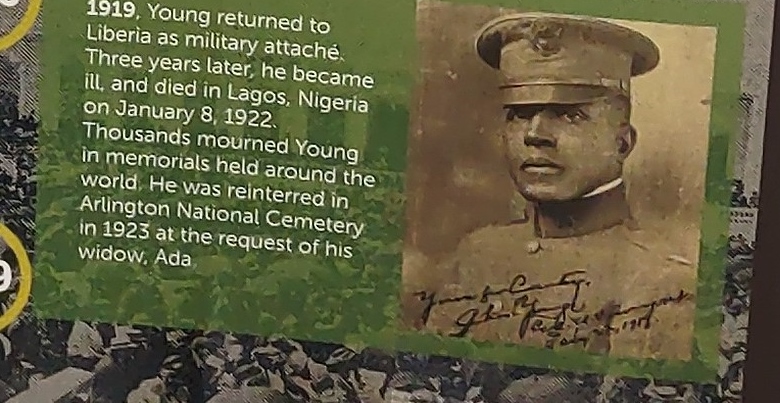
After the war, Colonel Young did not disappear into defeat. With Lincoln’s last full measure of personal courage, the Colonel stayed in the Army and was assigned to Africa, where he died in 1922, followed by a burial of honor in Arlington National Cemetery. His home is currently under renovation as a National Historic Landmark and station on the Underground Railroad.
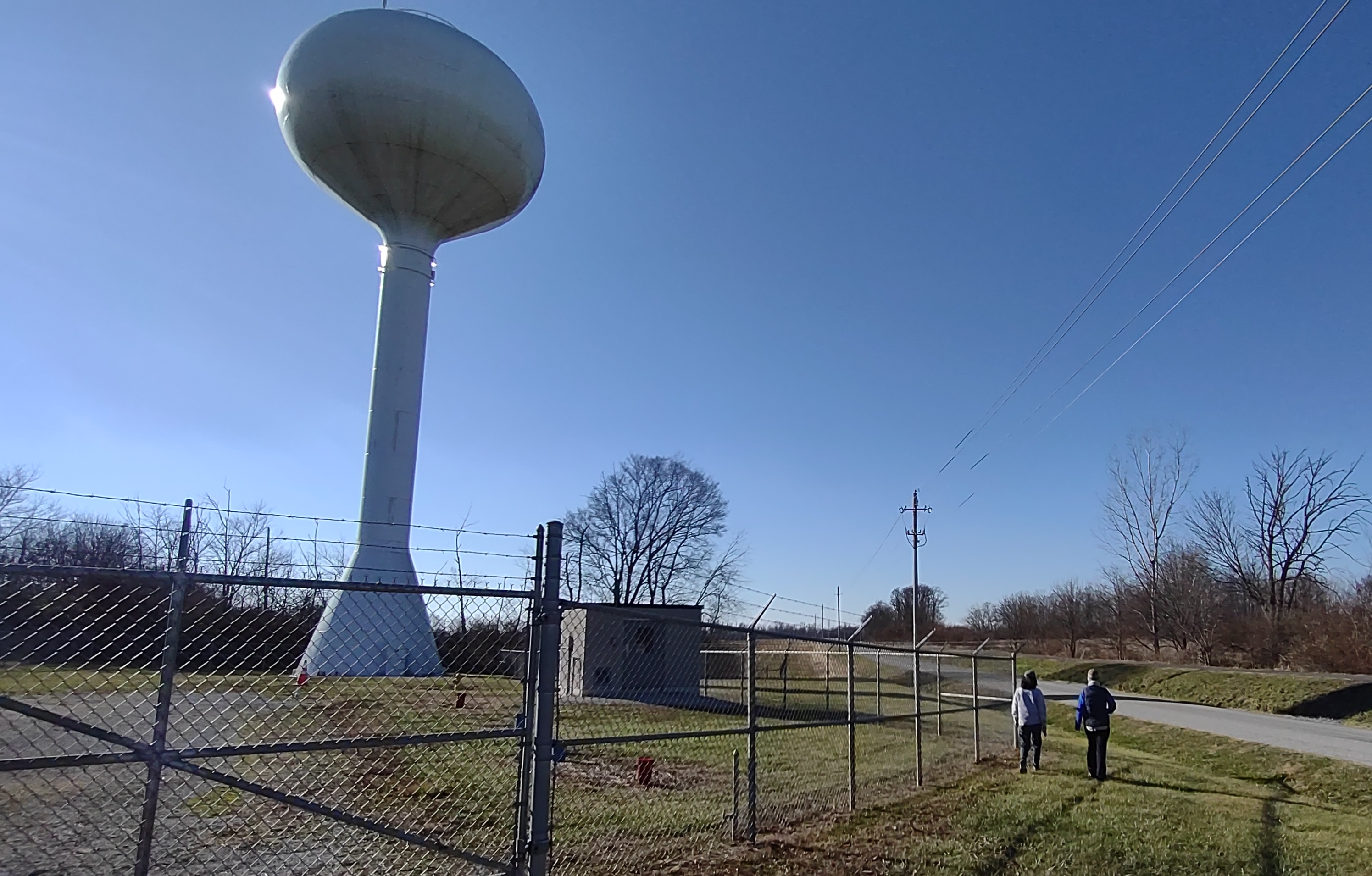
Our Ground Zero towers over us, enormous achievement on a slender thread. Quiet sunlight holds shadows of battalions running by on the trail, pushing before them centuries of anguished determination.
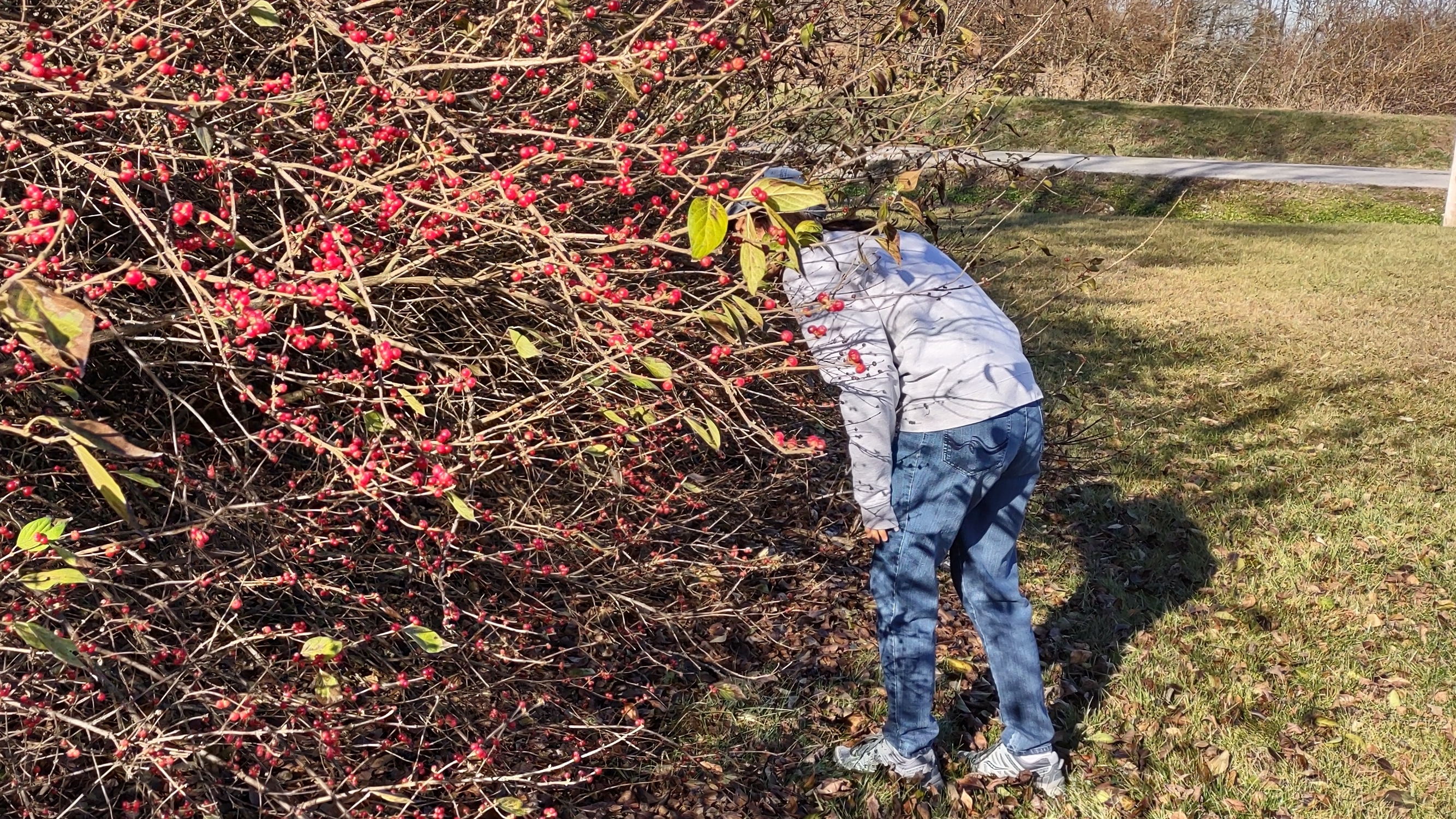
Around the fence, with a worried pause for twisted ankle-plunging into a grassy hole, we find a Christmas feast for feathered friends.
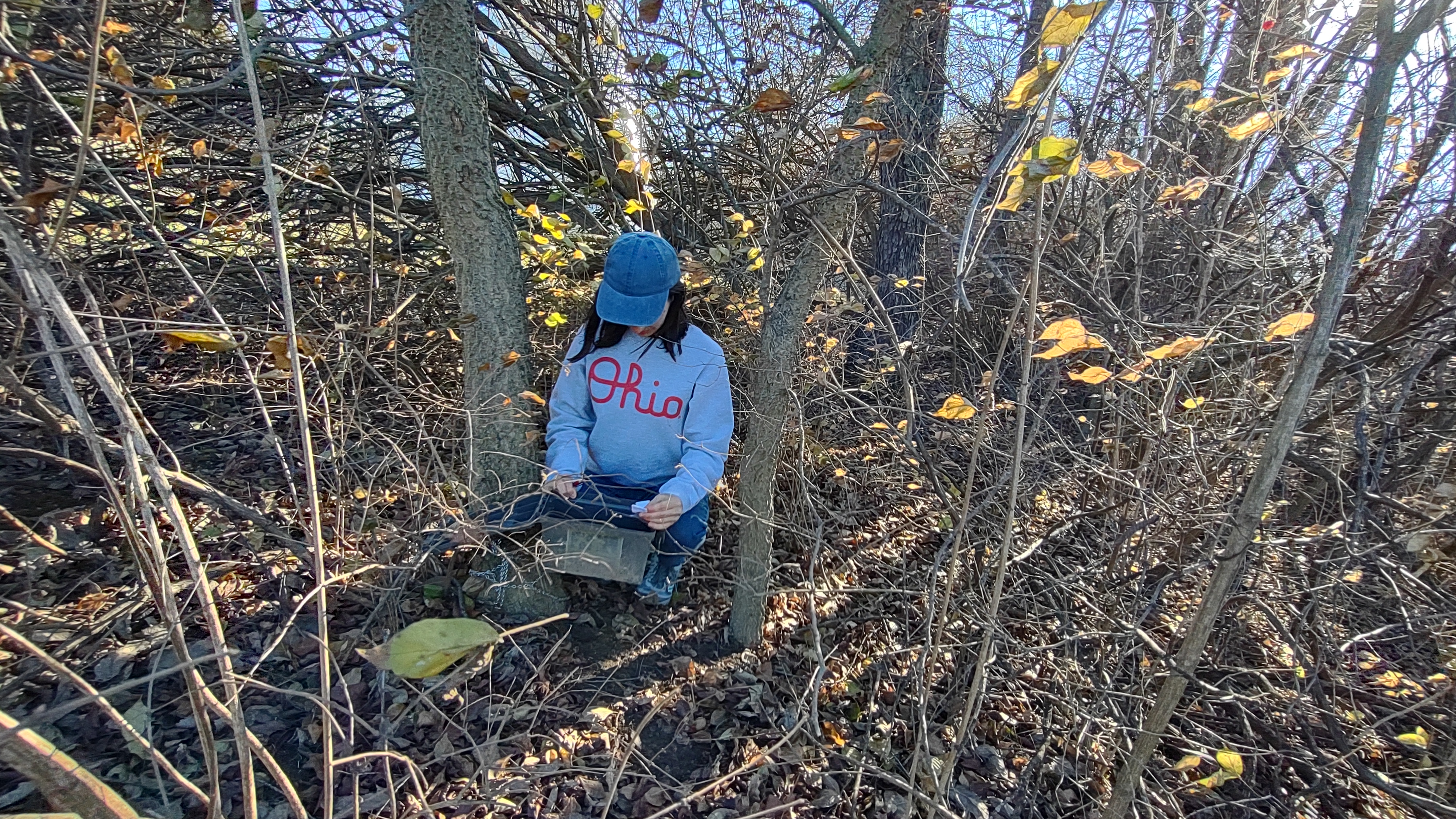
With gratitude and reverence for all giants on whose shoulders we stand.
-
3.5 Million Lights
Seeking Cache Owner boydfamily’s hide, in the company of 3.5 million muggles, is the definition of adventure.

Placed in 2014, the cache celebrates two centuries of energetic enterprise. Clifton Mill rose from the ground in 1802, with hand-powered lumber, sweat, and grit. By 1810, the mill was sold to Robert Patterson, who surveyed the emerging town into saleable lots and renamed it Clifton. When Patterson sold the mill, he had raised enough capital for his sons to reinvent the mechanical cash register into the National Cash Register Company.
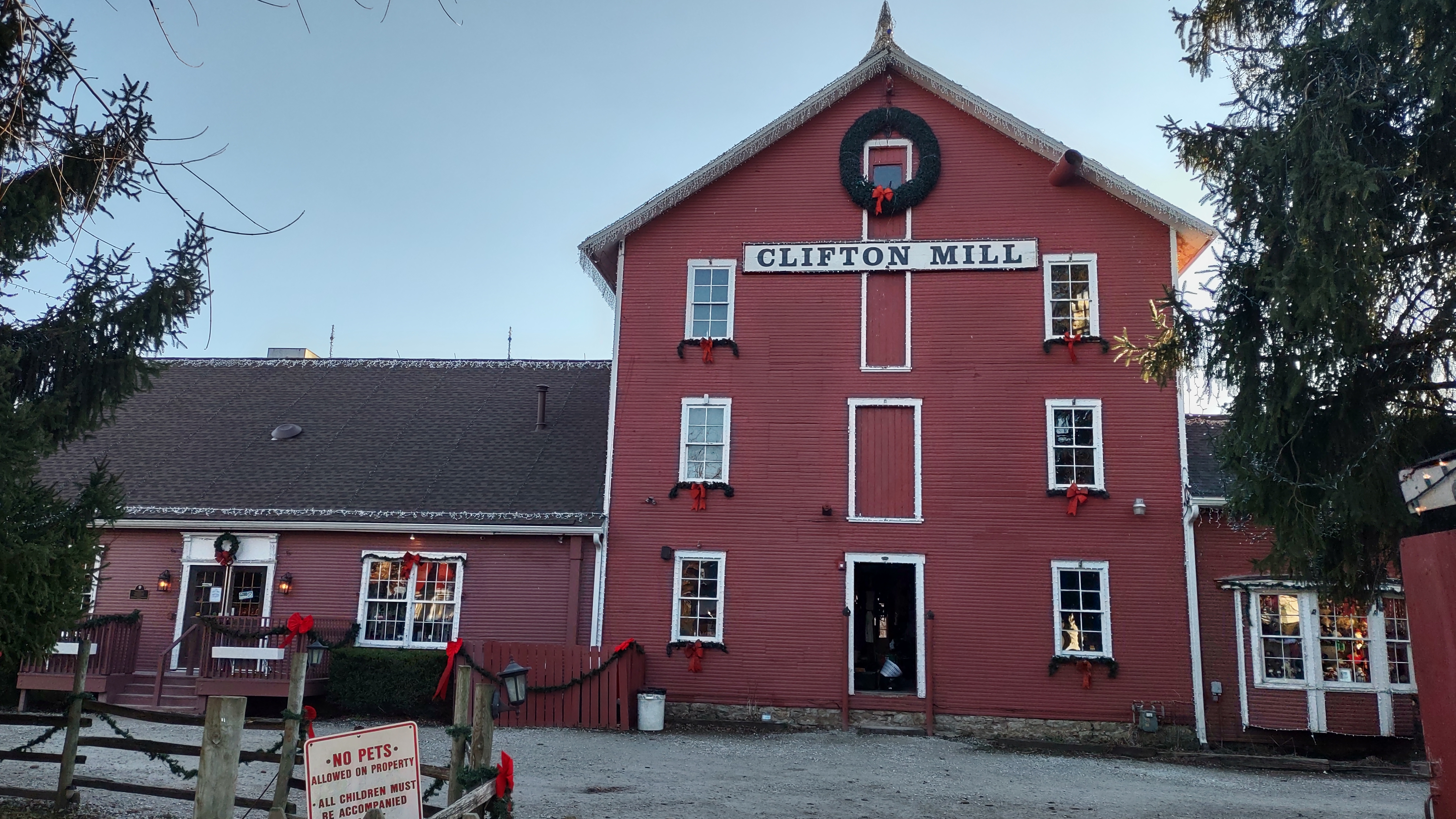
Today’s Clifton Mill channels the music of the Little Miami River into a brilliant display of lights, celebrating all that is Christmas. Reigning supreme above the cliffs of the gorge, this bejeweled kingdom sparkles and bedazzles with the ingenuity and creativity of the Satariano family.

Yearly pilgrimages bring gazillions of Americans back to delight in the miniature yesteryear village, toys under the tree from decades gone by, and the new kid on the block — digitized illumination. Long-suffering residents add their own enterprise creation, with a very chill Santa left in charge.
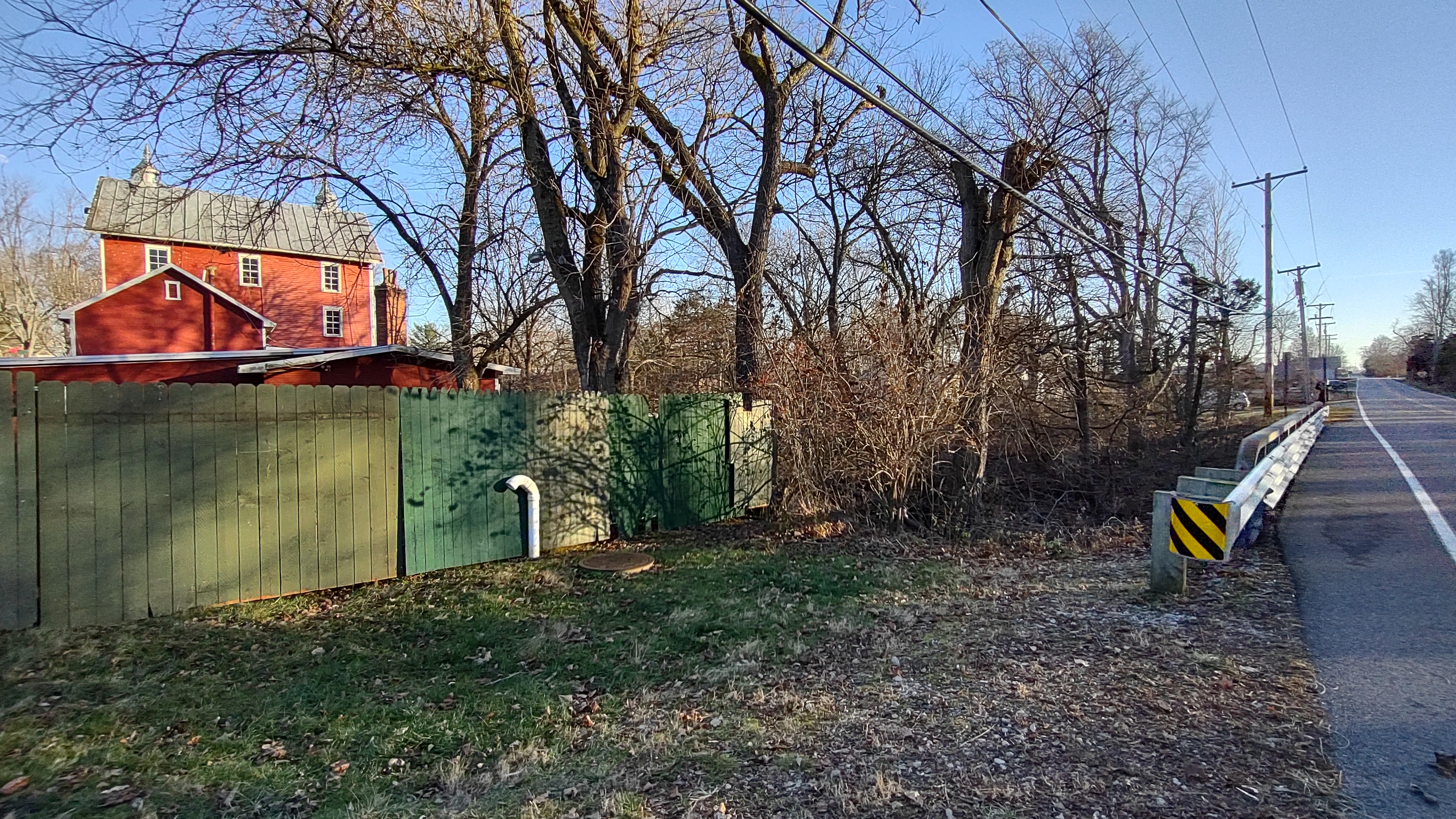
Our geotrail takes us alongside the mill, to a tiny spot often known simply as GR. In May of 2000, as the GPS satellite world was unjammed, Dave Ulmer placed his first five-gallon-bucket stash of canned beans and a slingshot, and proudly marketed the coordinates of his brilliant tap into GPS navigation. Buckets sprang up around the world, in a global scavenger hunt which rewarded the finder with a gift exchange. Eventually, the geocaching world took over. Hide sizes shrank to include micro and even nano, exponentially increasing the difficulty of the find.
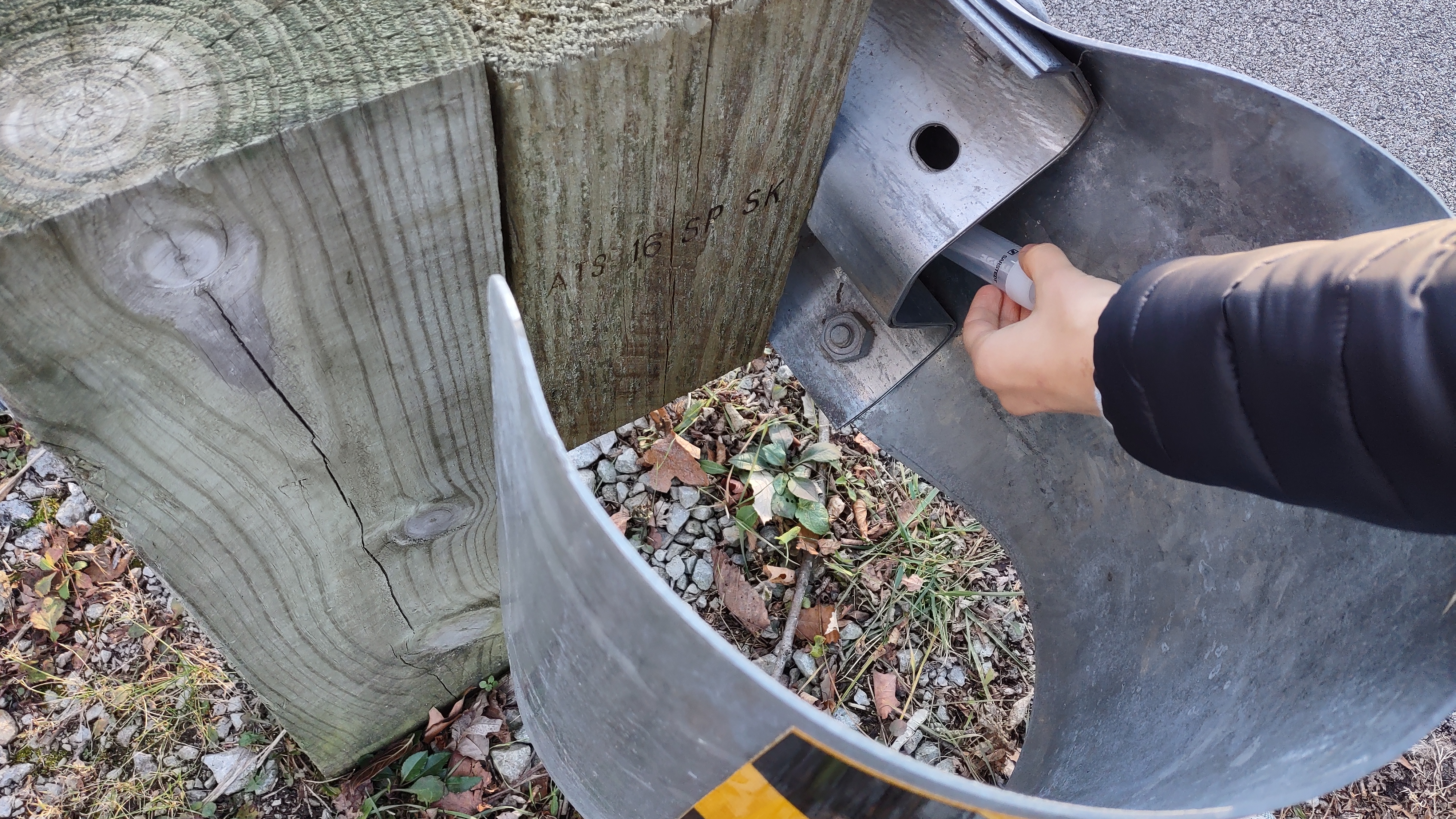 Exuberant geocachers defined themselves with a potpourri of cache handles. The next 22 years have been spent in the fellowship of others who have conquered each cache, meanwhile admiring and web-logging the cleverness of the Cache Owner. Gift exchanged.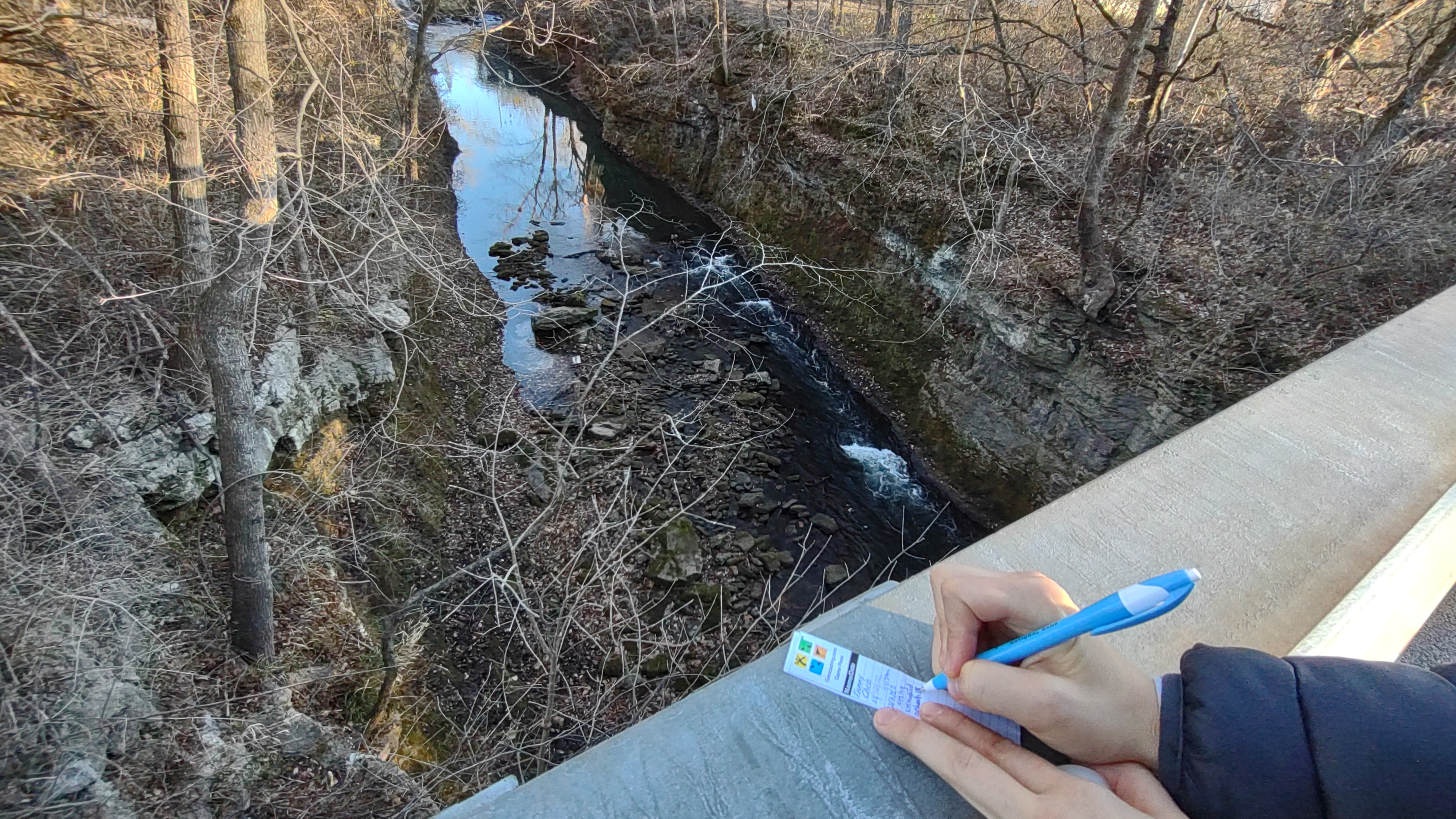
We ratify our reward, as the Little Miami chatters below. First breaths of winter lift spirits and encircle hearts. Mindful and inspired exploitation of technology awards us another point in our quest to outsmart the digital age.
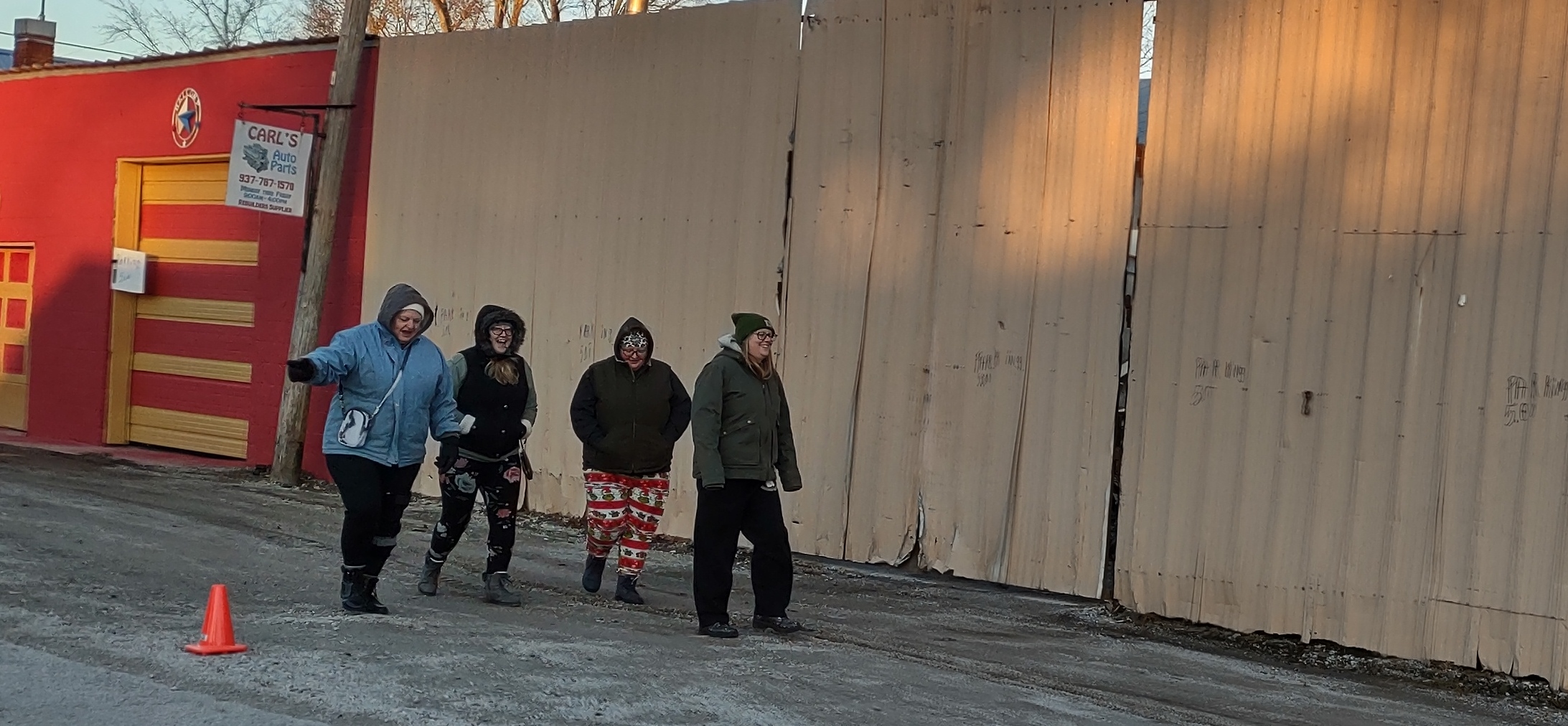
On our way out, brighter than 3.5 million lights, muggles twinkle with hope and joy, in an old Birth and a new year. At the heart of the universe, all is well.
Skip to content