-
Bring a picnic, you might be here awhile
Cache Owner purplemsc extends a big-hearted invitation to prepare for the long haul, or at least bring a picnic, and maybe even a sleeping bag, because you might be here awhile.
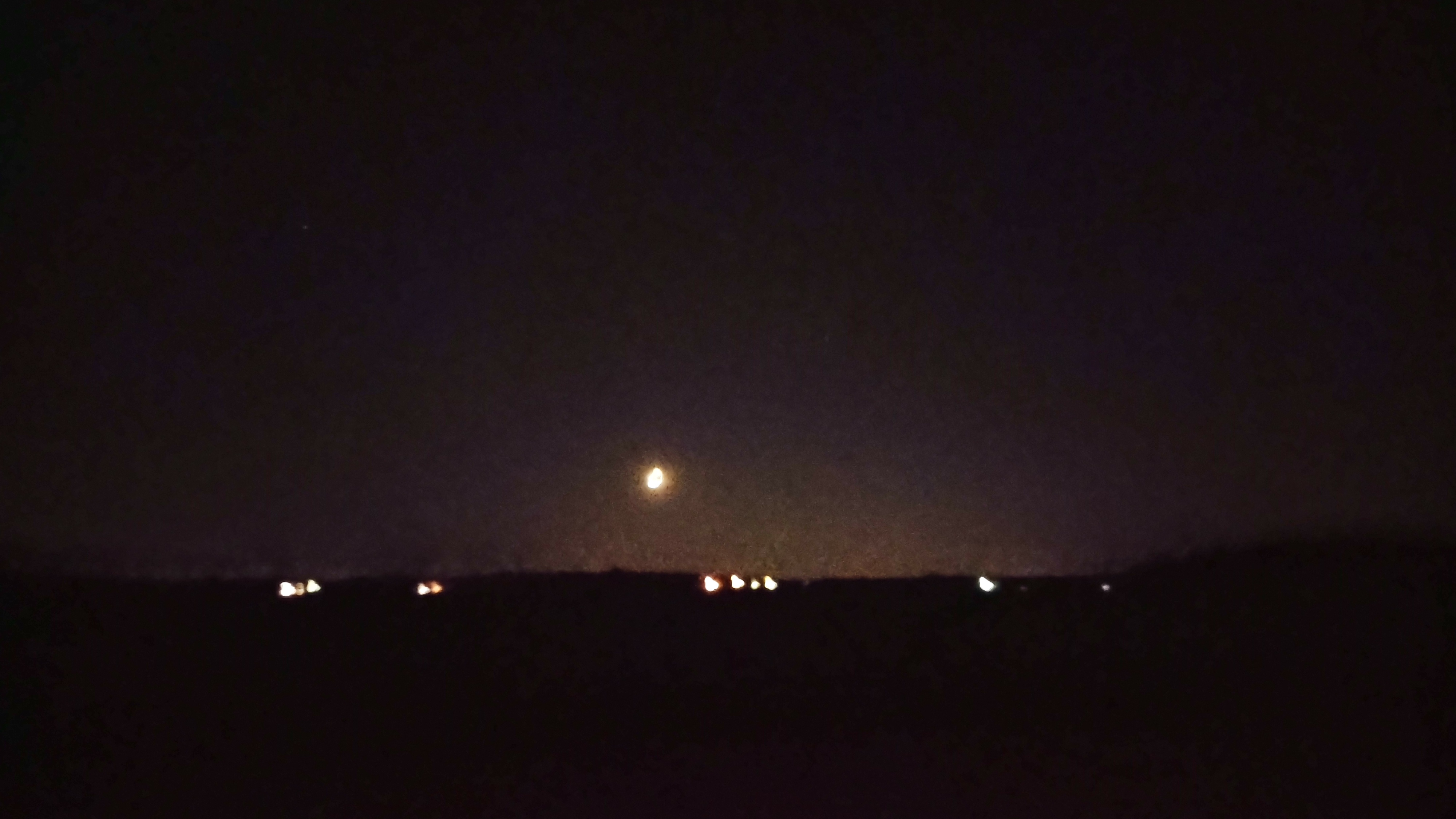
And in fact, here we are, in the black of night, aiming for points northwest. Night geocaching ups the ante for bold and audacious exploits, executed by intrepid caching bands, recounted in vivid weblog entries.
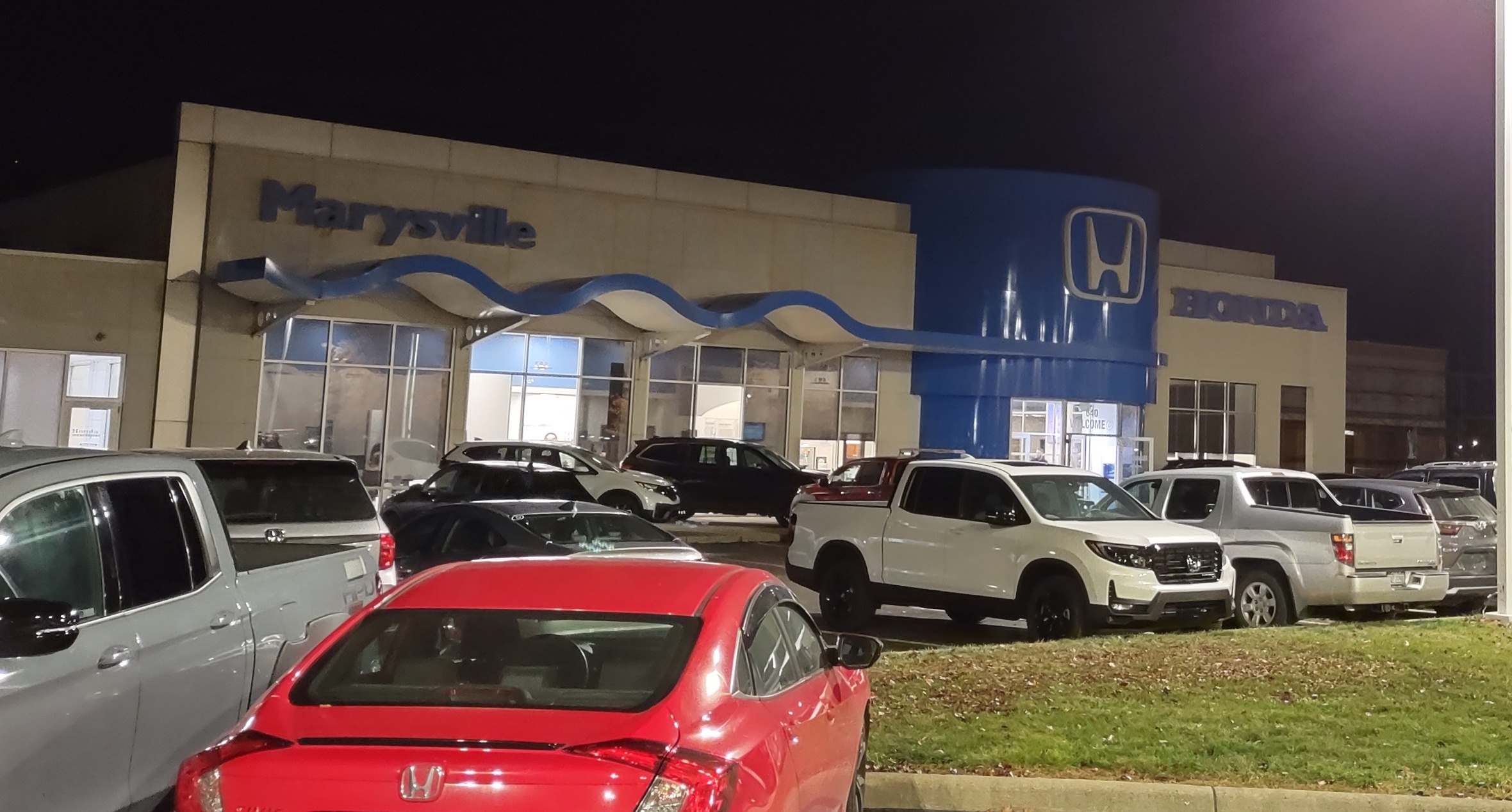
Our geotrail routes us past the car dealership, where even on a Friday night, deals are still being struck. Collective memory has aged past the day, the month, the decade when machines supplanted horses in the human heart. Drone of engines and tires on freeway are the play list, drowning memories of clip-clopping nickers. When the machine stops to fill up on corn, suddenly we come full circle.
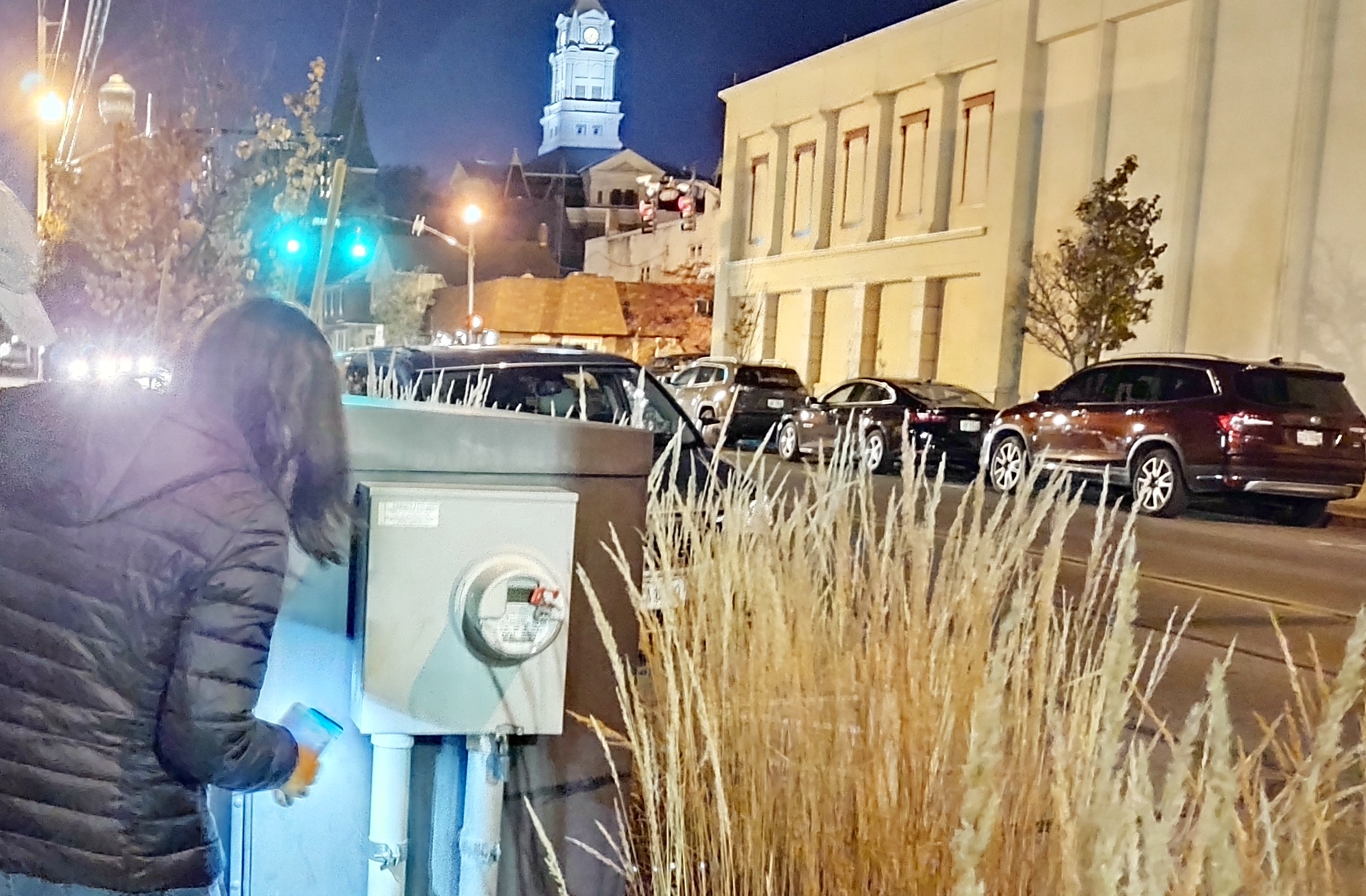
We land, on a placid street in downtown Marysville, so actionless on a Friday night that even the courthouse seems to be asleep.
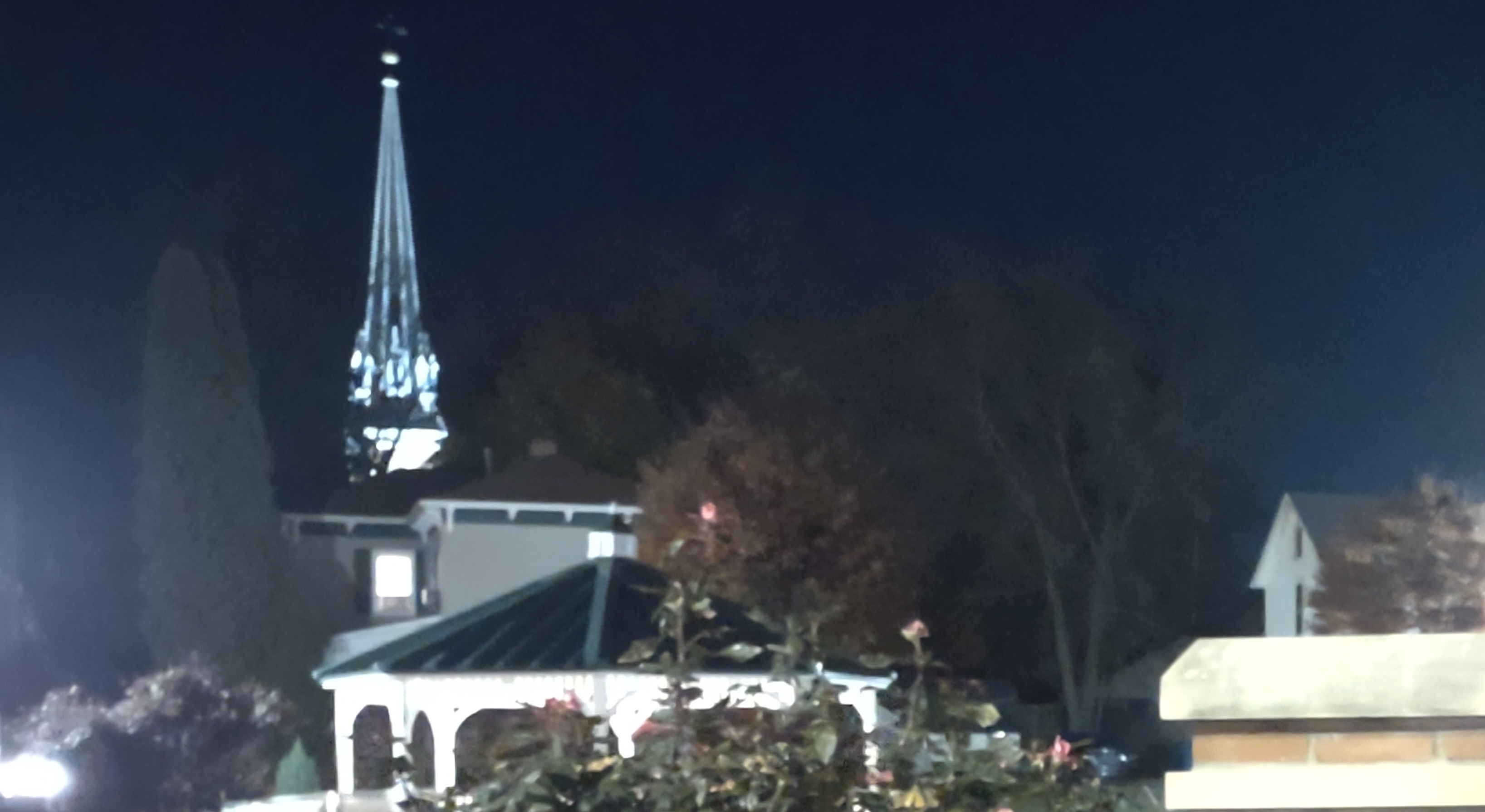
Like invisible yet ubiquitous radio waves, the web of law and order never slumbers. Across the way, holding the parallel boundary, shines the steeple. For the immigrants who saw and seized the rich northwestern Ohio farmland, their religion affirmed the demands of hard work, industry, invention and sacrifice, as the means to establish and protect their cultural circle.
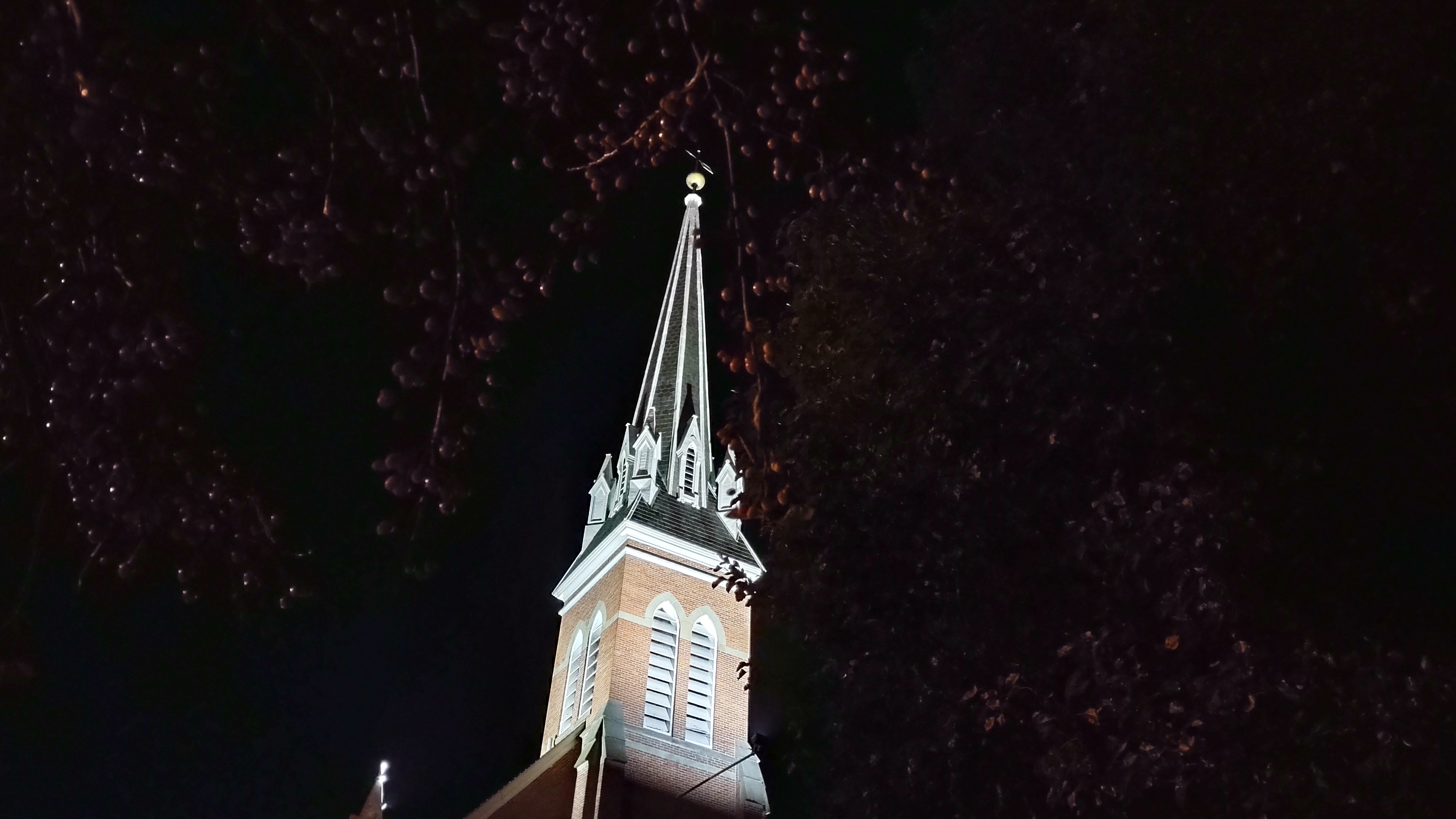
While some linked hands with all who believed, others defined grace as another commodity to hoard and withhold.
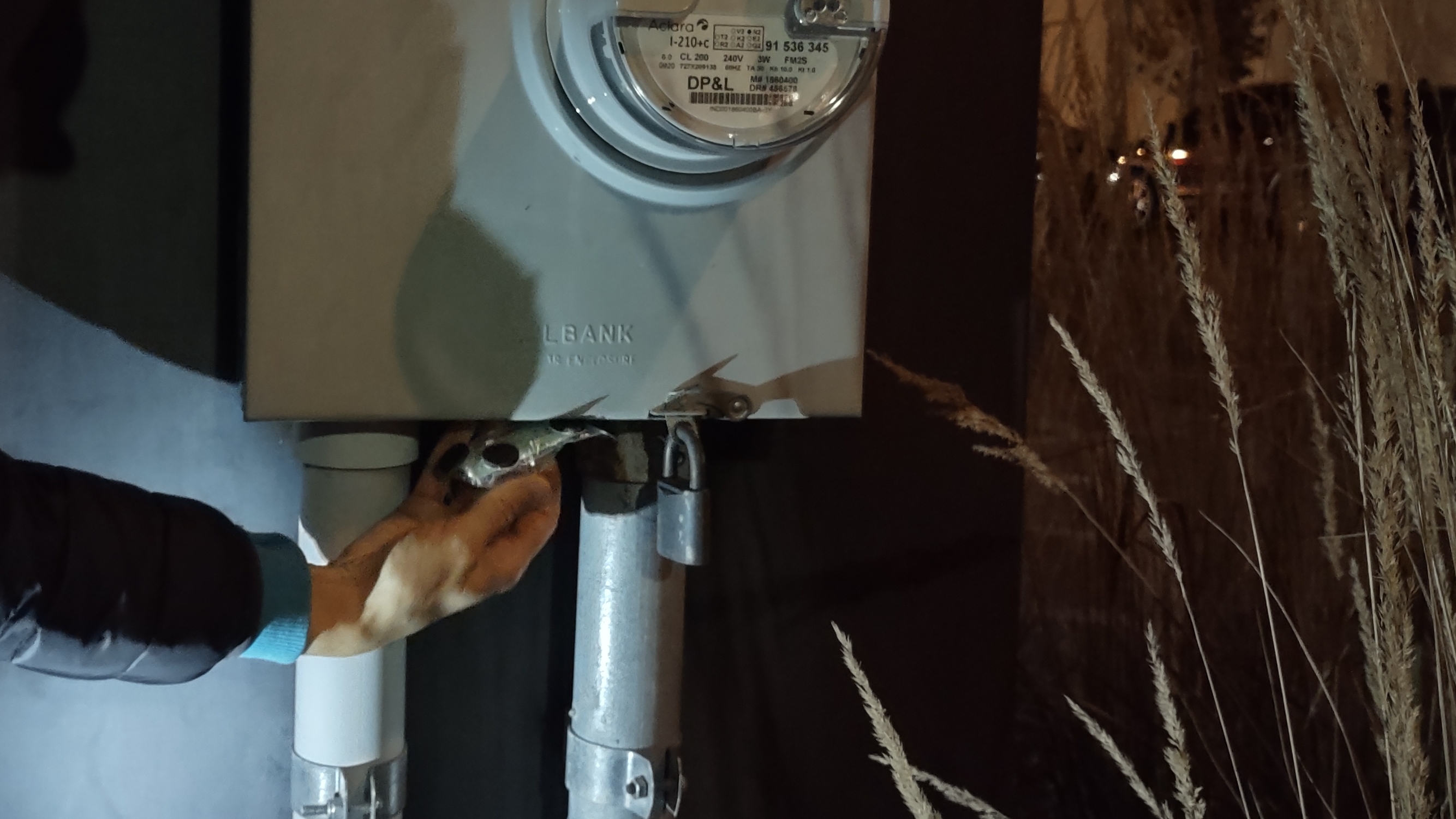
You can put that sleeping bag back in the car.
-
That Old Lot
On our way to That Old Lot, placed by Cache Owner chett46, we will pass by Hope Hotel.
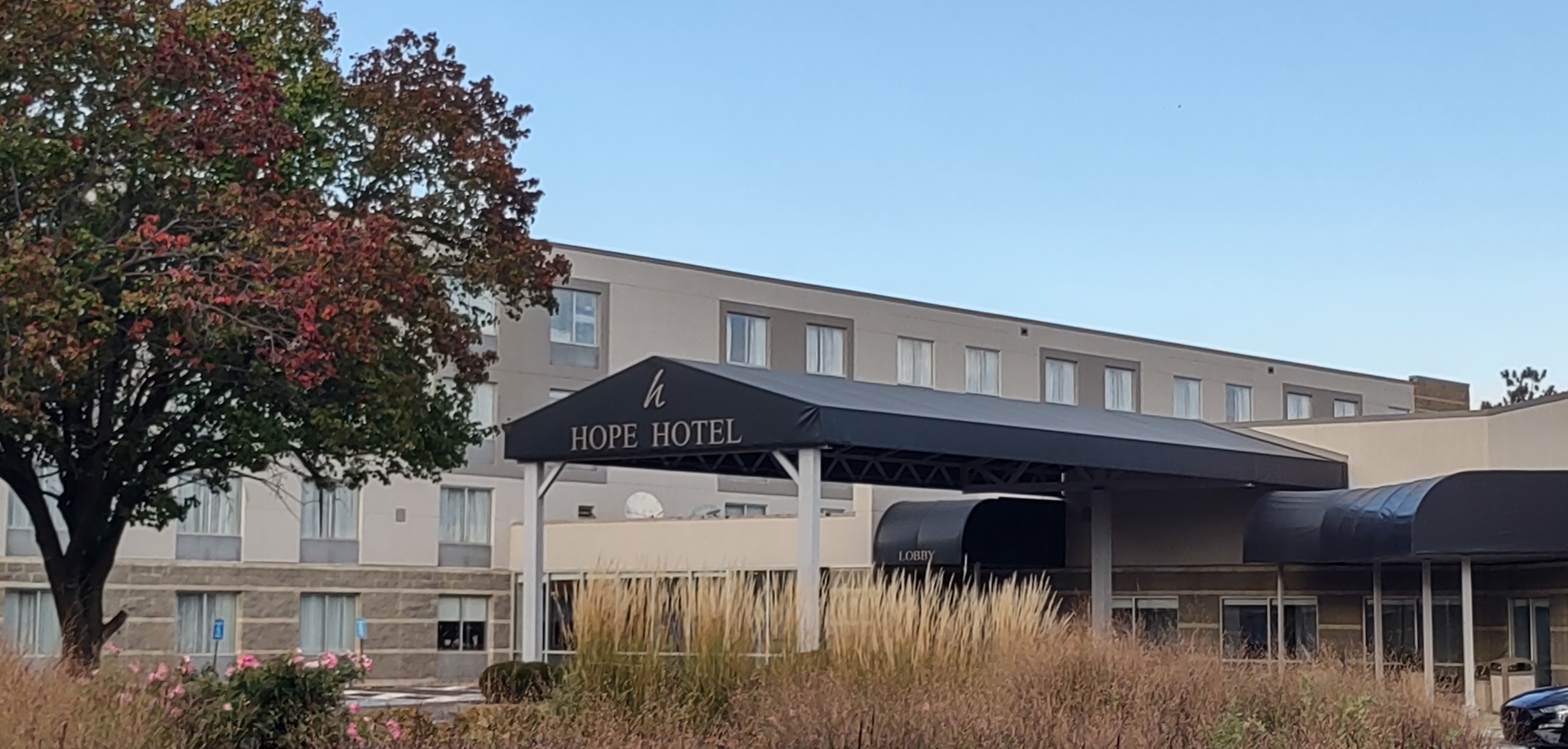
Through these doors in 1995 came Serbians, Croatians, and Bosnians, ravaged by years of pillaging each other’s peoples, looking for peace.
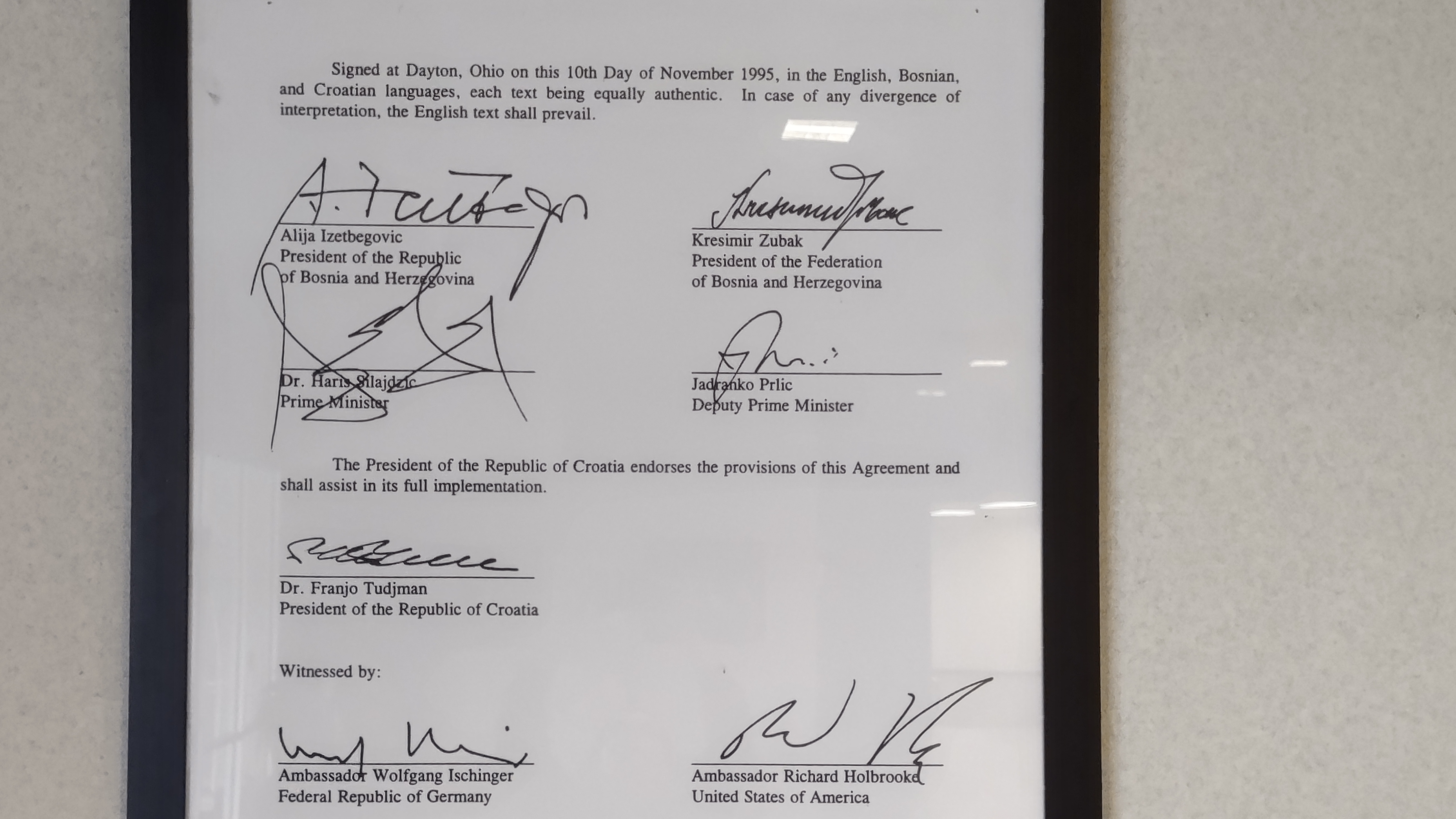
Here, at Hope Hotel, that peace was negotiated, agreed on and signed. Twenty seven years later, it is an honor to stand in this space.

As we drive away, we pass the checkpoint for Wright-Patterson Air Force Base, a very different approach to peace.
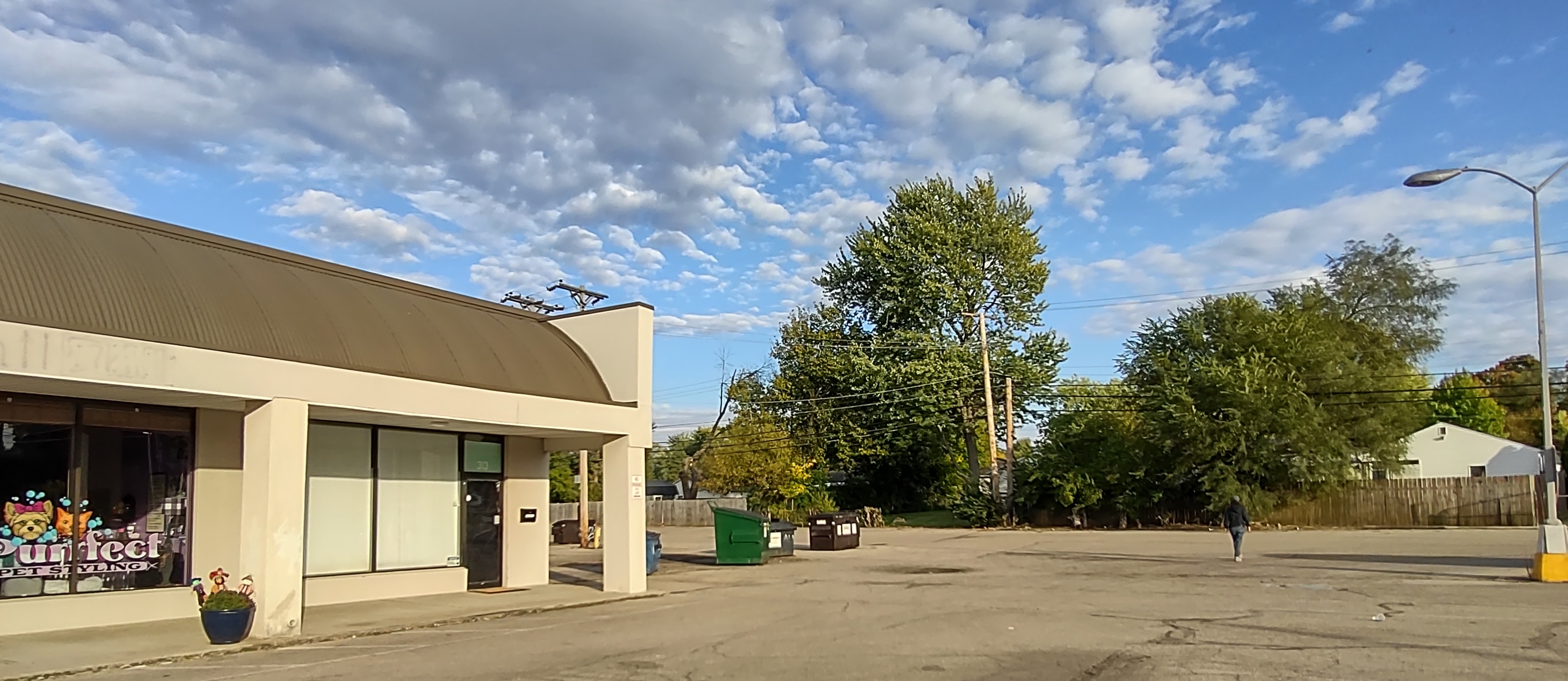
Our coordinates bring us to a lot, which is looking old.
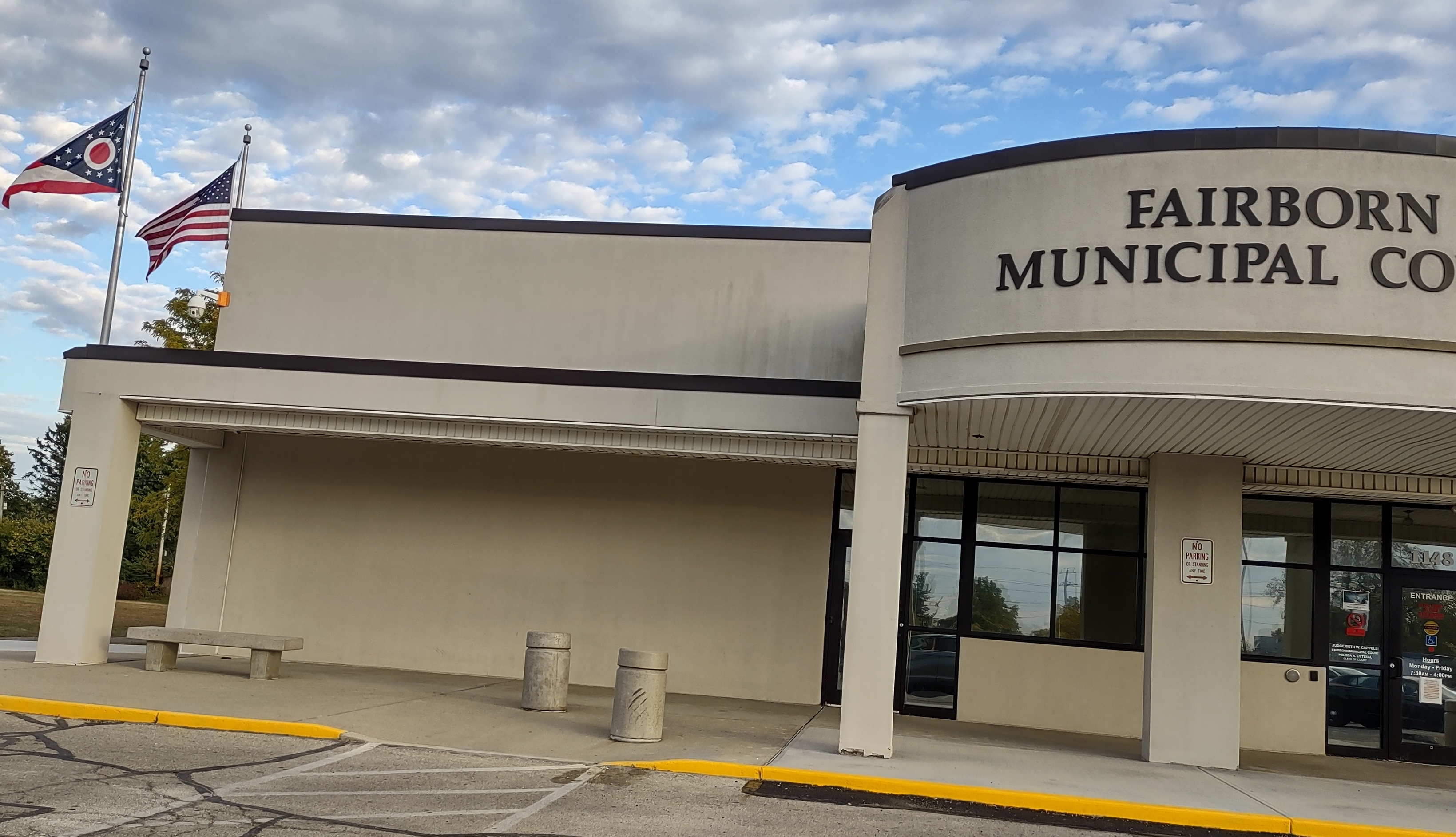
On one end, the Fairborn Municipal Court carries on the business of a fair and orderly society.
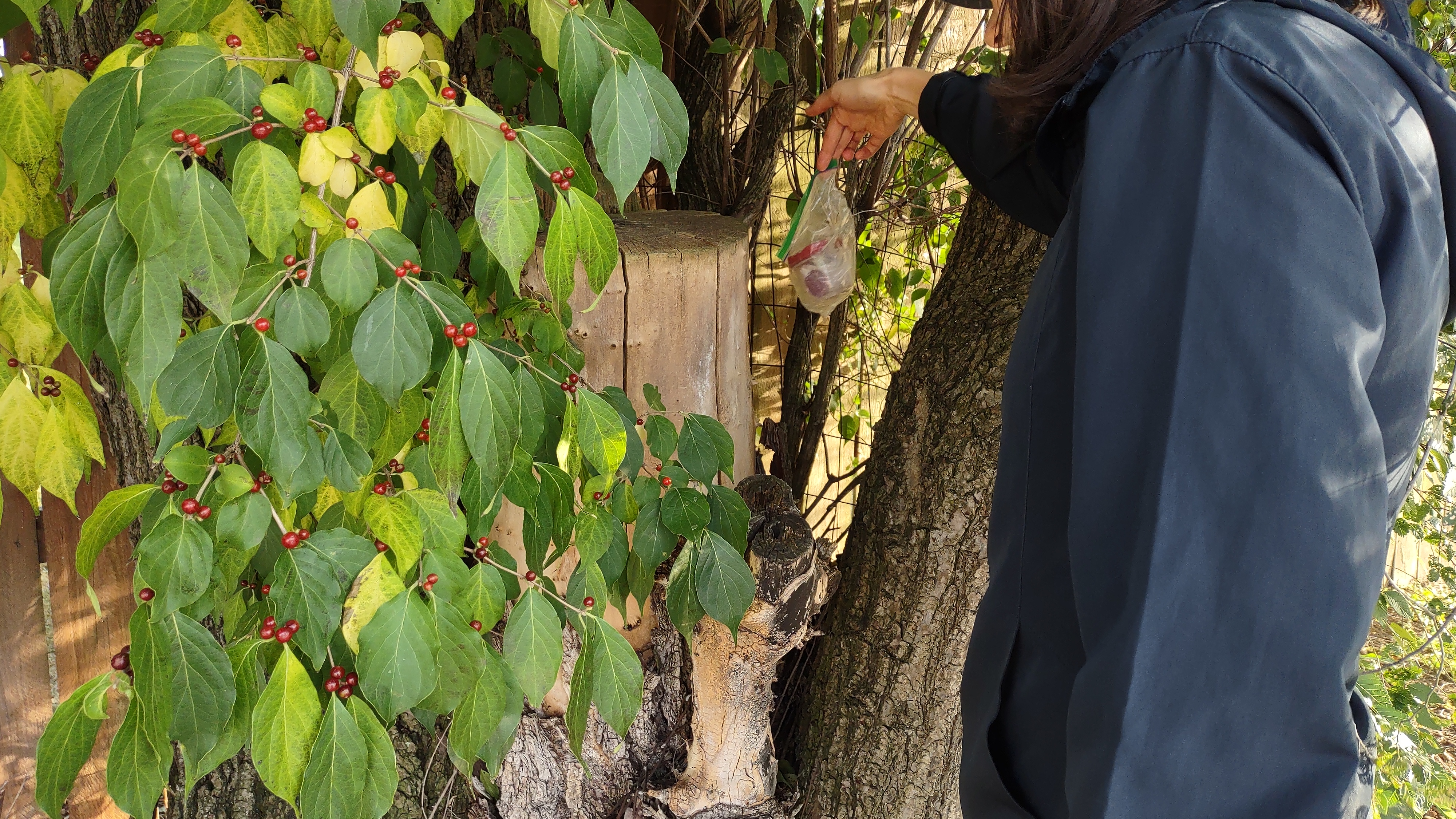
On the other, a tree delivers unexpected fruit.
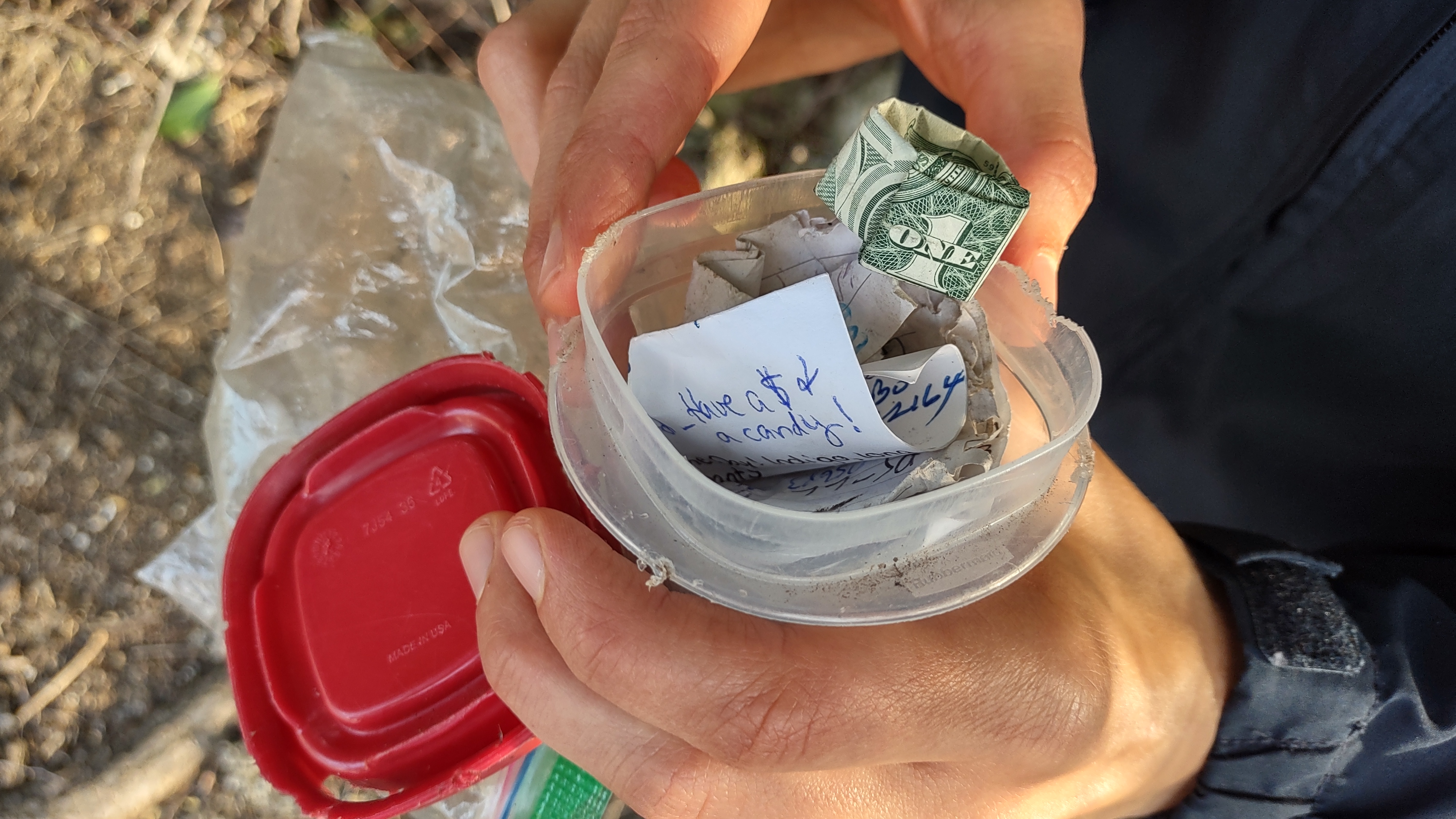
The cache welcomes us with innovative generosity. A double smile on this one.
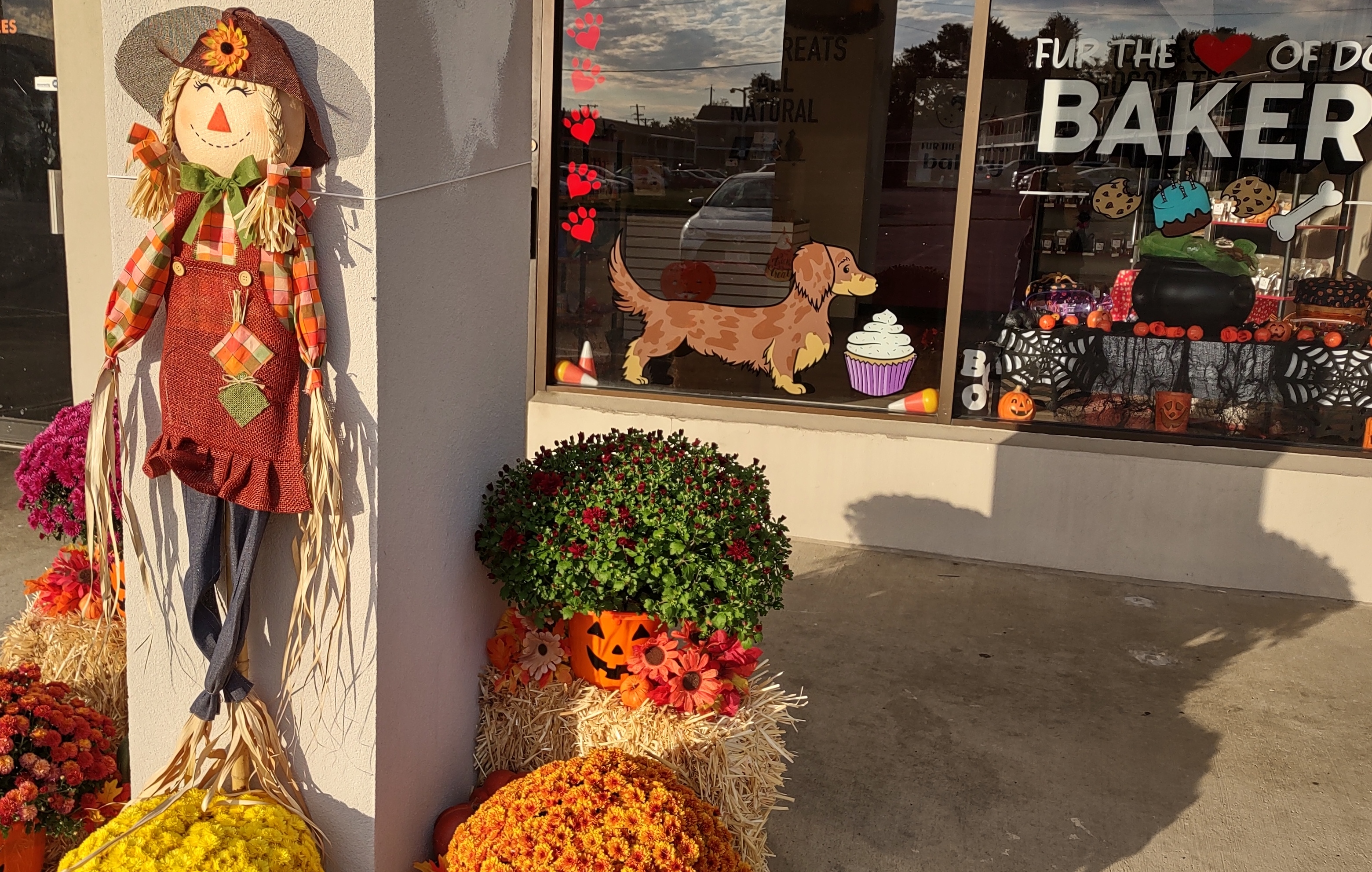
On our way out, a scarecrow, soaking up the last beaming rays, captivates us with the vividness of here, the great goodness of now.
-
Sunwatch Indian Village
Traveling south along the western Great Miami River, we anticipate the Sunwatch Indian Village cache, placed by goltzene almost 20 years ago.
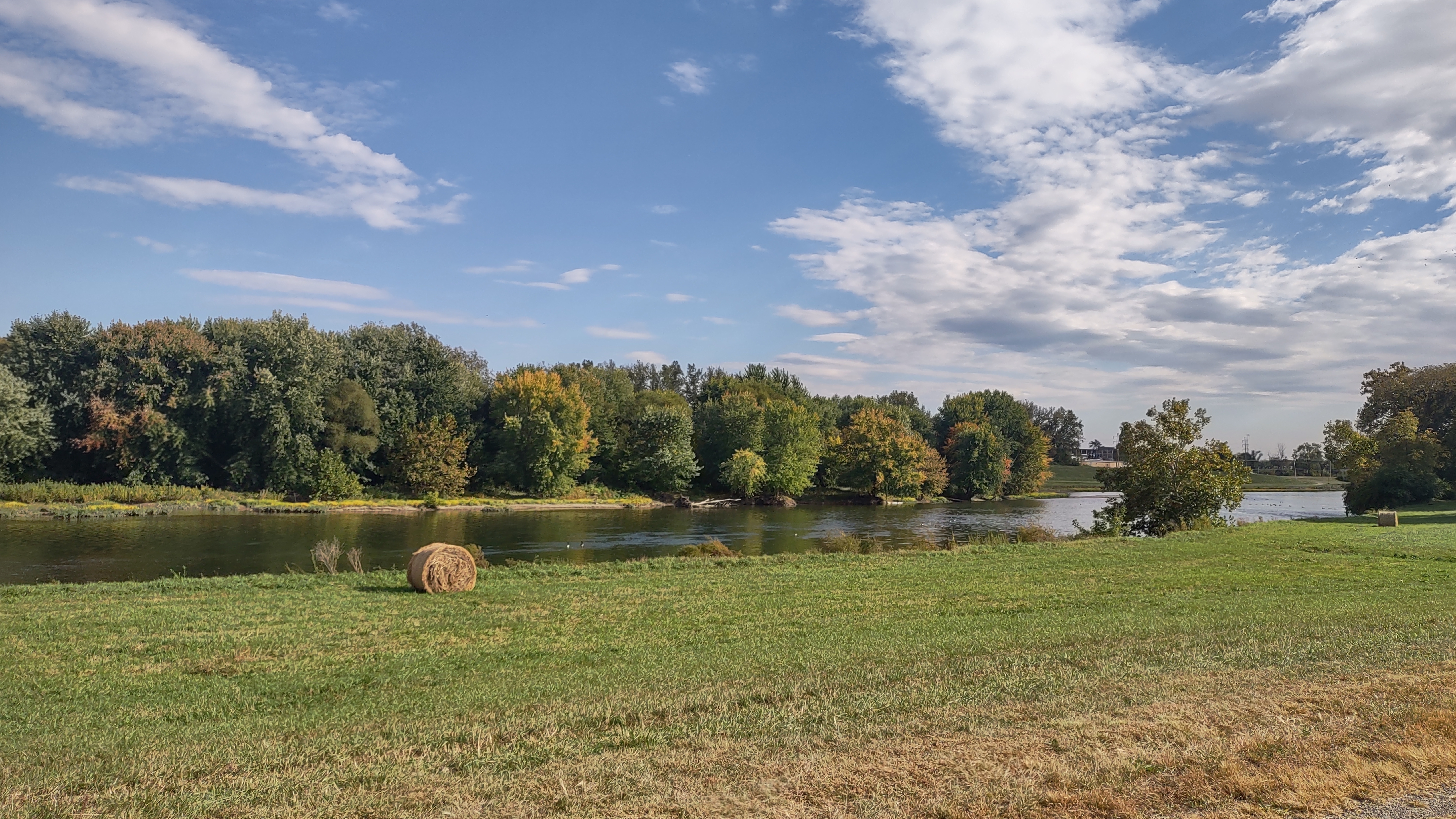
During the Fort Ancient period, groups settled in this valley to hunt and farm, after their slow migration southward from Canada. Massive earthworks served as city walls, bows and arrows appeared, trading thrived with pottery, flint, copper and shells.
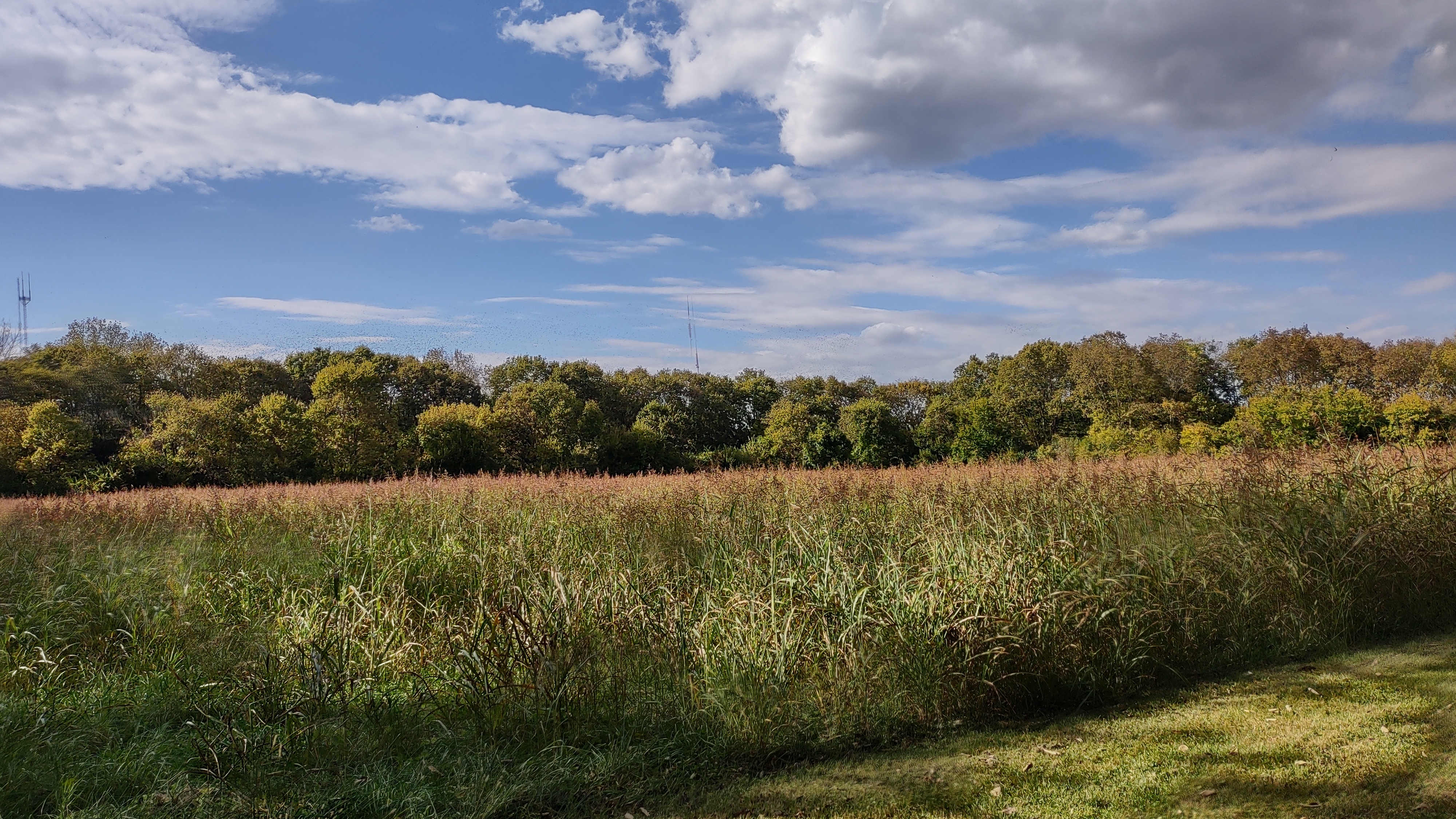
As French fur traders followed the migration routes into forests teaming with animals, the Fort Ancient peoples disappeared, replaced by Shawnee tribes. By 1795, after Wayne’s army defeated the tribal coalition at Fallen Timbers, the Greenville Treaty ceded the entire southern half of Ohio to the American government.
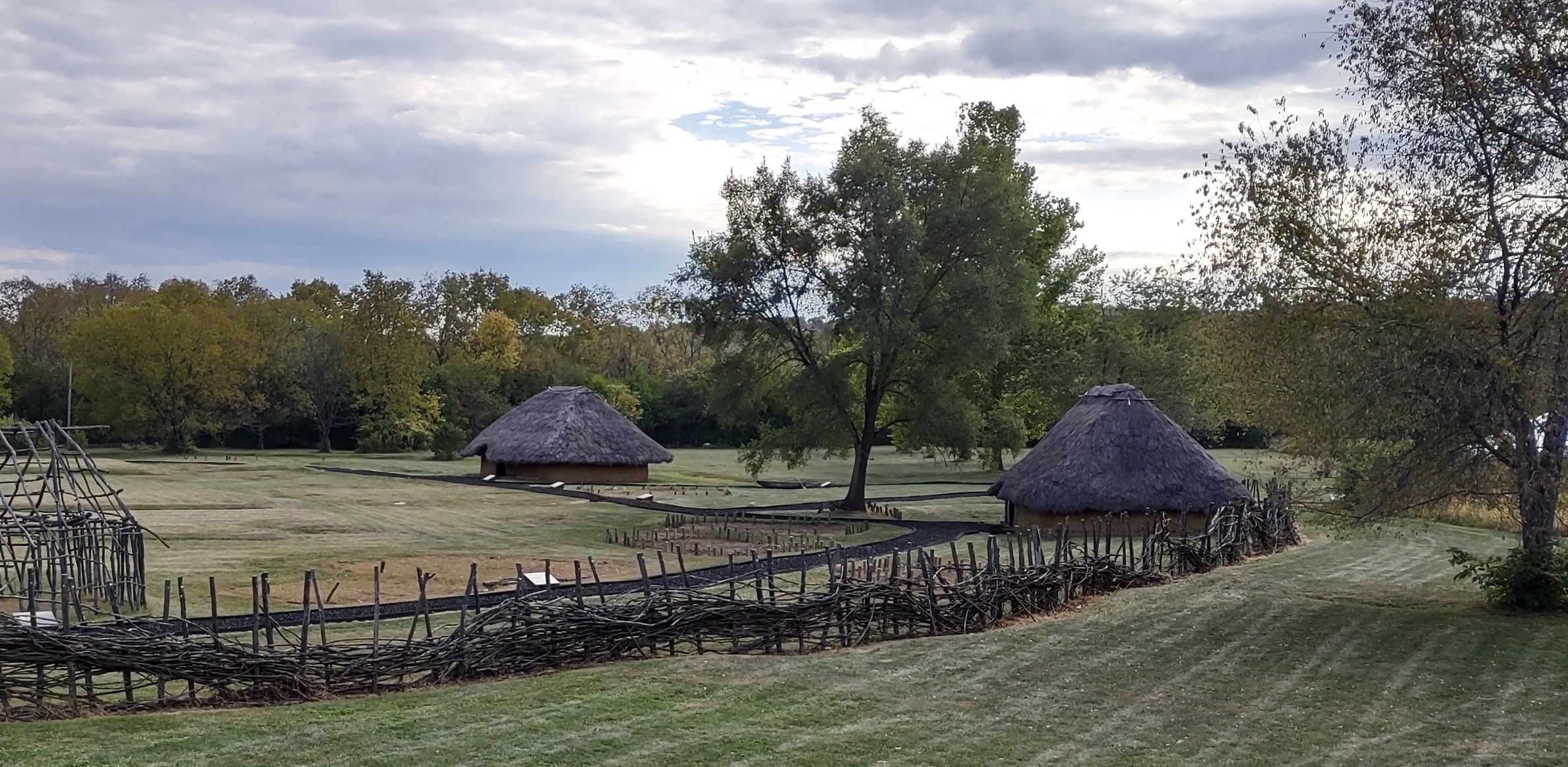
As citizens of sovereign tribal nations, Shawnees were not protected by American law, and this led to increasing hostility with new immigrants hungry for land. The three-stranded cord of French, British and tribal warfare against struggling pioneers cast a long shadow of memory over efforts to integrate tribes into new settlements. The Greenville Treaty line collected the tribes into the northwest corner of the state in an attempt to maintain peace in the area.
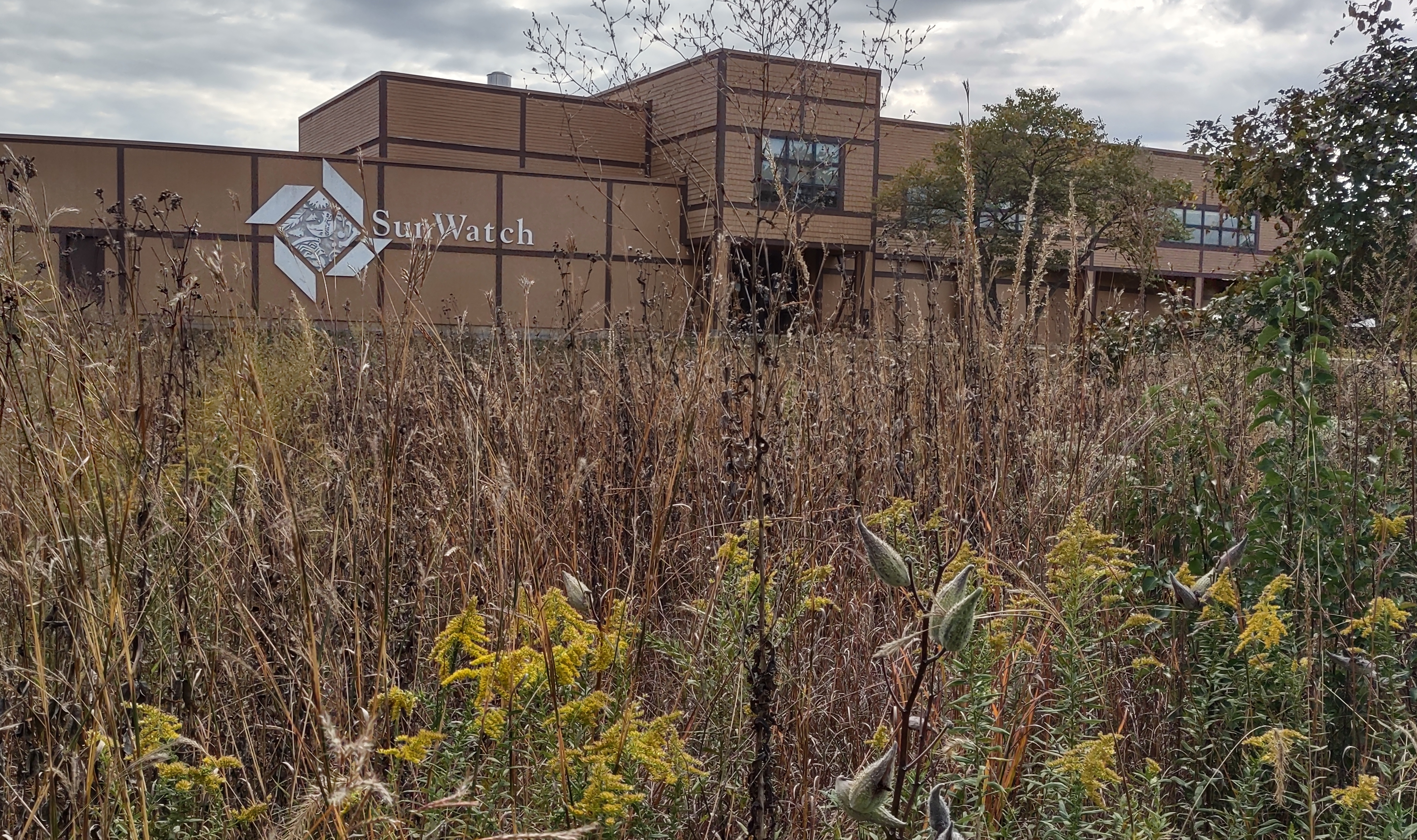
On a lingering day of autumnal warmth, great clusters of goldenrod sway in the breeze. As the Earth completes its great circle around the sun, the seasons circle around us. Steaming kettles, blazing fires, and the singular call of hearth and home have gathered peoples here through eons of time. Now this place holds all memories in a quiet and cherished reverence.

Cache logs report that the hiding spot has been destroyed, as of late August.
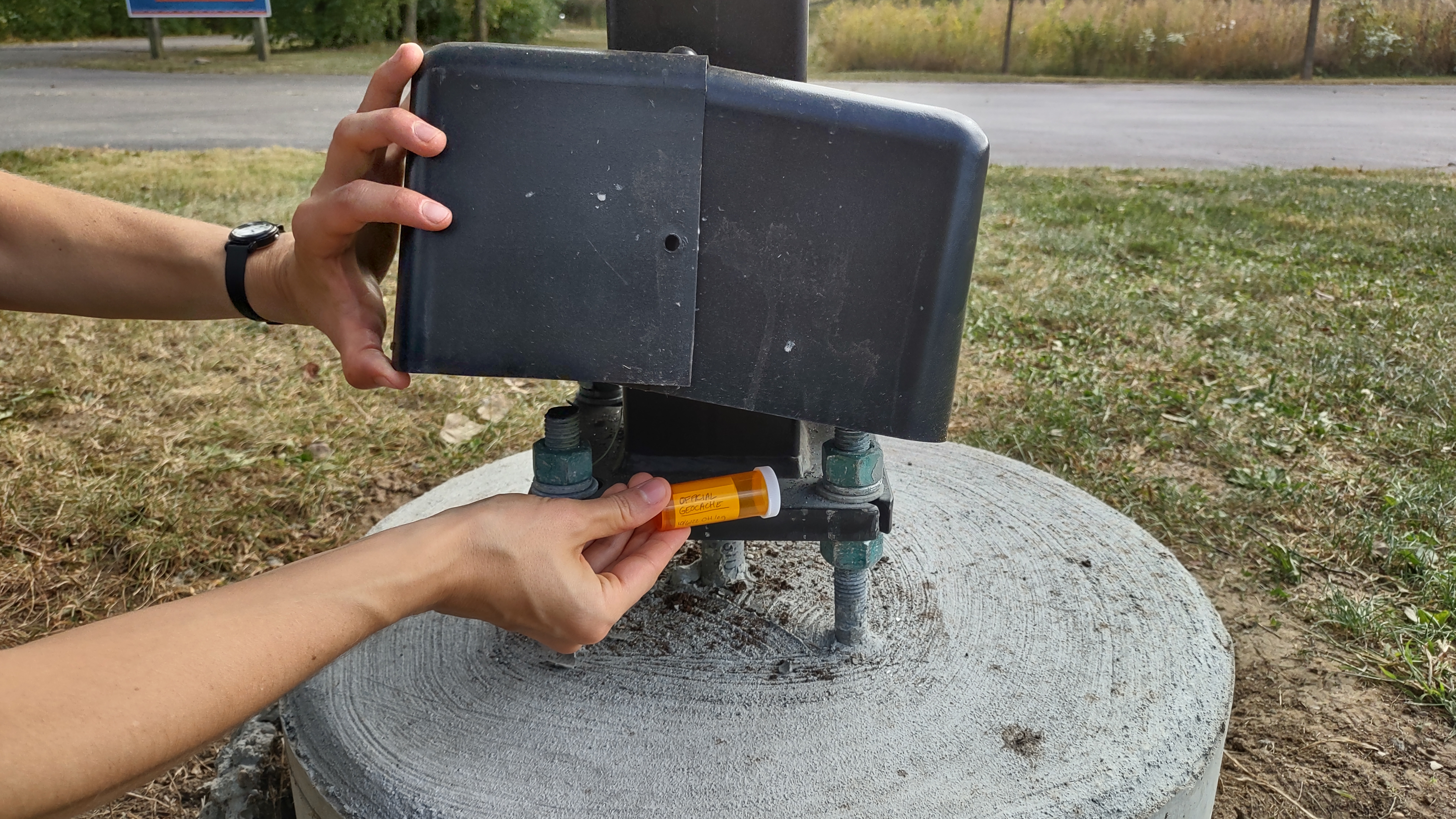
Quite thrilled to restart the engine of history, we report that a user clicked update in a brand new lamp post.
-
You So Pretty
Cache Owner bennet mysteriously directs us to You So Pretty, adding that this cache will indeed be attractive. Get it? Magnetic, attractive? The hunt in store for us promises to be bodacious.
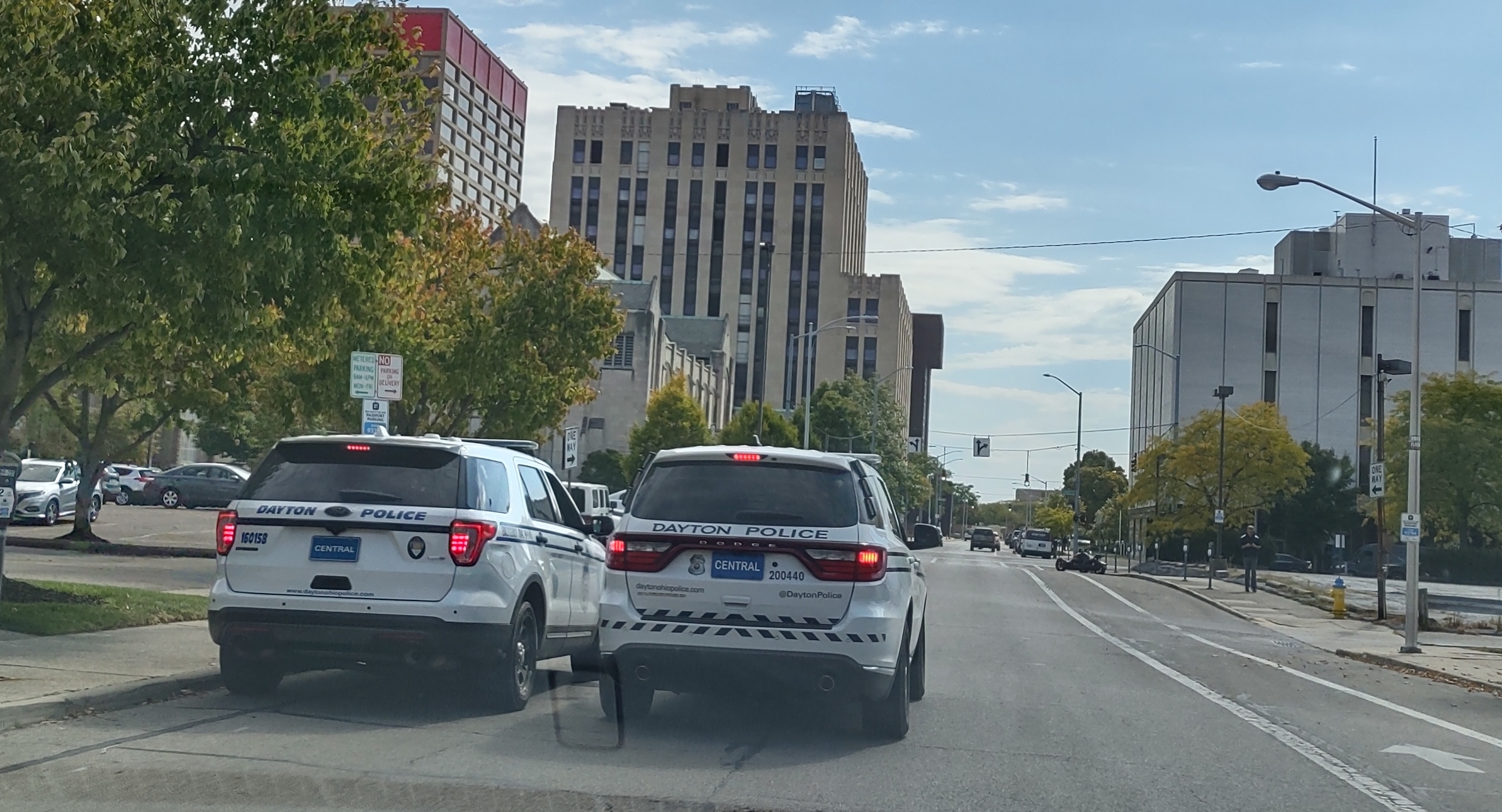
Cruising across the Great Miami River, our tires take us into the West Side. Historical decades of segregation and discrimination have driven high unemployment, poor housing, and disconnection to government, both political and law enforcement.
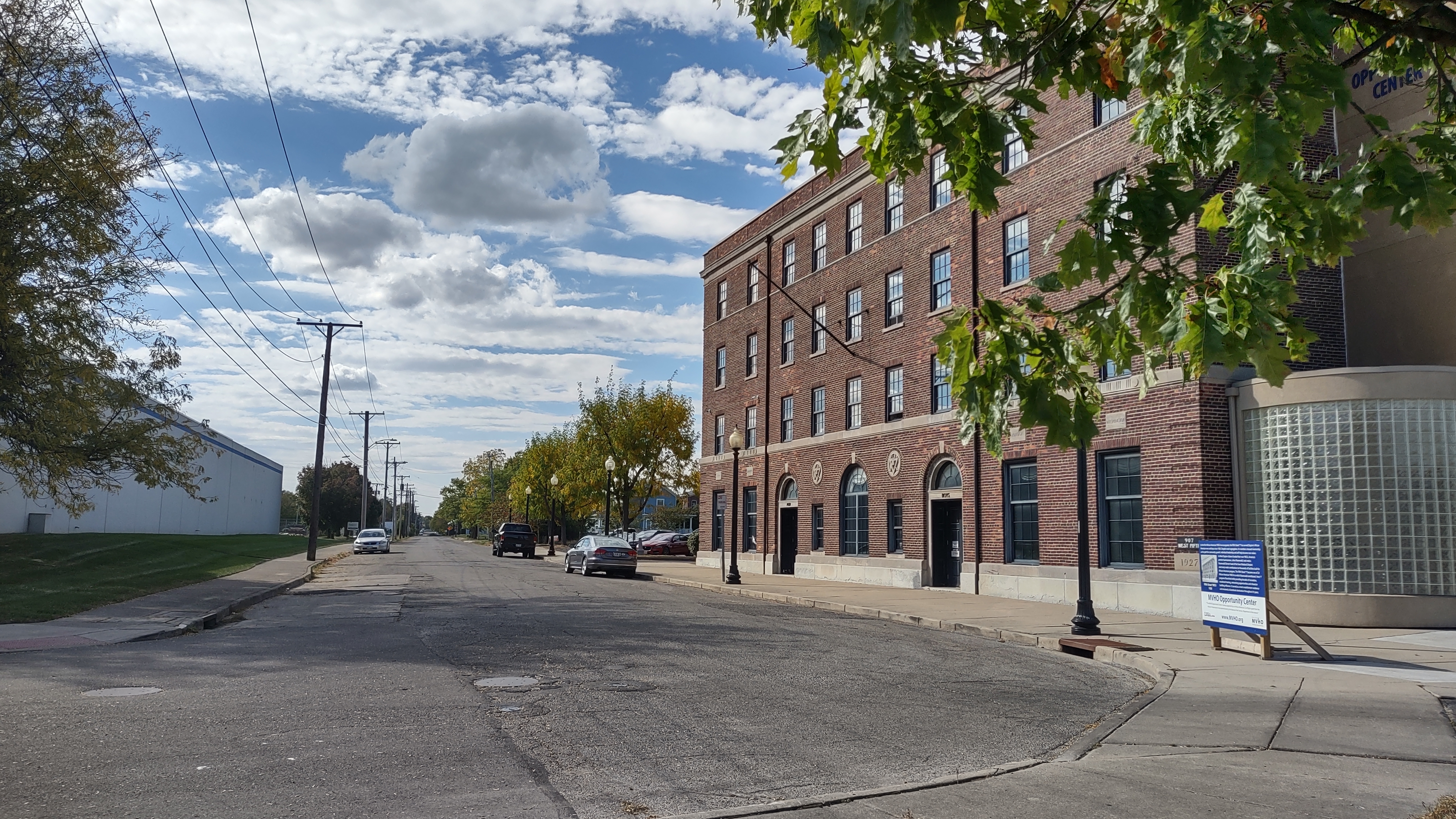
Blacks and whites from Kentucky poured into Dayton during the Great Migration, looking for jobs in the industrial super engine of World War I. Black migrants were escaping racial targeting in the South. At the same time, many white Kentuckians brought a deeply rooted anger toward integration of persons they viewed as place-holders, immutably below them, in the great social pyramid.

In this boiling cauldron, Lester Mitchell was sweeping his sidewalk on West Fifth in 1966, when he was shot and killed by a white motorist. Protest riots shook the city. With 96 per cent of Dayton’s Black community living in segregated housing, rioting and damage in West Dayton raged to the tune of hundreds of thousands of dollars.
Over the next 10 years, a serial killer executed over 30 drive-by shootings of Black men. The killer’s final target was the white university expert negotiating the busing of school children to integrated schools. Upon his arrest, the killer justified his own perceived role as the protector of white children.
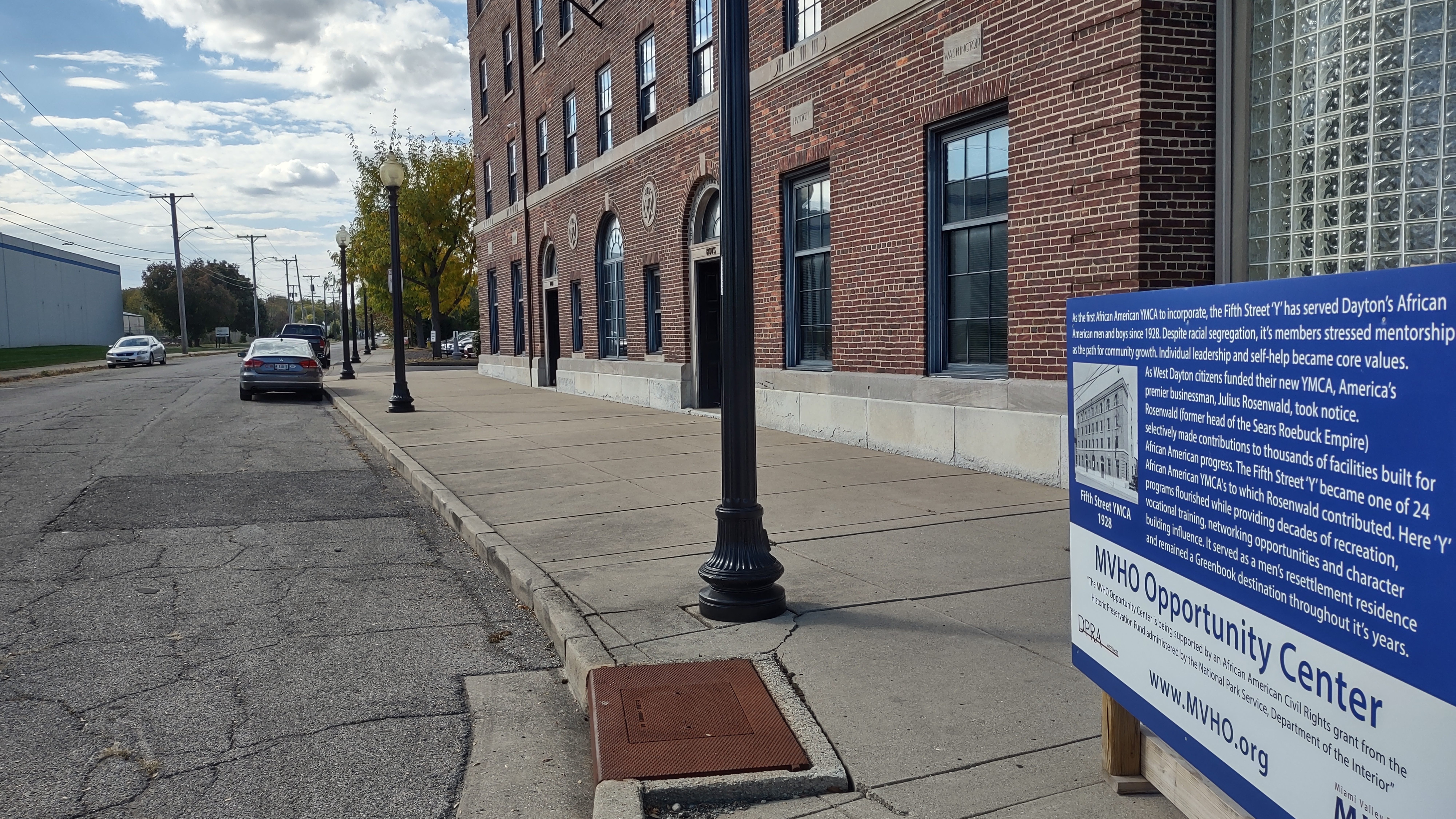
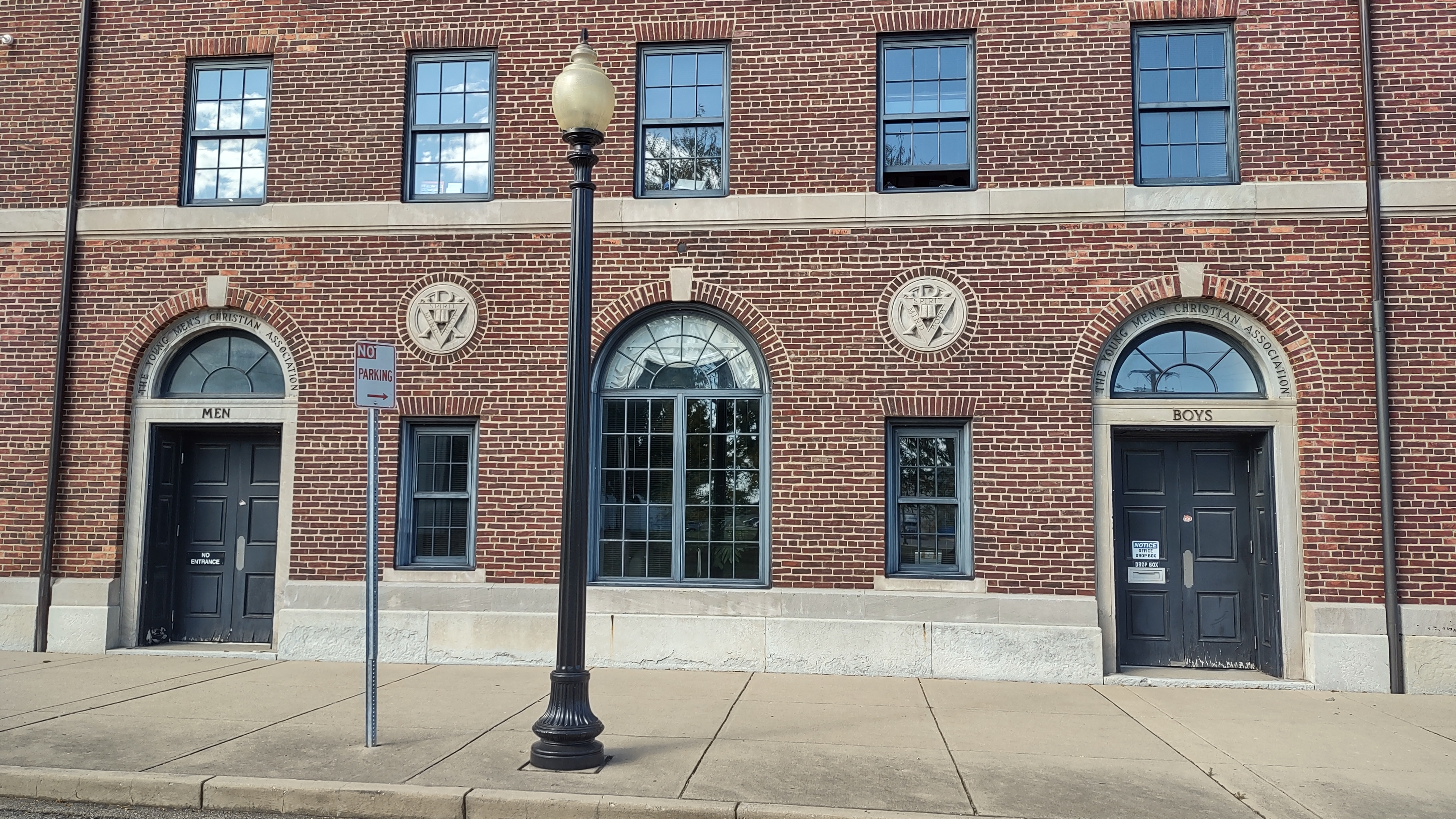
With quiet contemplation, we pause on West Fifth Street. Before us is the Miami Valley Housing Opportunities Center. The former YMCA, this venerable brick building served the Black men of the community with mentorship and vocational training for 100 years. Today, dedicated community individuals operate the Opportunity Center from this monarch of buildings, creating permanent housing solutions for people in need.
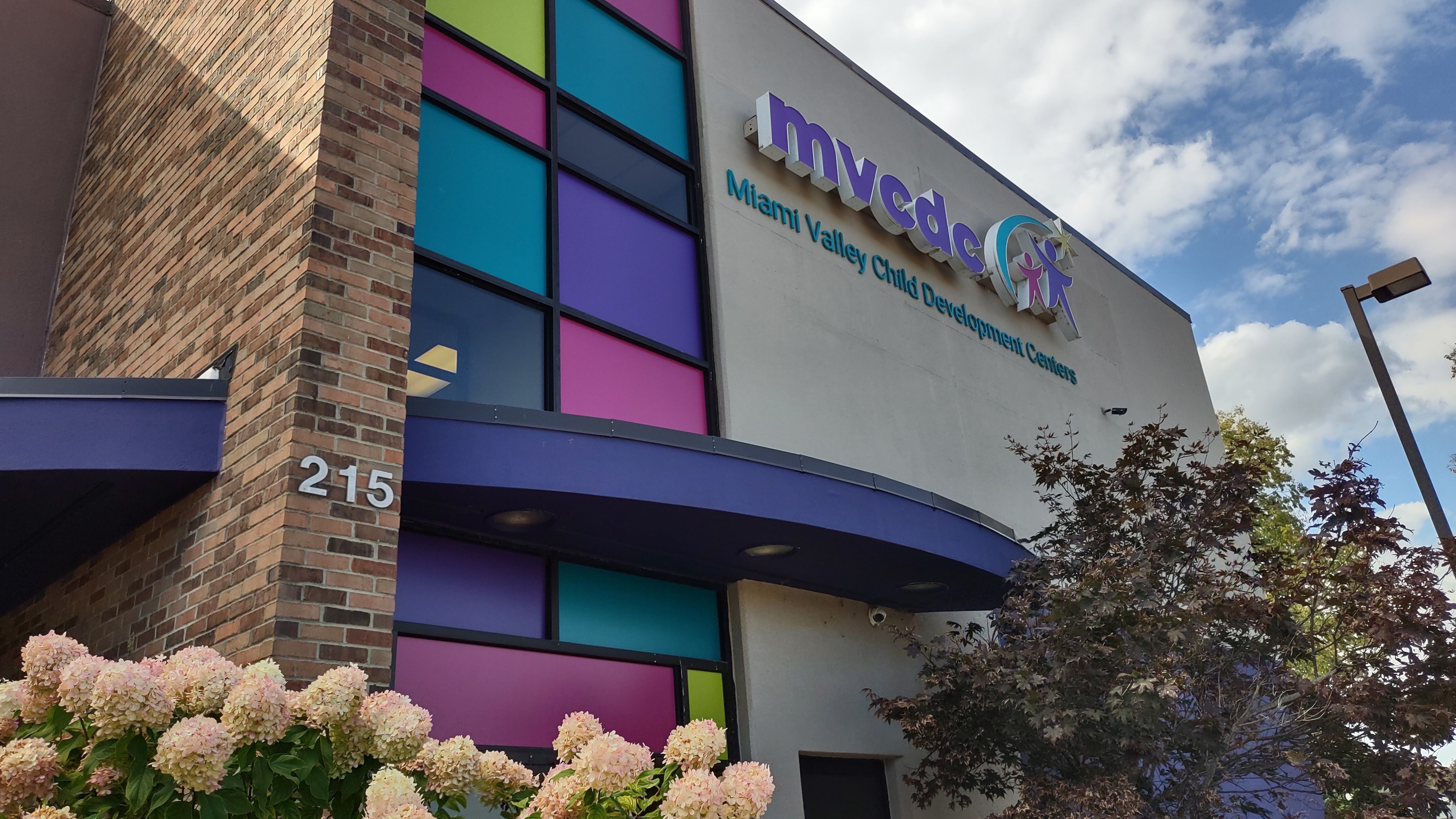
Down the road, the Miami Valley Child Development Center works with both children and their caregivers to implement resources and training for upward mobility. On this scene of rage and carnage fifty years ago, now prevails the strength of people who see life as an elevator, where everyone who gets on goes up, rather than a pyramid, where the bottom is big and the top is small.
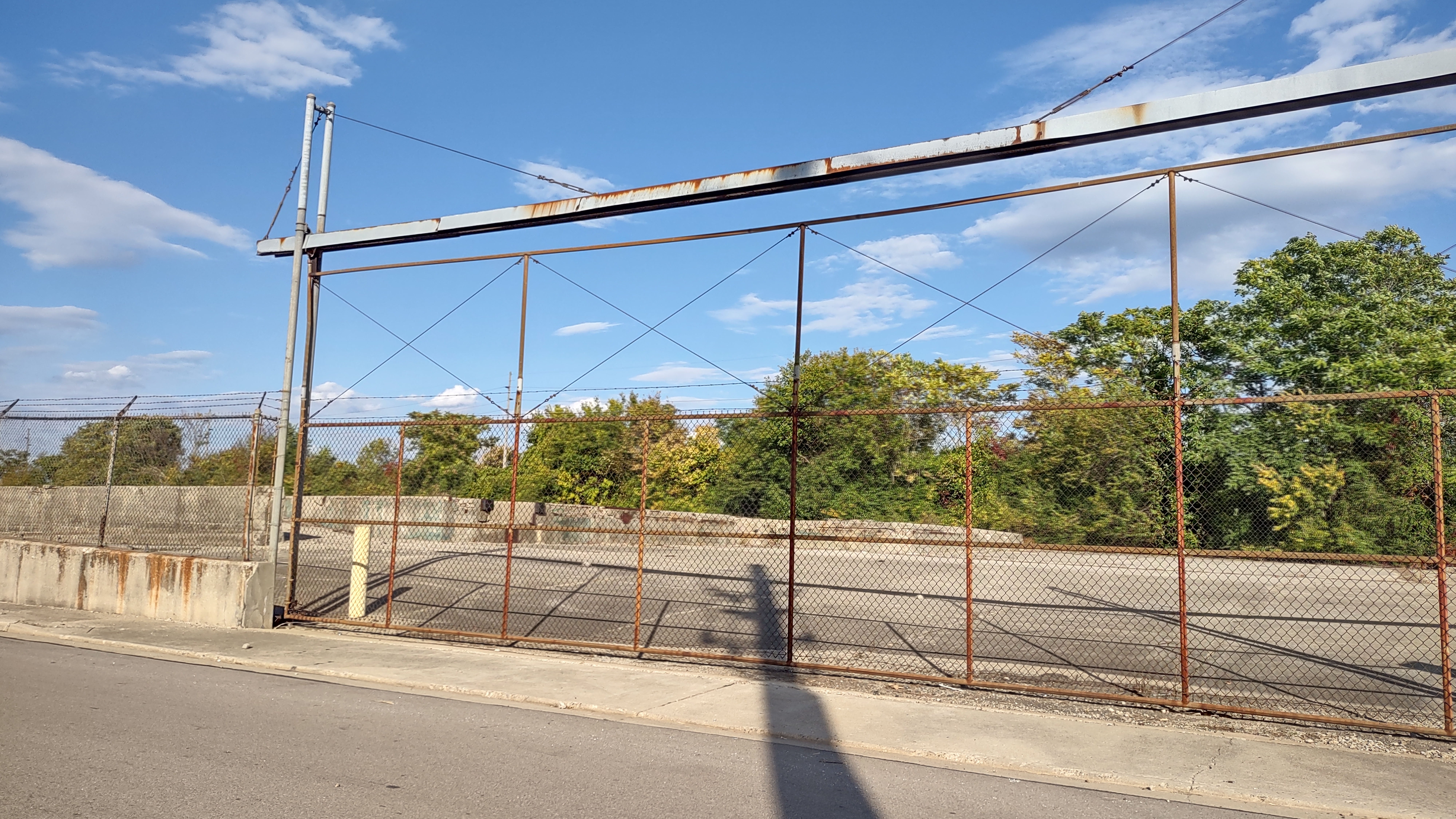
Our GPS moves us onward, to . . . a fence. A lot of fence.
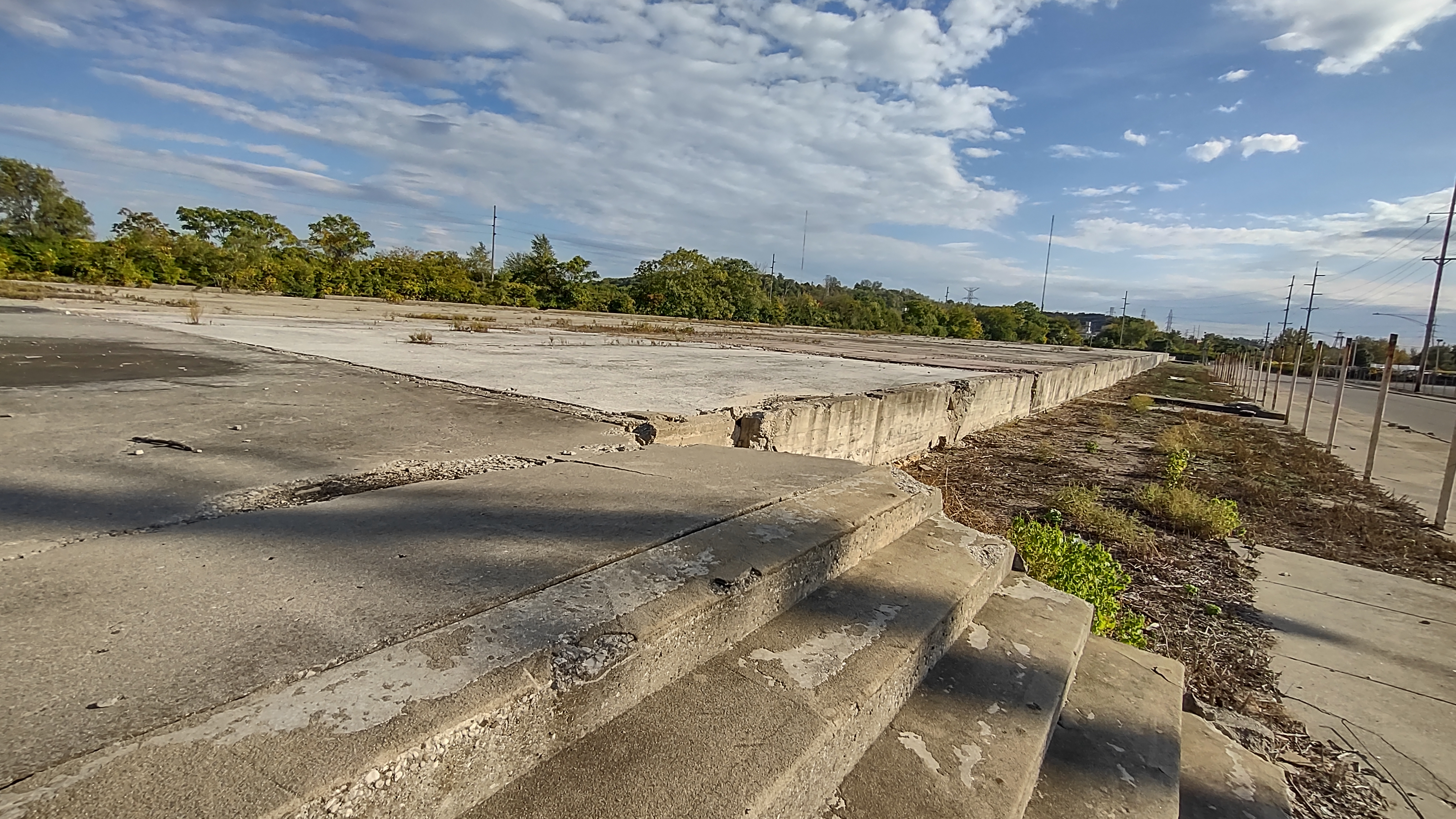
A prodigious concrete field stretches out beyond. Industrial warehouses loading tools, parts, products, and commodities onto trucks, bound for trains, tiptoe by, phantoms of a time now gone.
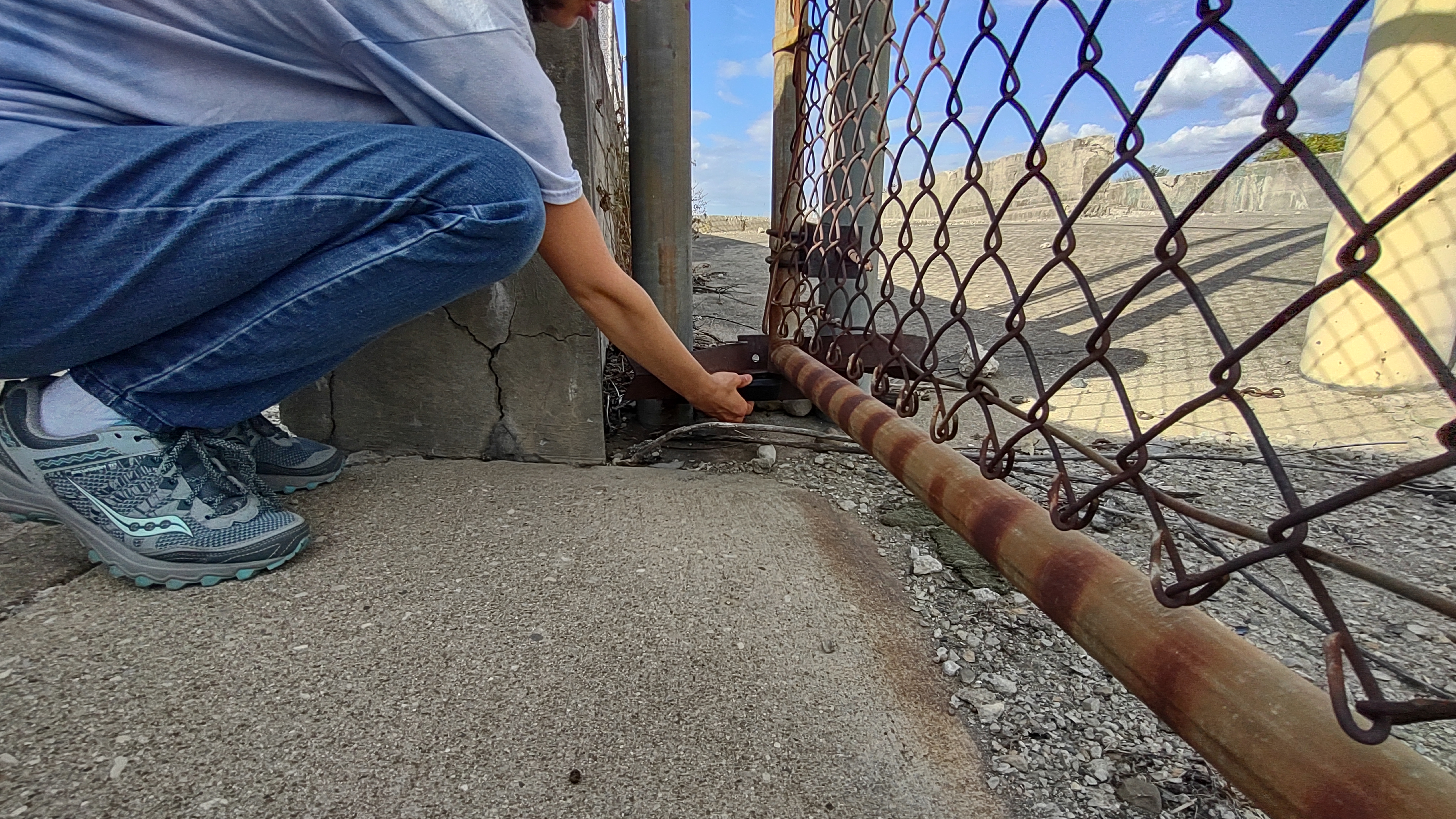
We walk up and down, no muggle problems here, for sure. We look too poor to be mugged, right? Cranial protoplasm bubbles. Where is the one piece of metal that could shelter a cache for 15 years?

Turning homeward, fading strains echo in the sunset anthem.
-
Apple Art
On the west side of the Great Miami River, Cache Owner metalhead\m/ has placed a nano, in an apple tree or apple pie or apple artifice. We’re expecting the third one.
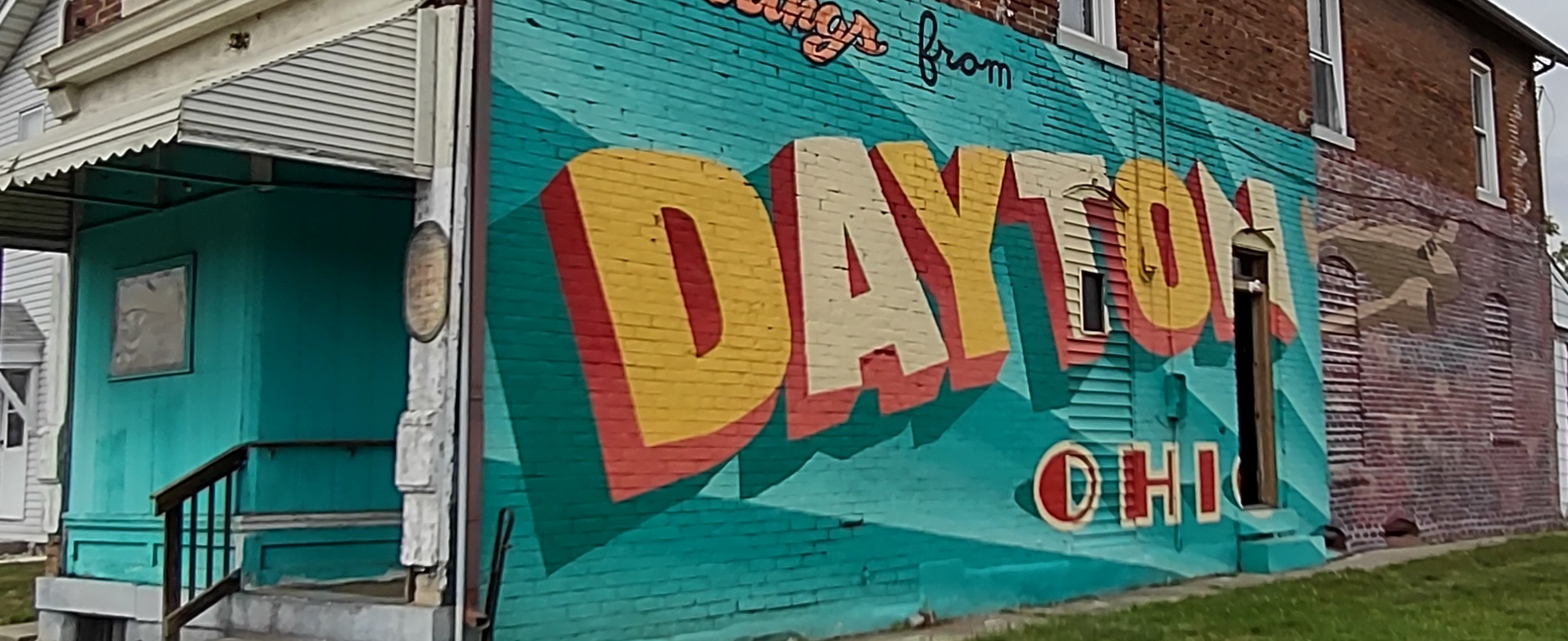
Dayton invites us to step through the open door of art adventure.
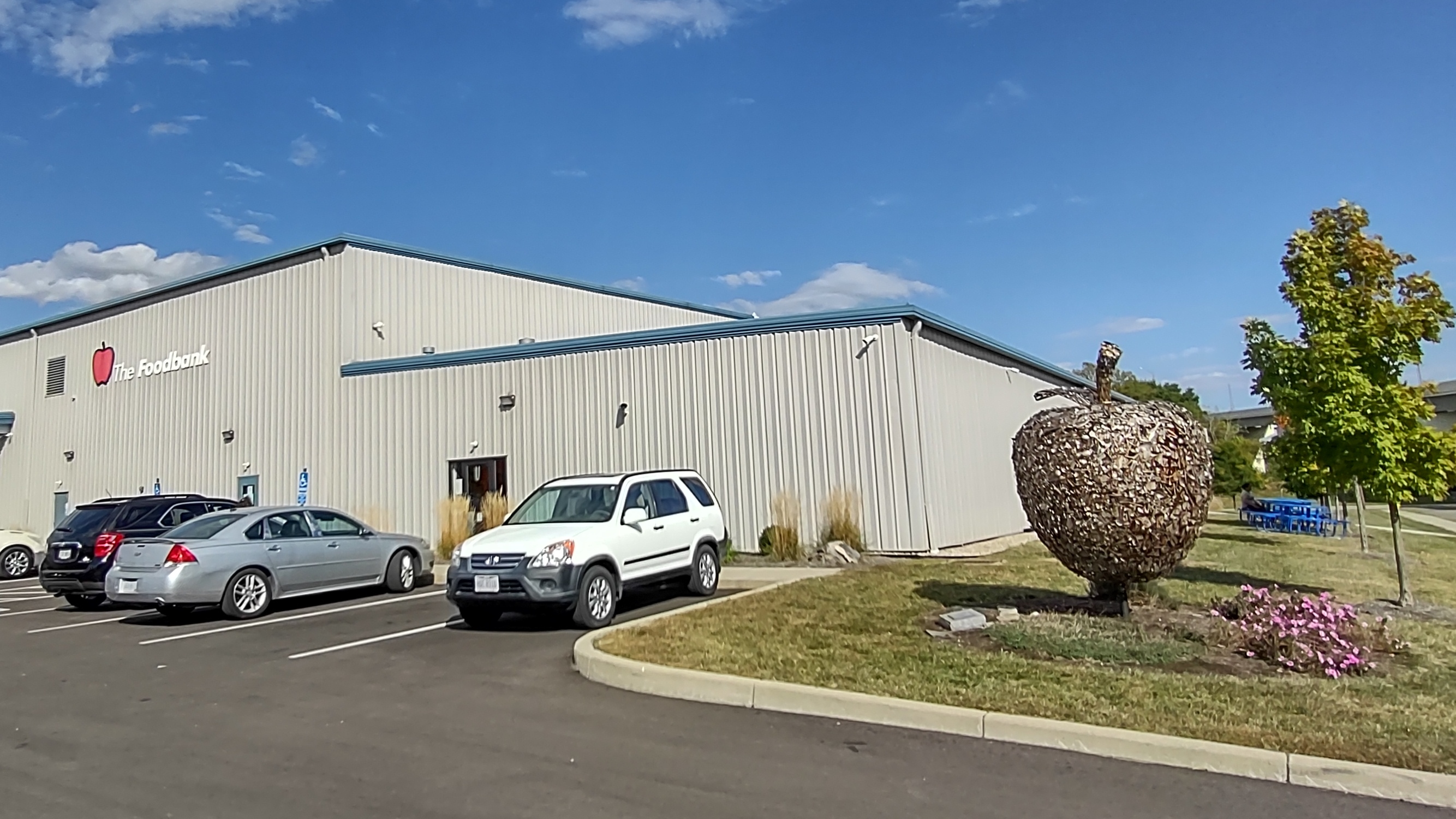
Our coordinates land at the Food Bank. Here the meaning of banking is turned on its head. Instead of resources flowing in to enrich those who already have, resources flow out to enrich those who do not.
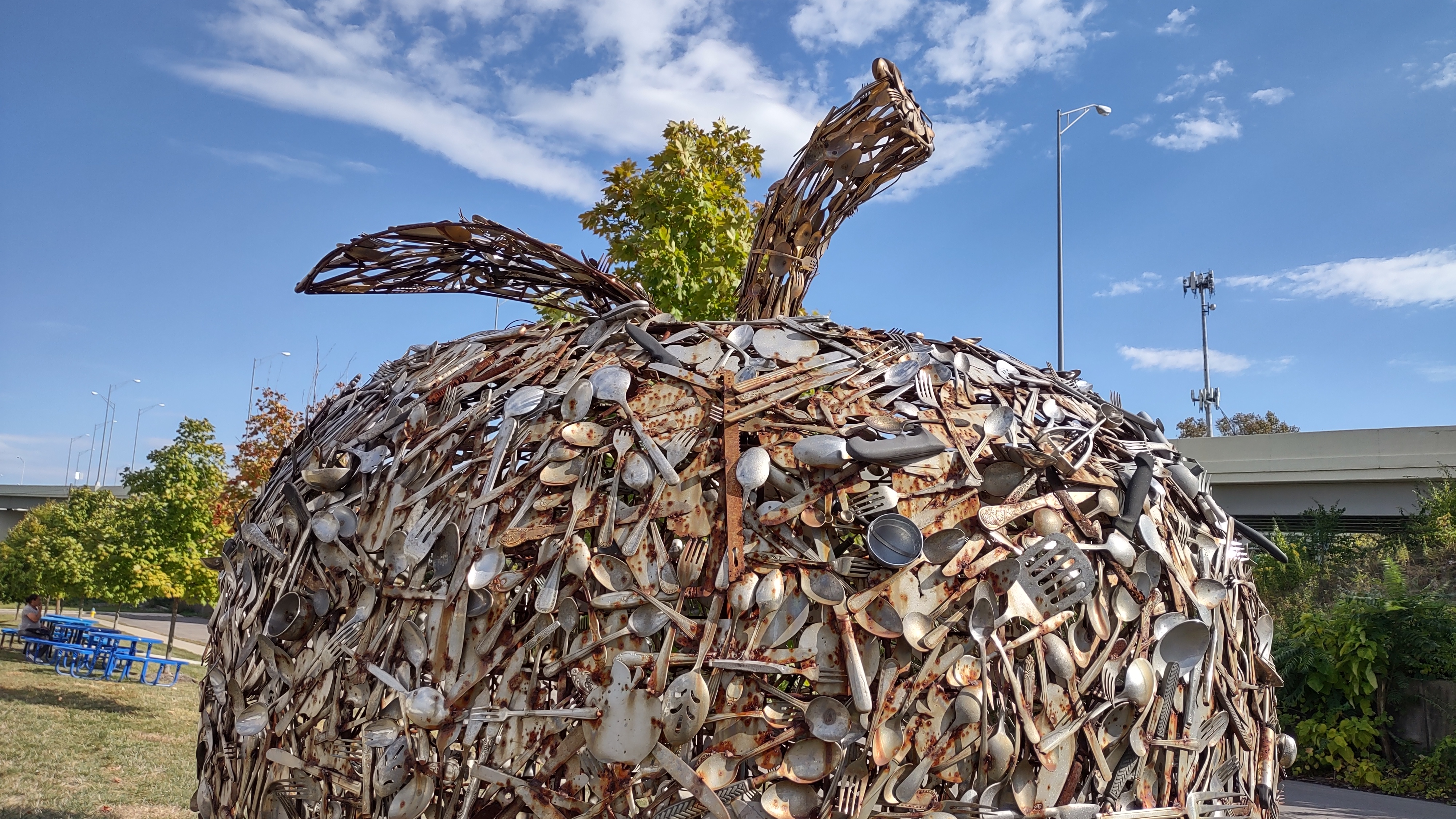
And our apple. Made from every kind of recycled metal food gadget, it gives us a moment’s pause to consider our trash, here made into something beautiful and mind-boggling.
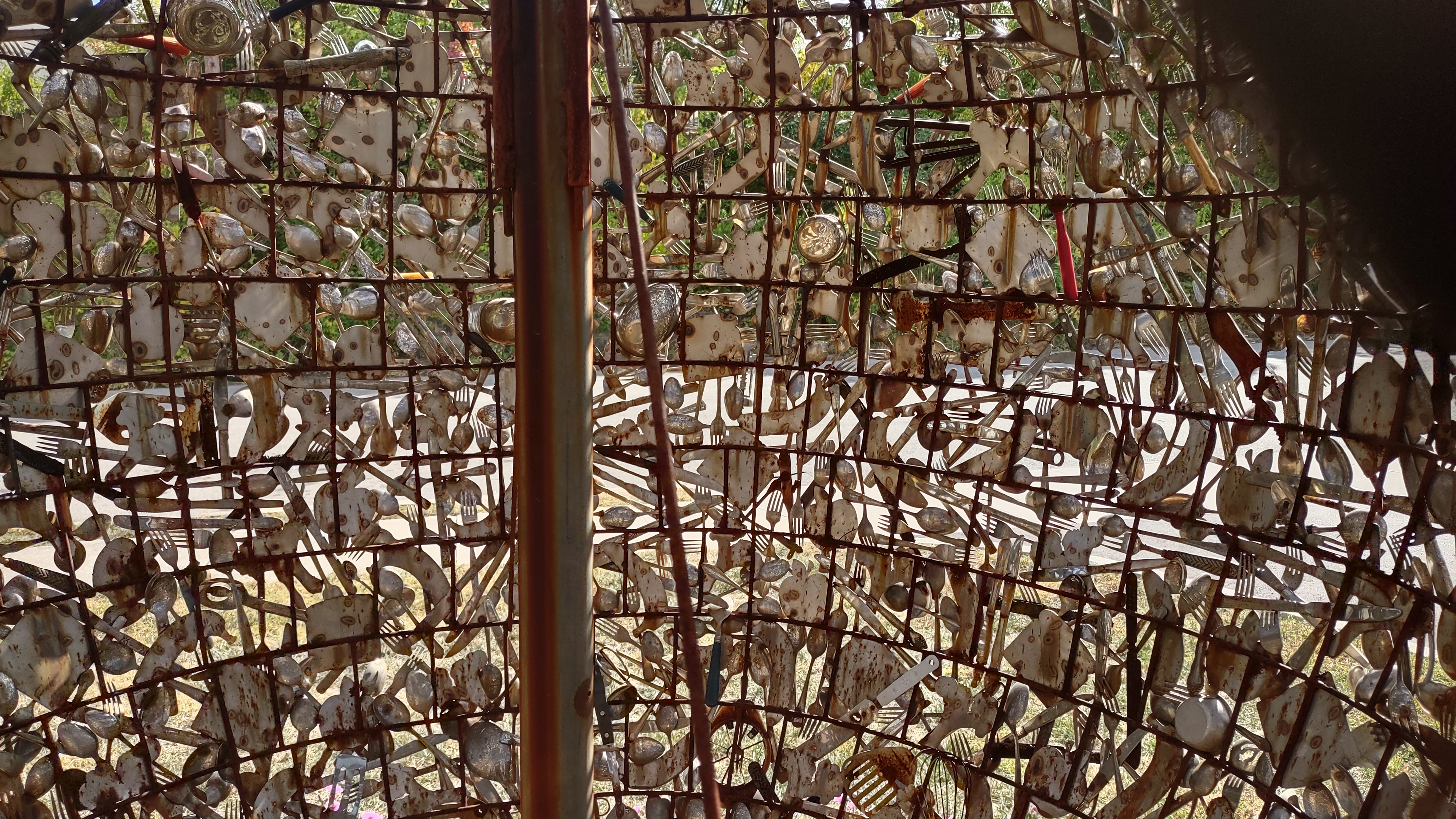
We look around … and around …. and up .. . and down …. and through. We squint, we groan, we laugh, we moan. One of us scores a bite from a monster flying insect. For the team.
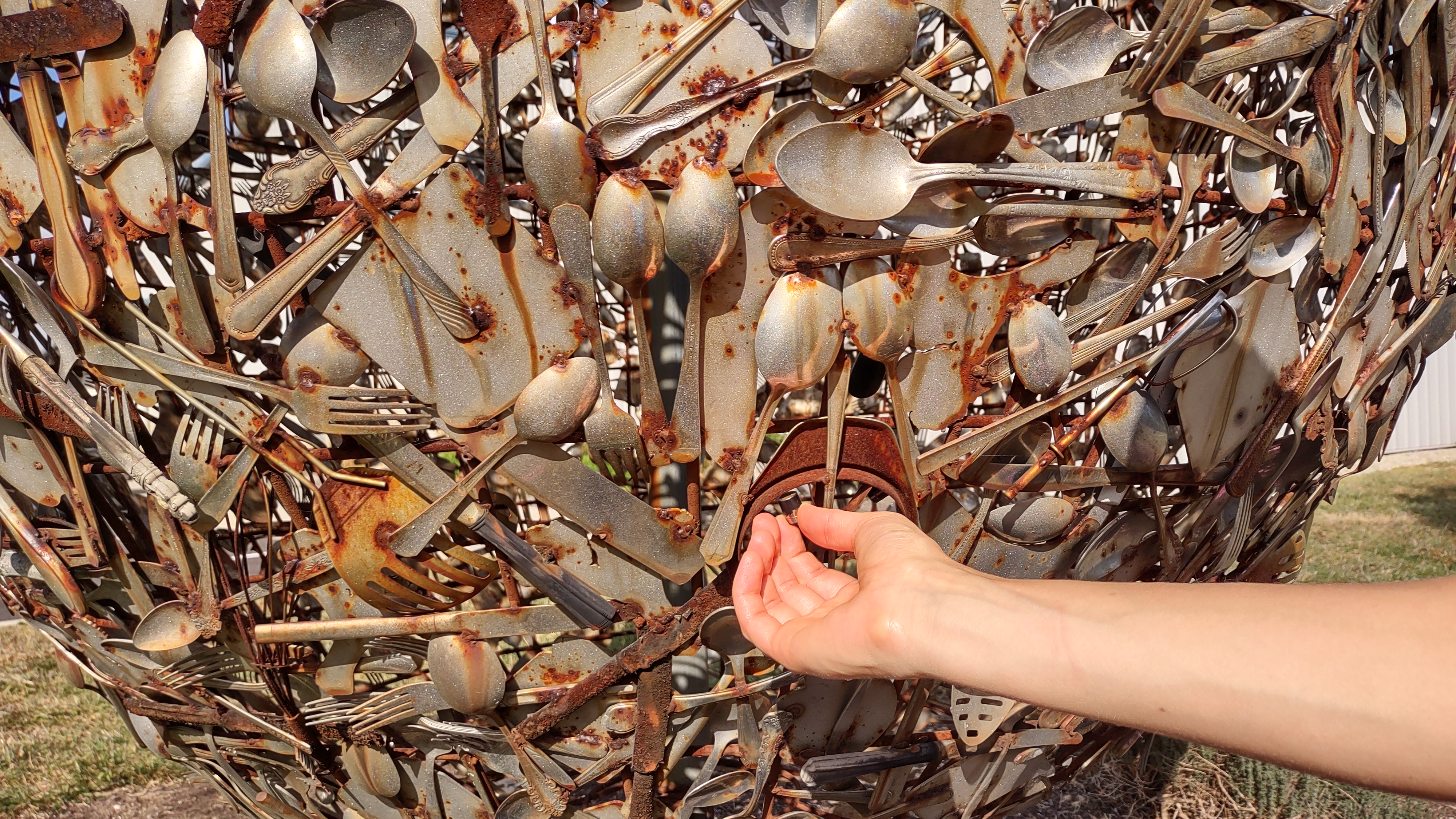
You didn’t see it there?!?
-
Ultramatic
America’s Packard Museum will take us back 100 years, where Cache Owner Riversurfer’s furtive hide is a relative young ‘un, at 20 years old.
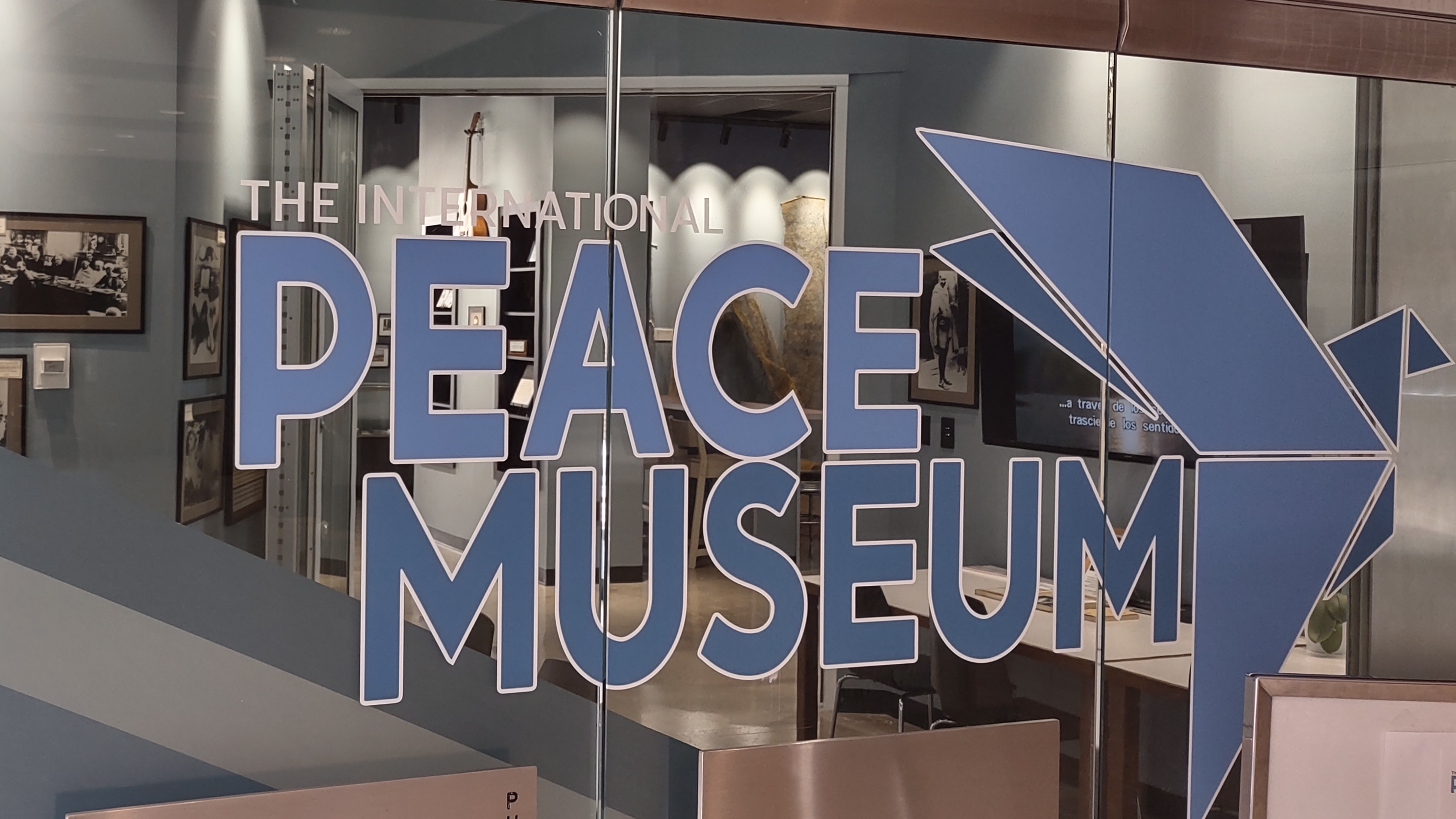
Driving down Ludlow Street in downtown Dayton, our geotrail passes through the Peace Museum.
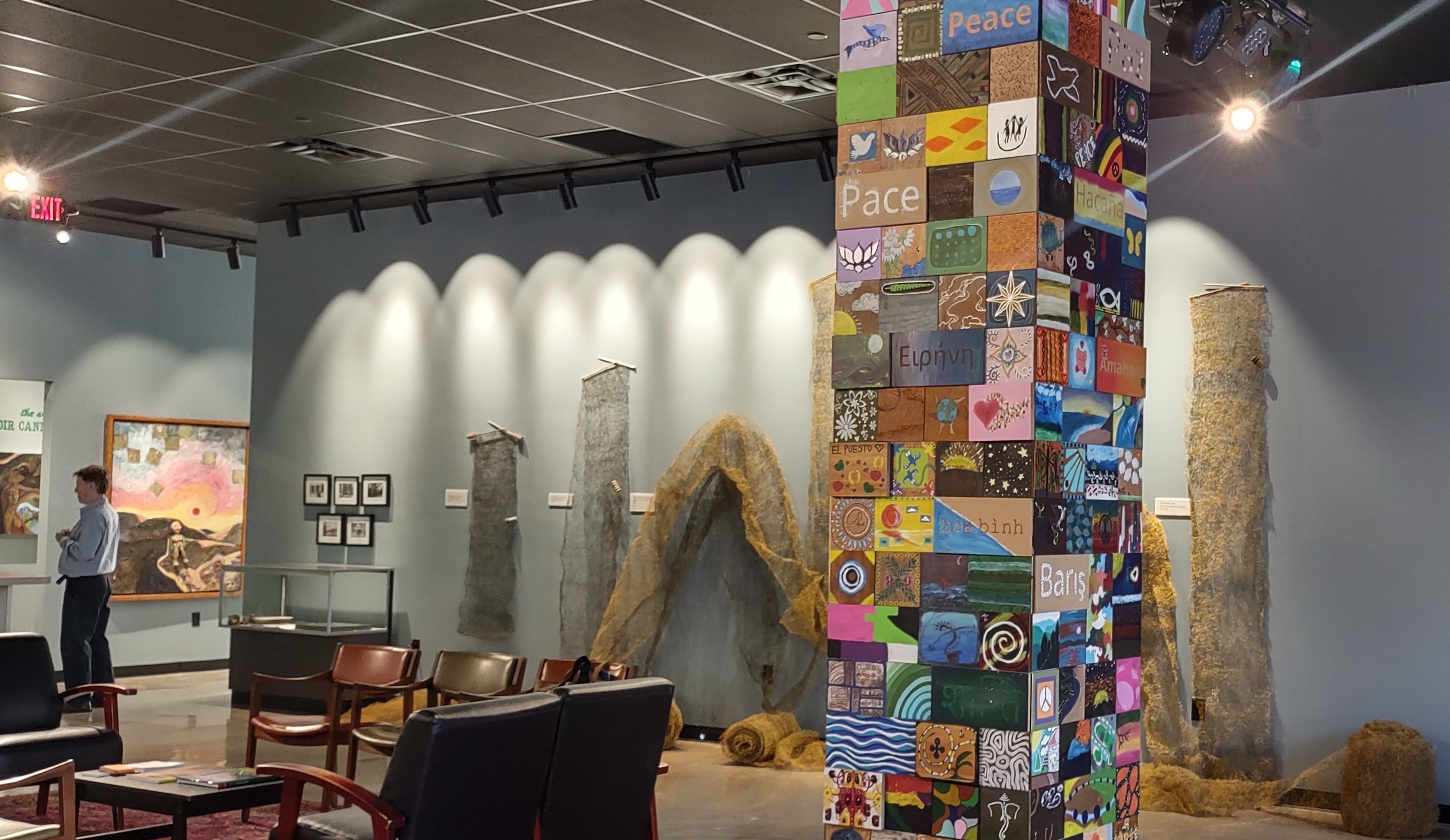
Here people gather to express the basic human longing to live peaceful lives. On the back wall, trip wire knitted into thousands of loops reflects the daily count of deaths and injuries in Iraqi and Afghanistan conflicts.
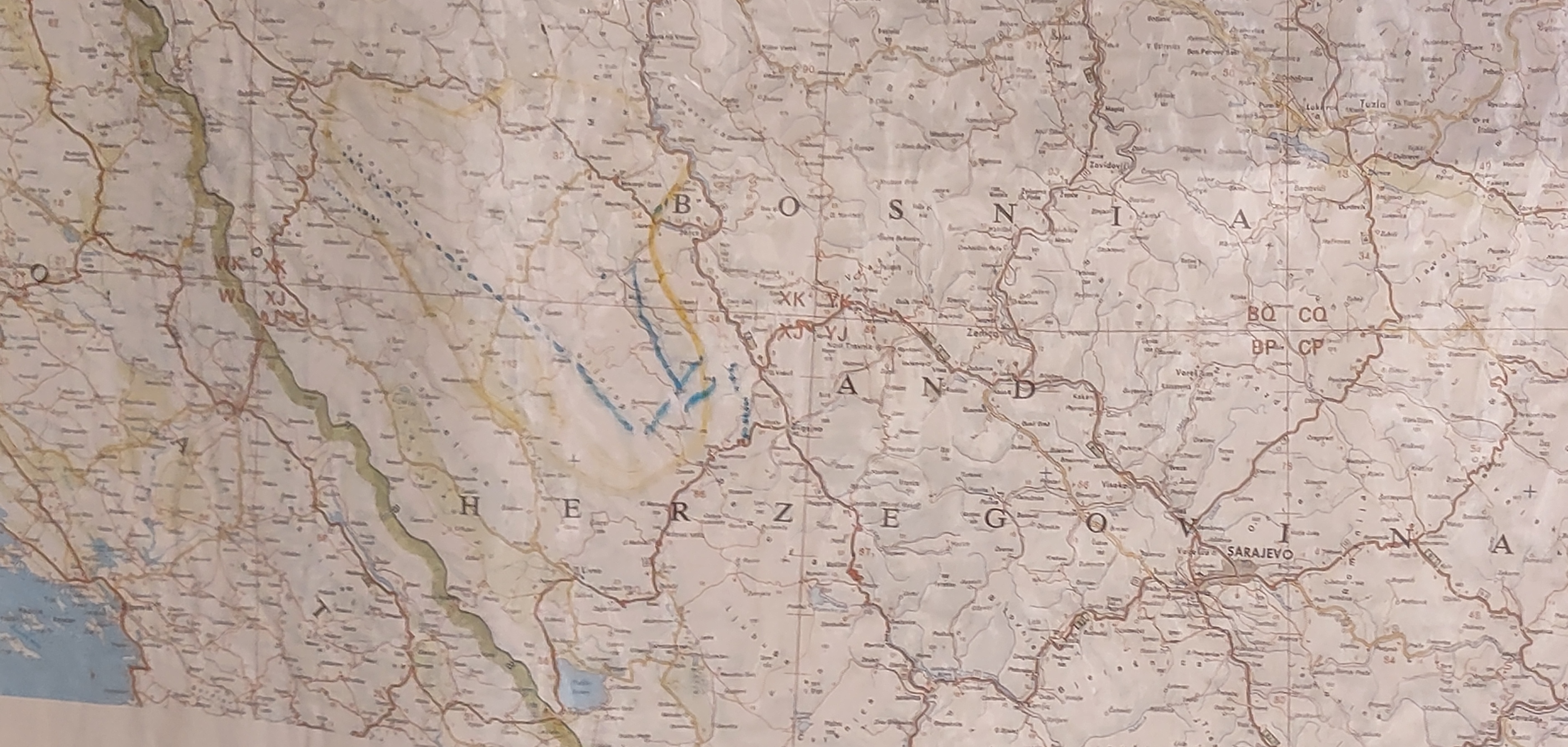
Across the Mediterranean Sea, just a hop away from the boot-shaped Italian peninsula, lie the regions of Serbia and Croatia. Bordering the Balkan Mountains, rich with natural resources and sea ports, they have been a flashpoint of conflict, at the crossroads of Europe, the Middle East and Asia. One day a Serb shot an Austrian, and World War I began.
By 1990, Bosnia existed as a pluralistic society. People practiced their politics and faith freely. This bothered their neighbors, Serbia and Croatia, who were fearful that free thought would seep across their borders. Over a four year period, one million Bosnians were murdered in an effort to take over their land. NATO bombings had little effect on the conflict. Wartime economy continued to thrive.
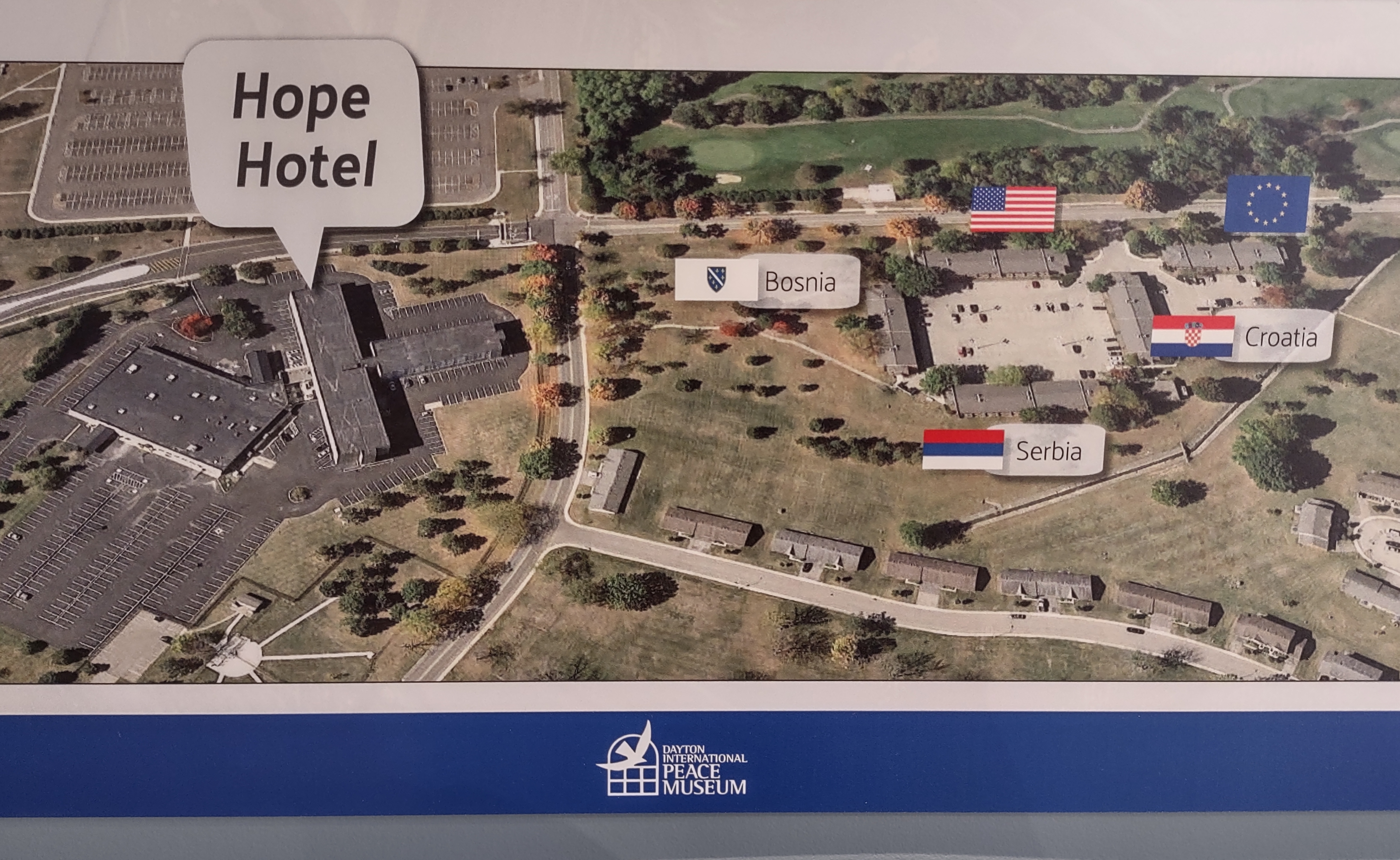
People of conscience were not silent. In 1995, Dayton and Wright-Patterson became Ground Zero for peace negotiations. In our museum rests the story of this search for peace.
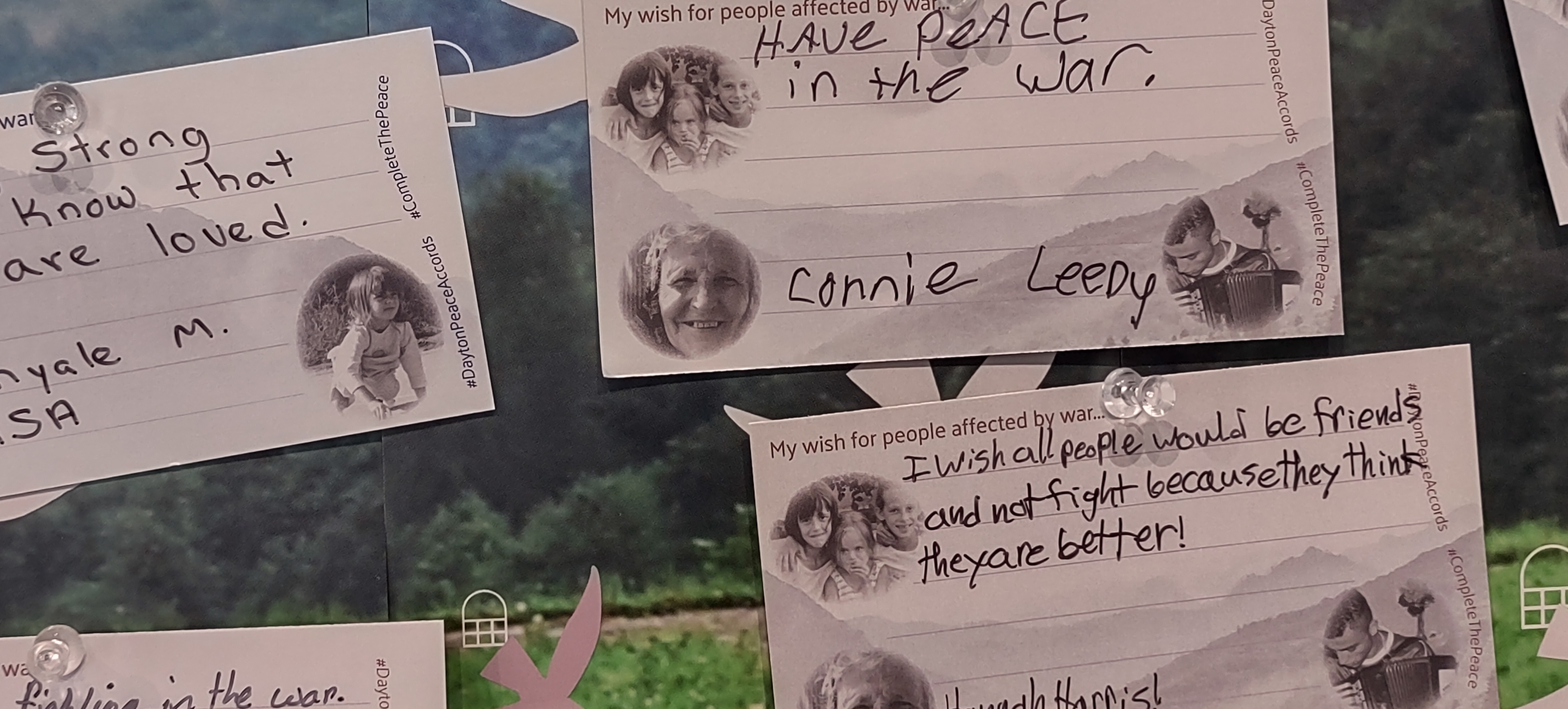
The resulting Accords froze military confrontation and ethnic massacres. It provided for free elections and a Bosnian constitution. On the wall before us, simple wishes.
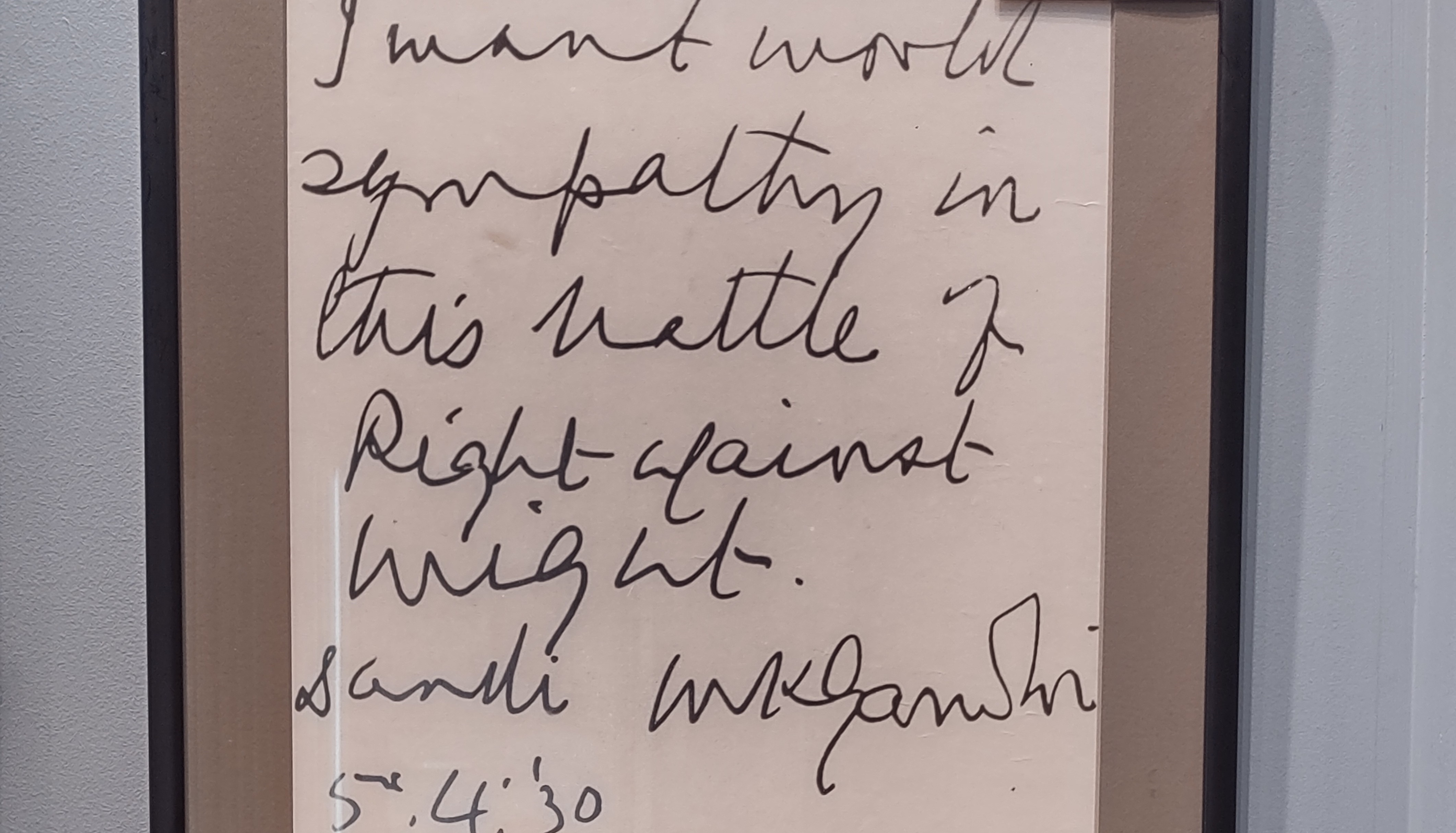
Ghandi also lives at this museum, in words and thoughts which changed the world.
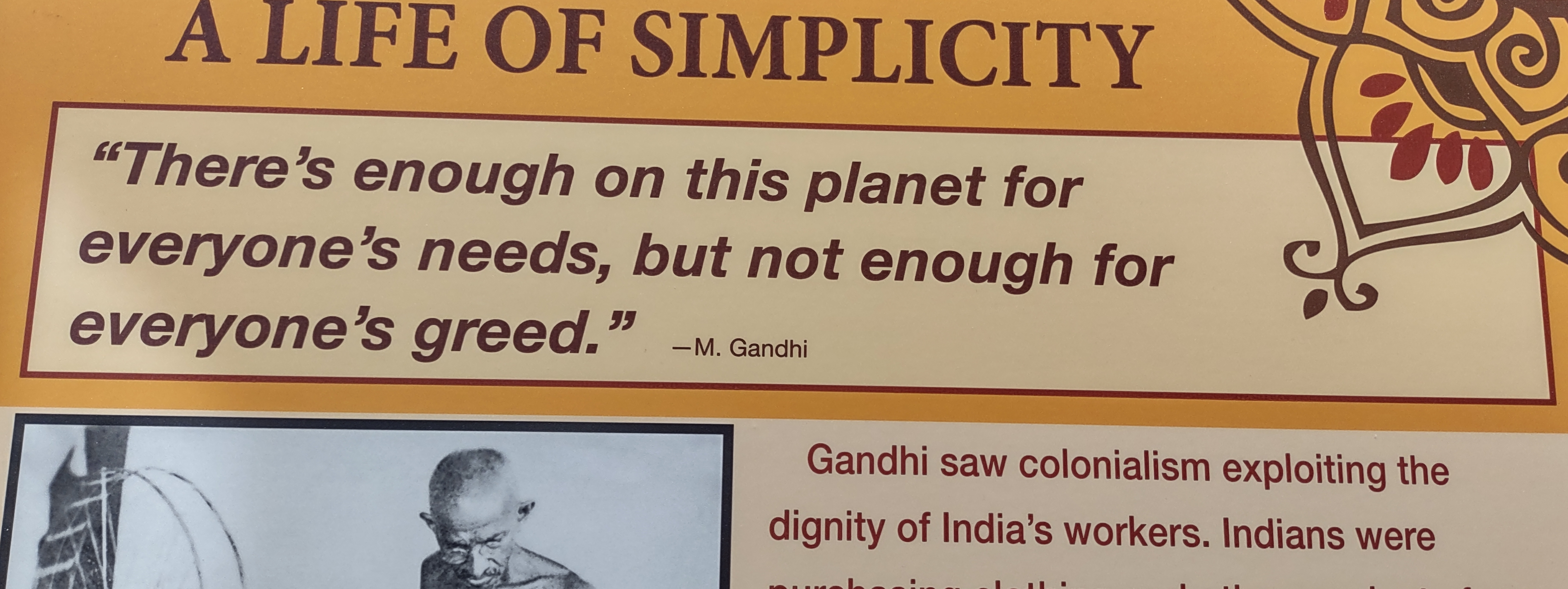
Twenty years after his death, Ghandi would reach across oceans to inspire peace for all peoples in our nation.
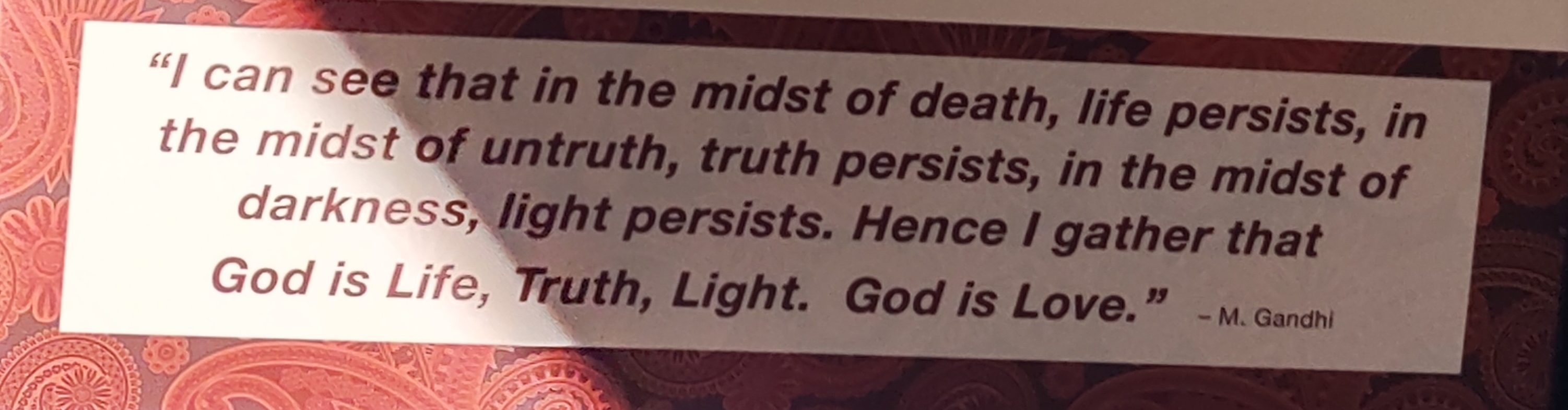
His words follow us as we walk back out into the sunshine on Ludlow Street.
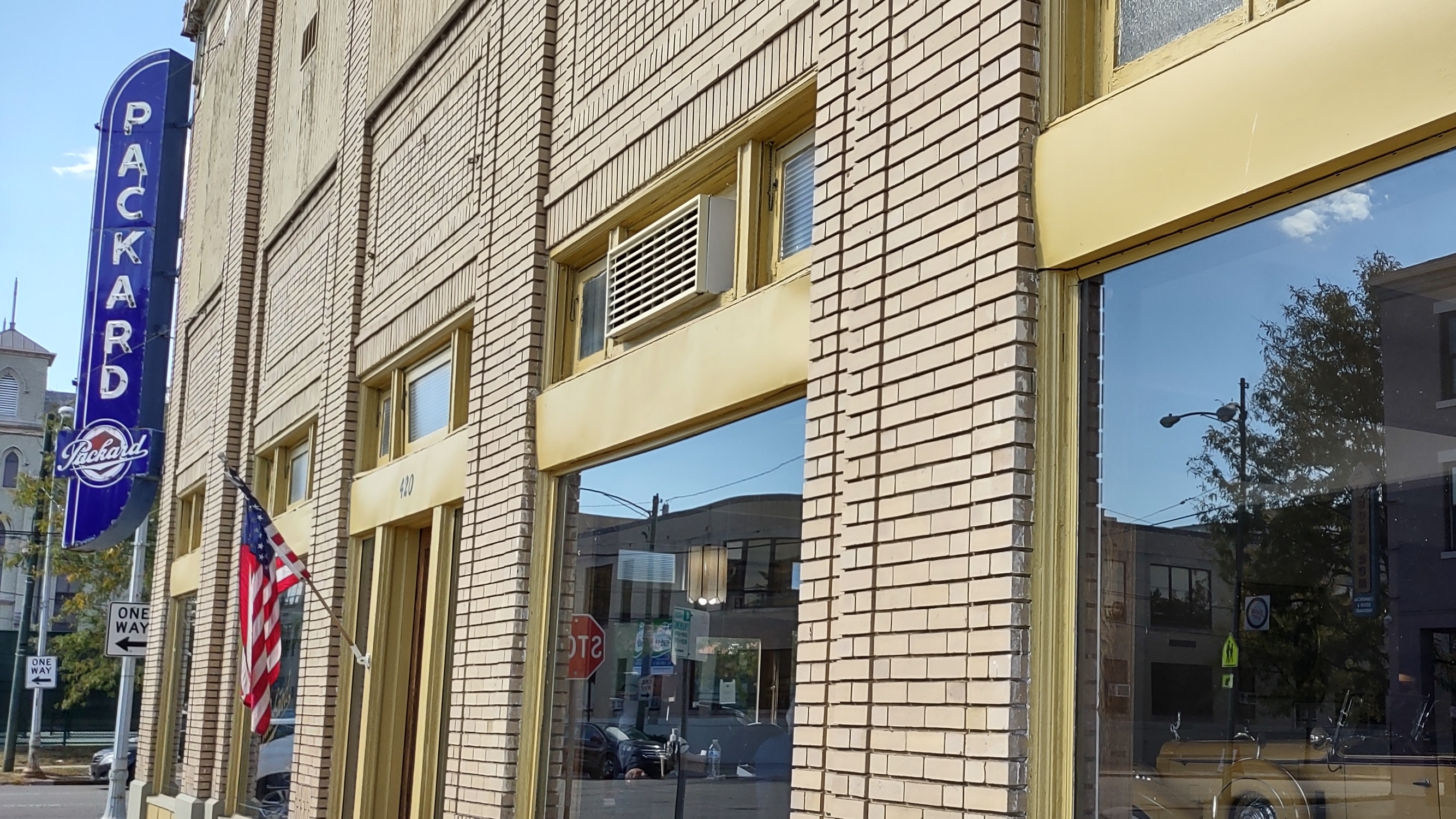
Our coordinates land at the Packard Museum, former Packard dealership, built in 1917.
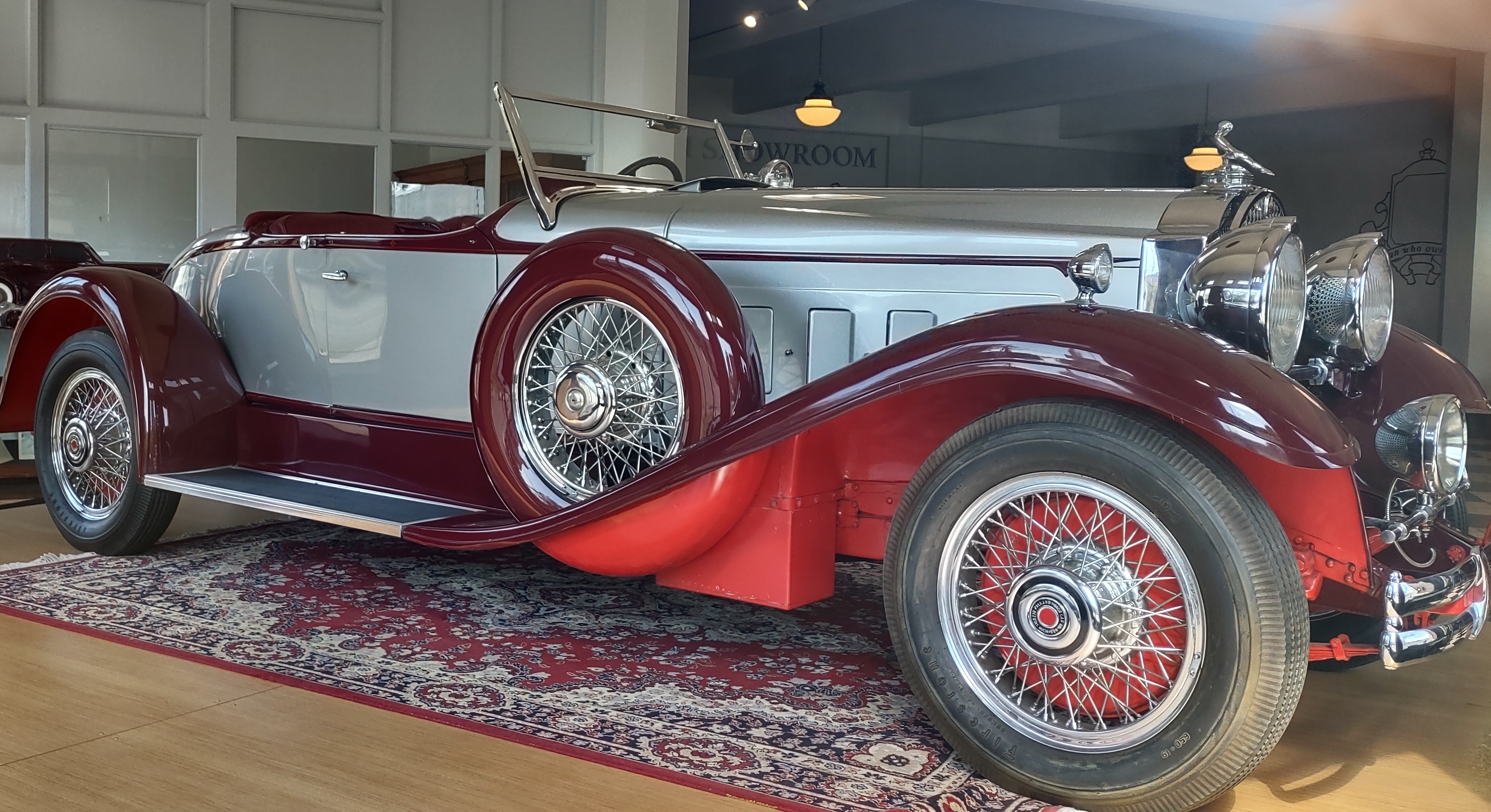
Here the glittering self-propelled vehicles first charmed us and attracted life-long passion.
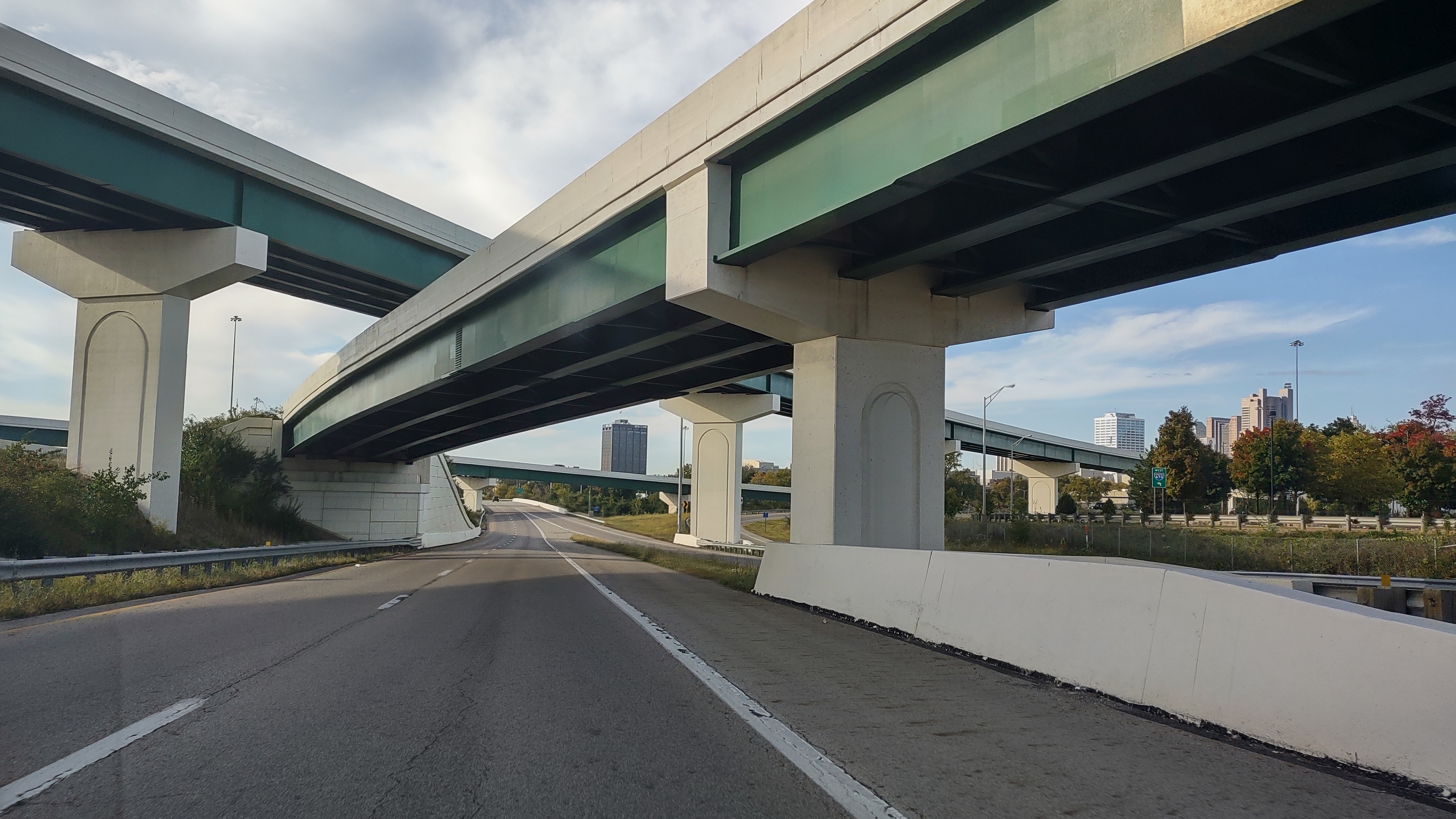
The open road called us, and ever-expanding arteries covered small towns and farms.
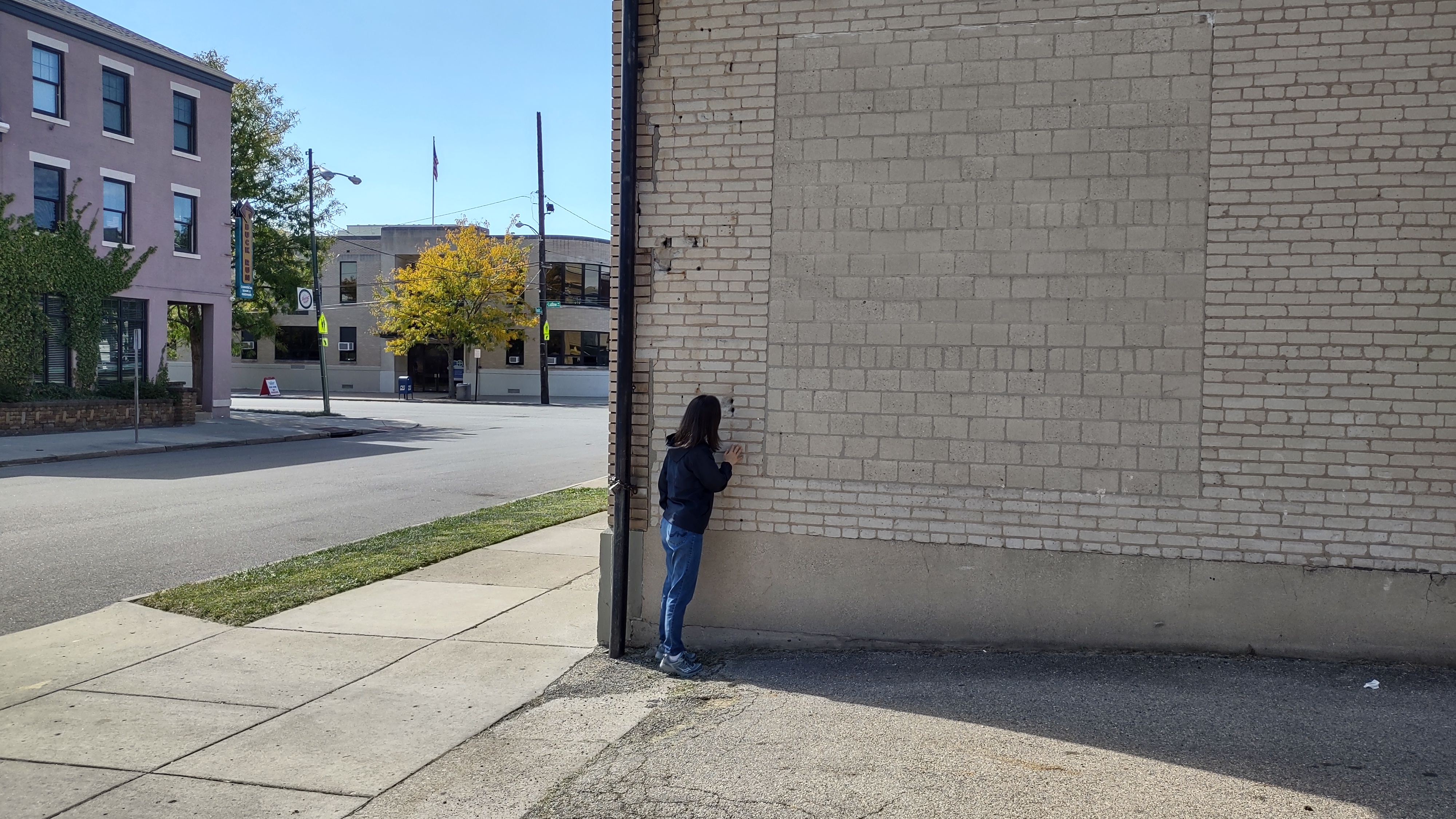
In this Where’s Waldo scenario, find a tiny crown jewel.

The century-old building peeps out and winks.
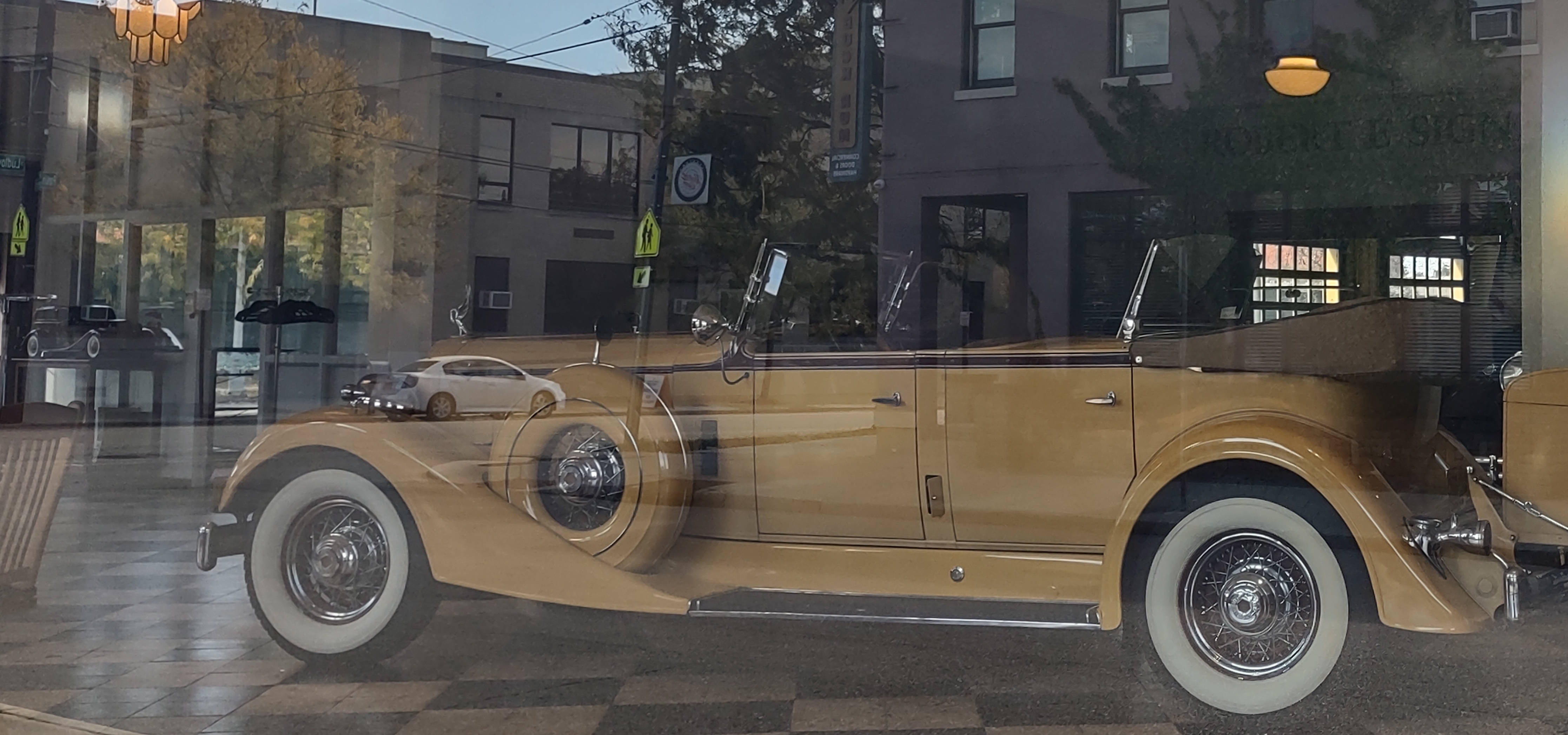
As we walk away, a car pulls up.
-
Cooper Park
Taking us to Cooper Park, Cache Owner Abby the Explorer asks us to enjoy the hunt in her hometown of Dayton.
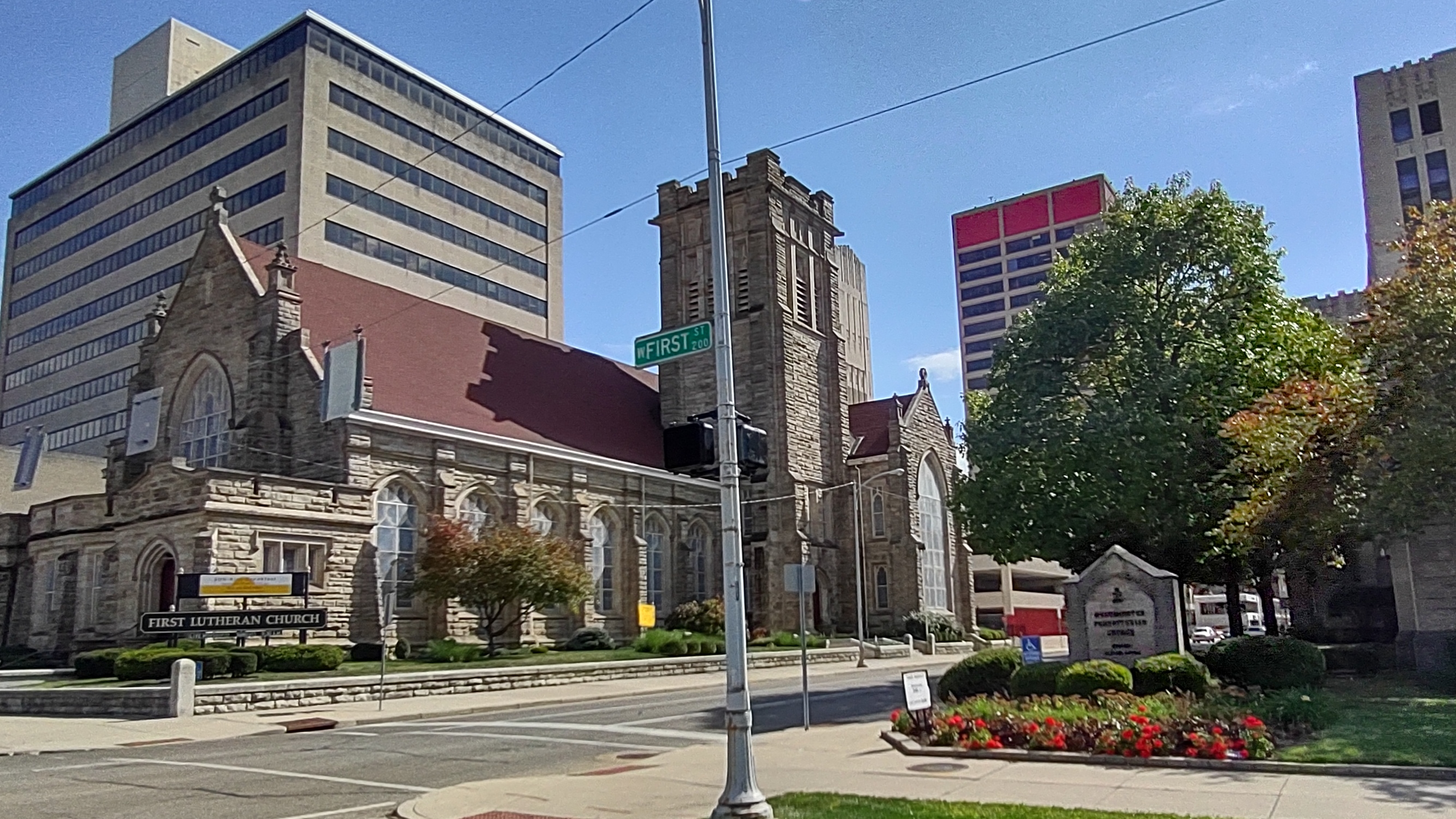
Facing off across the street, Lutherans and Presbyterians remind us of the astounding freedom we have to believe, and to choose our own beliefs.
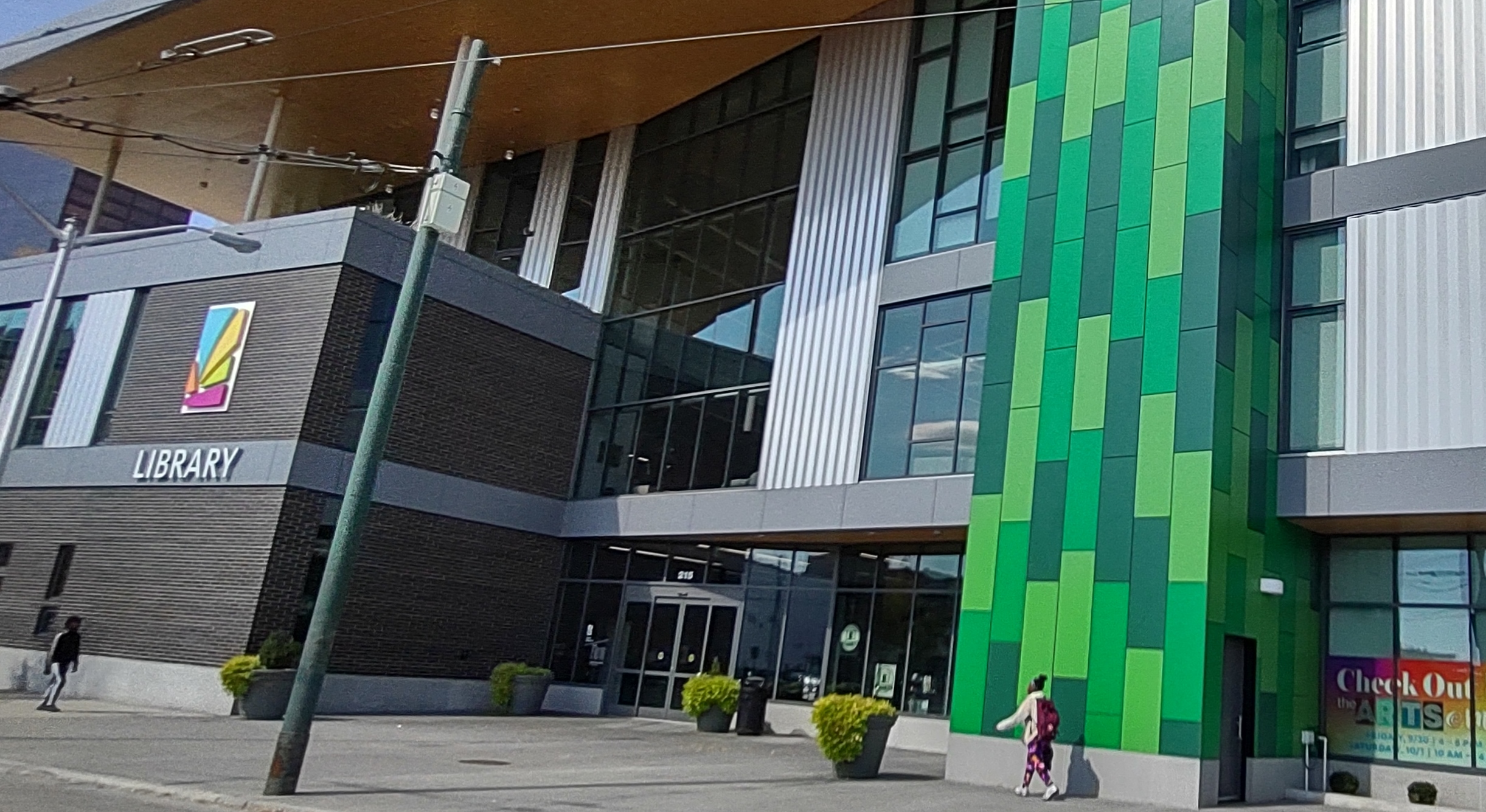
Freedom to think and to create combine in a library anthem.
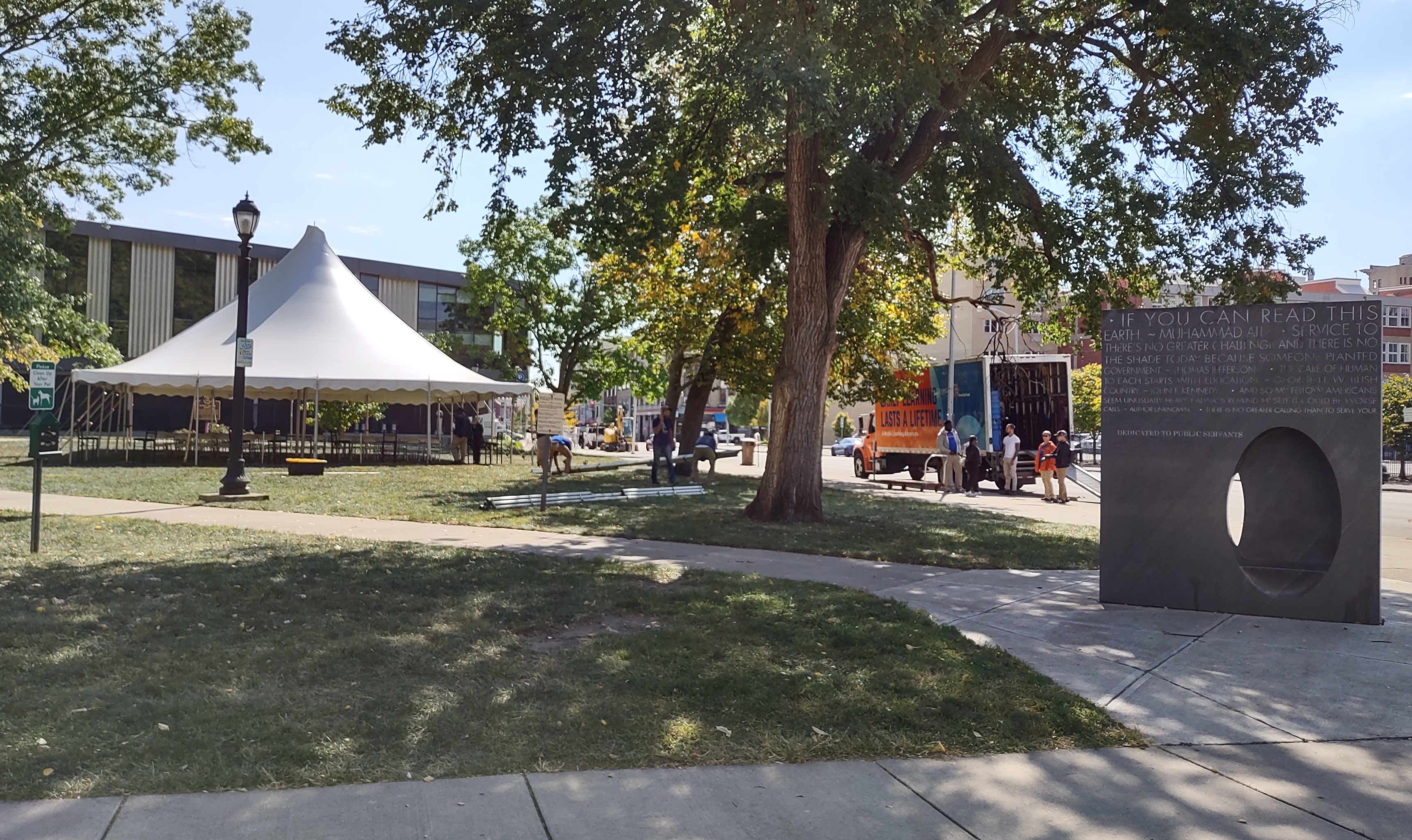
Our GPS lands in the park, where sculptured art perfectly captions an unfolding Early Learning event. If you can read this, thank a teacher.
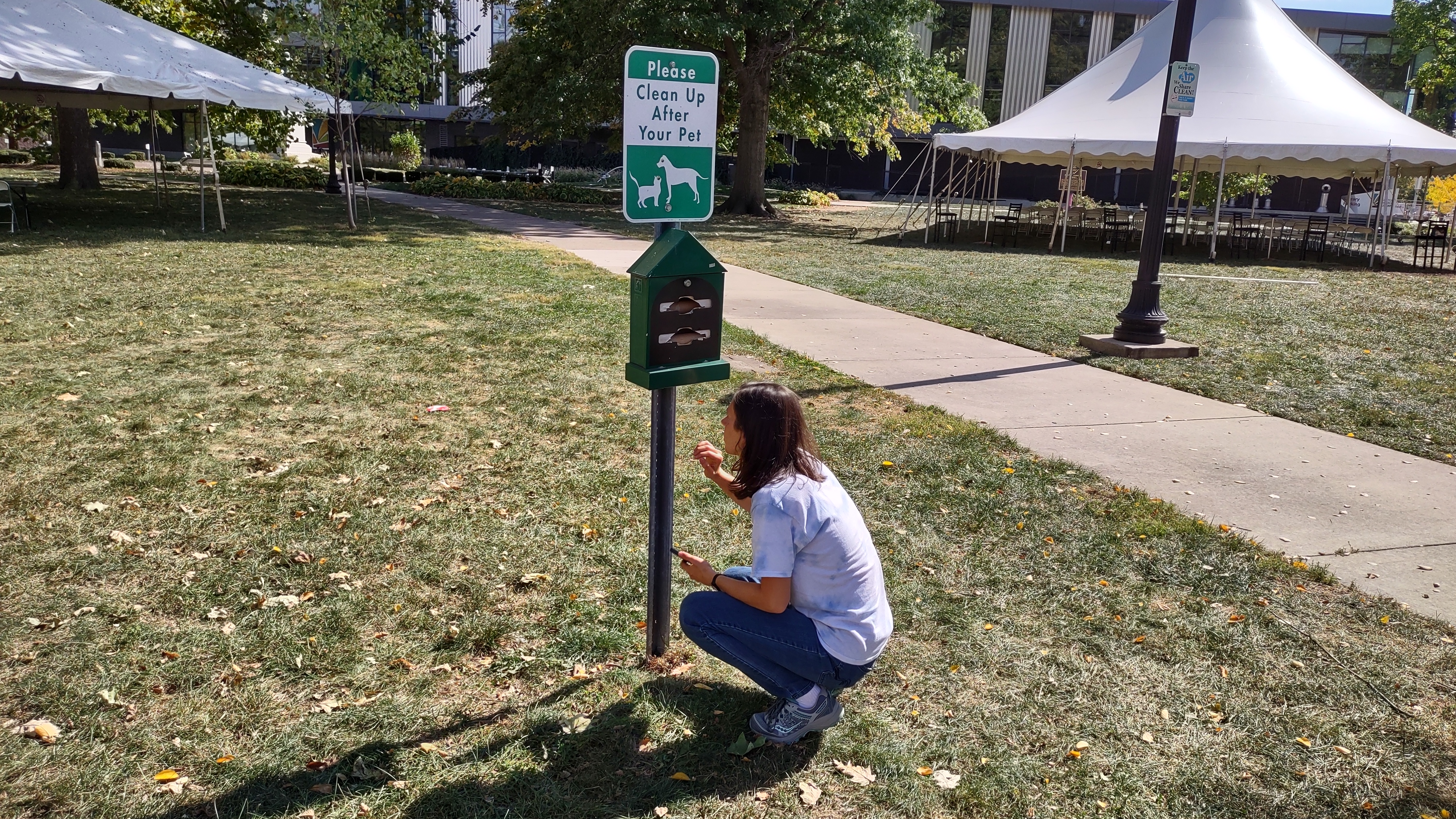
It really is kind of nice that those tables aren’t full of people right now.
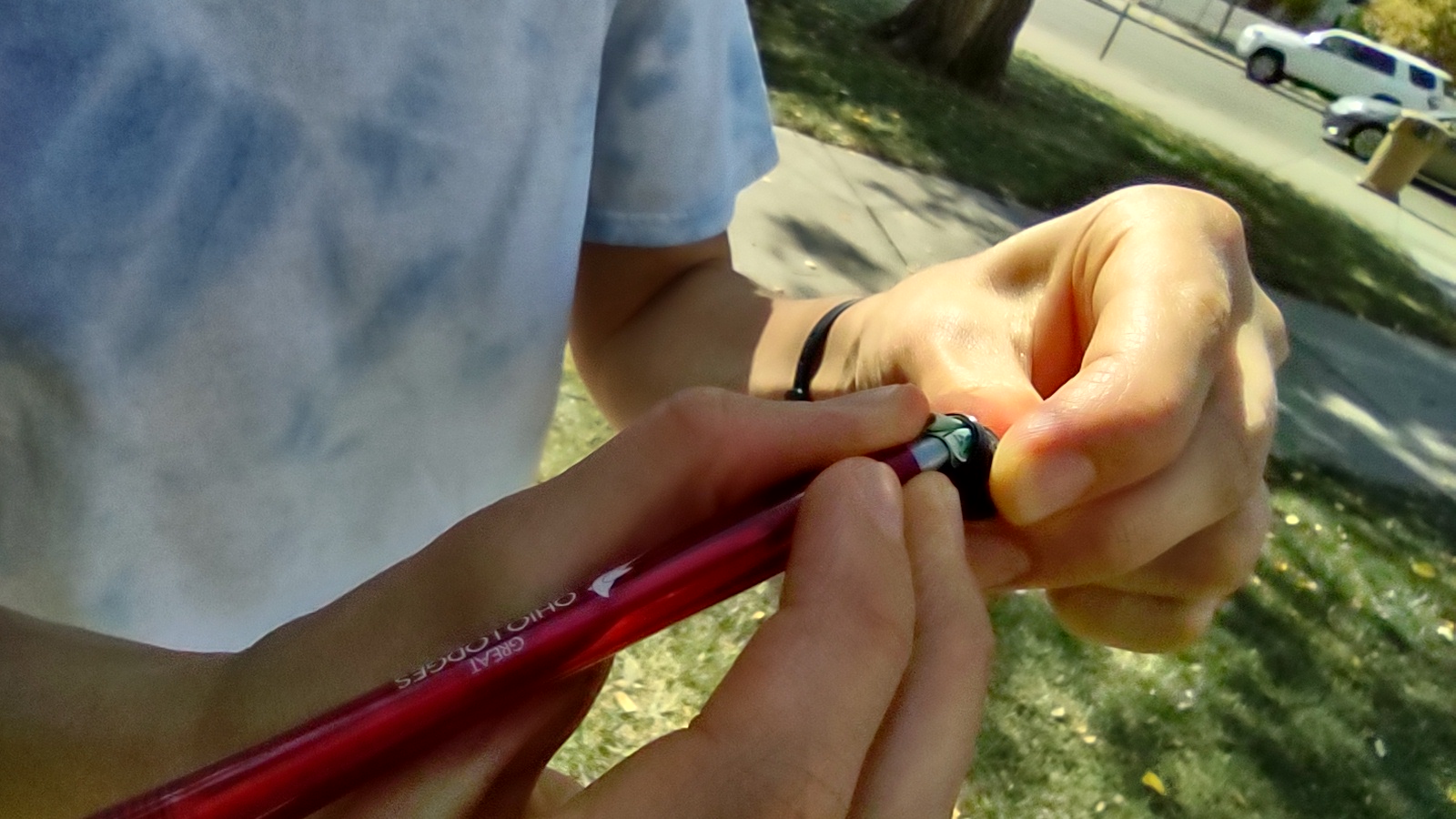
When cachers don’t bring tweezers, they will take turns banging the nano on a pole, stirring it with a pen, smashing it with a finger, and . . . . and . . .
-
Numbers
Numbers has been adopted out from Cache Owner Abby the Explorer to Mjs510. The responsibility of cache ownership, maintenance, and possible disappointment of the caching world, should this scrap of paper go missing, is not for the faint of heart.
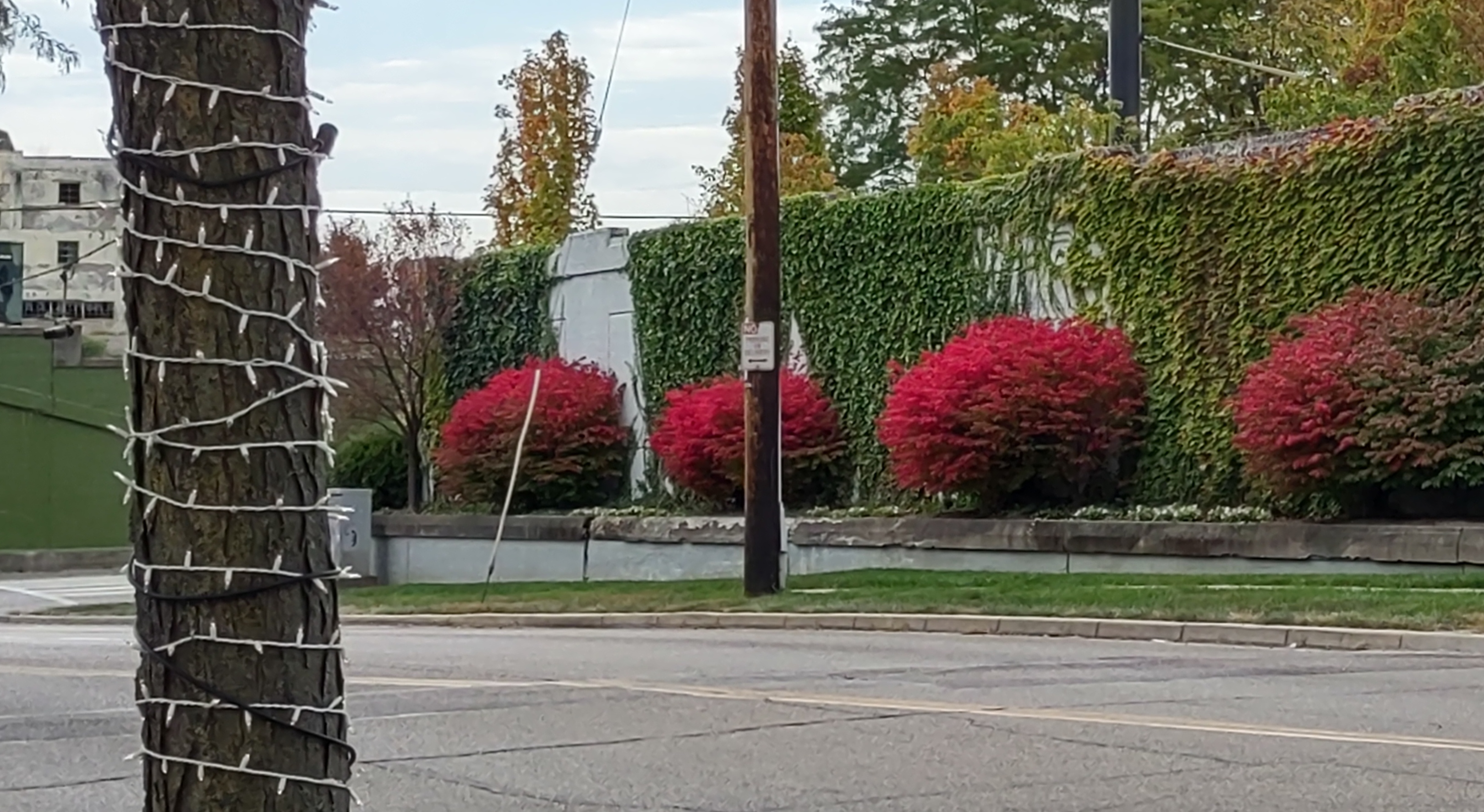
We mark the first lights of the jubilant holiday season. Not too soon, please. We must still warm our hands and hearts at fall’s flaming bonfire.
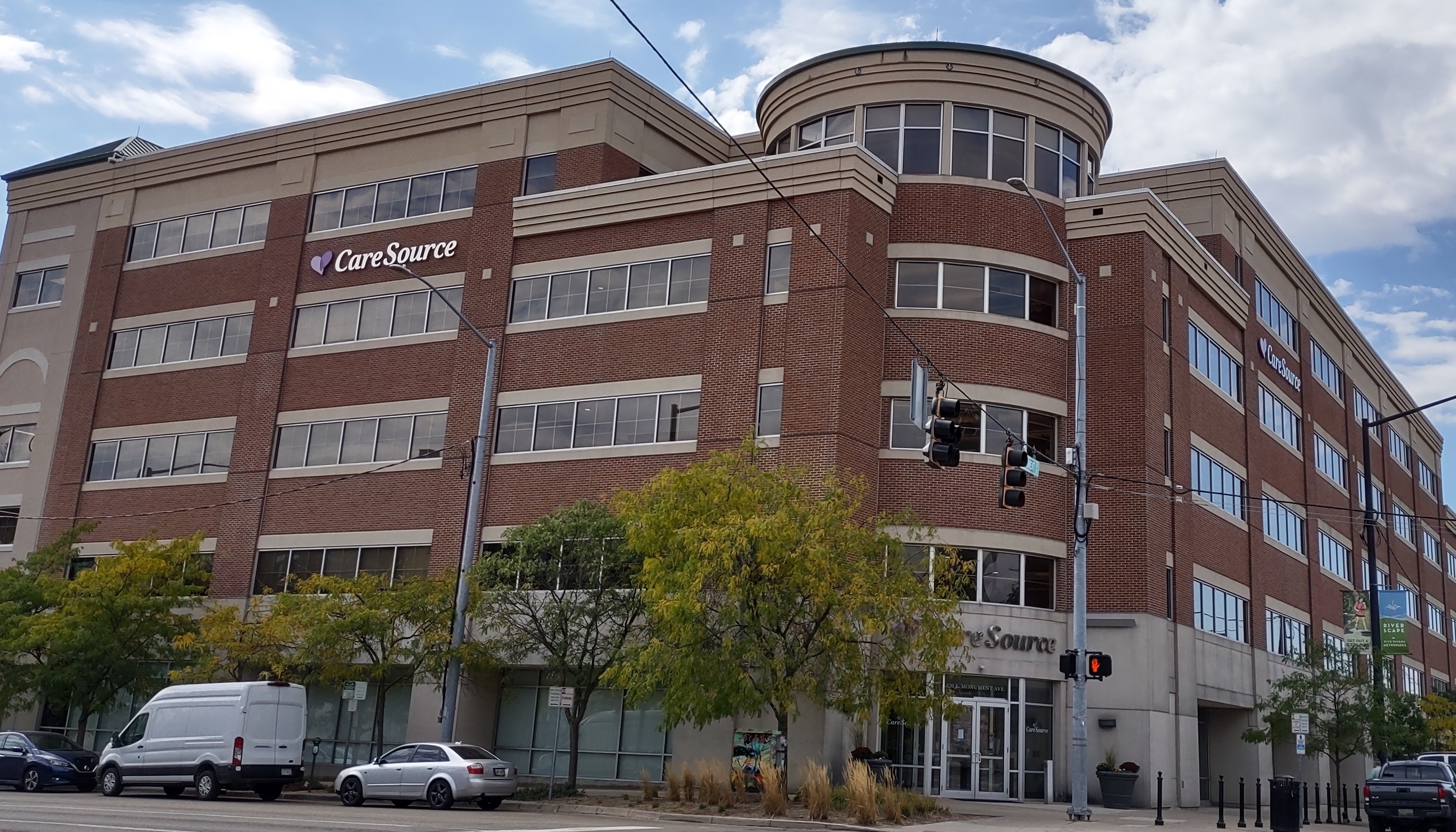
Arms held out to catch those who fall, the social safety net reaches from one to the next.
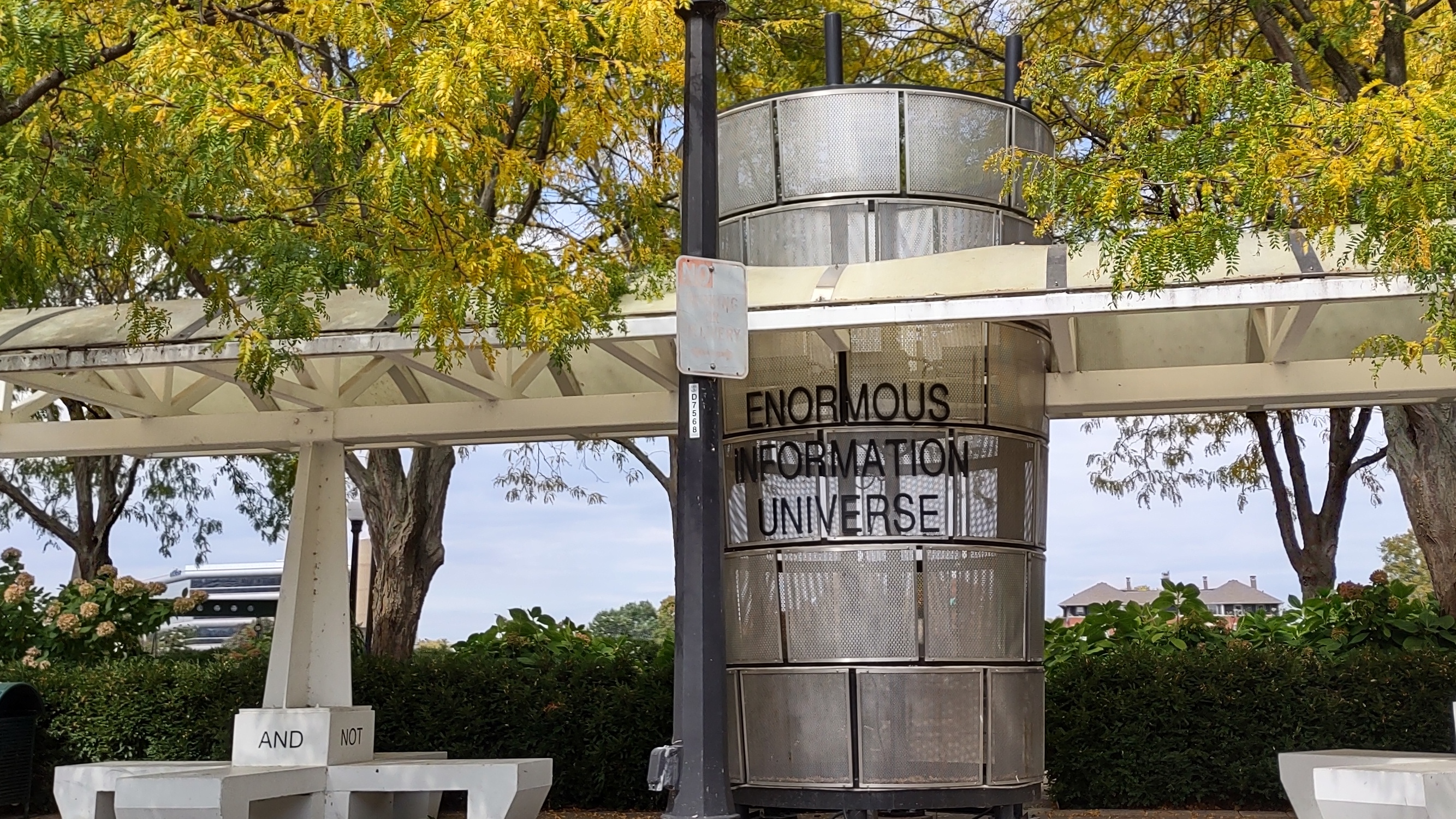
And here in downtown Dayton, we discover the name of our universe.
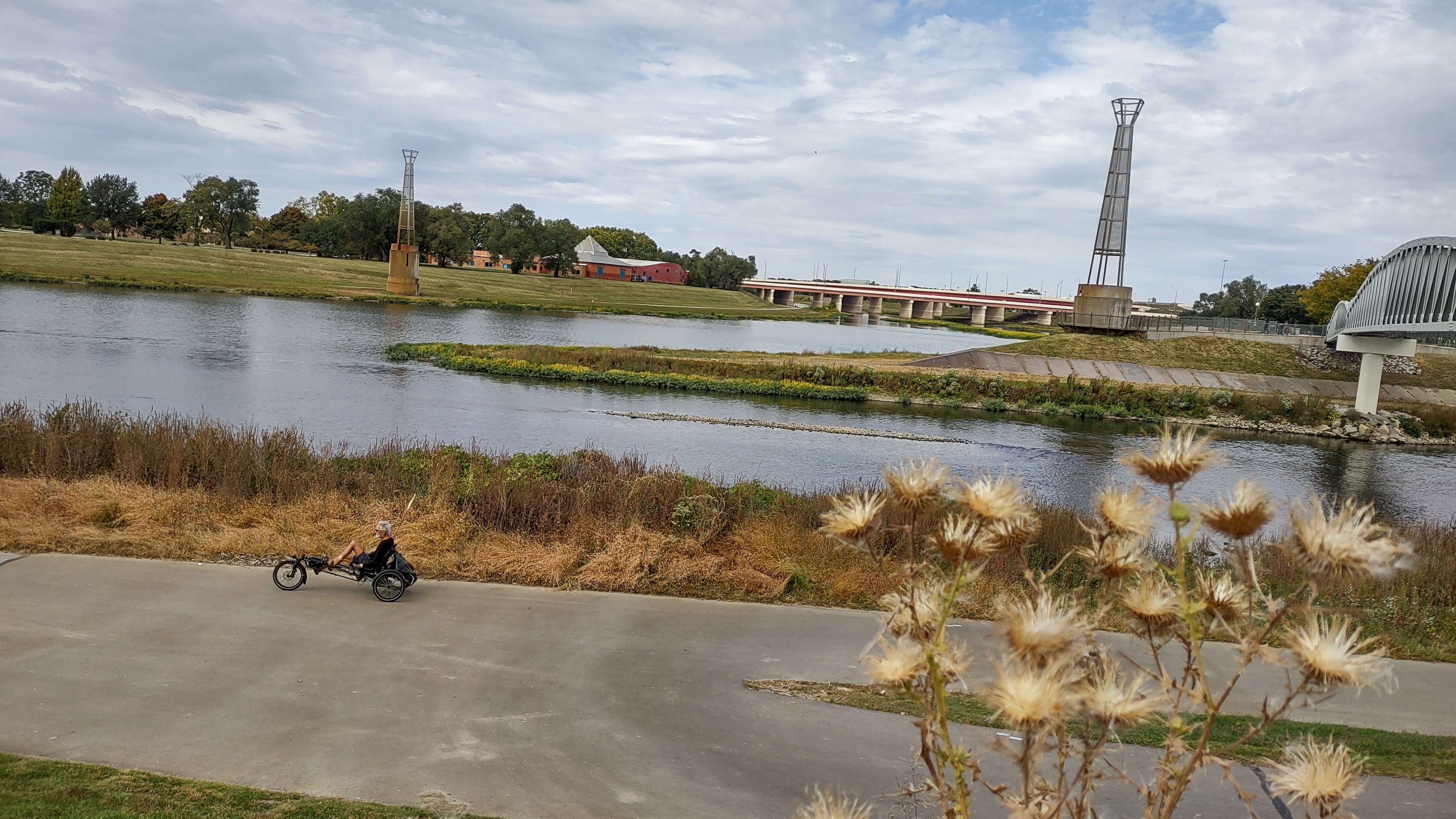
We pause to mark the joining of the Mad River to the Great Miami. The hardwood forests teaming with game, deep black soil, and bountiful rivers brought peoples of the world pouring into this rich valley.
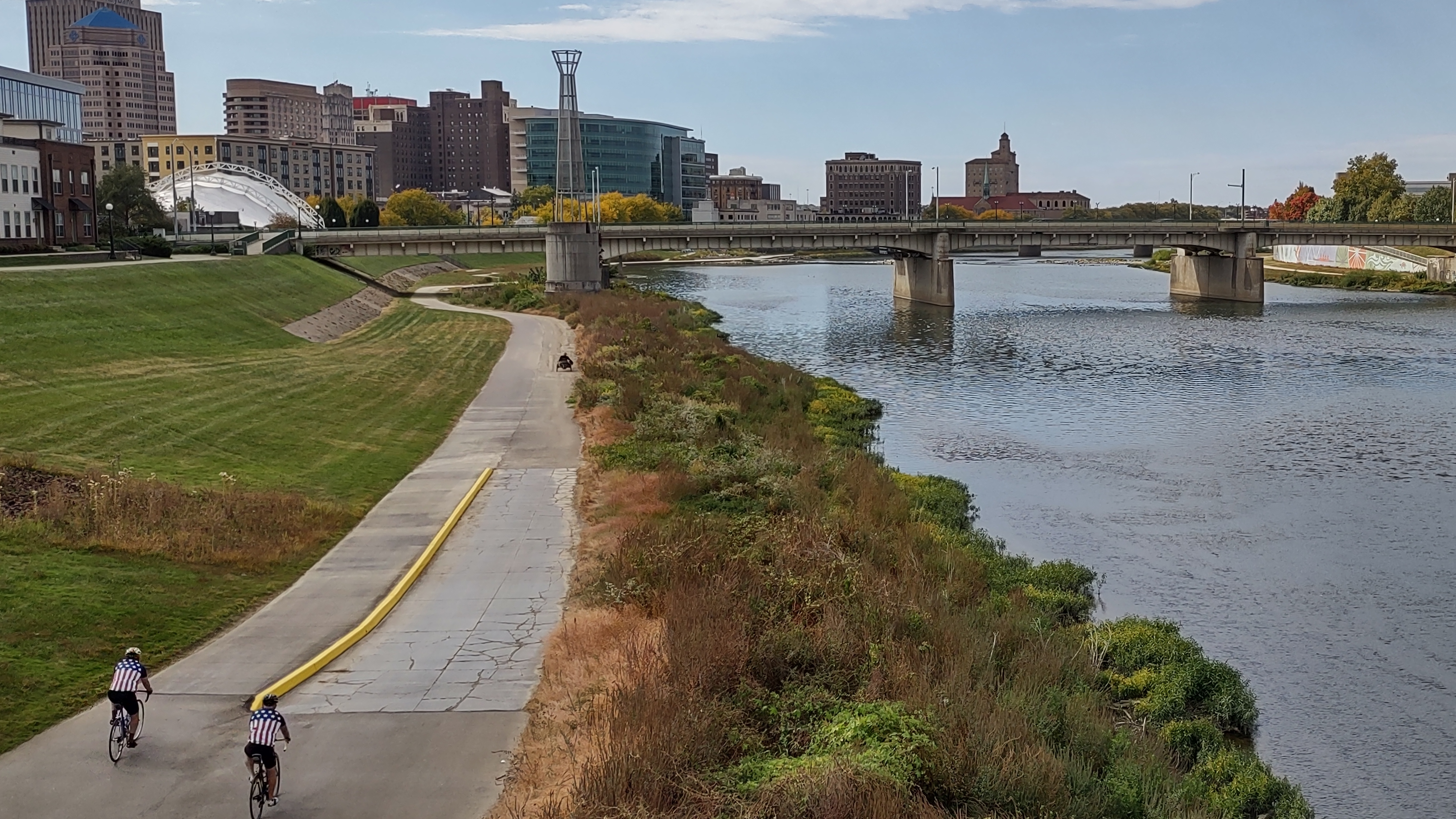
Where rows of canoes once banked, and thin columns of smoke curled lazily upward from camp fires, superstructures jostle and crowd for a glimpse of the shimmering waters which reflect only the sky. Like the planet itself, Ohio country sways under the weight of railroads, highways, housing developments, apartments, businesses, libraries, schools, stadiums, hospitals, factories, office buildings, and all that modern Two-leggeds need.
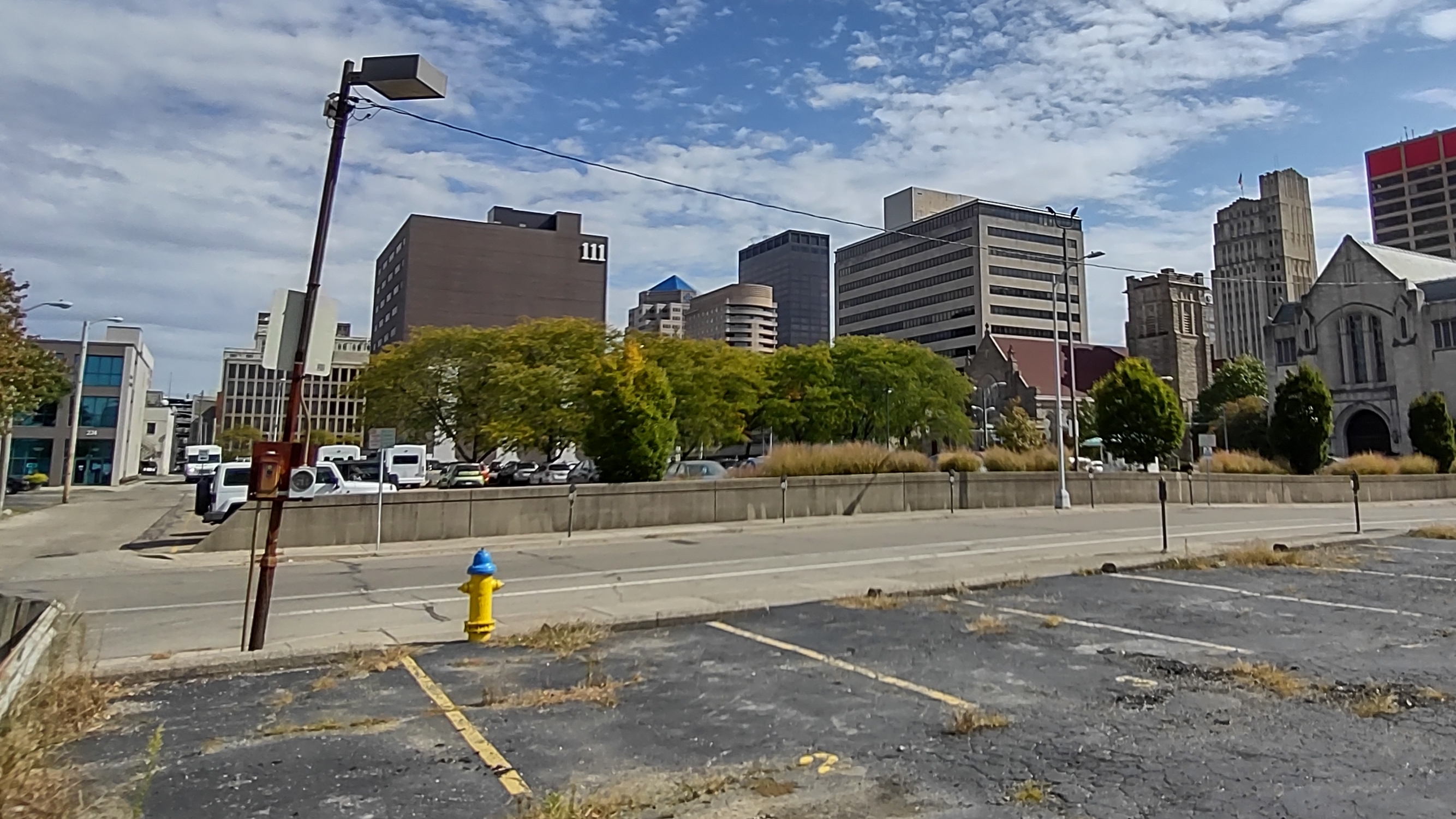
Our coordinates return us to a pond full of parking lot, with mountains of stone holding a cache. Somewhere.
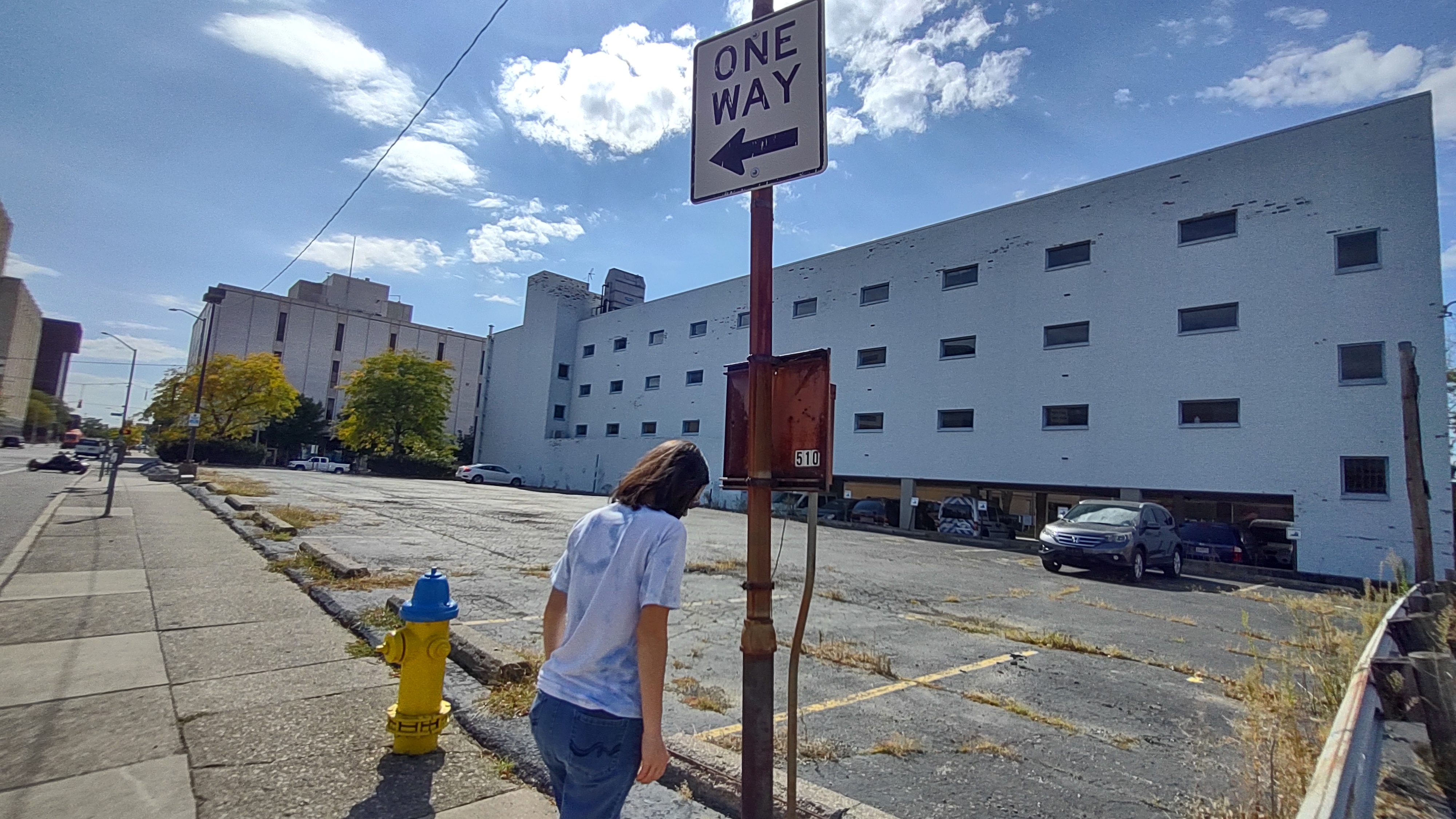
Looking up and down and down some more, we wonder why the cache name is Numbers.
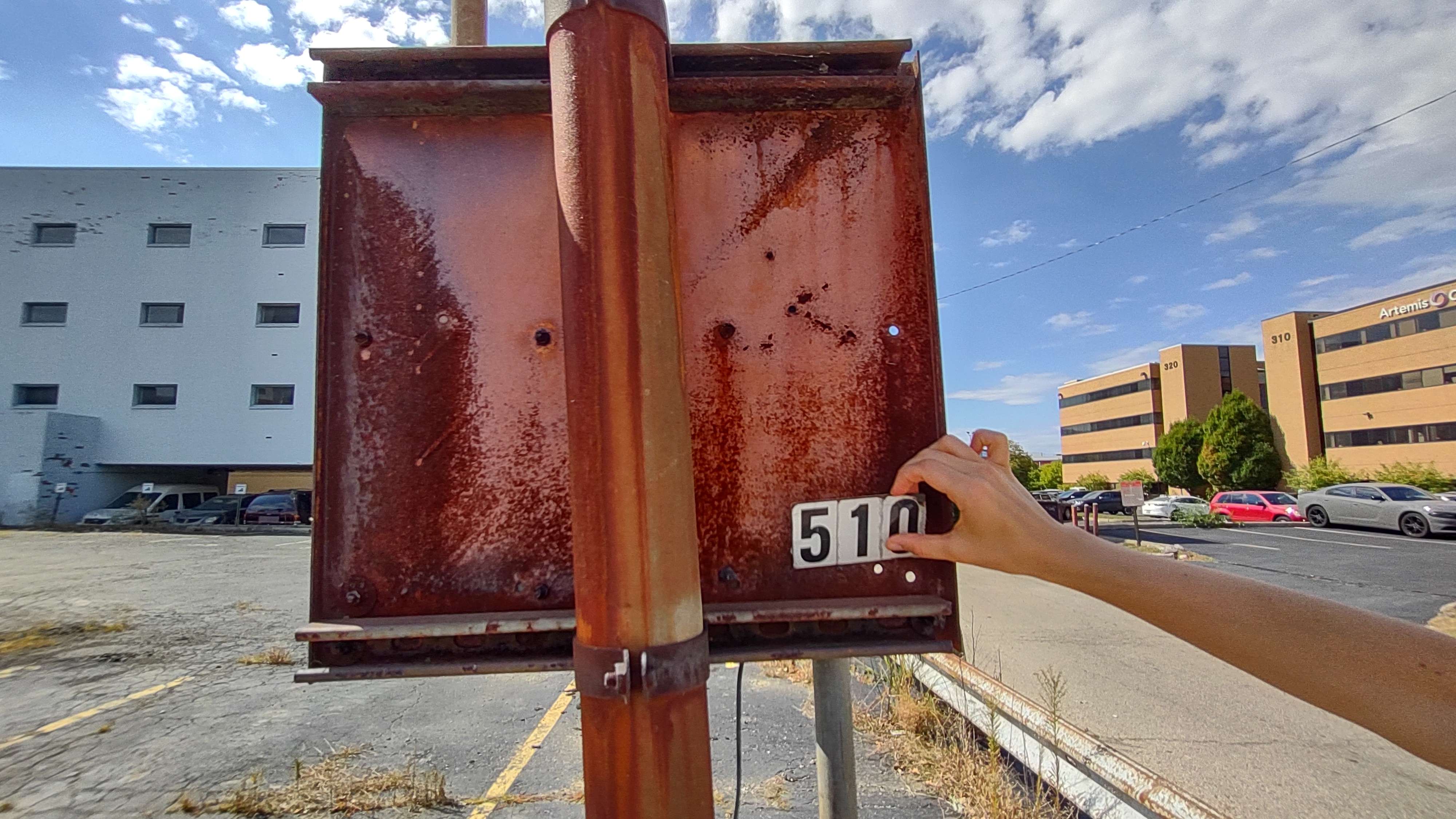
Nothing more satisfying than a sudden sweet surprise.
-
Extractions
We are setting our sights for east Dayton, where Cache Owner VPPLAYER challenges us with an extraction, hopefully not an abstraction, definitely a welcome distraction.
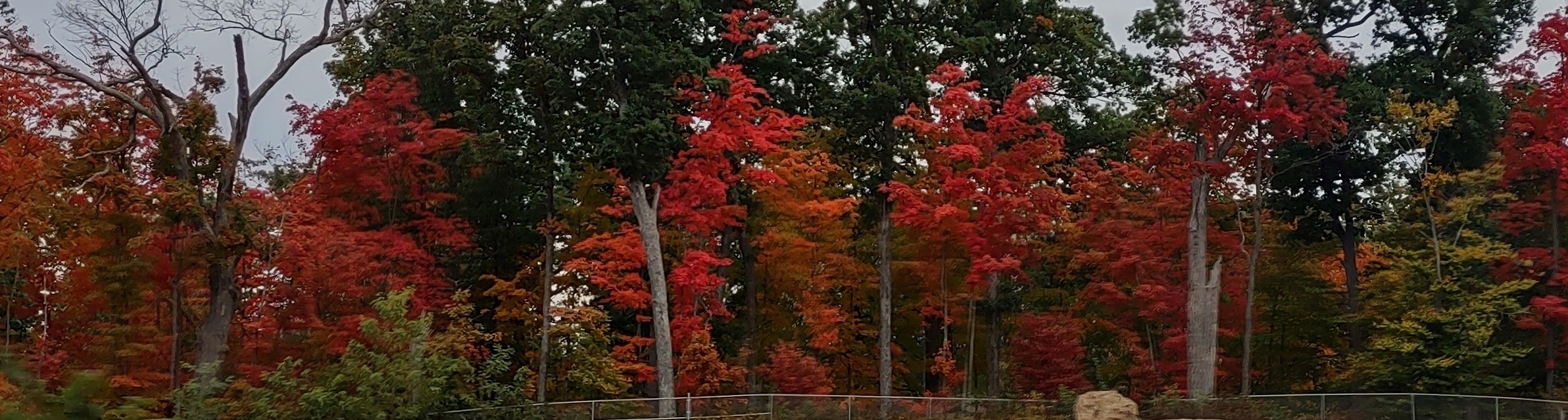
Ruby reds along the roadside resonate with royal radiance.
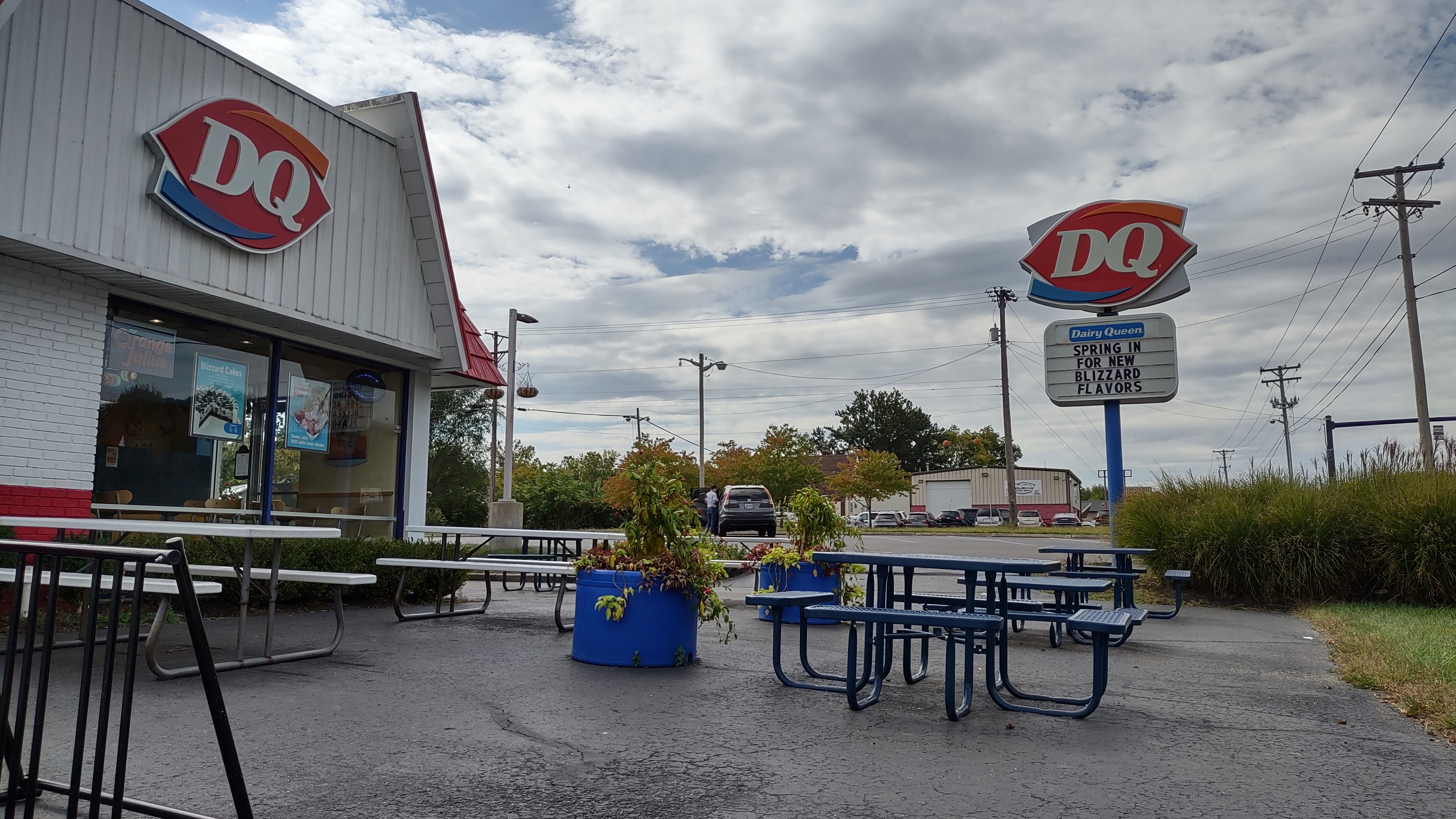
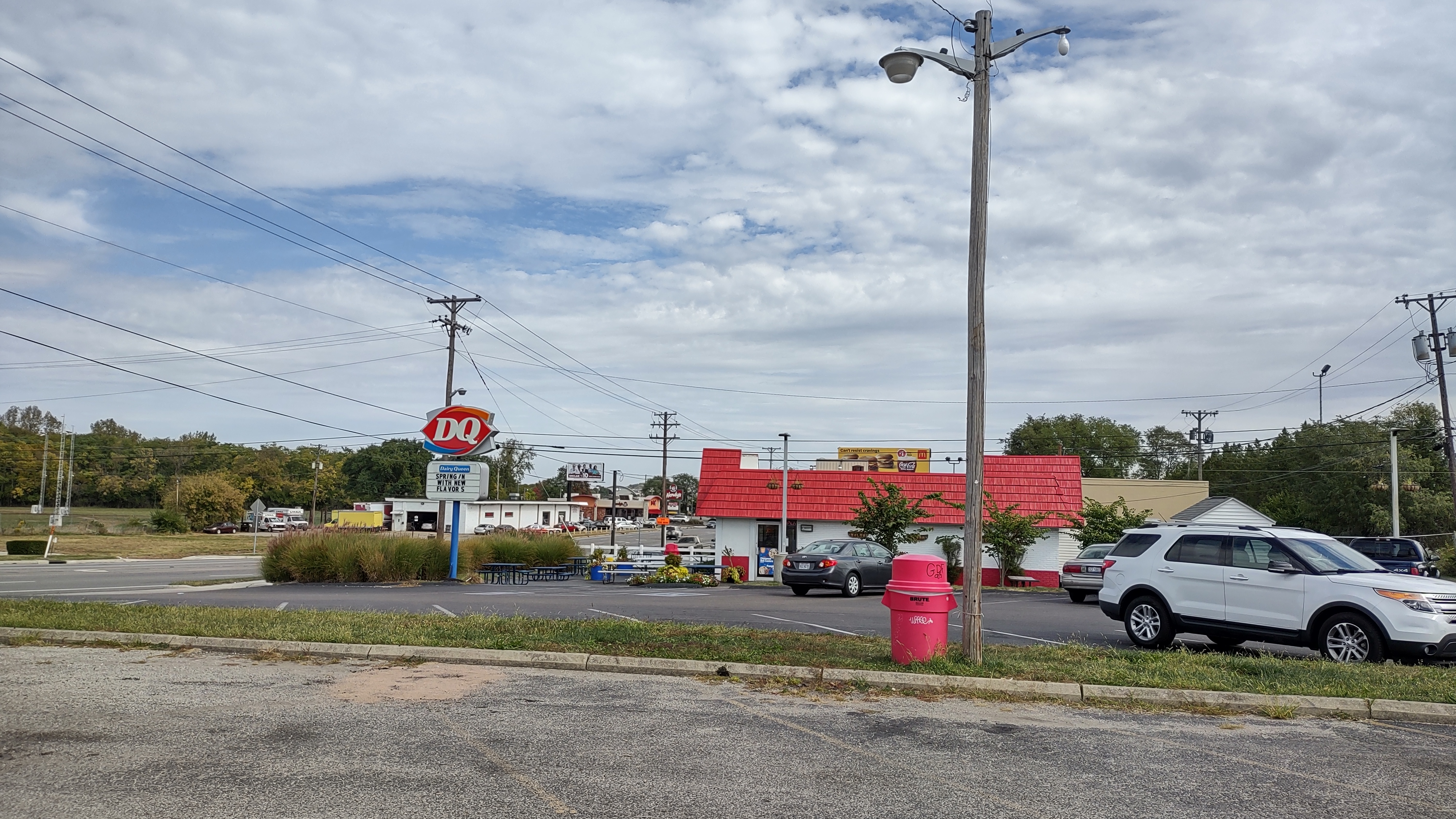
Our GPS lands at the DQ – Dairy Queen. Home of all sundaes, shakes, banana splits, blizzards, and the quintessential curled vanilla cone. Suddenly threatened with meltdown overnight.
Like children on the playground shouting out rules for a new game, power brokers shifted the boundaries on societal frameworks. Resulting collisions pushed back.
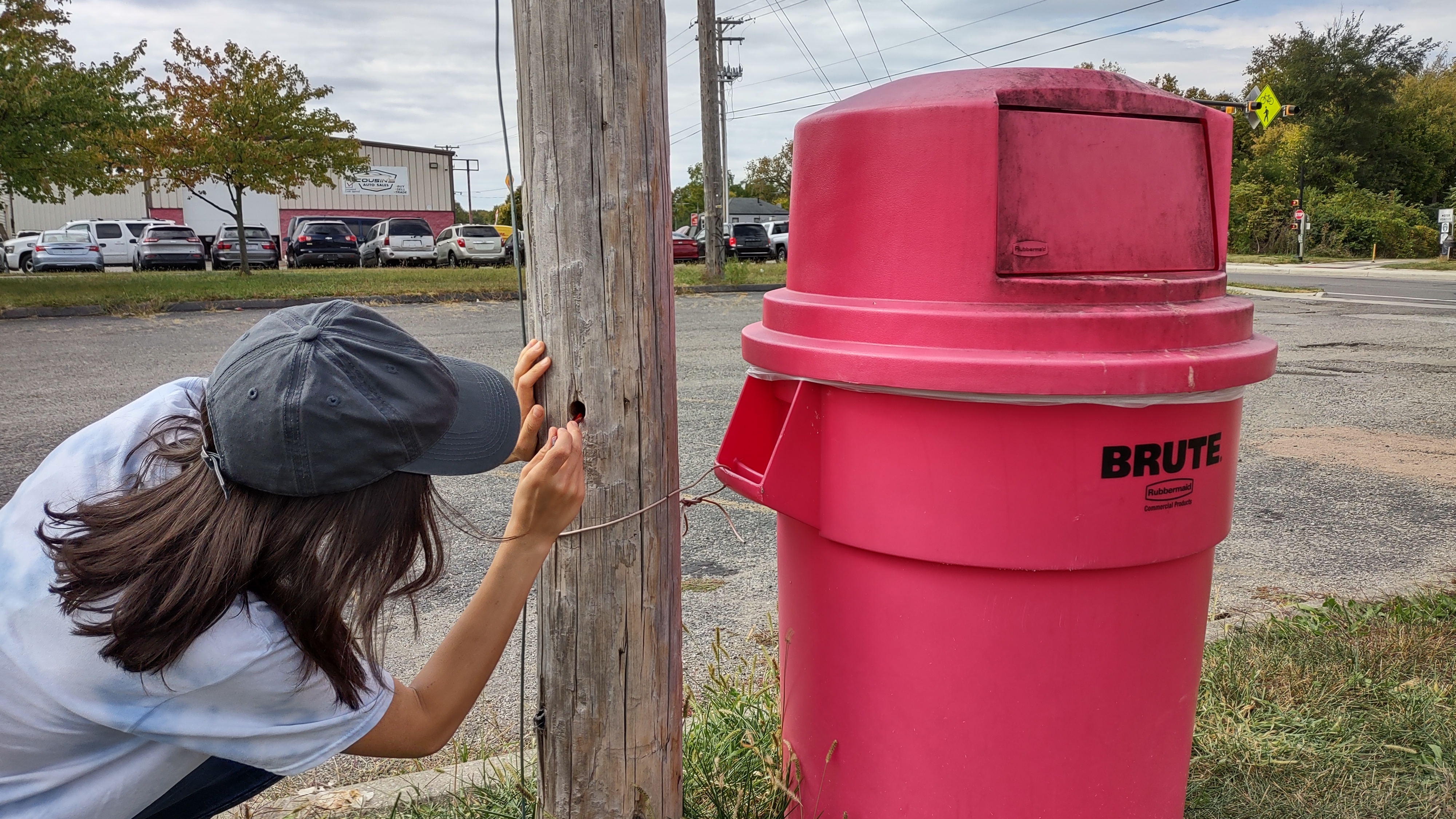
We are extracting.
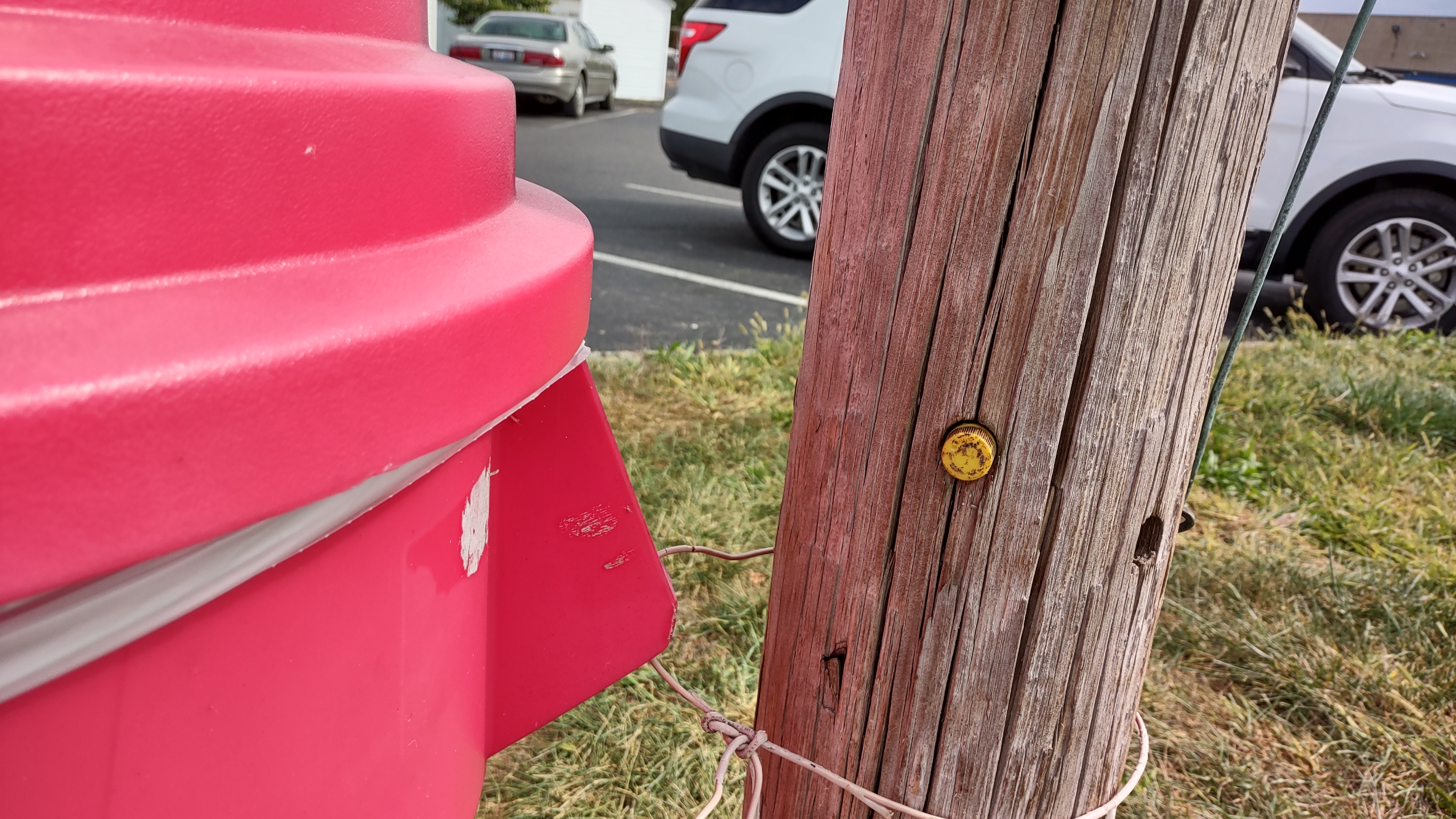
Even lamp posts are getting smarter.
-
Harshman Cemetery
Down the road from the Air Force Museum is Harshman Cemetery, and Cache Owner goltzene’s hide.
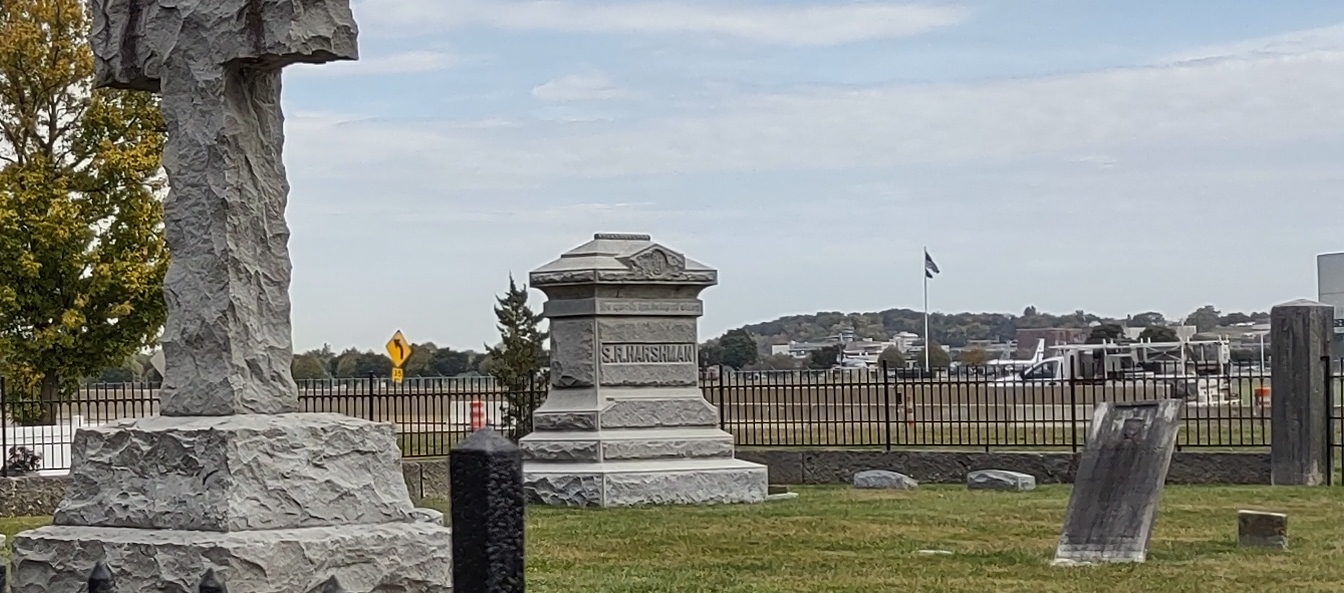
Our cache description says that Mr. Harshman paid $30 for forty acres of rich Ohio farmland. He set up a copper still in 1814, and sold whiskey, at a time when the neighboring Shawnee and Wyandot were fighting to save their youth from alcohol addiction, relentlessly marketed by traders and settlers. With those profits, Harshman opened a warehouse to transport farm products on canal boats bound for the eastern cities. Soon he was representing the county in the Ohio Assembly. When he died in 1850, he was a bank president, the most profitable of financial ventures. His grave pulls the quilt of religion snugly over his life, yet even that coverlet cannot conceal the opportunities and advantages which were shared by some, at the expense of others.
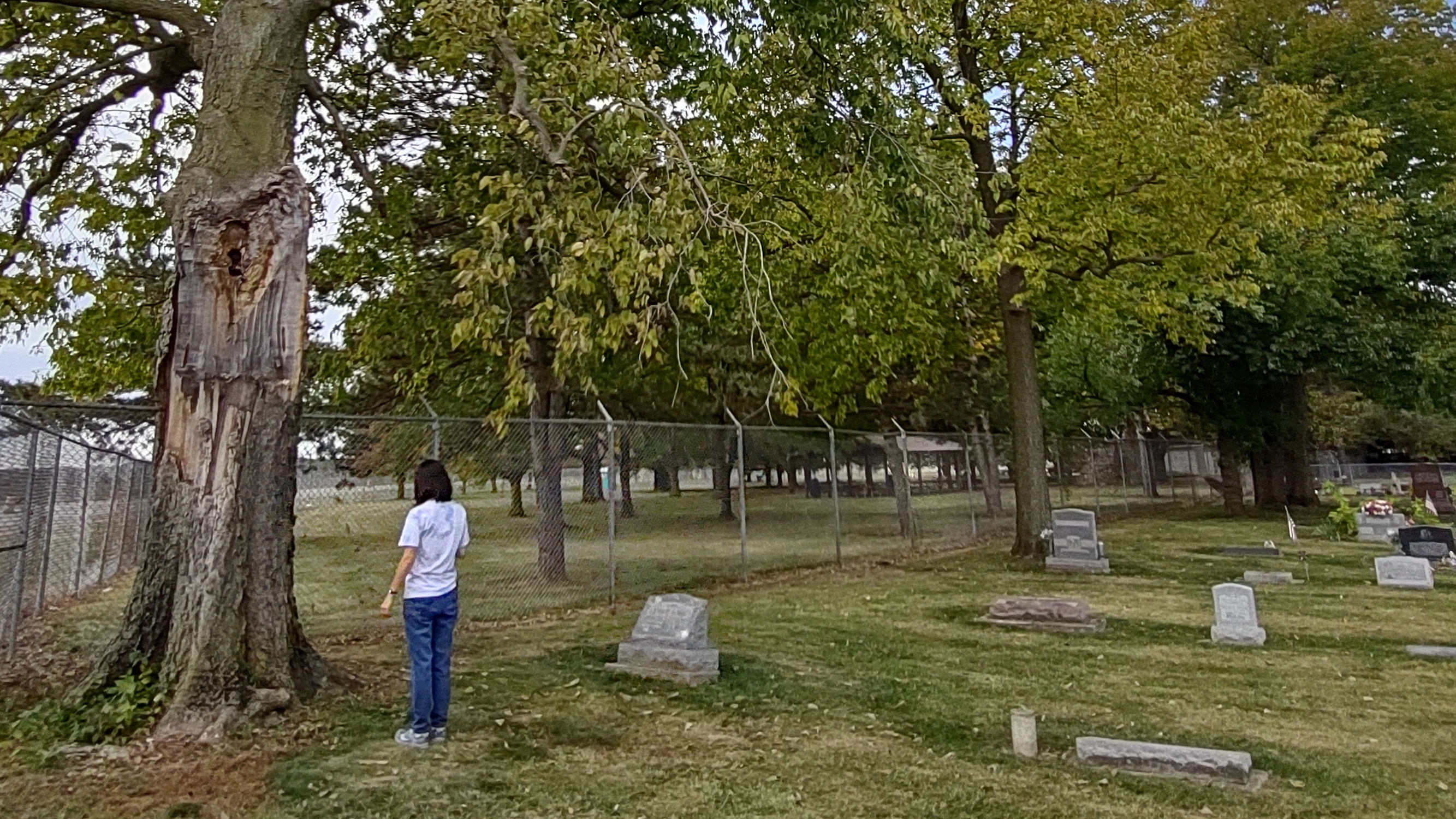
Our GPS lands at a tree in a quiet corner, rugged and silent, bearing a wound inflicted by some bygone storm. All nooks and crannies are explored, hoping that the dreaded DNF is not just around the corner.
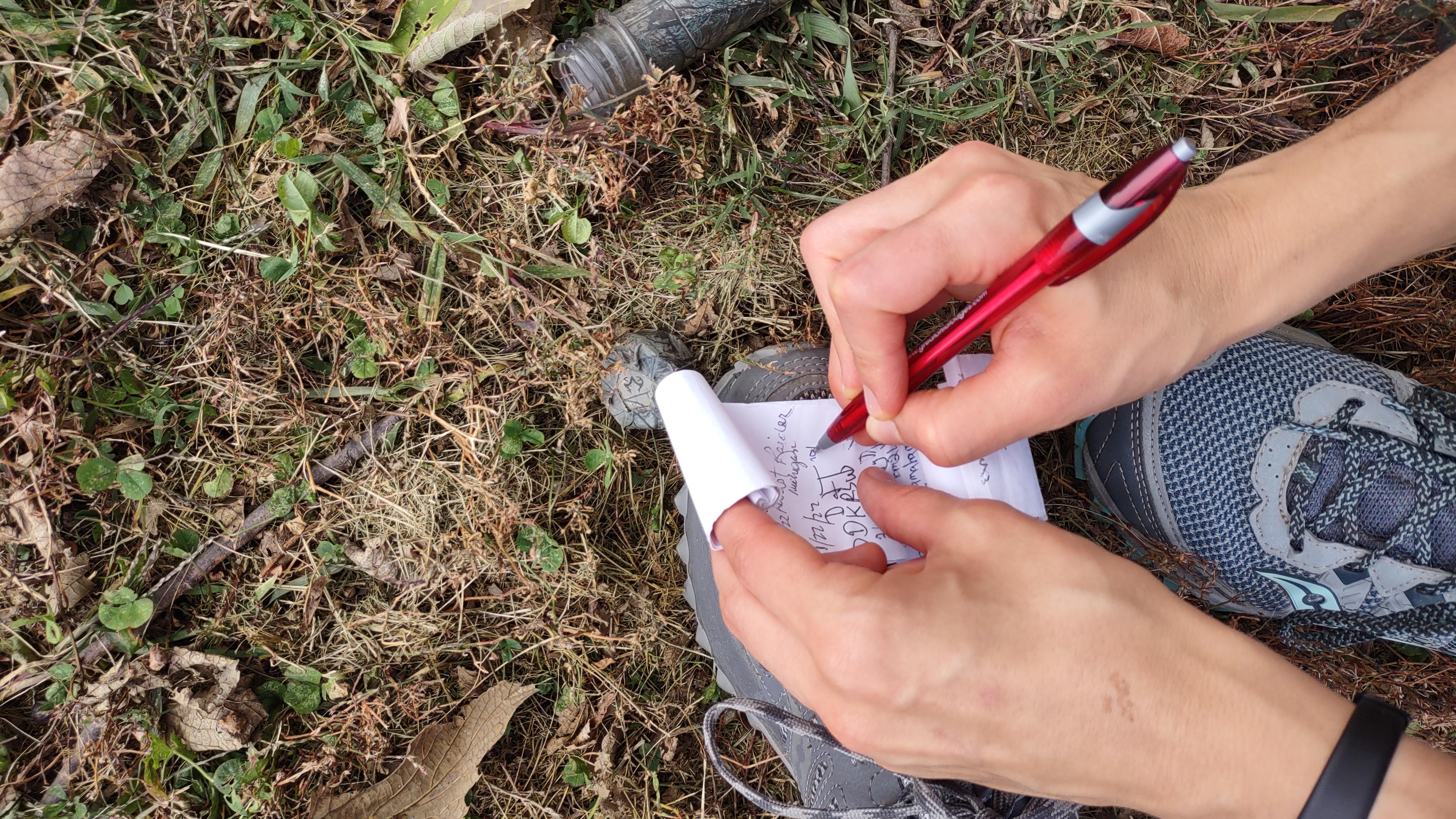
And there it is, sweetly cooperative.
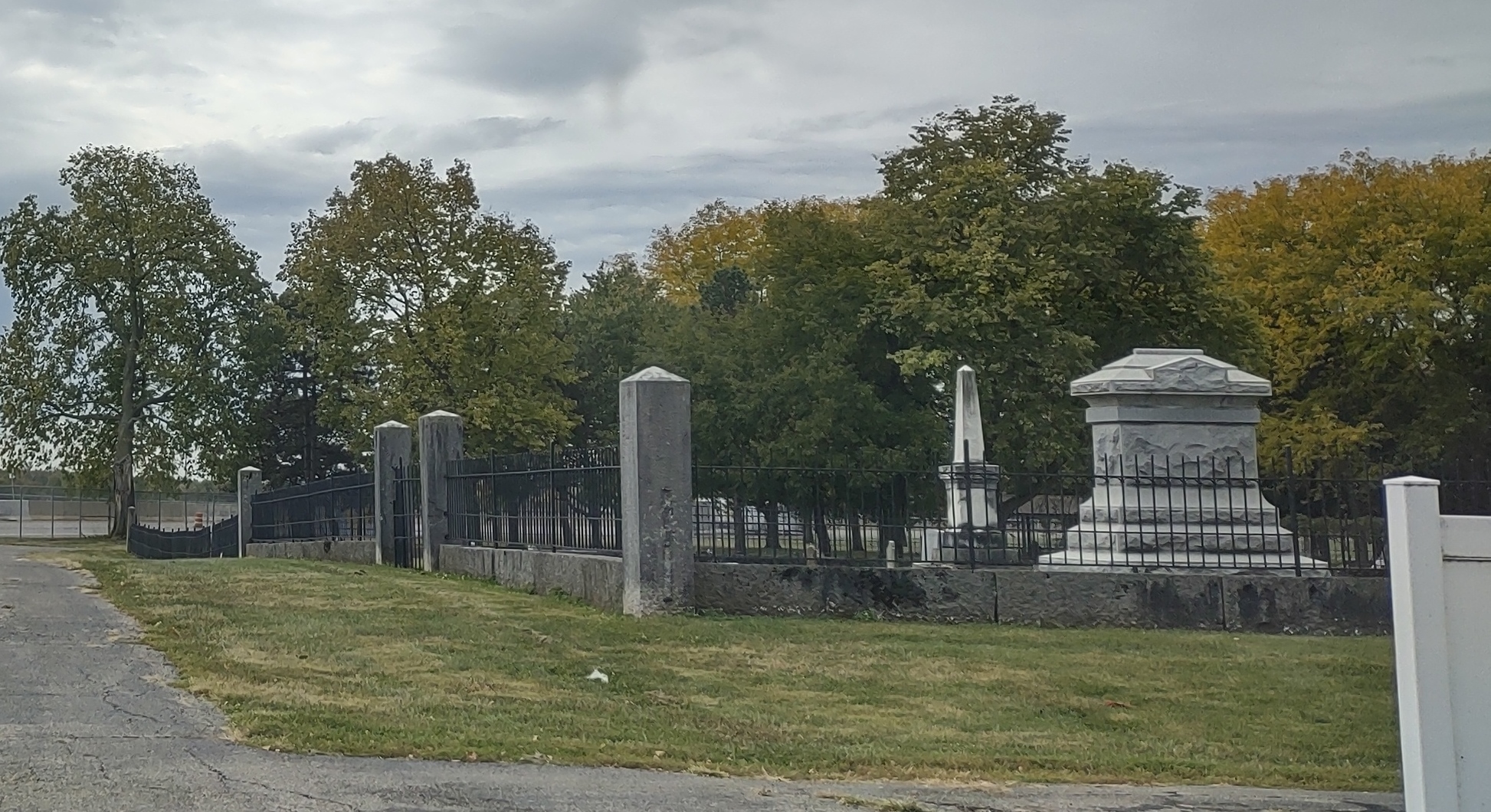
As we pause to eat a car lunch, we hear lawn mowers descending on the tiny cemetery. Two Mugg L. Guys on industrial mowers circle around our vehicle. I can hear the conversation, “Hank, Albert, get to the cemetery, there’s some aliens down there, I saw them pacing around funny-like, then they wrote a code on something and stuck it right into the tree. Hank, get Albert and get down there.”
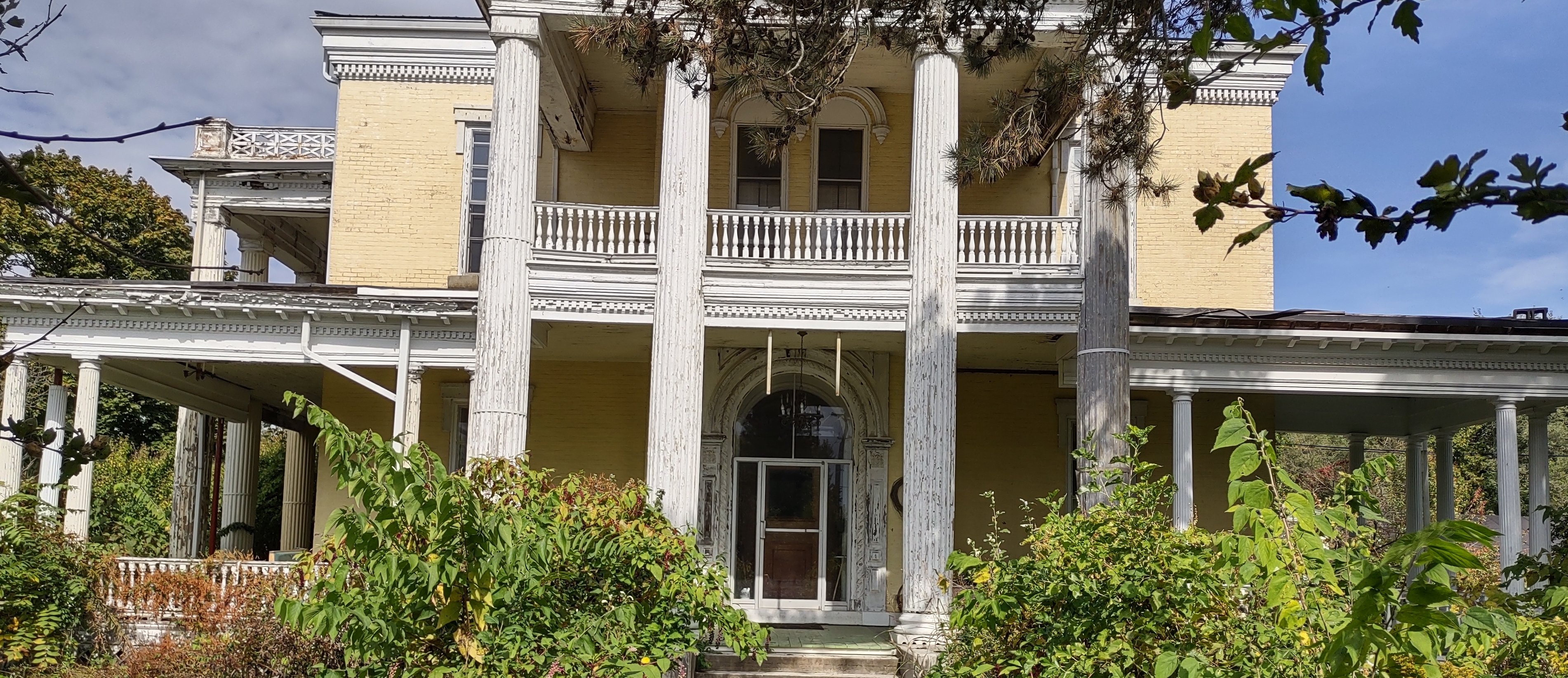
Our space ship lifts off. On a whim, we fly over to the Harshman Mansion, to see Mr. Harshman’s version of West Palm Beach or Malibu. When we arrive, a dilapidated and dying palatial residence greets us. Our cache description finishes the story. The house was sold and eventually owned by investors, hoping to establish a bed and breakfast. Recessions, pandemics, and global competition changed the script.
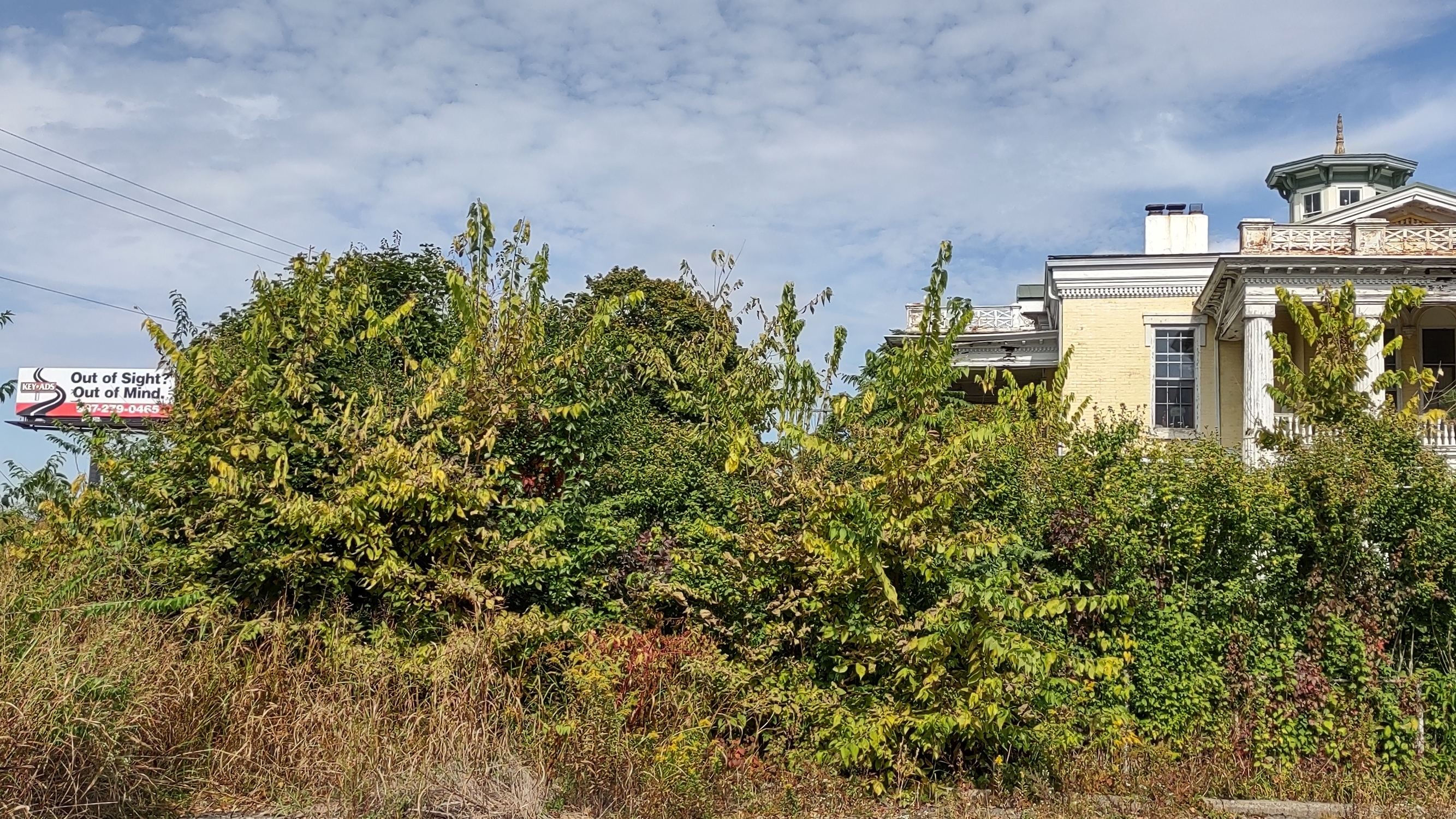
The sign that catches our eye across the highway seems too fitting to be real. Out of sight, out of mind. Those who came to this rich land and made their fortunes have now disappeared in the pages of history.
Skip to content