A boydfamily cache, only six months old, this baby sends out a howl.
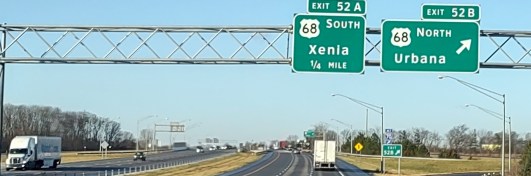
Ranking as an Xtra special place with an Xceptional name, Xenia calls.
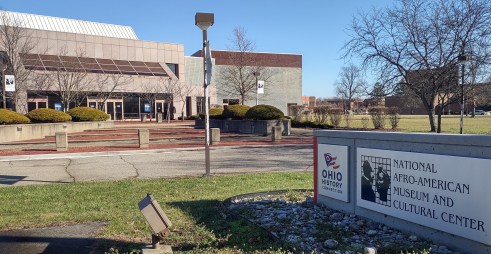
Route 42 and Brush Row Rd magnetically pull us into the National Afro-American Museum and Cultural Center.
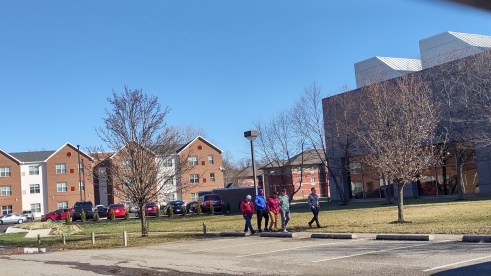
Set in the middle of the Wilberforce and Central State campuses, it will illuminate and elucidate things we need to know. For example, when Spanish explorers arrived on this continent in the 1500s, they thought it was fine to use superior weaponry to compel Southwestern tribes into forced labor. Like any gulag, guns held power of life and death.
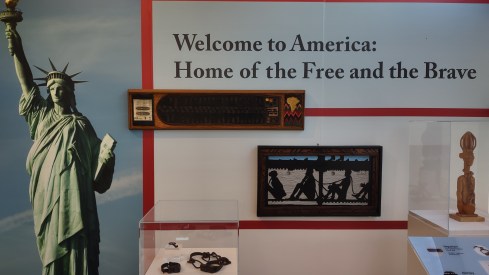
In 1619, 20 captive Africans were turned over to paying customers in Jamestown, Virginia. The floodgates opened for European settlers to traffic humans as a cheaper, more plentiful labor source than contracted workers in the servitude paradigm. Some Africans managed to come as indentured servants. They eventually earned their freedom, buying their own land and, in some cases, also using captive labor.
Tobacco, rice and indigo plantations from Maryland to Georgia gradually rebranded to cotton. As the textile world went industrial, only captive labor could keep up with picking all that cotton. Northern states outlawed human labor trafficking by 1808, but Southerners kept the whole thing going. By 1860 there were 4 million Americans living in captivity.

Fully aware of the injustice of their situation, Black captives fought back. Escape and passive resistance two-stepped with music, songs, prayers, tap dance, and other forms of a brutalized humanity unwilling to relinquish identity.
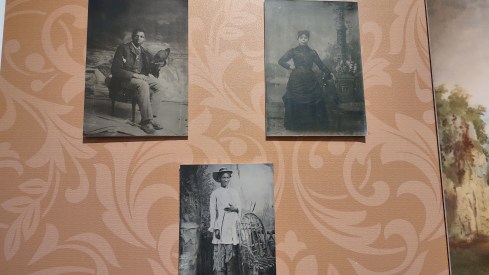
With the same cotton used to exploit them, captive Americans created unique ethnic clothing, and thus became owners, a defining factor in American identity. Photographs returned whole personhood to those labeled 3/5.
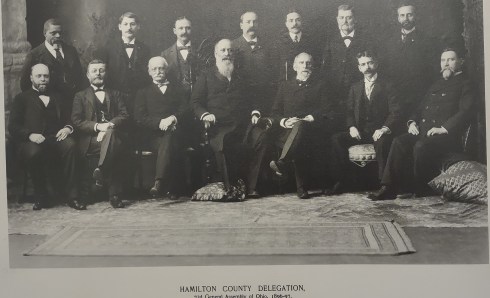
Black communities sprang up in northern towns, including Wilberforce University. In post-Civil War Ohio, William Parham, Benjamin Arnett, Jere Brown, and Robert Harlan were elected to the Ohio General Assembly, chipping away at the deconstruction of segregation and discrimination.
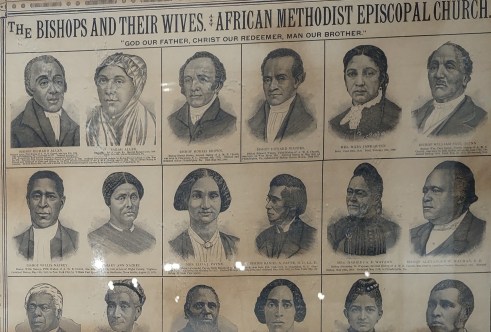
The African Methodist Episcopal Church, founded and populated by Black Americans, eradicated illiteracy and catalyzed religious and cultural definition in emerging Black identity. Like the slow blending of European immigrants post-Revolution, strands of divergent African nationals merged into a shared post-Civil War culture.

When President Hayes removed federal troops from the South in 1877, Reconstruction imploded, and mob justice returned.

The NAACP was founded and Black-directed change took root at Wilberforce University.

As the nation moved into the Roaring Twenties, Black musicians spoke out through jazz, a musical conversation incorporating Black voices into everyday life. Ragtime and blues followed suit, creating unique American expressions from full-fledged American souls. The rhythmic poetry of Langston Hughes echoed cadences of Black music and shattered innocent ignorance of Black experience.
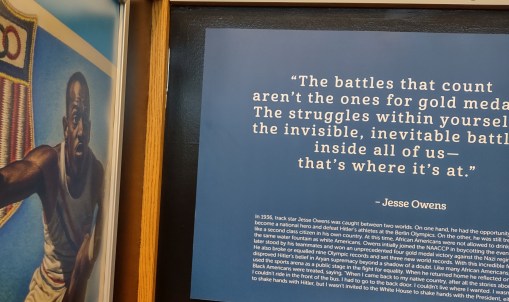
The Great Migration of the 1920s and 30s brought Black musicians and athletes into a northern audience, which enthusiastically welcomed the entertainment, while keeping doors to housing and equal access firmly locked.
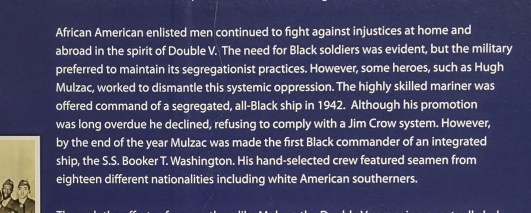
By 1945, as WWII drew to a close, more than a million Black men and women had logged military service.

They returned home to inadequate schools, homes, and neighborhoods. The world of segregation reverberated thunderously and embarrassingly in the face of willing blood and sacrifice.
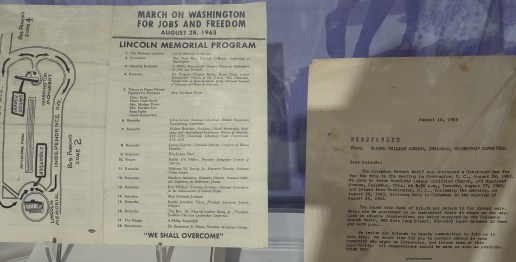
Dr. King’s March on Washington in 1963 hammered the words of freedom, “We shall overcome.”

Black artists continued to fight for equal footing in defining their own experience as an authentic thread in the American tapestry. Breaking down doors to prosperity and political engagement became the next threshold, led by rap and hip-hop musicians.

Law enforcement, prisons and court systems, and economic oppression worked against young Black Americans. Two terms of Black presidential leadership did not do enough.

In the shadow of Colonel Young, our museum guide gifts us with history, shared humor, and the difference he is making in this one small day.
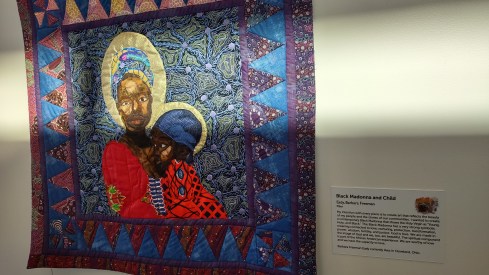
In a sudden shaft of sunlight, Mother and Child ask us to do the same.
 Two miles north, in the slumbering graveyard marked by our coordinates, Americans rest together. Stevensons and Robinsons sort out the strengths and satisfactions of shared history within diverse culture. Seventeen years after placing the first hide in this cemetery, the CO honors a second one.

Cache notes share the history of Oscar Robinson, who served in the Korean War, then came home to work in the Wilberforce Post Office. Like 9/11, his tomb marks a memory forever attached to a number — 4/3/74. An F5 tornado swept through Xenia, devastating 3,400 homes, businesses, and factories. Moving east, the funnel cloud ripped over Wilberforce and Central State University, leaving five fatalities. Oscar was 44 years old.
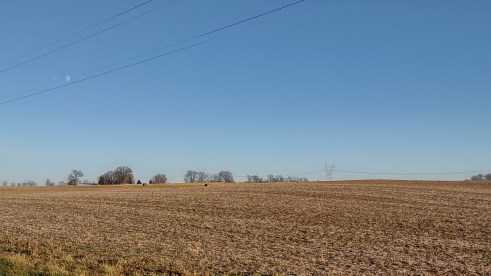
Buckeyes from all over Ohio spent the next weeks and months driving through the flat farms of Greene County to clean up and rebuild. Calamity transformed to community. Today, each tornado warning sounds an opportunity to move in and put things back together.

The guardian log holds the names of those who have walked these shadows of the departed. Our tiny rootling joins that soil. We quietly make our Xit.
 OH Love Of Geocaching