Fifteen years ago, Cache Owner hhhmmmmm proposed a riddle. Hmmmmm.
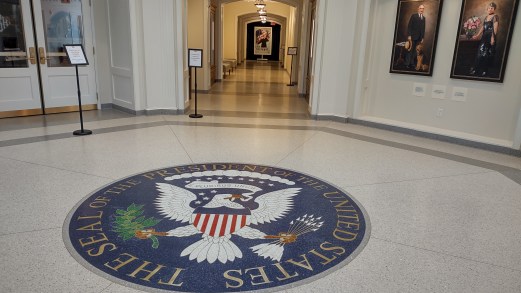
Our geo-zero lands in Marion, next door to the Harding Presidential Site. Starting with Mr. Grant in 1869, seven of the next eleven pairs of feet resting on the floor of the Oval Office would walk there from the soil of Ohio. Mr. Harding was the last, exactly 100 years ago. As Americans feel the need for law and order on the x-axis pull against the abuse of power for personal gain on the y-axis, the trajectory of Presidential influence rises higher and higher on the national graph.

Mr. Harding’s long years of unfaithfulness to his wife, his cabinet appointments obsessed with self-enrichment, and his restless hunger for changing the now to something-new-and-different will succeed in setting the tone for the next century of American politics.

Warren’s great-grandfather begins as a farmer, passing down his farm tools and his Bible.

By 1883, 19-year-old Warren owns a newspaper. As frontier grandchildren become literate readers, the potential for shaping mass national culture sprouts a seedling. In Marion, Warren’s newspaper pushes for street lights, city parks, and paved brick streets. At age 23, Warren marries a wealthy single mom, ready to back Warren’s newspaper business with her father’s hardware and real estate fortune. Ten years later, he is serving in the Ohio House and then as Lt. Governor of the state.

As the first airplane takes off, and the Titanic sinks, Warren wins a Senate seat, moves to Washington D.C., and takes over the RNC. After ten rounds of voting at the national convention, he is nominated as the Republican candidate for the 1920 election cycle.

Following the examples of Garfield, Harrison, and McKinley, Warren runs his campaign from the massive front porch of his Marion home. It is the first Presidential campaign with large amounts of cash funding, professional advertising, and frequent celebrity fireworks. Movies and newspapers have brought actors, athletes, and military heroes into homes across the nation, as mass culture blossoms into a sapling.

Trains bring these influencers to Marion, twice a week, before an admiring small town and the eyes of the nation. Al Jolson tells the nation what to sing, “We need a man to guide us who′ll always be beside us, Warren Harding, you’re the man for us.”
As entertainers enter and leave the spotlight, their own personal connection to small town life is lost. Celebrity scriptwriters choose the next cultural boundary to bend and break. Warren gives love back to the hard-driving cultural elite. He agrees that people should not be told what to do.
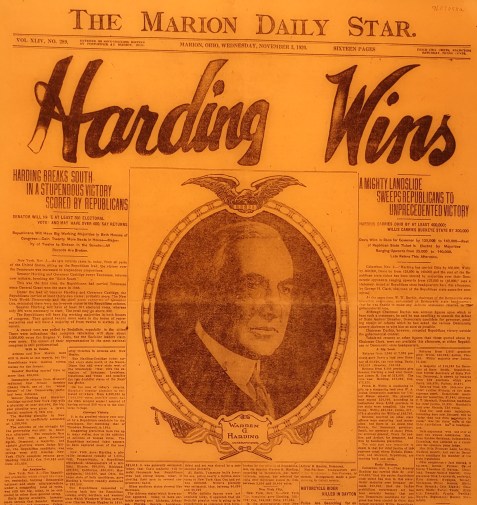
In the election of 1920, city voters outnumber rural Americans for the first time. Millions of women vote for the first time. Warren wins in a landslide of electoral votes: 404 to 127. At his 1921 inauguration, Warren speaks into the first microphone, to an astonished audience of 125,000 who can hear him now.

Roads for automobiles, entertainment for war-traumatized Americans, aviation start-ups, and any new business idea you can think of fuel the rising stock market and relentless pursuit of wealth through the 1920s. The graduation of the letter E from electricity to electronic will take a hundred years. In 2020, electronic commerce, mail, drives, and all manner of Internet E’s wake us up to a brand new day. In 1920, electric motors, appliances, assembly lines, and ultimately radio and television transmitters launch a brand new planet.
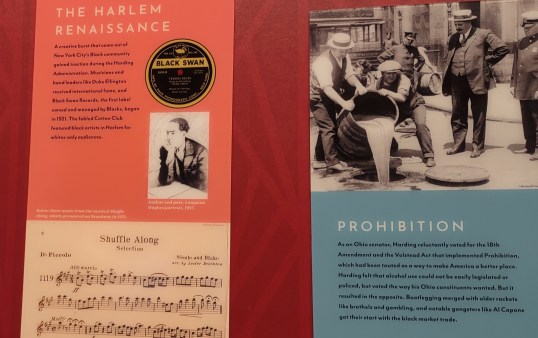
Industry and government have no trouble seeing the benefits of turning the whole country into one mass audience. Rural culture will be reached and brought into the next wave of spending and boundary-shifting. Funding fertilizer pours into the roots, as our tiny seed of mass media grows into a full trunk, branching across a nation.
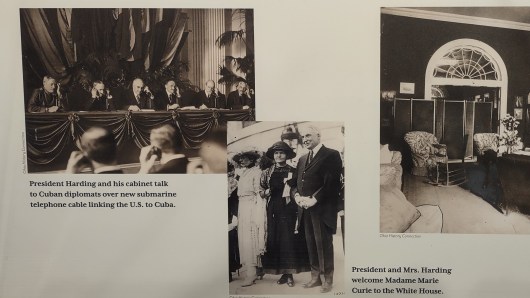
Within 15 years, two out of every three homes has a radio. Suddenly, if you don’t have it, you are behind the times. Talk shows, soap operas, games shows, sportscasts, and comedy hours bring families in from the front porch and backyard to sit at the feet of the far-away voice. Warren himself is the first President broadcasting live into the homes of waiting Americans.
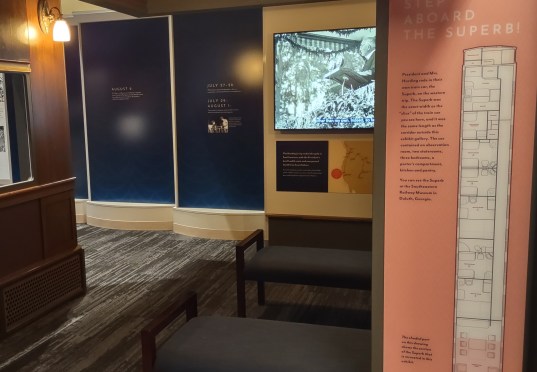
In 1923, Warren takes a train trip across America to visit the Alaska Territory. Still recovering from an extended illness, he relapses in San Francisco, and there he dies. A shocked and grieving nation mourns the Presidential train as it winds back across the towns and farmlands, where his name was checked on their voting ballots.
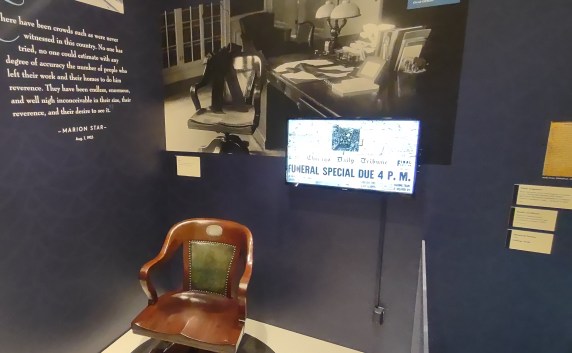
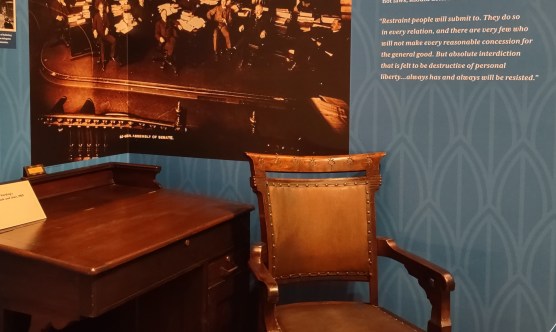
The chair in the Oval Office is brought home to Marion. Firestone, Ford, and Edison join the line of mourners. A President who seemed fit and hearty, after the long invalid months of Woodrow Wilson, staggers and falls.
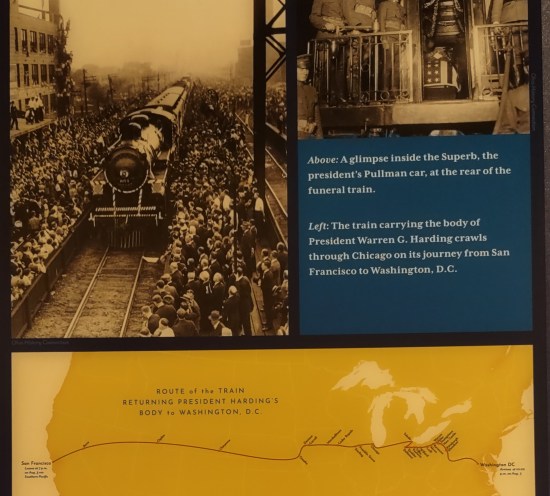
From California to Washington D.C., and back to Marion, Americans show up to acknowledge the Presidential office, and the fragile balance of power it holds over their lives.

We find the Harding Home and follow Warren’s footsteps across the yard. Visitors are still received, and still come, to learn and understand.

On the legendary front porch, we look for traces of footprints headed for the White House. Like Mr. Bush and the Gulf War, Warren’s star rose and fell with the tides of power and opinion. Stories of scandals during his time in office sprang to life after his death. A daughter fathered by Warren stepped forward. One hundred years later, W.G. would fit right in.

A national campaign raises $738,000 to shelter the body, in a monument rivaling Mr. Jefferson’s.

Mr. Hoover isn’t wrong. Our honor for those who have walked across our national stage is freely given.

Down Delaware Ave and across Barks Rd, our cache is in a Rather Natural Pile of Trash. Yes! We hear you!

Our TOTTs relish their role in the geo-enterprise.

Drying the tears of a lost cache and returning it home adds a warm feeling to an already sunny smiley.
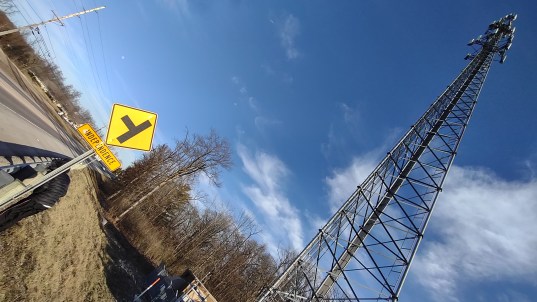
Far above, we hear something more. The silent tremor of radio waves exploring, extracting, and expressing data to waiting moguls. Battered and scratched, the sign for independence turns off just ahead.

On our way home, metal starkness stares at soft pink lullaby.
 OH Love Of Geocaching