In 2014, Cache Owner Nye-St-Mafia let loose a challenge with an avalanche of discoveries. We will find them.

On a bright, happy, wintry day meant for seeking out treasures, we follow the geo-voice north.
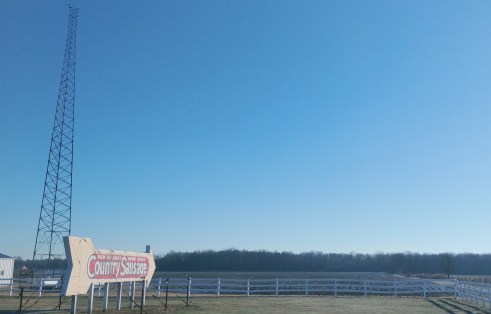
Mom Wilson’s Country Sausage shares the pasture with its tall, wiry neighbor. A third-generation business walks the tightrope of passing heritage on in the new frontier of screen-defined reality.

Our geotour lands an hour north, and 80 years back. In 1942, Marion residents looked out the window and saw the same tsunami of a rapidly changing world. US Army engineers displaced owners from 640 acres of land to build a supply depot, transporting food and munitions on the chessboard of World War II.
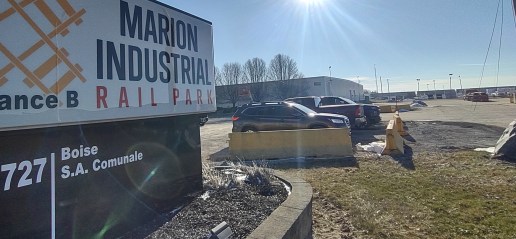
In 1989, the land sold for 1.1 million, and was renovated into the Marion Industrial Center. It is now a distribution, storage and manufacturing complex employing 1,000 people, who make things used by peace, not war.
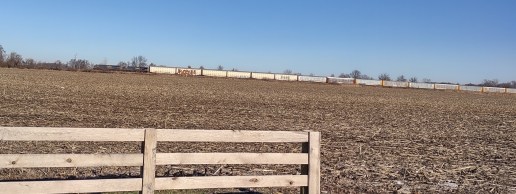
German POWs captured in Africa came to live on this soil, in Camp Marion, from 1944-46. They cooked, cleaned, and did construction and farming labor for 89 cents a day. While they played soccer, or painted, or made jewelry boxes, thoughts of war drifted away like butterflies.
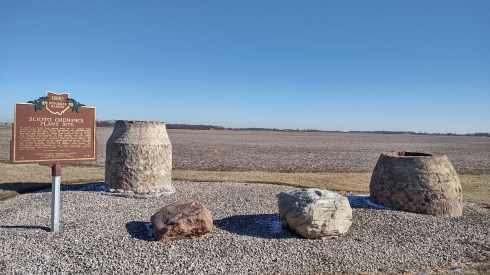
Down the road, a war munitions factory commandeered 13,000 acres from 126 farmers, by right of eminent domain. The Scioto Ordnance Plant Site gave the farmers two months to vacate, with below-market compensation for prime farm land. US Rubber, Atlas Powder, Kaiser Corporation and other manufacturing interests seized the moment. Pawns fell off the board.
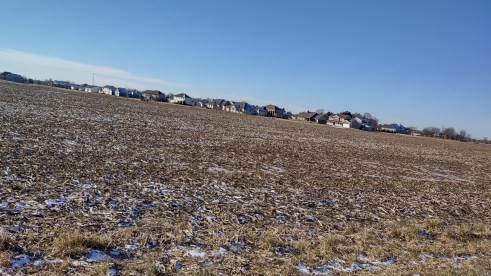
After a year, the bomb and shell factory was closed due to overproduction. Now an airport and housing development sit where bombs were made for far-away lands. 1,100 acres returned to farmland, where they study war no more.
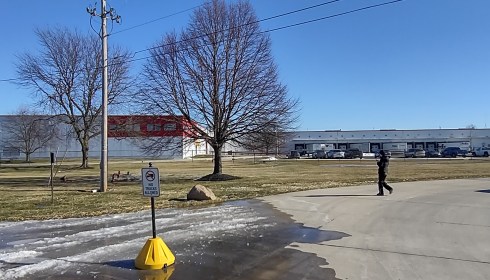
We turn the corner into the winter slush of manufacturing along Cascade Drive. Inventors and assemblers collaborate to keep the world patched together.
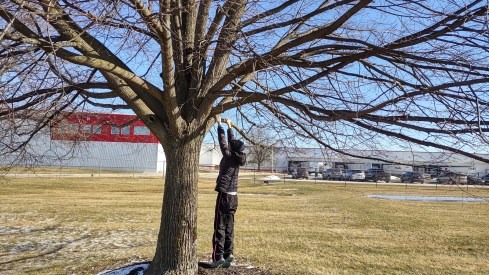
Limbs meet limbs, and proper introductions are made.

We leave our calling card.

The cascade of war is not finished with us. As B.C. turned to A.D., Persia, Greece, and Rome fought their way around the Mediterranean in pursuit of trade, materials, and labor. Powerful business owners captured ever more wealth and land. Small family farms and businesses slowly died, along with local cultures and art.
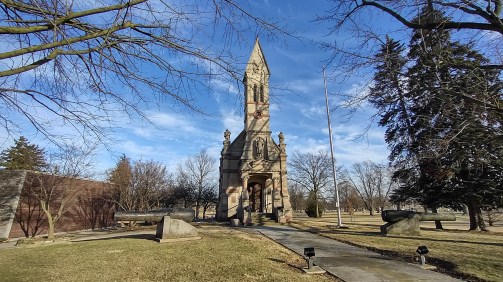
By the time the first millennium reached its one thousandth year, new kids on the block had moved in. Goths, Franks, Anglo-Saxons, Vandals, and Arabs flowed into Europe. At this critical moment, a movement for combining states in one great nation might have emerged, but it did not. Charlemagne, Alfred, the Gauls, and the Catholic Church gathered land into separate and warring nation-states. Life became one chess game after another, as kings and warriors fought endlessly.
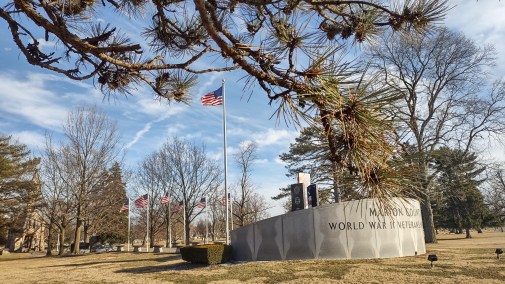
When the printing press went viral, and Columbus landed not-in-India, European farmers, weary of war, lined up for a new life in America, in search of freedom to determine their own destiny and personal beliefs.

Happy to carry their wars into newly discovered continents, powers in the Old World fought for another two centuries, greedy for rights to the gold mine of colonial raw materials. When Napoleon redrew the map of Europe in the early 1800s, no one knew that 100 years later, war would cover the world.
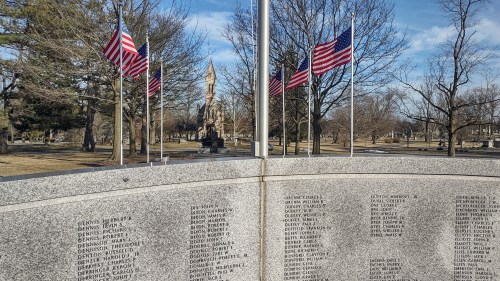
As German Kaisers moved the next chess pieces on the board, pawns from across the sea fell into the crossfire. In 1910, more than 32 million Americans were first or second generation immigrants from Europe. They lined up to return to that homeland and fight the old country for the new. Twenty years later, children of those Americans found they had not yet escaped from the appetite for war in the Old World. The roll call echoes names upon names, when towns and homes were emptied, leaving only the silence of voices stilled.
 OH Love Of Geocaching