Cache Owner Rattlebars beckons with monocle, top hat, white gloves, and hopefully a supersized-can. This drive should be worth it.
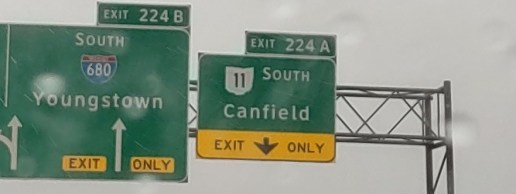
We are closing in.

Passing the Mahoning Valley History Center, we hear the only surviving Mahoning calling our name. This two-cylinder was custom made in 1904 by the Mahoning Motor Car Company.

And then the family album draws us in. Imagine Mr. Calvin’s astonishment as he opened rabbit drawers and gopher cabinets on his land, and found things left by the last tenants.

Far-away Connecticut first claimed this land as the Western Reserve, then sold it to speculators for 40 cents per acre, who then sold it in parcels to settlers migrating from New England.
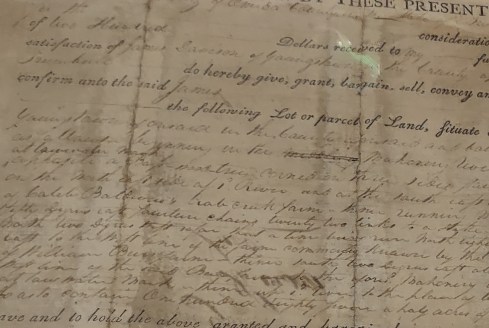
In a market as hot as the 2020s, land in the early 1800s was the commodity for profit, for farming, for business, for individual definition, identity, and prosperity. Most of all, for a place to put down the roots torn from other soils across oceans.
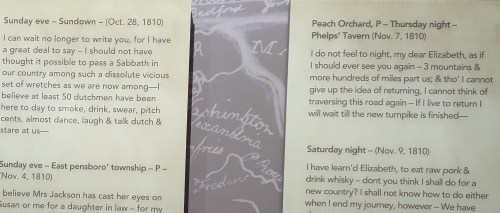
20-year-old Margaret’s letters, as she traveled from Connecticut to northeastern Ohio in a wagon, where she got married and had 13 children.

The Rayens arrived in Youngstown in 1802. For the next 30 years, they defined their place in the emerging social pyramid. A tavern and dry goods store provided profit for serving as post master, clerk, justice of the peace, and finally judge.

By 1906, Mr. Schwebel was baking bread while Dora sold the loaves on the street. Three generations later, there are Schwebel plants serving the entire Midwest. An American success story carries on.
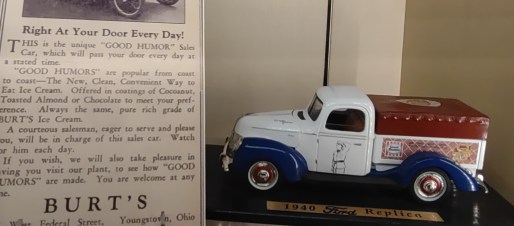
In the 1920s, Harry Burt began transporting his wildly popular “Good Humor” ice cream bars and other sweets. The Good Humor brand is still alive and well today.
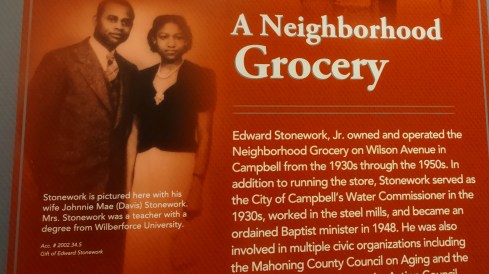
Black families arrived after the Civil War, as brick masons, bakers, stone masons and farmers. By 1930, the Stoneworks were store owners and community leaders. Welsh, German and Irish immigrants went to the iron mills, where they had worked back home in Europe. They set up drugstores, bookstores, and lots of grocery stores.
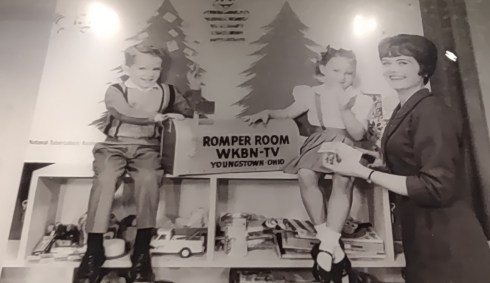
The early 1950s brought television to Youngstown. Fast-moving, visual, perfectly packaged, and designed to entertain, programming delivered instantly. Human interaction moved to the screen, where values, ideas, and especially advertising poured into home audiences.
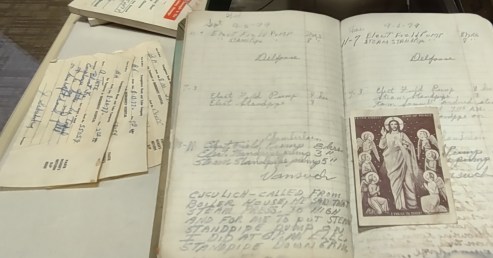
In the background, the steel mills hummed, day upon month upon year upon decade. The 1979 House Report book from Briar Hill Works.

When the steel mills closed, everything changed in Youngstown.
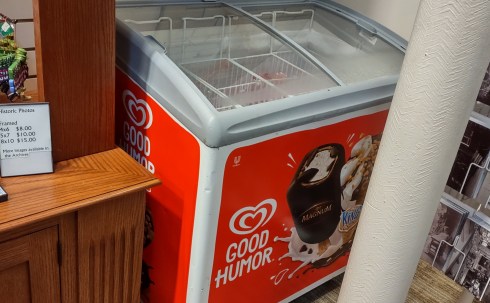
On our way out, a smile from the Good Humor cooler.

Back on the geotrail, we pass old election signs, as sure a sign of fall as the changing leaves. Now fallen.

We see you, Mr. Peanut. And now for the cache, please?
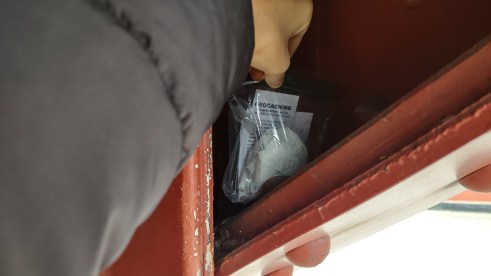
Only the salted legumes are missing.

The Mahoning flows onward below, nourishing new hopes and fresh dreams for the next page of the family album.
 OH Love Of Geocaching