With her 2014 hide, Cache Owner msmandi circles us through the arc of history.

We trace the curve of south-bound 270, and then westward on I-70, crossing the Madison County line, slowing to fresh-air-speed on Route 42, and finally landing on a spider web of roads, converging at the mothership in downtown London.

Our geosense tells us that the history center of this rural county seat has some mysteries to unlock.

Our guide, descended from lawyers and optometrists who set up shop in London, narrates the tales of this land on a virtual real reality PowerPoint slideshow walk-through.
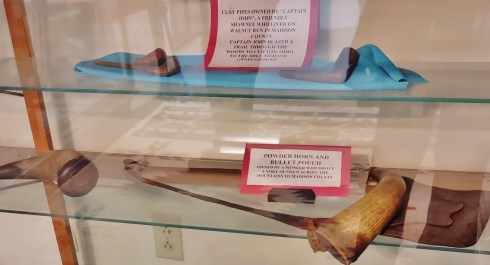
Our first slide opens. A pioneer powder horn shares the screen with clay pipes owned by a local Shawnee man. Captain John, living on Walnut Run south of London, slowly melts into the changes sweeping over his hunting grounds.

As dads and grands retell tales of heroism in the Revolutionary and 1812 Wars, sons enlist for the Union.
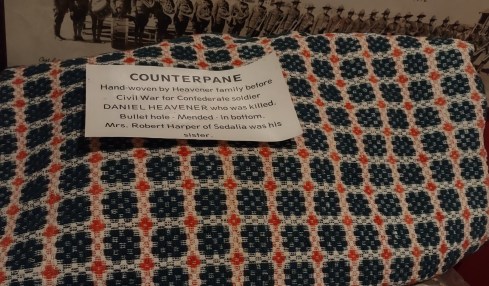
In a repeat of the 1770s, when families were torn between King George loyalists and rebel siblings, families of the 1860s look across the Ohio River to see relatives shooting back.
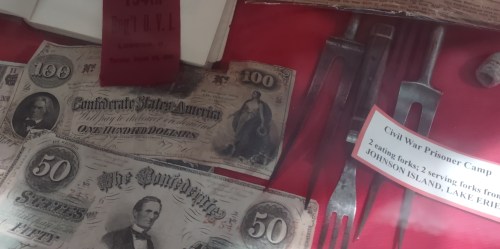
On the south side of the river, Confederates cut their teeth on granddad’s tales of revolution, and ask why not? A baby country spins into action, printing money, and sending men to die in battle. The Union holds.
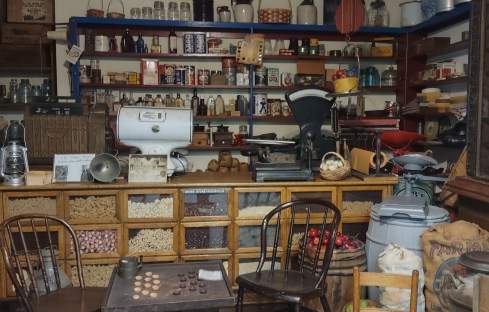
On the next slide, an 1880s general store, where you can one-click ask the clerk for anything on the website on the shelves, pick up your email snail mail, hear the latest gossip from social media the horse’s mouth, play online games checkers, get a call on your cell phone the store phone, get a package delivered tied up and handed to you, and order again tomorrow wait for your next trip into town.
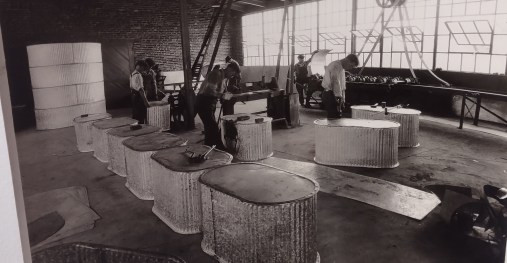
As Mahoning Valley steel blankets the state in the Roaring Twenties, the Thomas and Armstrong Company employs 36 men, making brooder houses, water tanks, hog troughs, corn cribs, and silos for increasingly larger livestock operations. As today’s economy shifts to underpaid, disenfranchised, and unrewarding labor, overworked minions increasingly opt out.

By the 1930s, America’s romance with steel boxes on rubber circles trickles down to chubby child hands, passing on a passion that has not faded.

On our last slide, eras mesh together to create today’s story of $30 trillion in national debt, which somehow makes sense to someone somewhere.
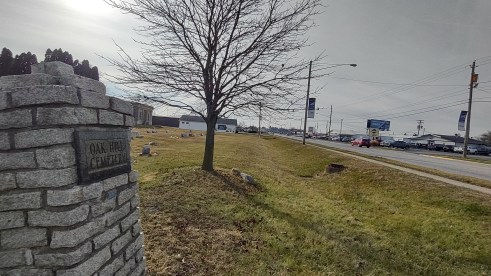
Our coordinates lead us back outside and down the street. Cemeteried land becomes a new guardian of the soil, holding houses, farms, and businesses at bay, preserving life in stone and also in undisturbed ecosystems.
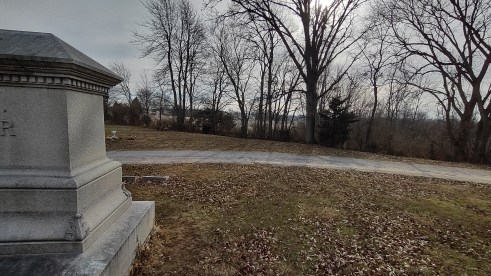
We move toward the back of the cemetery, where new ground holds the dust to which we will return, protected for another 200 years.
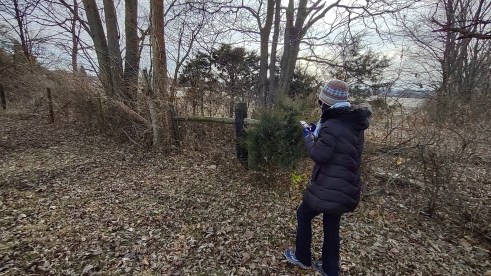
Crunch of brown and drying leaves echoes the invisible microbe universe, giving nutrients back to soil for another season of summer growth.
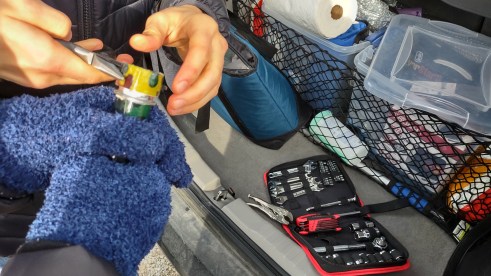
This one takes a little teamwork. And a good set of pliers.

In her cache description, msmandi tells us of a transplant from England, Major Cowling, who seemed to feel right back home when he settled in Ohio in a town called London. He became a successful business man and, in 1861, roused the farmers and craftsmen of Madison County to join in defense of the Union. London’s Company K headed into western Virginia, where many of them died. Cowling and his family are buried in this cemetery, alongside 65 veterans of Company K, for whom he erected this honorary monument.

The dedication of the monument in 1871 still echoes.
When they left our midst in the bloom of youth and the pride of manhood, as they climbed the high hills or bivouacked on the open fields of the south, as they met danger on the fields of strife or languished in the camp and hospital; as they reposed at noontide beneath the orange and magnolia trees, or in the forest at the midnight hour, listening to the wind sighing through the boughs of the pine and cypress, perhaps no silent wish more often swelled up in their hearts, and no uttered prayer more frequently ascended into the presence of the Divinity in whom they trusted, than that their actions and efforts might be appreciated and they might be remembered by those at home.
 OH Love Of Geocaching