Seeking that, without which how many marriage proposals could not have happened, we will follow Cache Owner boydfamily to a covered bridge.
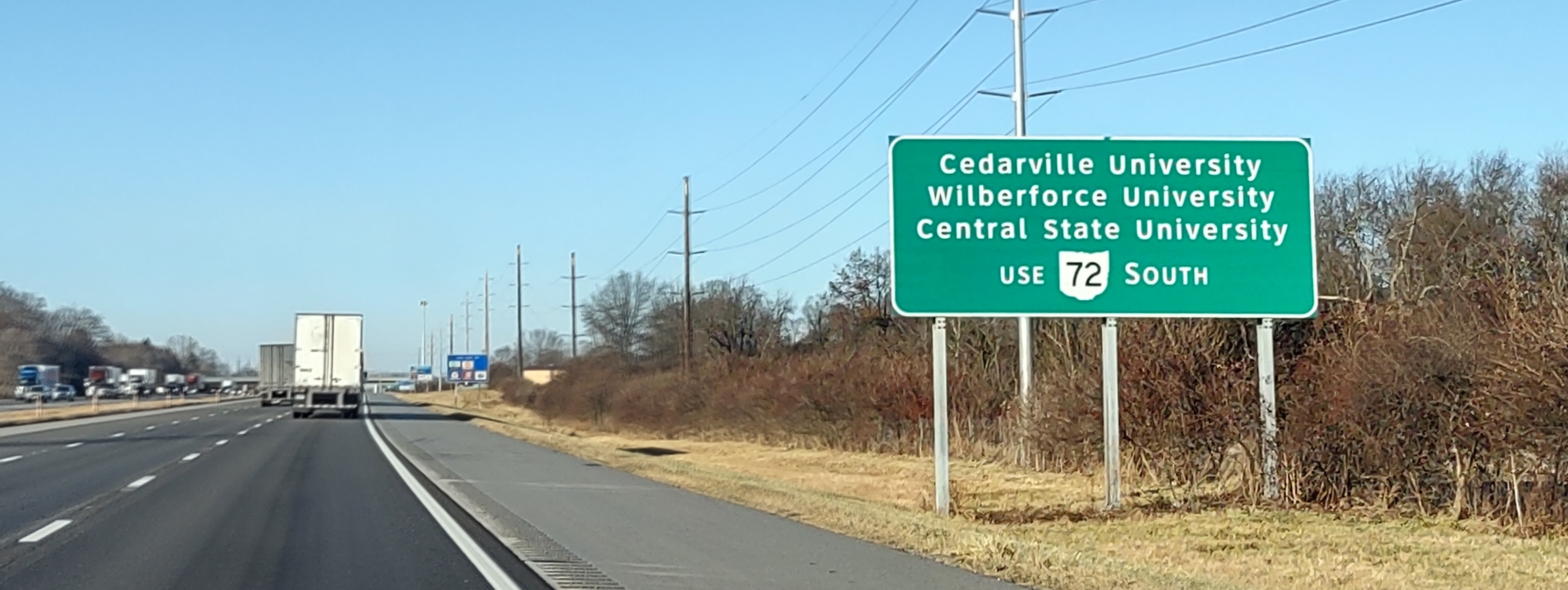
Our geotrail leads west, then south, as the cerulean sky purrs innocence of recent cloudbursts.
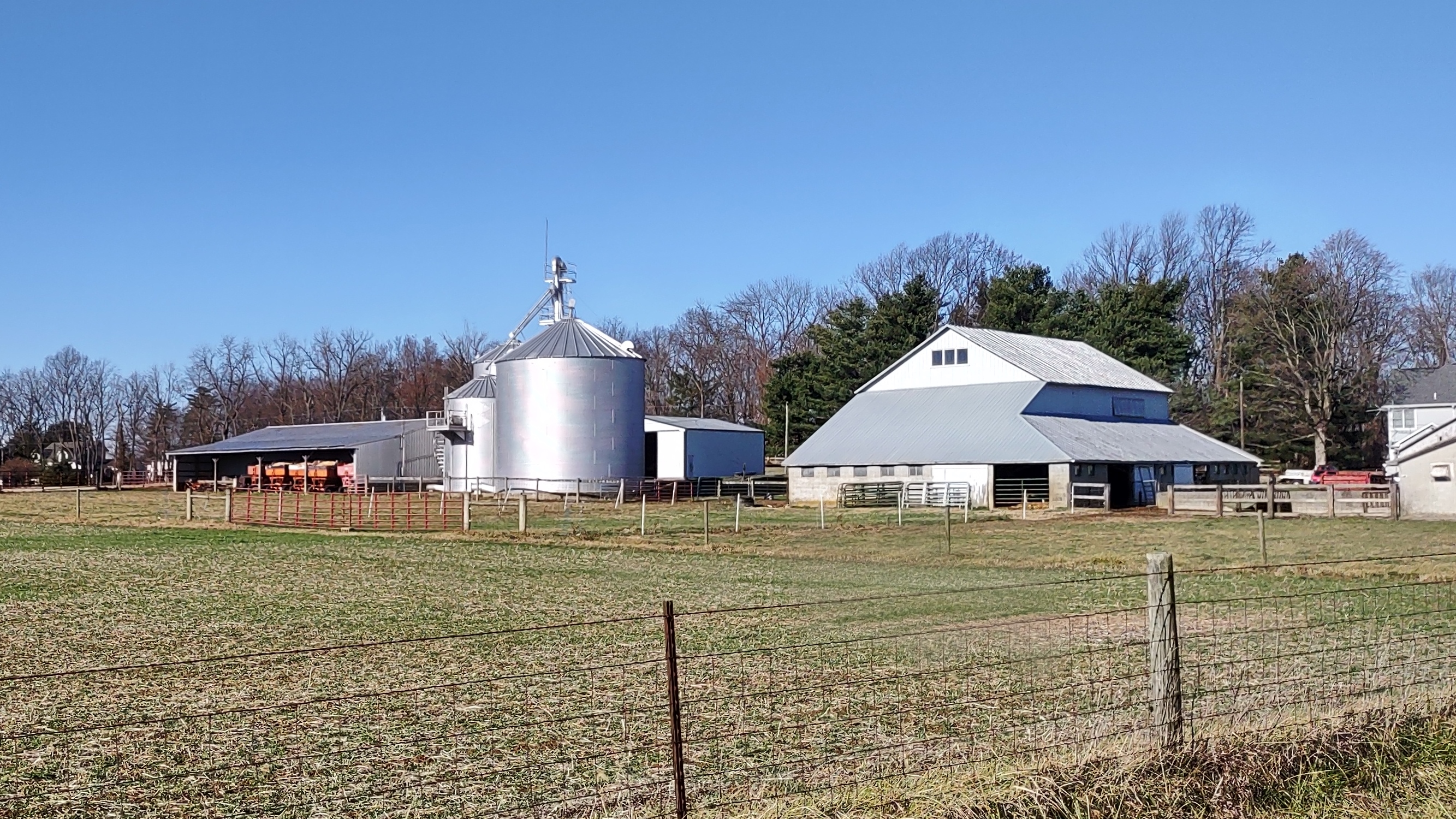
While industrial agriculture turns soil into corn and soy deserts, family farms, with small silos and smaller tractors, cultivate 25% of available farmland to produce 70% of our food. Connected to a living landscape, invigorated by generations of hearts rooted in dirt, small farmers figure out how to hold on.

Our geotrail crosses the campus of Wilberforce University. Two hundred years ago, as Wayne and his army pushed Ohio tribes to the northwest, farmers bought and settled this land. In 1850, Elias Drake saw fit to develop the land into a resort, where he welcomed Southern land owners, along with their entourages of captive American women. Annoyingly unpopular with his abolitionist neighbors, Drake sold out to the Methodist Episcopal Church, which then helped to found Wilberforce University. In this small town, free Black students lay down to rest, in the cottages where no captives would sleep again.
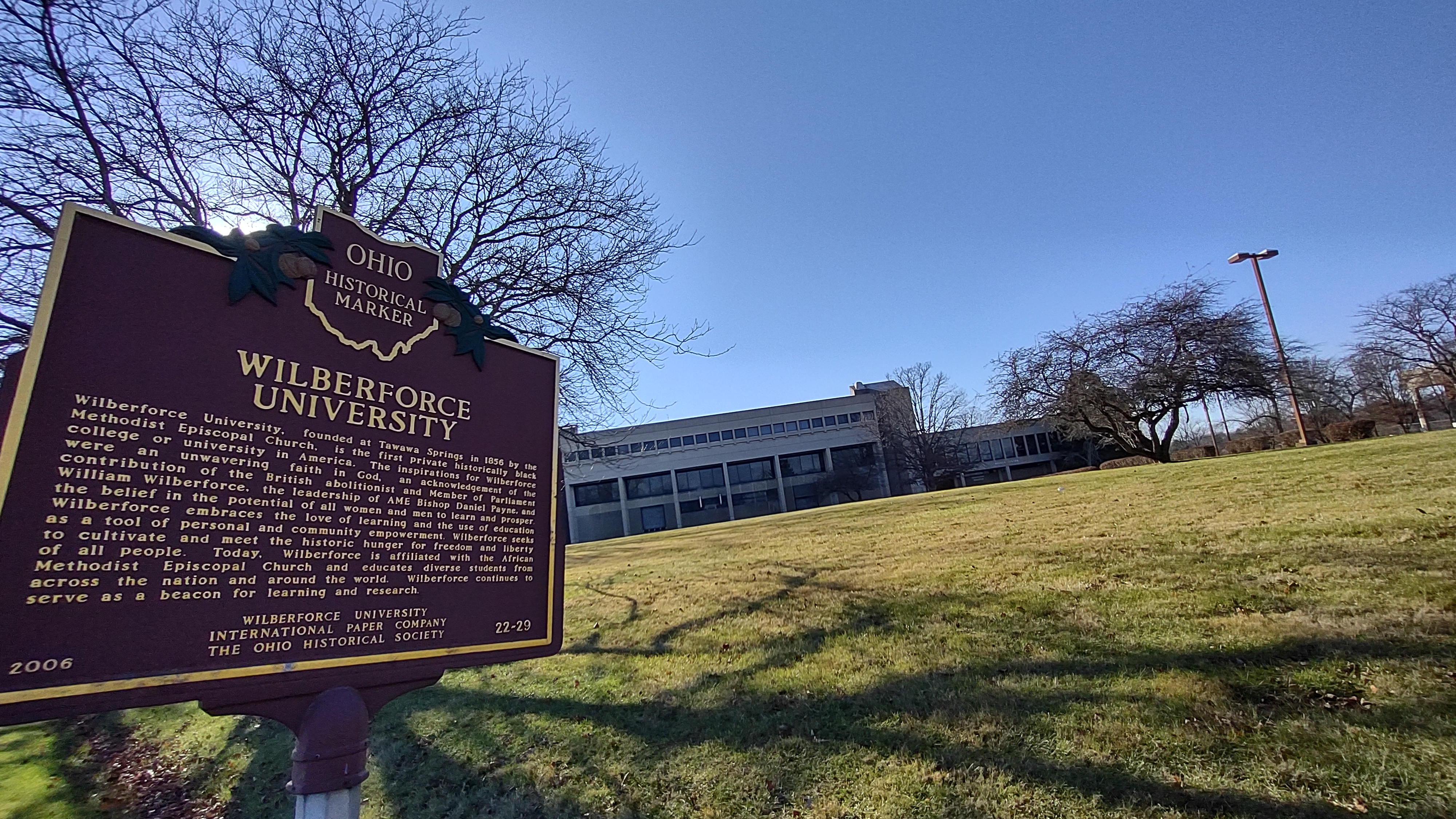
Crediting the abolitionist William Wilberforce, Bishop Daniel Payne, an unwavering faith in God, and their own conviction that opportunity must empower all, the institution stands strong 166 years later. From this Historically Black University have risen educators, philosophers, military heroes, athletes, opera singers, physicians, and politicians — all nurtured and empowered within a safe haven for Black culture.
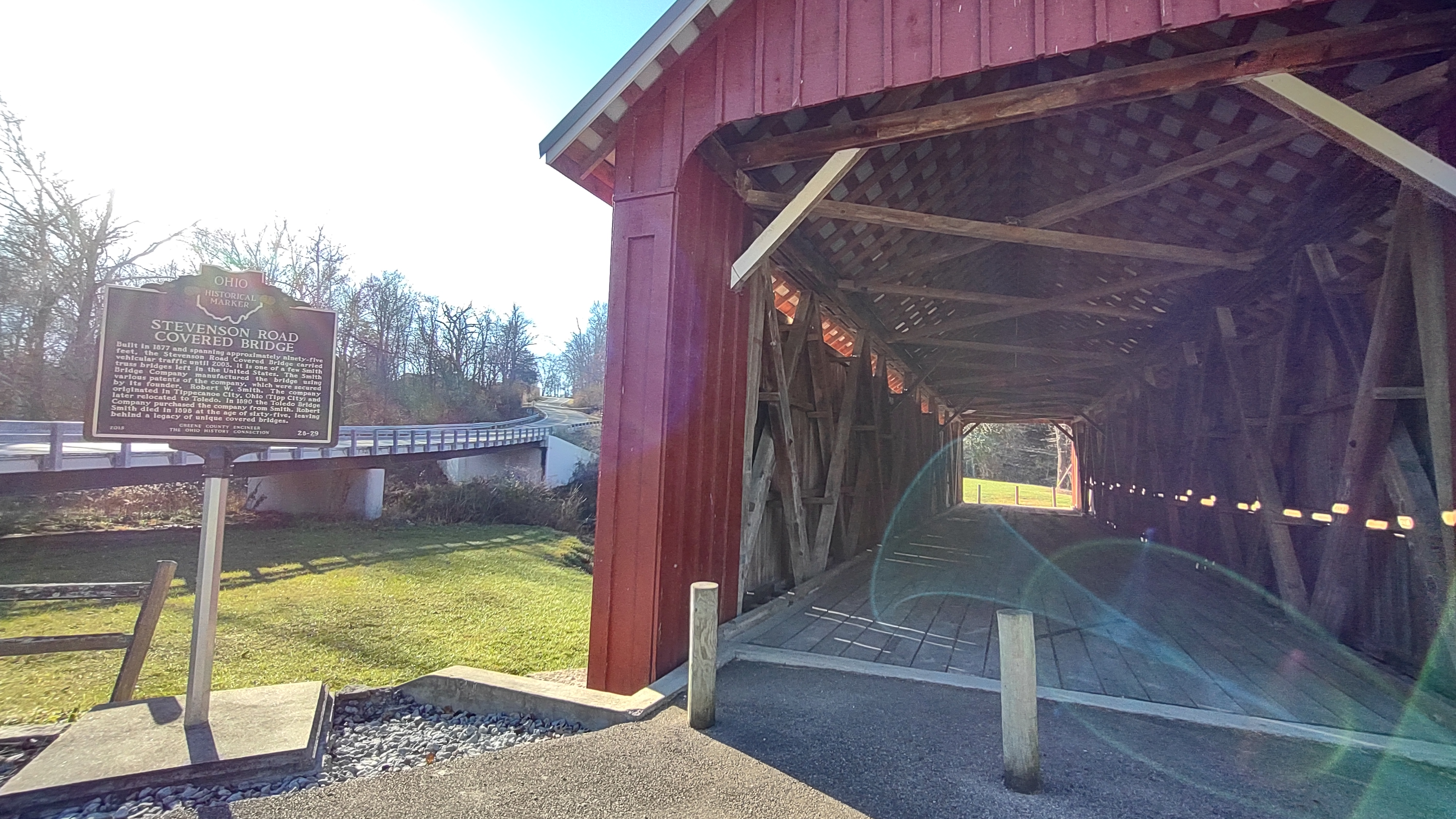
As we wind north on Brush Row, then Stevenson Road, the 1877 bridge rises before us above Massie’s Creek. The patented Smith Truss diagonal specialized in longer spans and heavier loads. Out of use for the past 20 years when the road wandered over to its ugly stepsister, the bridge was nevertheless rebuilt in 2015.

Logs tell us that if a muggle is around, apparently posing for touristy type pictures, and you are posing for your own fake pictures, as you both edge closer to the cache, one of you will finally catch on.
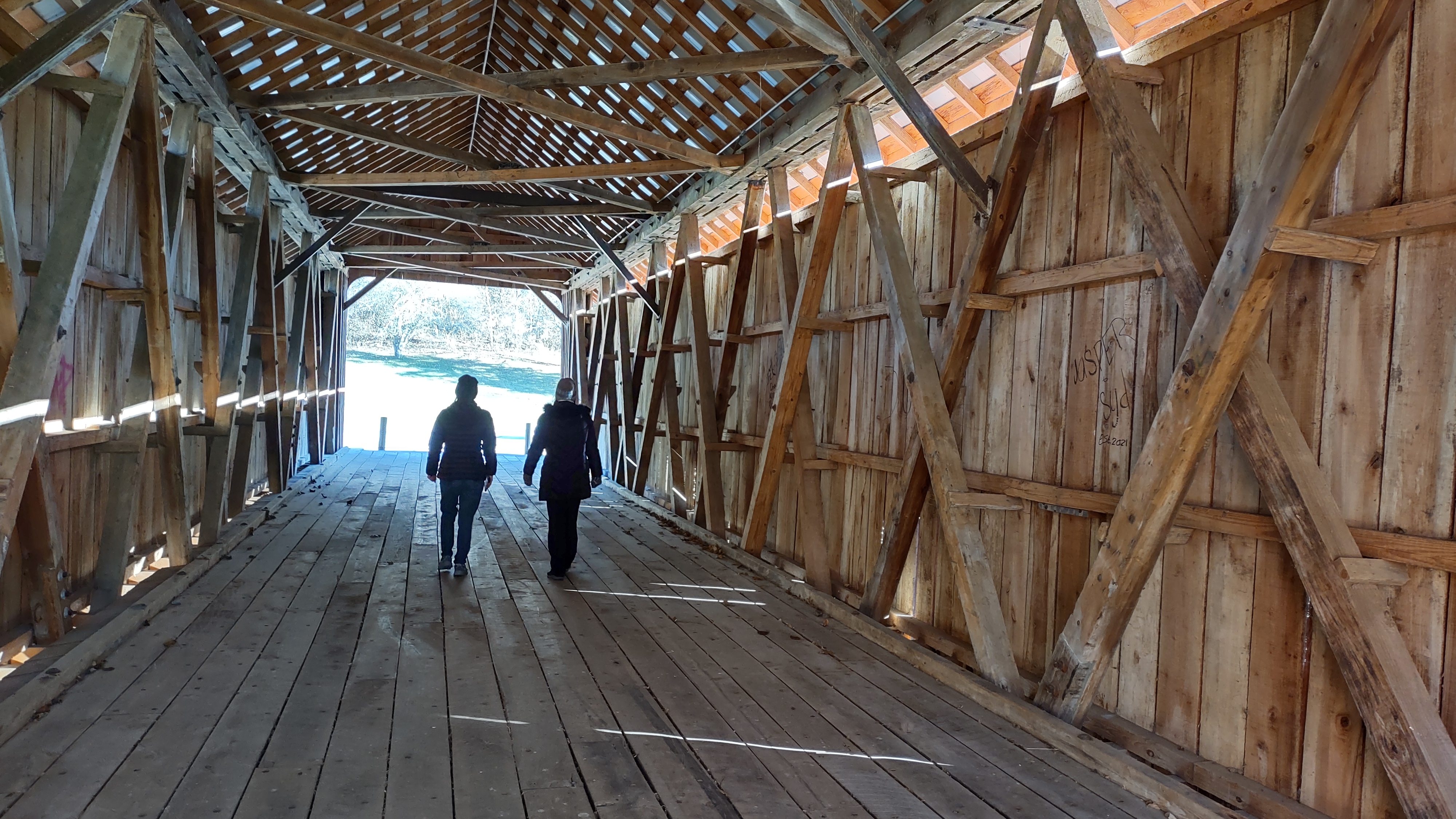
And both of you will dissolve in boisterous belly laughs, and find a new friend.

In 2013, a cacher stood beside the dilapidated and worn 136-year-old bridge, and logged a treasure for us to find, about ourselves, and why we cache.
Spent too much time indoors today
so I headed out for a cache
before dusk came.
 OH Love Of Geocaching