
In 2015, Cache Owner dstricker sets a 49th birthday cache that promises to be tee-riffic.

On an early Saturday morning, our swatch of the planetary quilt snores, recovering from the previous week of rush-around.

White-winged smudges smile from on high, bringing no rain or snow down on our north-bound interstate.
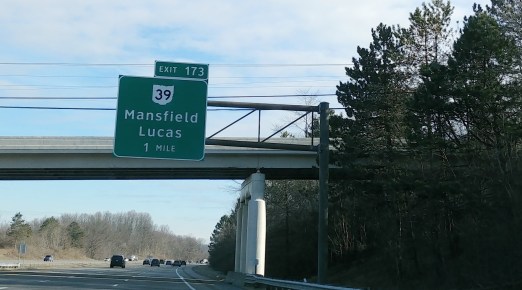
With no gender bias intended, the geo-sensor exits toward our upstate neighbor.

Promising an unforgettable experience, our geo-detour begins.

As settled eastern states and new Presidents morph legal codes from the Old World into the New, the pioneer settlers of baby Ohio deliver justice frontier style. Whip lashings, stockades, impromptu posses retrieving stolen horses and rifles, and a network of army posts write the beta code of American law.

By 1815, prisoners are trying out a brand new penitentiary, designed to ensure public safety and the rehabilitation of the lawbreaker. Solitary confinement is approved for crimes inside the prison, such as assault, cursing, idleness, or disobedience.
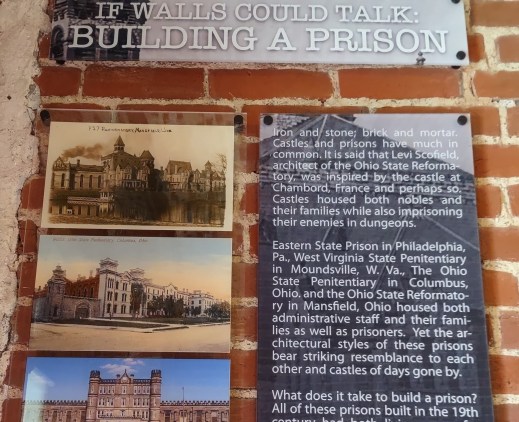
Fifteen years later, a new prison built by inmates houses 700 cells. Income from long days of prison labor feeds the state treasury. What’s not to like? Prison profits in 1838 exceed expenses by $23,000, or, in today’s dollars, well over half a million. People of conscience, fighting to end unpaid Southern labor, sit up and take notice of this substantial source of state income on the backs of captives.
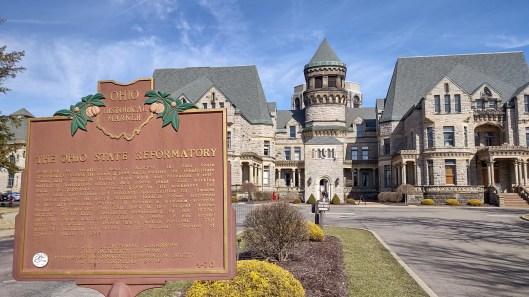
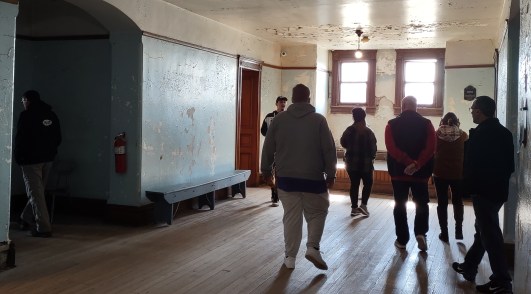
When the city of Mansfield wins a share in the prison pie, the brand new Ohio State Reformatory is built and finished in 1896. Architects envision a very different model, where minor offenders can finish school, learn a trade, and participate in spiritual development.

A prison farm, regular chapel attendance, and industrial training deliver the goods, bringing home an impressively high success rate and low repeat offense.
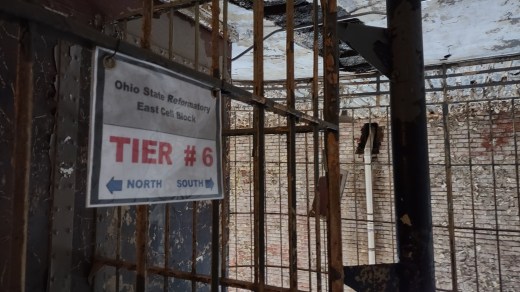
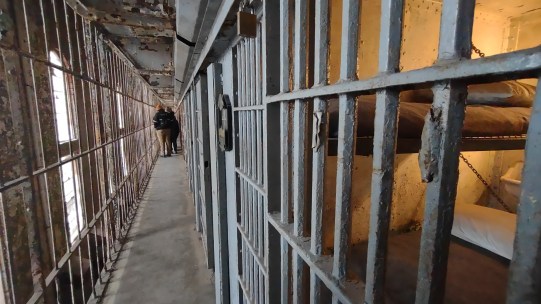
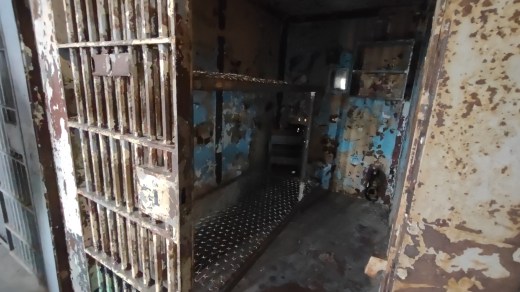
With a West and East cell block, stacked one on top of another, 1,300 inmates now fill the OSR.
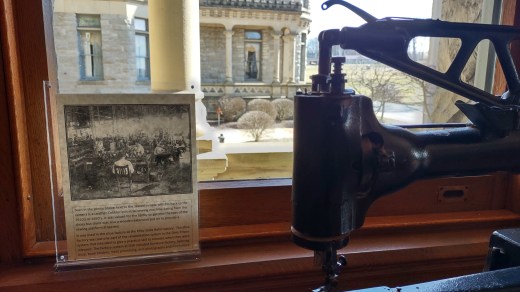
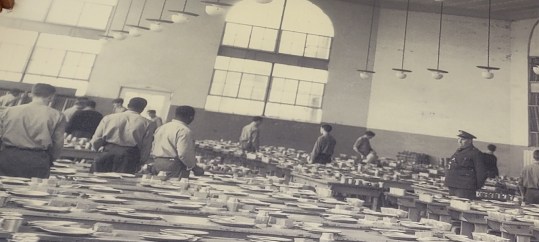
Days mimic routines to return to society, making shoes, clothes, and furniture, processing meat, writing and playing music, working on a construction team, doing things never learned as children.

Inmates are paid an hourly rate. Half is saved for “Going Home.” The other half buys magazines, chips, and smoked sausage from the commissary. Intricate craftsmanship reflects inner souls. Mr. Humphrey enters for Grand Theft and leaves with a high school diploma and a resume for building houses.
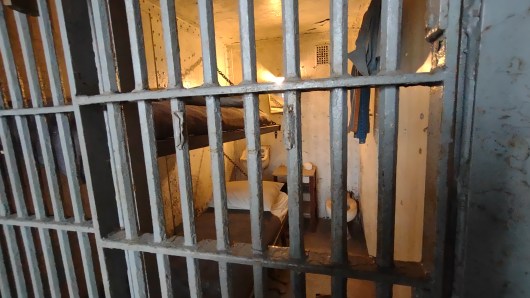
In 1957, Eugene Flynt is crossing an Akron street after a long shift at the Goodyear plant. He is struck and killed by Frank Freshwaters, another 20-something auto worker. Frank is convicted of manslaughter, violates his probation, and finds himself in a cell at the Ohio State Reformatory in 1959. His good attitude takes him to the prison farm, where he slips away undetected, disappearing for the next 56 years.
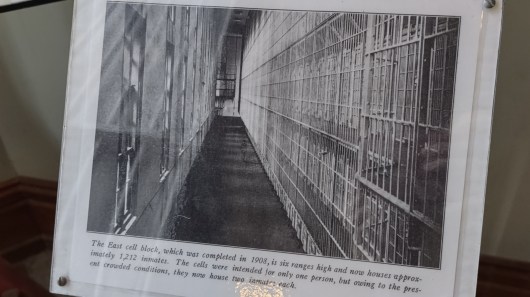
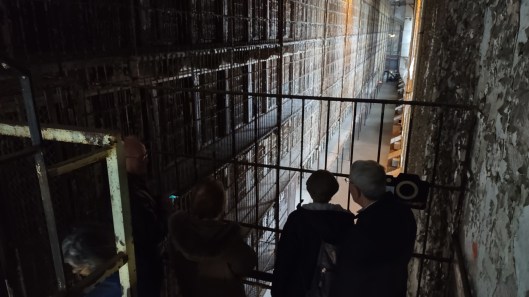
By the 1960s, the Reformatory is converted to a maximum security facility, something it was never designed for. The largest free-standing steel cell block in the world becomes a sardine can. A seven-by-nine foot cell meant for one now holds two, and the population rises to 1,900.

The next 30 years will be spent in a battle for rights of those incarcerated: due process protections, grievance procedures, access to legal materials and law libraries, reintegration support, educational programming, parole eligibility, care of terminally ill inmates, the ethics of prison snitches, crime victims’ rights and protection, and definitions and penalties for felonies, in the context of public, staff, and inmate safety.
When the full-fledged Department of Rehabilitation and Corrections is born in 1972, Bennett Cooper becomes first Black Director of Corrections in the nation. He supervises 9,000 inmates across seven institutions, with 8,000 parolees and 3,000 staff.

Within four years, the number across the state sky-rockets to 12,000. Cell-crowding becomes a norm. $250 million is budgeted for new prisons situated closer to cities where inmates can maintain family contacts, the greatest predictor for successful reentry.
By 1975, Frank Freshwaters is now William Cox. He has lived in West Virginia for 15 years, fishing, tinkering on cars, fathering children, driving truck, and eating cold chicken. When Ohio finally catches up with him, WV covers for Frank long enough for another escape, further south.
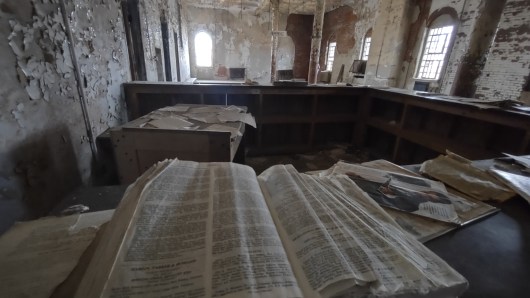
In 1978, the US Supreme Court limits public access-on-demand to penal institutions. That same year, four residents of the Ohio State Reformatory dust off a 200-year-old document. There they find that the United States Constitution not only guarantees equal protection under the law, but also prohibits cruel and unusual punishment.

With Constitution in hand, Boyd vs. Denton initiates a class action complaint to remedy overcrowding, racial segregation, physical deterioration,

inadequate showering, heating, and cooling, and rodent infestation.

In 1979, Stewart vs Rhodes is settled with a consent decree, mandating time, space, and equipment for exercise and recreation, noncrowding in cells,
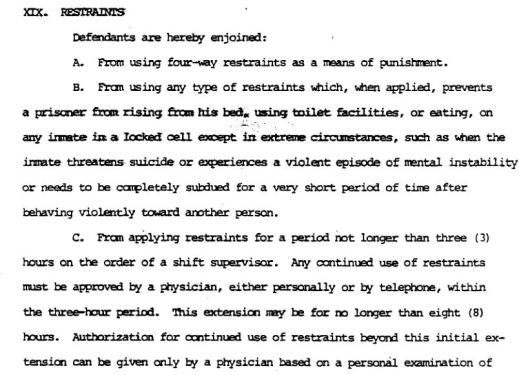
justified use of physical restraints inside a locked cell, sanitation and clean clothes,
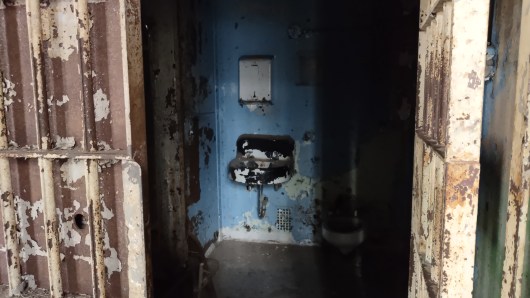
operational plumbing, light fixtures and temperature control (heating, ventilation, lighting, plumbing and water), fire safety, psychiatric care, access to legal research and law interns, writing materials, disability accommodations,

voluntary work assignments, mail delivery, reading materials, approved visits and access to telephones, religious services and consultation, non-racially-segregated cells, and applications for transfer to lesser security institutions.
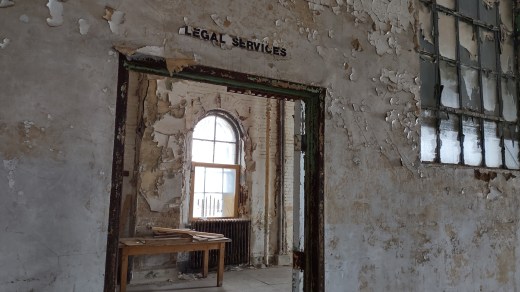
Two years later, Rhodes vs Chapman, also a class action against cell crowding, works its way to the US Supreme Court. Federal justices consult their consciences and decide that, “To the extent such conditions are restrictive and even harsh, they are part of the penalty that criminals pay for their offenses against society.” The court feels good about relying on the judgment of state legislatures and prison administrators, “who surely are not insensitive to the requirements of the Constitution.”
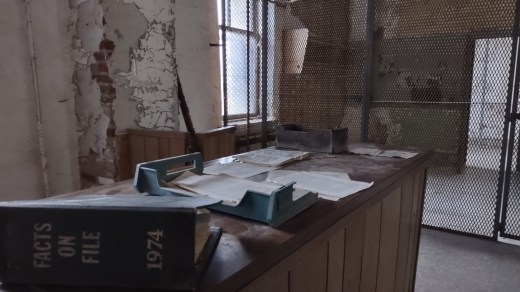
It will not be until 1983 that Boyd vs. Denton works its slow way through the court. A consent decree is approved to close the OSR permanently in five years. Extensions are granted for another 17 years while two new facilities are built.

For two inmates, that time is not soon enough. In the spring of 1990, they pinpoint a no-longer-occupied section of the West Wing. They pry back a metal plate, open a door, remove a six-foot metal support bar and use it to pound a hole through an outside wall of a deserted prison dormitory. Debris is stuffed into mattresses. The crash of weights in an exercise room nearby covers the regular pounding of a hole expanding through the wall. Train tracks and a highway are a short jog away.

One day, Officer Ingram walks through the deserted hall. He wonders why a blue sweatshirt is hanging on the wall. When he moves it aside, a gaping hole and one bit of cornerstone rests between two industrious inmates — and freedom.
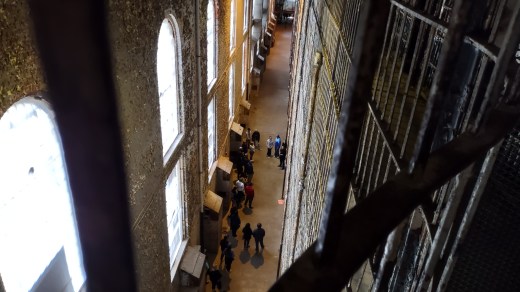
Later that year, the last prisoner walks out of the OSR. 20,000 people attend the ribbon-cutting for the Mansfield Correctional across town, population 2,200, with both general security and max compounds.

From the window, we watch black-suited inmates at Richland County Correctional next door. Residents pace out rounds on the sidewalk or gather in clustered groups. Security guards walk to their cars and drive away.

Left behind in the old Gothic Reformatory flickers a 36-foot-high, solid gold, completely invisible trophy, inscribed Most Haunted Prison in Ohio . . . or maybe the World. Over 200 prisoners perished while incarcerated. Noises, perfume, and other paranormal activity, attributed to deceased residents of this sad and weary place, now draw curious spectators. Hunting ghosts throughout the reformatory, by day or night, costs $99 and includes pizza.

By 1993, Lucasville, south of Columbus, has become the home of a maximum security prison, with 1800 residents, including 300 suffering from severe psychological disorders. On Easter Sunday, with low staff levels, 400 prisoners in the L Block seize batons from guards and hold eight guards hostage for 11 days. Nine inmates and one guard will die before a surrender is called with a 21-point settlement. Prisoners ask for more Black guards, better jobs for Black inmates, religious vaccine exemptions for Muslims, contact with the news media, and firing of the warden.

As inmates are brought to trial post-riot, the elephant foot of the state crushes with deadly precision. Disparity of resources between prosecution and defense is public knowledge. A Special Prosecutor tells the public defender that prisoners should not have counsel prior to indictment because then they would not incriminate themselves. Volunteer attorneys are informed that they may only represent clients if they arrange plea deals.
Prisoners recount interviews with the Highway Patrol in which they are told to incriminate three specific inmates for the death of the guard, with little or no material evidence. Popcorn and movie parties are arranged to get prison snitch testimony to agree. Parole is extended by decades for informants who testify for any defense cases.

Not until 1995, and another hard-fought court case, will mental health treatment be mandated in prisons, especially for the severely ill.
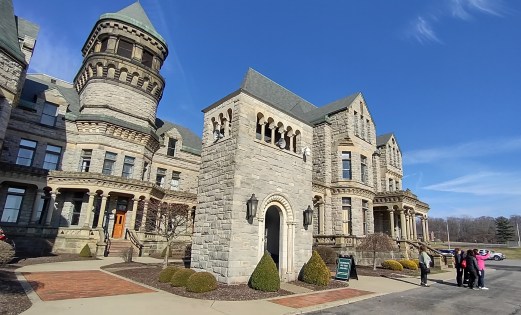
A prison built for dramatic backdrops does not escape the notice of Hollywood. Sweeping Romanesque and Queen Anne architecture thrills a director looking for a movie set. The story of one man’s war against the system comes to Mansfield.

Mixing Sam Sheppard’s fight for justice, Harrison Ford’s riveting portrayal of Sheppard in The Fugitive, and a 1990 legendary blue-sweatshirt coverup, Director Darabont chooses the OSR for The Shawshank Redemption.
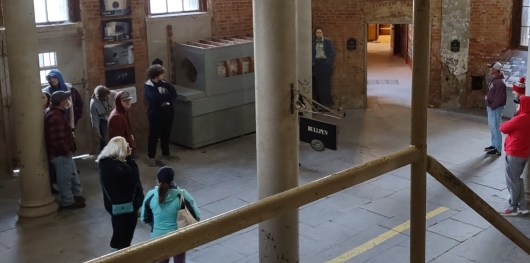
Tours gather round, where chocolate and marshmallow syrup morphs into a sewage-covered escape tunnel, and lines blur between screens and reality.
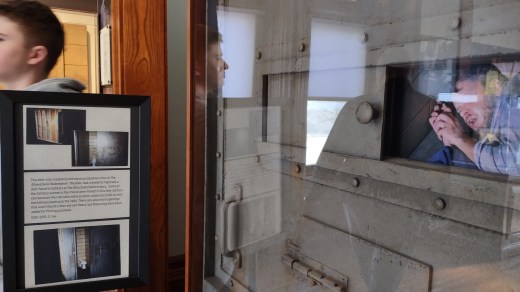
Thoughts fly through isolation cells, cleaned and sanitized to meet the demands of outtakes and scripting.
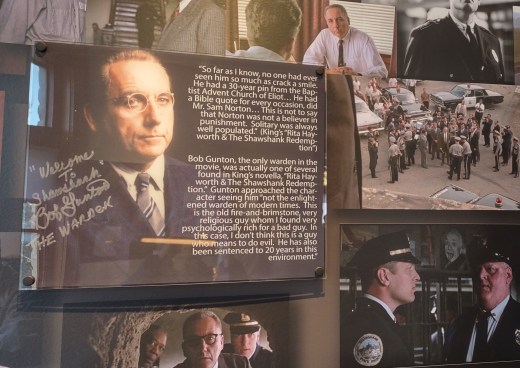
The warden, wall-papered in layers of religion, threatens, preaches, cheats, moralizes, tortures, sermonizes, degrades, and versifies. A Bible takes center stage, hollowed inside to hide a small pickaxe. Over decades, the pickaxe hacks through a wall, creating a tunnel, coated with chocolate syrup, where our hero escapes.
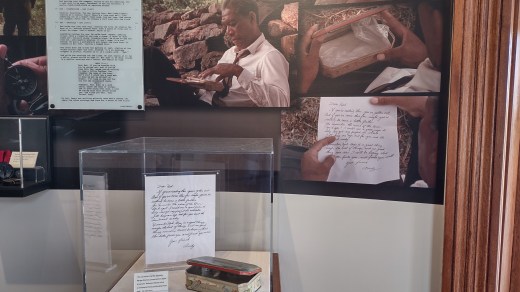
His letter sums it up, “Hope is a good thing.” In this movie, hope is based on luck, determination, and inner fortitude.
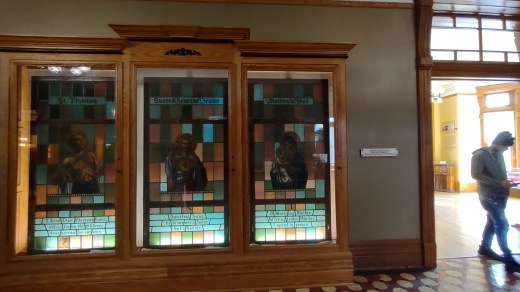
Not so In Real Life, where hope flies on little bird wings, beyond the walls to faces and arms which shelter and cradle.
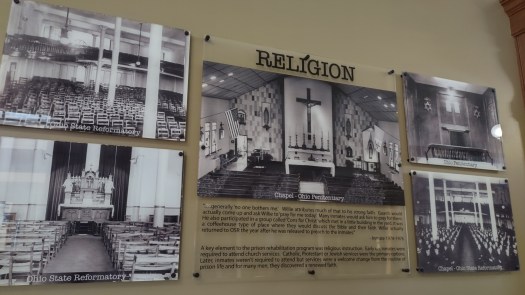
Prayers are shared and encouragement is passed from one to another, anchored not by a pickaxe but a Bible.

Each worships according to the dictates of his own conscience. Gratitude for human connection to an invisible world blossoms in offerings of the heart.

Today’s Chapel visitors summon the spirits of 1,200 men called to contemplate.

By 1999, the Department of Rehabilitation and Correction clocks its first reduction in inmate population.
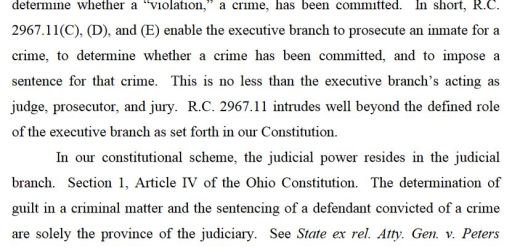
A year later, Bray vs. Denton declares bad time — adding further years of sentencing for offenses in prison – unconstitutional. A 200-year-old separation of the executive and judicial branches dictates that the executive may only carry out, not adjudicate, judicial sentences. Clutched in hands behind bars, the Constitution does not disappoint.
On the 30th birthday of the ODRC, offender reentry programs are demanded by public outcry. Across 33 institutions, 45,000 inmates and 32,000 parolees must be restored to their communities.

Now reaching the ripe age of 50, in 2023 the Corrections website envisions reentry savings accounts, body scanners, enhanced staff environments, visitor spaces, violence and drug prevention, surveillance cameras, crisis response teams, post-time jobs and training, peer support, violence risk tools, increased parole staff and navigators, and updated virtual programming.
Two decades after The Shawshank Redemption scripts Andy’s disappearance into a Mexican coastal town, US Marshals match up fingerprints with a 79-year-old man named Frank Freshwaters, living in Melbourne, Florida. He is arrested and charged with escape, ID fraud, and Social Security fraud. As real-life melts into Hollywood, a nation waits in suspense for the fate of “the Shawshank fugitive.”

Questions of innocence, guilt, time served, good behavior, 56 years as a productive citizen, justice for the victim, and public accountability occupy the parole board and people of Ohio. In 2016, Frank is released on probation into the care of his friends and family.

In 2020, the Ohio Innocence Project helps to gather evidence and defense for Isiah Andrews. The OIP proves that after 45 years of incarceration, Isiah is innocent of murdering his wife. Isiah walks back across the thin line between freedom and incarceration. Altogether, the 30+ persons helped by OIC have served nearly 600 years in prison for crimes they didn’t commit. Voices call out for a country of conscience to stop wrongful targeting and convictions of minorities and the already disadvantaged.
Citizens of the 21st century wrestle with a justice system that can free the guilty and take away an entire lifetime of the innocent. Civil codes for guiding law enforcement and insuring public peace are brooded over. Walmart closes its last two stores in Portland, Oregon, losing $5 million during a long year of shop-lifting and theft. For the wealthy, high-end protector dogs are costing as much as a Mercedes Benz. Across a nation, a 250-year-old document stretches and strains in the tug-of-war between truth, justice, and human iniquity.

From north Mansfield, we turn south and east, to a simple spot on Route 39. Immensity of open country counts the last days and hours to the homeward arrival of insect chorus, green flood of underbrush, and multitude of leaves settling at last on waiting branches.

Past laughter encircles our cache. It is awesome, creative, unique, fun, cool, and cute, echoes Cache Nation. With a perfect putt, we hit our hole-in-one.

Sunshine warms, shadows lengthen, all that we have seen today comes to rest.
 OH Love Of Geocaching