Cache Owner boxen-hunters, with a 2014 hide, asks us to ponder somewhere yonder.
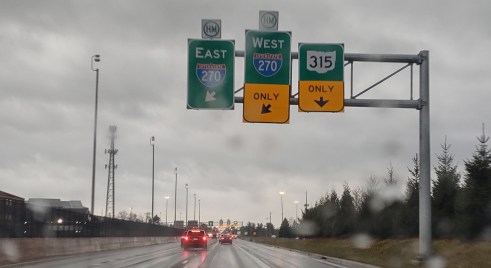
We will head southwest to Wilberforce, and a triangular corner where the Wilberforce-Switch Trail shakes hands with its long and winding neighbor, the Ohio-to-Erie Trail.
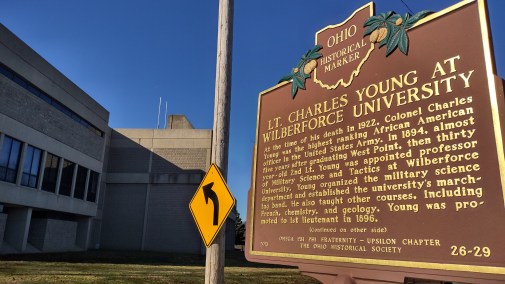
The CO writes that, as a member of the Reserved Officer Training Corps at Wilberforce/Central State University, he pounded these trails. Boxen-hunters now returns to honor the man who began the ROTC program here.
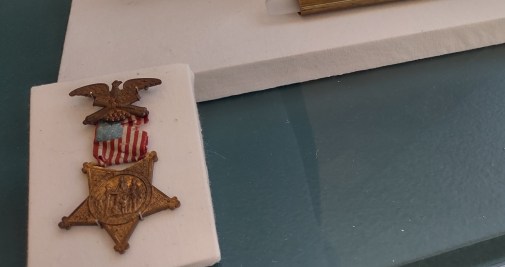
Born to parents held as labor captives in Kentucky, Charles Young grew up hearing about his father’s escape to freedom in 1865, in order to enlist in the Union army. This 150-year-old medal, awarded to his father by Union Army veterans, is still preserved. By 1889, at age 25, Charles Young had graduated from West Point. Five years later, Wilberforce University called on him to organize the military science department. When he left the university in 1898, 113 cadets marched proudly in the brand new ROTC unit. Fourteen of those cadets would follow him to the Ninth Ohio Battalion, the only Black regiment in the Ohio National Guard, serving as a guard unit during the Spanish American War.

Given leadership of Sequoia National Park, Colonel Young organized his Buffalo Soldiers to build roads and protect unsettled land, fighting Mexican revolutionaries in 1916. Then the first World War broke out. At age 53, Colonel Young was the highest-ranking Black officer in the United States. The Army declared him physically unqualified to command, and refused to appoint him to lead Black troops in Europe.
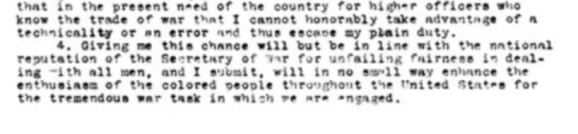
Colonel Young spent a year appealing the decision. It would be another half-century before Dr. King would write, in a Letter from Birmingham Jail, “. . . when you suddenly find your tongue twisted and your speech stammering as you seek to explain to your six-year-old daughter why she can’t go to the public amusement park that has just been advertised on television, and see tears welling up in her little eyes when she is told that Funtown is closed to colored children, and see the depressing clouds of inferiority begin to form in her little mental sky, and see her begin to distort her little personality by unconsciously developing a bitterness toward white people . . . when you are forever fighting a degenerating sense of ‘nobodiness’ . . . there comes a time when men are no longer willing to be plunged into an abyss of injustice where they experience the bleakness of corroding despair.”
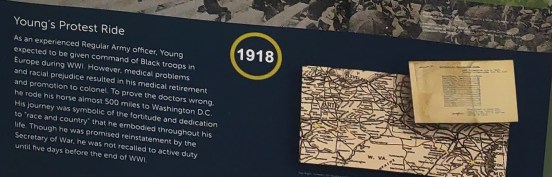
For Colonel Young, that time had come. Mounting his best horse, he rode 497 miles, from his home in Wilberforce, through Circleville, Logan, and Athens, across West Virginia, and Virginia, into the halls of Washington DC, to discover what health restriction such a man who could make this journey might have. Unmoved, the Secretary of War signaled to a watching nation that legal segregation and discrimination still had a place in the land of the free.

After the war, Colonel Young did not disappear into defeat. With Lincoln’s last full measure of personal courage, the Colonel stayed in the Army and was assigned to Africa, where he died in 1922, followed by a burial of honor in Arlington National Cemetery. His home is currently under renovation as a National Historic Landmark and station on the Underground Railroad.
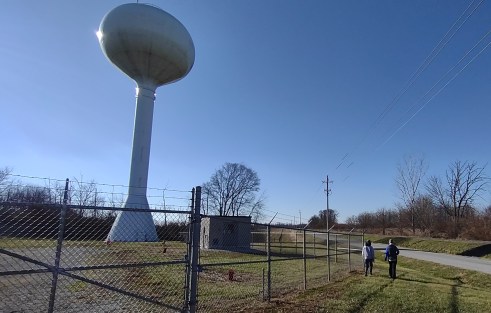
Our Ground Zero towers over us, enormous achievement on a slender thread. Quiet sunlight holds shadows of battalions running by on the trail, pushing before them centuries of anguished determination.
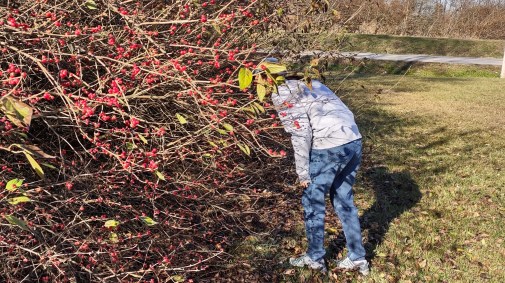
Around the fence, with a worried pause for twisted ankle-plunging into a grassy hole, we find a Christmas feast for feathered friends.
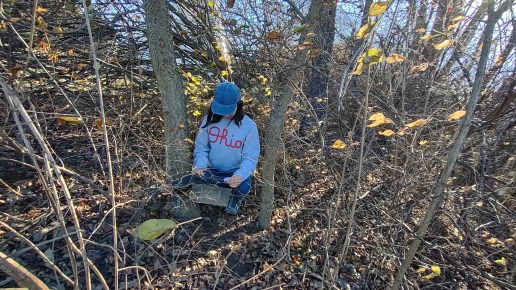
With gratitude and reverence for all giants on whose shoulders we stand.
 OH Love Of Geocaching